Maximising Kasai portoenterostomy in the treatment of biliary atresia: medical and surgical options
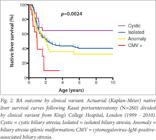
Biliary atresia (BA) remains one of the most challenging conditions in paediatric surgery. It has several possible causes, resulting in a range of different clinical scenarios. The current therapeutic approach is almost entirely surgical with an initial attempt to restore bile flow and preserve the native liver using a Kasai-type portoenterostomy. Liver transplantation (cadaveric or living donor) is usually reserved for failure or for infants presenting late with end-stage cirrhosis. The role of adjuvant medical therapy is unclear and evidence of benefit is lacking. Nonetheless, the use of post-operative steroids, prophylactic antibiotics and choleretic agents such as ursodeoxycholic acid is common. Ideally, the entire pathway should be complementary and seamless with few infants dying of end-stage liver disease or uncorrectable associated congenital malformations. Experience from high-volume centres suggests that clearance of jaundice can be achieved in 50 - 60% of infants, with 10-year native liver and real survival rates of 45% and 90%, respectively.
SAMJ: South African Medical Journal
 Thumbnail
 Thumbnail