SGLT2 inhibitors for heart failure in sub-Saharan Africa: A scoping review of global trials and regional implementation gaps (2015 - 2024)
BACKGROUND. Heart failure (HF) is a leading cause of morbidity and mortality in sub-Saharan Africa (SSA), where patients often present at a younger age and with more advanced disease than in high-income countries. Sodium-glucose cotransporter-2 (SGLT2) inhibitors have demonstrated significant benefits in reducing HF hospitalisations and mortality in large global trials. However, their implementation in SSA remains uncertain, with little region-specific trial data. METHODS. A scoping review was conducted in accordance with PRISMA-ScR and JBI guidelines. PubMed, Scopus, Web of Science and Google Scholar were searched for clinical trials of SGLT2 inhibitors in HF published between 2015 and 2024. Eligible studies were randomised or interventional trials in adults (>18 years). Data were extracted on study design, outcomes, safety and relevance to SSA. RESULTS. Seven major HF-specific clinical trials were identified: DAPA-HF, EMPEROR-Reduced, EMPEROR-Preserved, DELIVER, SOLOIST-WHF, EMPULSE and CHIEF-HF. Across these studies, SGLT2 inhibitors consistently reduced HF hospitalisations, improved survival in HF with reduced ejection fraction and improved patient-reported outcomes. Safety profiles were favourable, with adverse events similar to placebo, and serious complications rare. No trial was conducted exclusively in SSA, and African participation was minimal, mostly confined to South African sites. Limited real-world data suggest that uptake of SGLT2 inhibitors in SSA remains low, hindered by high cost, limited availability and low prescriber familiarity. CONCLUSION. Strong global trial evidence supports SGLT2 inhibitors as effective and safe therapies for HF, but their implementation in SSA is constrained by a lack of local trial data and significant access barriers. Addressing affordability, supply and clinician awareness is essential to translate global evidence into regional practice. Further SSA-specific research and policy interventions are urgently needed to close this gap.
heart failure; sub-Saharan Africa; SGLT2 inhibitors; dapagliflozin; empagliflozin; implementation
SGLT2 inhibitors for heart failure in sub-Saharan Africa: A scoping review of global trials and regional implementation gaps (2015 - 2024)
S Pillay
Senior PhD, MSc Endocrinology; Internal Medicine Department, Victoria Mxenge Hospital and School of Medicine, University of KwaZulu-Natal, Durban, South Africa
ABSTRACTBACKGROUND. Heart failure (HF) is a leading cause of morbidity and mortality in sub-Saharan Africa (SSA), where patients often present at a younger age and with more advanced disease than in high-income countries. Sodium-glucose cotransporter-2 (SGLT2) inhibitors have demonstrated significant benefits in reducing HF hospitalisations and mortality in large global trials. However, their implementation in SSA remains uncertain, with little region-specific trial data.
METHODS. A scoping review was conducted in accordance with PRISMA-ScR and JBI guidelines. PubMed, Scopus, Web of Science and Google Scholar were searched for clinical trials of SGLT2 inhibitors in HF published between 2015 and 2024. Eligible studies were randomised or interventional trials in adults (>18 years). Data were extracted on study design, outcomes, safety and relevance to SSA.
RESULTS. Seven major HF-specific clinical trials were identified: DAPA-HF, EMPEROR-Reduced, EMPEROR-Preserved, DELIVER, SOLOIST-WHF, EMPULSE and CHIEF-HF. Across these studies, SGLT2 inhibitors consistently reduced HF hospitalisations, improved survival in HF with reduced ejection fraction and improved patient-reported outcomes. Safety profiles were favourable, with adverse events similar to placebo, and serious complications rare. No trial was conducted exclusively in SSA, and African participation was minimal, mostly confined to South African sites. Limited real-world data suggest that uptake of SGLT2 inhibitors in SSA remains low, hindered by high cost, limited availability and low prescriber familiarity.
CONCLUSION. Strong global trial evidence supports SGLT2 inhibitors as effective and safe therapies for HF, but their implementation in SSA is constrained by a lack of local trial data and significant access barriers. Addressing affordability, supply and clinician awareness is essential to translate global evidence into regional practice. Further SSA-specific research and policy interventions are urgently needed to close this gap.
Keywords: heart failure, sub-Saharan Africa, SGLT2 inhibitors, dapagliflozin, empagliflozin, implementation
Heart failure (HF) is a growing public health problem in sub-Saharan Africa (SSA), accounting for up to 30% of cardiovascular admissions in some hospital series.[1] Patients often present at a younger age and with more advanced disease compared with high-income countries.[1,2] The predominant aetiologies in SSA include hypertensive heart disease, dilated and peripartum cardiomyopathies, and rheumatic valvular disease, in contrast to the ischaemic heart disease that dominates in high-income settings.[2,3] Outcomes remain poor: 1-year mortality after hospitalisation for HF in SSA has been reported to exceed 30%, substantially higher than global averages.[1,4]
In the past decade, sodium-glucose cotransporter-2 (SGLT2) inhibitors have emerged as a novel therapeutic class with major benefits in HF. Initially developed as glucose-lowering agents for type 2 diabetes, these drugs were shown in large cardiovascular outcome trials to reduce HF hospitalisations in diabetic patients.[5-7] Subsequent dedicated HF trials have confirmed consistent efficacy in patients with established HF, irrespective of diabetes status.[8-12] In HF with reduced ejection fraction (HFrEF), dapagliflozin and empagliflozin significantly reduced the composite endpoint of cardiovascular death or HF hospitalisation by ~25%.[8,9] In HF with preserved ejection fraction (HFpEF), a population with few proven therapies, empagliflozin and dapagliflozin reduced the risk of HF hospitalisation in landmark trials.[10,11] More recently, benefits have also been demonstrated in acute decompensated HF when therapy is initiated during hospitalisation.[12] These findings have led to international guideline recommendations incorporating SGLT2 inhibitors as core therapy for HFrEF and beneficial therapy for HFpEF.[13]
Despite this compelling global evidence, the extent of implementation of SGLT2 inhibitors in SSA remains limited. No HF-specific trial has been conducted exclusively in SSA, and African representation in major trials has been minimal, largely confined to South African (SA) sites.[14] Real-world studies from SSA suggest that prescription rates for SGLT2 inhibitors in eligible HF patients are <25%, with major barriers including high drug costs, limited availability and low clinician familiarity.[15,16] These challenges highlight a growing evidence-to-practice gap in SSA.
This scoping review was therefore undertaken to map the available clinical trial evidence on SGLT2 inhibitors for HF between 2015 and 2024, assess its relevance to SSA and identify implementation gaps. The goal is to provide a foundation for future research, policy and practice strategies to improve access to this life-saving therapy in the region.
Methods
Protocol and reporting framework
This scoping review was conducted according to the Joanna Briggs Institute (JBI) methodology for scoping reviews[17] and reported in line with the PRISMA-ScR (Preferred Reporting Items for Systematic Reviews and Meta-Analyses extension for Scoping Reviews) checklist.[18] The review protocol was defined a priori using the population-concept-context (PCC) framework to ensure a structured and reproducible approach.
Eligibility criteria
Studies were eligible if they met the following criteria:
• Population: eligible trials that included adults (aged >18 years) with HF, irrespective of diabetes status. Trials enrolling exclusively patients with type 2 diabetes, exclusively patients without diabetes, or mixed populations were included, provided HF outcomes were reported. Diabetes status was extracted and recorded where reported.
• Concept: intervention with an SGLT2 inhibitor (dapagliflozin, empagliflozin, canagliflozin, sotagliflozin, or ertugliflozin).
• Context: clinical trials conducted between 2015 and 2024, with a focus on SSA. Global trials were included if they reported outcomes relevant to HF and had SSA participation or relevance to the SSA context.
• Study design: randomised controlled trials (RCTs), cluster RCTs, stepped-wedge or pragmatic interventional trials. Observational studies, reviews and case series were excluded.
Information sources and search strategy
Electronic databases searched included PubMed, Scopus, Web of Science and Google Scholar. The search covered January 2015 to December 2024. A combination of keywords and MeSH terms was used: ('heart failure' OR 'HFrEF' OR 'HFpEF' OR 'HFmrEF') AND ('SGLT2 inhibitor' OR 'dapagliflozin' OR 'empagliflozin' OR 'canagliflozin' OR 'sotagliflozin' OR 'ertugliflozin') AND ('clinical trial' OR 'randomised'). References of included articles and relevant reviews were also hand-searched.
Study selection
Titles and abstracts were screened for relevance. Full texts of potentially eligible studies were retrieved and assessed against inclusion criteria. Reasons for exclusion at the full-text stage were documented.
Data charting
A standardised data extraction form was used to capture study characteristics: author, year, setting, trial registration, sample size, HF subtype, intervention and comparator, duration of follow-up, primary outcomes, efficacy results, safety outcomes, and any SSA-specific relevance. Data were charted in duplicate for accuracy.
Data synthesis
Given expected heterogeneity, results were synthesised descriptively. Trials were grouped by HF subtype (HFrEF, HFpEF, acute HF). Key outcomes were summarised narratively and in tabular form. Special attention was paid to SSA representation in trials and to implementation-relevant findings such as access, safety and barriers. No meta-analysis was performed, consistent with scoping review methodology.
PRISMA flow diagram
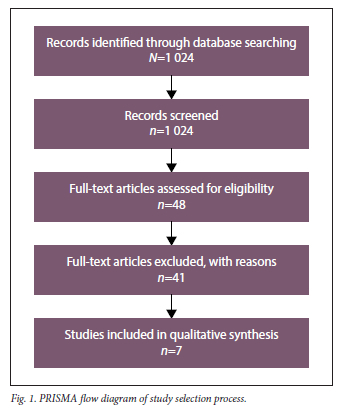
The study selection process is summarised in Fig. 1.
Results
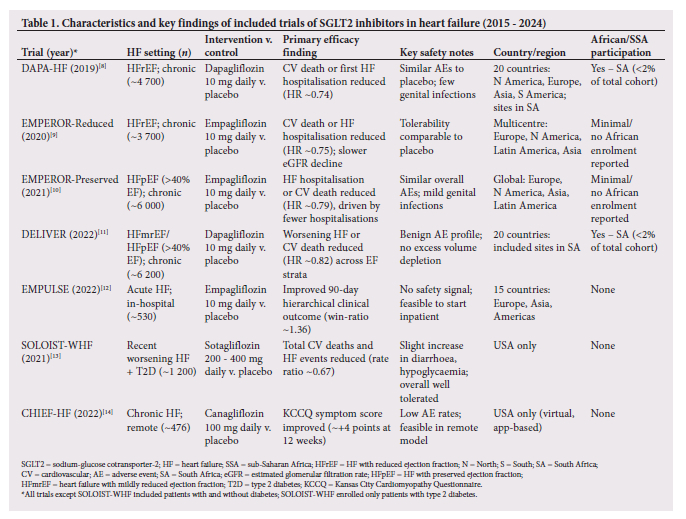
Database searches identified 1 024 records. After de-duplication and screening, 48 full-text articles were reviewed, and 41 were excluded. Seven HF-specific clinical trials of SGLT2 inhibition were included: DAPA-HF,[8] EMPEROR-Reduced,[9] EMPEROR-Preserved,[10] DELIVER,[11] EMPULSE,[12] SOLOIST-WHF[13] and CHIEF-HF.[14] None were conducted exclusively in SSA, and African participation was minimal, limited mainly to SA centres (Table 1).
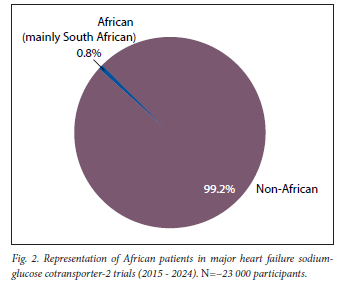
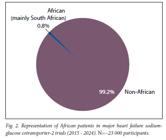
Together, these seven trials enrolled ~23 000 patients with HF, spanning HFrEF, heart failure with mildly reduced ejection fraction (HFmrEF), HFpEF and acute HF. However, African representation was extremely limited. Fewer than 2% of participants across all studies were from Africa, and these were almost exclusively from SA sites in DAPA-HF and DELIVER. None of the trials reported outcomes separately for African or SSA subgroups. EMPEROR-Reduced and EMPEROR-Preserved acknowledged minimal or no enrolment from Africa, while EMPULSE, SOLOIST-WHF and CHIEF-HF had no African participants (Fig. 2).
Across the seven included trials, diabetes status varied by study design. DAPA-HF, EMPEROR-Reduced, EMPEROR-Preserved, DELIVER, EMPULSE and CHIEF-HF enrolled patients with and without diabetes, whereas SOLOIST-WHF exclusively enrolled patients with type 2 diabetes. Importantly, subgroup analyses in trials enrolling mixed populations consistently demonstrated that the clinical benefits of SGLT2 inhibitors on HF outcomes were independent of baseline diabetes status.
Across these trials, SGLT2 inhibitors consistently demonstrated significant benefits. In HFrEF, dapagliflozin and empagliflozin reduced the combined endpoint of cardiovascular death or HF hospitalisation by ~25%. In HFpEF and HFmrEF, dapagliflozin and empagliflozin lowered the risk of HF hospitalisation, a breakthrough in a group with few effective therapies. In acute HF, empagliflozin improved short-term clinical outcomes when initiated during hospitalisation, and sotagliflozin reduced post-discharge HF events in patients with diabetes. The CHIEF-HF trial confirmed that SGLT2 inhibitors rapidly improve quality of life, even in a virtual trial setting.
Safety outcomes were favourable, with adverse event rates similar to placebo. Genital mycotic infections were more common but mild and manageable. Serious complications, such as ketoacidosis, were rare and confined to diabetic patients.
Discussion
This scoping review demonstrates that SGLT2 inhibitors are consistently effective and safe therapies for HF across diverse clinical presentations, with robust global evidence of reduced HF hospitalisations, improved survival in HFrEF and enhanced quality of life.[8-14] Although SGLT2 inhibitors were initially developed as glucose-lowering agents, the HF benefits observed in contemporary trials are independent of diabetes status, supporting their role as disease-modifying therapy for HF rather than solely antidiabetic agents.
However, translation of this evidence into SSA is challenged not only by health system barriers but also by the unique epidemiological profile of HF in the region, which differs markedly from high-income settings. Unlike Europe and North America, where ischaemic heart disease predominates, HF in SSA is frequently driven by infectious and endemic conditions, including rheumatic valvular heart disease, HIV-associated cardiomyopathy, peripartum cardiomyopathy and tuberculosis (TB)-related myocardial or pericardial disease.[1-4] These underlying conditions disproportionately affect younger populations and often present at advanced stages, amplifying the need for effective therapies that are affordable and widely accessible.
The intersection between infectious diseases and HF further complicates implementation. HIV remains highly prevalent in SSA, and several studies demonstrate that HIV infection increases HF risk via mechanisms such as myocarditis, chronic inflammation and antiretroviral therapy (ART)-related metabolic complications. Similarly, TB may lead to constrictive pericarditis or pulmonary hypertension, both of which contribute to HF. In this context, integrating SGLT2 inhibitors into existing HIV and TB care platforms could provide a pragmatic route for delivery, drawing lessons from the region's experience with antiretroviral roll-out and TB drug procurement.
Real-world adoption of SGLT2 inhibitors in SSA remains low (<25%), with barriers including high drug prices, limited formulary inclusion and low prescriber awareness.[15,16] These challenges mirror those seen during the early HIV treatment era, when lifesaving antiretrovirals were initially unavailable to most patients in Africa. Successful scale-up of ART was achieved through political commitment, pooled procurement, generic manufacturing, and donor support - a model that could be adapted for essential cardiovascular medicines. Without similar action, the inequity in access to SGLT2 inhibitors may widen the gap in HF outcomes between SSA and the rest of the world.
Future research should prioritise SSA-specific implementation trials that account for the high burden of comorbid infectious diseases and the socioeconomic constraints of local health systems. Pharmacovigilance and health economic evaluations are particularly critical, given the high prevalence of malnutrition, HIV and TB, which may influence drug safety and cost-effectiveness profiles in African populations. Parallel qualitative work is also needed to explore cultural perceptions of HF, and potential barriers to adherence in communities already burdened by chronic infectious diseases.
In summary, while global trial evidence for SGLT2 inhibitors is compelling, the minimal African enrolment (<2% of participants) and absence of SSA-led studies highlight a significant evidence gap for the region. Addressing this gap requires co-ordinated strategies that integrate infectious disease and non-communicable disease care, strengthen procurement systems and build clinician familiarity. By situating SGLT2 inhibitors within Africa's broader public health agenda - where HIV, TB and rheumatic heart disease remain major drivers of HF - implementation could be accelerated, ensuring that patients benefit equitably from this therapeutic advance.
Conclusion
This scoping review of clinical trials from 2015 to 2024 confirms that SGLT2 inhibitors are safe, effective and transformative therapies for HF across the spectrum of ejection fraction. Global evidence demonstrates consistent reductions in hospitalisations, improved survival in HFrEF and improved quality of life, regardless of diabetes status.
For SSA, the challenge lies not in the efficacy of these therapies but in their implementation. No trial has been conducted exclusively in the region, and African patient representation in global programmes has been minimal. Real-world use remains low, limited by high costs, inconsistent availability and low clinician awareness. These barriers must be addressed urgently to close the evidence-practice gap.
Expanding access to SGLT2 inhibitors in SSA will require co-ordinated strategies that include policy reforms to incorporate them into essential medicines lists, negotiation for generic or subsidised pricing, and education to raise clinician familiarity. Region-specific research, registries and implementation studies are also needed to provide local data that can guide practice and reassure policy-makers.
In conclusion, SGLT2 inhibitors represent a major opportunity to reduce the burden of HF in SSA. Bridging the gap between global evidence and local practice could transform outcomes for thousands of patients across the region, ensuring that therapeutic advances are equitably realised worldwide.
Acknowledgements. None.
Author contributions. Sole author.
Funding. None.
Conflicts of interest. None.
References
-
1. Dokainish H, Teo K, Zhu J, et al. Global mortality variations in patients with heart failure: Results from the International Congestive Heart Failure (INTER-CHF) study. Lancet Glob Health 2017;5(7):e665-e672. https://doi.org/10.1016/S2214-109X(17)30196-1
» https://doi.org/10.1016/S2214-109X(17)30196-1 -
2. Damasceno A, Mayosi BM, Sani M, et al. The causes, treatment, and outcome of acute heart failure in 1006 Africans from 9 countries: Results of the sub-Saharan Africa Survey of Heart Failure. Arch Intern Med 2012;172(18):1386-1394. https://doi.org/10.1001/archinternmed.2012.3310
» https://doi.org/10.1001/archinternmed.2012.3310 -
3. Bloomfield GS, Barasa FA, Doll JA, Velazquez EJ. Heart failure in sub-Saharan Africa. Curr Cardiol Rev 2013;9(2):157-173. https://doi.org/10.2174/1573403X11309020008
» https://doi.org/10.2174/1573403X11309020008 -
4. Sliwa K, Davison BA, Mayosi BM, et al. Readmission and death after an acute heart failure event: Predictors and outcomes in sub-Saharan Africa: Results from the THESUS-HF registry. Eur Heart J 2013;34(40):3151-3159. https://doi.org/10.1093/eurheartj/eht393
» https://doi.org/10.1093/eurheartj/eht393 -
5. Zinman B, Wanner C, Lachin JM, et al. Empagliflozin, cardiovascular outcomes, and mortality in type 2 diabetes. N Engl J Med 2015;373(22):2117-2128. https://doi.org/10.1056/NEJMoa1504720
» https://doi.org/10.1056/NEJMoa1504720 -
6. Neal B, Perkovic V, Mahaffey KW, et al. Canagliflozin and cardiovascular and renal events in type 2 diabetes (CANVAS Program). N Engl J Med 2017;377(7):644-657. https://doi.org/10.1056/NEJMoa1611925
» https://doi.org/10.1056/NEJMoa1611925 -
7. Wiviott SD, Raz I, Bonaca MP, et al. Dapagliflozin and cardiovascular outcomes in type 2 diabetes (DECLARE-TIMI 58). N Engl J Med 2019;380(4):347-357. https://doi.org/10.1056/NEJMoa1812389
» https://doi.org/10.1056/NEJMoa1812389 -
8. McMurray JJV, Solomon SD, Inzucchi SE, et al. Dapagliflozin in patients with heart failure and reduced ejection fraction (DAPA-HF). N Engl J Med 2019;381(21):1995-2008. https://doi.org/10.1056/NEJMoa1911303
» https://doi.org/10.1056/NEJMoa1911303 -
9. Packer M, Anker SD, Butler J, et al. Empagliflozin in patients with heart failure and reduced ejection fraction (EMPEROR-Reduced). N Engl J Med 2020;383(15):1413-1424. https://doi.org/10.1056/NEJMoa2022190
» https://doi.org/10.1056/NEJMoa2022190 -
10. Anker SD, Butler J, Filippatos G, et al. Empagliflozin in heart failure with a preserved ejection fraction (EMPEROR-Preserved). N Engl J Med 2021;385(16):1451-1461. https://doi.org/10.1056/NEJMoa2107038
» https://doi.org/10.1056/NEJMoa2107038 -
11. Solomon SD, McMurray JJV, Claggett B, et al. Dapagliflozin in heart failure with mildly reduced or preserved ejection fraction (DELIVER). N Engl J Med 2022;387(12):1089-1098. https://doi.org/10.1056/NEJMoa2206286
» https://doi.org/10.1056/NEJMoa2206286 -
12. Voors AA, Angermann CE, Teerlink JR, et al. Empagliflozin in patients hospitalised with acute heart failure (EMPULSE). Nat Med 2022;28(3):568-574. https://doi.org/10.1038/s41591-021-01659-1
» https://doi.org/10.1038/s41591-021-01659-1 -
13. Bhatt DL, Szarek M, Steg PG, et al. Sotagliflozin in patients with diabetes and recent worsening heart failure (SOLOIST-WHF). N Engl J Med 2021;384(2):117-128. https://doi.org/10.1056/NEJMoa2030183
» https://doi.org/10.1056/NEJMoa2030183 -
14. Spertus JA, Birmingham MC, Nassif M, et al. The SGLT2 inhibitor canagliflozin in heart failure: The CHIEF-HF remote, patient-centered randomized trial. Nat Med 2022;28(4):809-813. https://doi.org/10.1038/s41591-022-01703-8
» https://doi.org/10.1038/s41591-022-01703-8 -
15. Ashinze P, Abdul-Rahman T, Wireko AA. The usage of SGLT-2 inhibitors in the management of heart failure in rural Africa: Mitigating barriers to optimal adoption. Ther Adv Cardiovasc Dis 2023;17:251-253. https://doi.org/10.1177/17539447231202933
» https://doi.org/10.1177/17539447231202933 -
16. Jarraya F, Niang A, Bagga H, et al. The role of SGLT2 inhibitors in the treatment paradigm of chronic kidney disease in Africa: An AFCKDI panel position paper. Kidney Int Rep 2024;9(3):526-548. https://doi.org/10.1016/j.ekir.2023.12.019.
» https://doi.org/10.1016/j.ekir.2023.12.019 -
17. Arksey H, O'Malley L. Scoping studies: Towards a methodological framework. Int J Soc Res Methodol 2005;8(1):19-32. https://doi.org/10.1080/1364557032000119616
» https://doi.org/10.1080/1364557032000119616 -
18. Tricco AC, Lillie E, Zarin W, et al. PRISMA extension for scoping reviews (PRISMA-ScR): Checklist and explanation. Ann Intern Med 2018;169(7):467-473. https://doi.org/10.7326/M18-0850
» https://doi.org/10.7326/M18-0850

Accepted 23 January 2026