Pre-transplant body mass index and survival after liver transplantation in an adult recipient cohort in Johannesburg, South Africa
BACKGROUND. Uncertainty exists regarding associations between recipient pre-transplantation body mass index (BMI) and survival after liver transplantation, particularly in terms of obesity as an exclusion criterion. There are no studies assessing these associations in southern Africa, which has implications for the selection of potential transplant candidates in the setting of limited liver transplant availability. OBJECTIVES. To determine associations between recipient pre-transplant BMI and survival after liver transplantation in Johannesburg, South Africa (SA). METHODS. Adults aged >18 years who underwent liver transplantation for end-stage liver disease (ESLD) from August 2004 to January 2024 at Wits Donald Gordon Medical Centre were included in this cohort study. Multivariable Cox regression determined adjusted hazard ratios (HRs) and 95% confidence intervals (CIs), which were used for the associations of recipient pre-transplant BMI at listing and all-cause post-liver-transplant mortality. Survival at 1 and 5 years post transplantation was also assessed. BMI (kg/m2) was categorised using the World Health Organization classification: underweight <18.5; normal 18.5 - 24.9; overweight 25 - 29.9; obese: class I 30.0-34.9; class II 35.0 - 39.9; class III >40. Potential confounders adjusted for were age, sex, self-reported ethnicity, aetiology of ESLD, model for end-stage liver disease (MELD) score, ascites, diabetes, waitlist duration and postoperative complications. Effect modification by age, sex, self-reported ethnicity and MELD were assessed. RESULTS. Among 489 adults, the median (interquartile range (IQR)) age was 53 (43 - 60) years; 290 (59.3%) were male; and in terms of ethnicity, 8 (1.6%) were Asian, 89 (18.4%) black, 35 (7.2%) Indian, 15 (3.1%) mixed and 338 (69.7%) white. Of these, 21 (4.3%) were underweight, 168 (34.4%) of normal BMI, 169 (34.6%) overweight, and 93 (19.0%) class I, 32 (6.5%) class II, and 6 (1.2%) class III obesity. After a median (IQR) of 5.3 (1.3 - 8.9) years follow-up, there were 187 (38.2%) deaths post liver transplantation. Using normal BMI as the reference category, there was no significant association with post-transplant mortality across BMI categories overall, except for class III obesity (HR 3.95; 95% CI 1.49 - 10.47). BMI was not significantly associated with 1- and 5-year post-transplant mortality. CONCLUSION. There was no significant association with post-liver-transplant mortality across BMI categories, except for class III obesity, which was positively associated. Owing to the limited number of participants with class III obesity, larger studies are needed to evaluate this further. The findings suggest that there is insufficient evidence to reliably use BMI as an exclusion criterion for liver transplantation, particularly for a BMI <40 kg/m2.
body mass index; adiposity; liver transplantation; South Africa
Pre-transplant body mass index and survival after liver transplantation in an adult recipient cohort in Johannesburg, South Africa
P PillayI; A MahomedII, III; J FabianIV
IMB ChB, MSc; Wits Donald Gordon Medical Research Institute, Department of Internal Medicine, School of Clinical Medicine, Faculty of Health Sciences, University of the Witwatersrand, Johannesburg, South Africa
IIMB BCh, FCP(SA); Wits Donald Gordon Medical Research Institute, Department of Internal Medicine, School of Clinical Medicine, Faculty of Health Sciences, University of the Witwatersrand, Johannesburg, South Africa
IIIMB BCh, FCP(SA); Charlotte Maxeke Johannesburg Academic Hospital, Department of Internal Medicine, Faculty of Health Sciences, University of the Witwatersrand, Johannesburg, South Africa
IVPhD, Cert Nephro (SA); Wits Donald Gordon Medical Research Institute, Department of Internal Medicine, School of Clinical Medicine, Faculty of Health Sciences, University of the Witwatersrand, Johannesburg, South Africa
BACKGROUND. Uncertainty exists regarding associations between recipient pre-transplantation body mass index (BMI) and survival after liver transplantation, particularly in terms of obesity as an exclusion criterion. There are no studies assessing these associations in southern Africa, which has implications for the selection of potential transplant candidates in the setting of limited liver transplant availability.
OBJECTIVES. To determine associations between recipient pre-transplant BMI and survival after liver transplantation in Johannesburg, South Africa (SA).
METHODS. Adults aged >18 years who underwent liver transplantation for end-stage liver disease (ESLD) from August 2004 to January 2024 at Wits Donald Gordon Medical Centre were included in this cohort study. Multivariable Cox regression determined adjusted hazard ratios (HRs) and 95% confidence intervals (CIs), which were used for the associations of recipient pre-transplant BMI at listing and all-cause post-liver-transplant mortality. Survival at 1 and 5 years post transplantation was also assessed. BMI (kg/m2>40. Potential confounders adjusted for were age, sex, self-reported ethnicity, aetiology of ESLD, model for end-stage liver disease (MELD) score, ascites, diabetes, waitlist duration and postoperative complications. Effect modification by age, sex, self-reported ethnicity and MELD were assessed.
RESULTS. Among 489 adults, the median (interquartile range (IQR)) age was 53 (43 - 60) years; 290 (59.3%) were male; and in terms of ethnicity, 8 (1.6%) were Asian, 89 (18.4%) black, 35 (7.2%) Indian, 15 (3.1%) mixed and 338 (69.7%) white. Of these, 21 (4.3%) were underweight, 168 (34.4%) of normal BMI, 169 (34.6%) overweight, and 93 (19.0%) class I, 32 (6.5%) class II, and 6 (1.2%) class III obesity. After a median (IQR) of 5.3 (1.3 - 8.9) years follow-up, there were 187 (38.2%) deaths post liver transplantation. Using normal BMI as the reference category, there was no significant association with post-transplant mortality across BMI categories overall, except for class III obesity (HR 3.95; 95% CI 1.49 - 10.47). BMI was not significantly associated with 1- and 5-year post-transplant mortality.
CONCLUSION. There was no significant association with post-liver-transplant mortality across BMI categories, except for class III obesity, which was positively associated. Owing to the limited number of participants with class III obesity, larger studies are needed to evaluate this further. The findings suggest that there is insufficient evidence to reliably use BMI as an exclusion criterion for liver transplantation, particularly for a BMI <40 kg/m2
Keywords: body mass index, adiposity, liver transplantation, South Africa
There has been a global increase in rates of overweight and obesity,[1] with obesity defined as a body mass index (BMI) >30 kg/m2[2] In 2021, ~2 billion adults, half of the adult population, were overweight or obese globally.[1] Notably, the age-standardised prevalence of overweight and obesity in South Africa (SA) was ~76% in females and 50% in males.[1] By 2050, sub-Saharan Africa (SSA) is expected to have the highest increase in the number of people living with overweight and obesity, with a projected increase of 255%.[1] Obesity is a major risk factor for liver disease, particularly metabolic dysfunction-associated steatohepatitis (MASH),[3,4] which is one of the leading indications for liver transplantation in some high-income countries.[5] However, owing to the increasing incidence of obesity, the coexistence of obesity with end-stage liver disease (ESLD) due to any aetiology is likely to increase.
Despite liver transplantation being the only curative option for ESLD, there are strict criteria for liver transplant eligibility, with guidelines having certain levels of obesity as a potential contraindication to liver transplantation. The American Association for the Study of Liver Diseases and the American Society of Transplantation[6] consider a pre-transplant BMI >40 kg/m2[6] The 2016 European Association for the Study of the Liver (EASL) guidelines[7] recommended that patients with a BMI >35 kg/m2[8] recommend lifestyle modification, pharmacological interventions and consideration of bariatric surgery in those with a BMI >35 kg/m2[8] The increasing uncertainty regarding the use of obesity as an exclusion criterion for liver transplantation is heightened by studies demonstrating conflicting associations between pre-transplant BMI and post-liver-transplant mortality.[9-13] Using BMI-defined obesity as an exclusion criterion for liver transplantation may result in patients being inappropriately excluded as transplantation candidates, or in delays in transplantation while patients try to reduce weight. This delay in transplantation could result in disease progression, with increased risk of waitlist and post-transplant mortality.
Despite SSA having an increasing incidence of obesity[1] and the highest global age-standardised mortality rate from cirrhosis,[14] there are no published studies assessing the association between pre-transplant BMI and post-liver-transplant mortality in SSA. In part, this might be explained by limited regional liver transplant services.[15] Currently, there are only two liver transplant centres in the southern African region, both in SA.[16,17] The Wits Donald Gordon Medical Centre (WDGMC) comprises one of the hospitals within the University of the Witwatersrand (Wits) Academic Teaching Hospital Complex in the Faculty of Health Sciences, Johannesburg, SA. The WDGMC Transplant Unit provides access to deceased and living donor liver transplantation for adults with ESLD, accepting regional and national referrals. This study aimed to assess the association between recipient BMI at the time of listing and all-cause post-liver-transplant mortality among adults undergoing liver transplantation at WDGMC.
Methods
This study comprised a retrospective analysis of adult liver transplant recipients in the WDGMC Transplant Unit from the inception of the liver transplant programme in August 2004 until 31 January 2024. Details of all adult liver transplants were collected by trained research staff and entered into a Wits Human Research Ethics Committee-approved, Protection of Personal Information Act 4 of 2013 (POPIA)-compliant REDCap database (M240985). Source data were routinely abstracted from clinical records, pathology and laboratory reports, radiology reports and operative notes. Variables included donor status, recipient transplant workup, pre-transplant clinical characteristics, intraoperative details and complications, and post-transplant outcomes, including graft and recipient survival. Annual recipient survival status was independently verified through the SA Department of Home Affairs. For this analysis, recipient BMI at the time of listing was defined as the exposure and calculated as weight (kg) divided by height (m) squared.
Statistical analysis
Patients aged >18 years at the time of transplantation, who received an index liver transplant for ESLD between August 2004 and 31 January 2024 at WDGMC, Johannesburg, SA, were included in the analyses. Analyses excluded those who received a transplant for acute liver failure, received a living donor transplant, had previously received a liver transplant, had missing BMI data, or received a transplant after 31 January 2024. BMI (kg/m2>40. Normally distributed variables were presented as means and standard deviations (SDs), and non-normal data as medians and interquartile ranges (IQRs). Categorical variables were presented as frequencies and percentages. Normally distributed continuous variables were compared across BMI categories with one-way analysis of variance (ANOVA), and non-normally distributed variables were compared with the Kruskal-Wallis test. Categorical variables were compared across BMI categories with the χ22
Potential confounders that were adjusted for included age, sex, self-reported ethnicity (Asian, black, Indian, mixed, white), aetiology of ESLD (MASH, alcohol-associated steatohepatitis (ASH), metabolic and alcohol-associated liver disease (MetALD), autoimmune, infection, malignancy, and other causes combined), ascites, pre-transplant diabetes, waitlist duration, postoperative complications (biliary, vascular and enteric), and model for end-stage liver disease (MELD) score. Participants with both metabolic risk factors and documented harmful alcohol use contributing to liver disease were retrospectively classified as MetALD to align with current terminology. MELD score categories were defined using established 3-month mortality estimates in ESLD as follows: <9: slight risk (=1.9% mortality); 10 - 19.9: mild-to-moderate risk (=6.0% mortality); 20 - 29.9: moderate risk (=19.6% mortality); 30 - 39.9: high/severe risk (=52.6% mortality); and >40: very high/critical risk (=71.3% mortality).[18] Participants were censored at loss-to-follow-up dates or on 31 January 2024, if they were still alive at the end of the study period. Kaplan-Meier curves evaluated the cohort survival at 1, 3 and 5-years follow-up, and compared survival across BMI categories. Adjusted HRs for BMI and post-liver-transplant mortality at 1 and 5 years post liver transplantation were also determined. The Cox proportional hazards assumption was tested, and showed no evidence of violation. Effect modification by age, sex, self-reported ethnicity and MELD score was assessed by including an interaction term in the multivariable model and performing a likelihood ratio test. Sensitivity analyses were performed to evaluate the robustness of the independent association between pre-transplant BMI and post-transplant mortality. Sensitivity analyses excluded recipients with hepatic malignancy or pre-existing cardiovascular disease (myocardial infarction, angina, cerebrovascular accident, transient ischaemic attack, or peripheral vascular disease) as these conditions can influence both BMI and mortality risk, and may therefore confound the observed associations or introduce reverse causation. To further minimise the possibility of reverse causation - where low BMI may reflect underlying or preclinical illness rather than an independent risk factor - sensitivity analyses also excluded deaths occurring within the first 5 years of follow-up. All p-values reported were two-sided with significance at p<0.05. Analyses were performed with Stata version 18.5 (StataCorp, USA).
Results
Of the 593 liver transplant recipients, 489 remained in the analysis after excluding those who received a transplant for acute liver failure (n=51), received a living donor transplant (n=31), had previously received a liver transplant (n=28), had missing BMI data (n=1), or received a transplant after 31 January 2024 (n=18). There were 16 (3.3%) participants who were lost to follow-up. Following exclusions, participants had a median (IQR) age of 53 (43 - 60) years; 290 (59.3%) were male; and 8 (1.6%) were ethnically Asian, 89 (18.4%) black, 35 (7.2%) Indian, 15 (3.1%) mixed and 338 (69.7%) white. There were 21 (4.3%) participants who were underweight, 168 (34.4%) of normal BMI, 169 (34.6%) overweight, and 93 (19.0%) class I, 32 (6.5%) class II and 6 (1.2%) class III obesity (Table 1). On average, males had a higher BMI than females, and those with normal or underweight BMI tended to be younger (Table 1). The median (IQR) waitlist duration was 62 (23 - 142) days, and the leading indications for liver transplantation were autoimmune liver disease (40.7%), MASH (11.5%) and ASH (11.5%). Those with autoimmune liver disease tended to have a lower BMI. Most participants did not have pre-existing diabetes (75.8%) or vascular disease (89.4%), but those who did have pre-existing disease tended to have a higher BMI (Table 1).
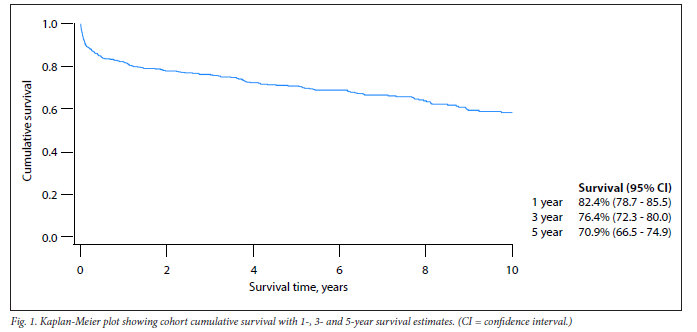
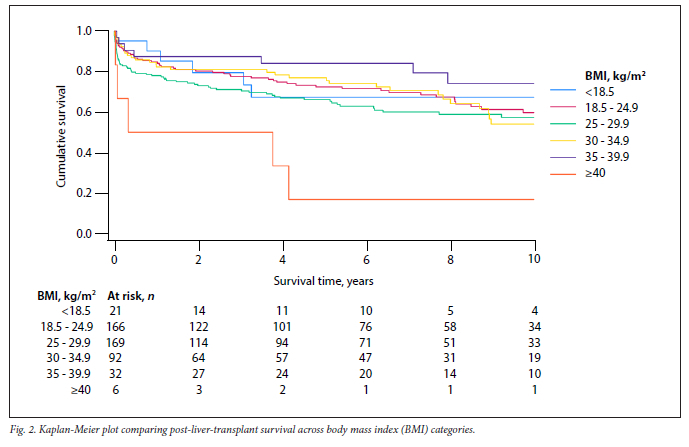
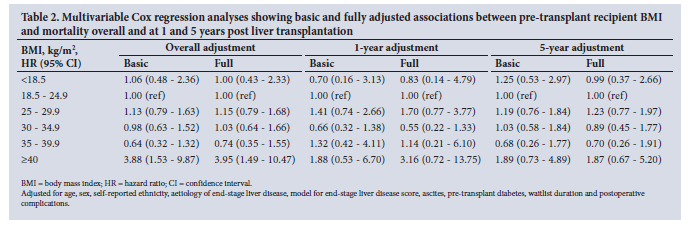
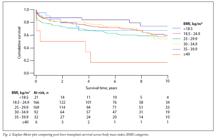
After a median (IQR) follow-up of 5.3 (1.3 - 8.9) years, there were 187 (38.2%) deaths post liver transplantation. The 1-, 3- and 5-year survival estimates for the cohort were 82.4%, 76.4% and 70.9%, respectively (Fig. 1). After adjusting for potential confounders, there was no significant association with overall post-liver-transplant mortality across BMI categories, except for class III obesity, which demonstrated a positive association (HR 3.95; 95% CI 1.49 - 10.47) (Figs 2 and 3, Table 2). Furthermore, at 1 and 5 years post liver transplantation there was no association with post-liver-transplant mortality across BMI categories (Table 2). There was no evidence of effect modification by age, sex, self-reported ethnicity, or MELD category. Sensitivity analyses did not show any significant change in associations after excluding the first 5 years of follow-up and those with hepatic malignancy or pre-existing cardiovascular disease.

Discussion
This is one of the first studies assessing the association between recipient pre-transplant BMI and survival after liver transplantation in southern Africa. Overall, among adults receiving an index liver transplant for ESLD in Johannesburg, SA, there was no significant association with post-liver-transplant mortality across BMI categories, except for class III obesity, which demonstrated a positive association. However, due to the small number of participants with class III obesity in our study (n=6), the positive association with post-transplant mortality in this category should be interpreted with caution, and warrants further evaluation. There was no significant association with mortality across BMI categories at 1 and 5 years post transplantation. Our findings suggest that there is currently insufficient evidence to reliably use BMI-defined obesity as an exclusion criterion for liver transplantation, particularly in those with a BMI <40 kg/m2
Most transplant teams consider a BMI >40 kg/m2[8] However, recent guidelines suggest that obesity should no longer be seen as a contraindication to eligibility.[8] WDGMC previously used a BMI cut-off of 38.5 kg/m222[8] in managing excess adiposity.
The increasing uncertainty regarding the use of BMI-based obesity as an exclusion criterion for liver transplantation is highlighted by studies demonstrating conflicting associations across BMI categories with post-liver-transplant mortality. An earlier study in the USA with ~18 000 participants found a significantly higher 5-year post-liver-transplant mortality in those with class II and class III obesity.[12] However, there was potential for misclassification of BMI because ascites was not adjusted for, and the epidemiology of obesity and ESLD in this study may also have differed from current trends.[12] More recently, larger studies have demonstrated no association between obesity and post-liver-transplant mortality. Similar to the present study's findings, a United Network for Organ Sharing (UNOS) study in the USA with ~45 000 participants showed that overweight and obese BMI categories were not associated with mortality at 1 year post liver transplantation.[9] However, more long-term associations between BMI and post-liver-transplant mortality were not evaluated. Likewise, another UNOS study with 57 000 participants recruited over a 9-year period showed that class II and class III obesity were not associated with post-liver-transplant mortality overall.[19] A meta-analysis of 2 275 participants with obesity also reported that there was no association with post-liver-transplant mortality across BMI categories.[20] However, no studies from Africa were included, and significant variation in BMI classification across studies may have influenced associations.[20] The inability of these larger studies to detect a positive association between class III obesity and post-liver-transplant mortality suggests that our positive association could be due to chance, and should be further evaluated in a larger sample of class III obesity.
By contrast, studies have found that those who were underweight had an increased risk of post-liver-transplant mortality[9,10] Furthermore, those who were overweight, class I obese[19] and class II obese had a reduced risk of mortality compared with those with normal BMI.[10] This might be explained by the obesity paradox, where those with a lower rather than higher BMI are at increased risk of mortality. The obesity paradox in the setting of ESLD could be attributed to sarcopenia,[21] which has also demonstrated a positive association with post-liver-transplant mortality.[22] Notably, BMI may underestimate or overestimate adiposity, as it cannot distinguish fat mass from lean mass and does not evaluate the distribution of fat.[23] Using BMI alone to determine obesity also poses the risk of overdiagnosis,[23] which is of particular concern in liver transplantation, as certain levels of obesity based on BMI alone might be used as eligibility criteria for transplantation in some transplantation centres.
There is also potential for confounding and misclassification of BMI due to the presence of ascites in some participants. A study by Leonard et al.[24] demonstrated that survival post liver transplantation was similar across all BMI categories after correcting for ascites. For every litre of ascitic fluid removed, the relative risk of mortality increased by 7%.[24] This could suggest that the confounding effect of ascites might be partly responsible for some studies finding obesity to be associated with increased post-liver-transplant mortality, or that patients with a truly lower pre-transplant BMI (e.g. underweight) are actually at higher risk for post-liver-transplant mortality. The limitations of defining obesity based on BMI,[23] particularly in the setting of ESLD, should be critically evaluated. In addition, future research should evaluate the role and benefit of alternative anthropometric measures and direct measurement of body fat with methods including bioelectrical impedance, dual energy X-ray absorptiometry[23] and particularly computed tomography, which offers more reliable evaluation of sarcopenia[25] and quantification of visceral and subcutaneous adipose tissue.[26]
Study strengths and limitations
The strengths of the present study include adjusting for a range of potential confounders, almost complete follow-up, and evaluating participants over a 20-year period, which allowed long-term associations to be determined. The study also demonstrated that autoimmune liver disease was the leading indication for liver transplantation, and determined associations of BMI with post-liver-transplant mortality in this context. Limitations of the study include the small sample size, particularly the small number of participants with class III obesity. However, as WDGMC is currently one of only two liver transplant units in SA, a large proportion of those receiving liver transplantation nationally were evaluated. Assessing causality was limited due to the observational study design, and residual confounding due to unknown or unmeasured confounders could not be excluded. However, sensitivity analyses showed no significant change in associations. Ascites was adjusted for in the analyses, but there is still a possibility of misclassification of BMI because the quantity of ascites was not measured, and dry weights were not used in all participants. Cause-specific mortality could not be assessed because postmortem data were unavailable, and direct comparison of associations with some high-income transplant centres may be limited as certain internationally used risk-adjustment metrics are not routinely collected in SA. Limited regional outcome data also constrained our ability to benchmark performance. Although the study spans two decades, advances in surgical technique and perioperative care may have introduced temporal heterogeneity. These limitations notwithstanding, the study provides the largest and most comprehensive evaluation of long-term adult liver transplant outcomes reported from SA to date.
Conclusion
Among adults receiving an index liver transplant for ESLD in Johannesburg, SA, there was no significant association with post-liver-transplant mortality across BMI categories, except for participants with class III obesity, which demonstrated a positive association. Owing to the limited number of participants with class III obesity in our cohort, this association should be interpreted with caution, and larger studies are therefore needed to reliably evaluate associations at extremes of BMI. The findings suggest that there is currently insufficient evidence to reliably use BMI-defined obesity as an exclusion criterion for liver transplantation, particularly in those with a BMI <40 kg/m2
Data availability. The data used for this study are available from the authors on request.
Declaration. This study was conducted in partial fulfilment ofPP's MMed (Internal Medicine) degree at the University of the Witwatersrand.
Acknowledgements. To all staff and participants at the WDGMC research and transplant unit.
Author contributions. Concept and design: all authors; acquisition, analysis, and interpretation of data: all authors; drafting of manuscript: PP; critical revision of manuscript: all authors; statistical analysis: PP; supervision: AM, JF.
Funding. None.
Conflicts of interest. None.
References
-
1. Ng M, Gakidou E, Lo J, et al. Global, regional, and national prevalence of adult overweight and obesity, 1990-2021, with forecasts to 2050: A forecasting study for the Global Burden of Disease Study 2021. Lancet 2025;405(10481):813-838. https://doi.org/10.21203/rs.3.rs-6789777/v1
» https://doi.org/10.21203/rs.3.rs-6789777/v1 -
2. World Health Organization. Obesity and overweight 2025. Geneva: WHO, 2025. https://www.who.int/news-room/fact-sheets/detail/obesity-and-overweight (accessed 7 June 2025).
» https://www.who.int/news-room/fact-sheets/detail/obesity-and-overweight -
3. Fabbrini E, Sullivan S, Klein S. Obesity and nonalcoholic fatty liver disease: Biochemical, metabolic, and clinical implications. Hepatology 2010;51(2):679-689. https://doi.org/10.1002/hep.23280
» https://doi.org/10.1002/hep.23280 -
4. Huang DQ, Terrault NA, Tacke F, et al. Global epidemiology of cirrhosis - aetiology, trends and predictions. Nat Rev Gastroenterol Hepatol 2023;20(6):388-398. https://doi.org/10.1038/s41575-023-00759-2
» https://doi.org/10.1038/s41575-023-00759-2 -
5. Wong RJ, Singal AK. Trends in liver disease etiology among adults awaiting liver transplantation in the United States, 2014 -2019. JAMA Netw Open 2020;3(2):e1920294-e. https://doi.org/10.1001/jamanetworkopen.2019.20294
» https://doi.org/10.1001/jamanetworkopen.2019.20294 -
6. Martin P, DiMartini A, Feng S, Brown RJ, Fallon M. Evaluation for liver transplantation in adults: 2013 practice guideline by the American Association for the Study of Liver Diseases and the American Society of Transplantation. Hepatology 2014;59(3):1144-1165. https://doi.org/10.1002/hep.26972
» https://doi.org/10.1002/hep.26972 -
7. European Association for the Study of the Liver Clinical Practice Guidelines: Liver transplantation. J Hepatol 2016;64(2):433-485. https://doi.org/10.1016/jjhep.2015.10.006
» https://doi.org/10.1016/jjhep.2015.10.006 -
8. Samuel D, de Martin E, Berg T, et al. European Association for the Study of the Liver Clinical Practice Guidelines on liver transplantation. J Hepatol 2024;81(6):1040-1086. https://doi.org/10.1016/j.jhep.2024.07.032
» https://doi.org/10.1016/j.jhep.2024.07.032 -
9. Bambha KM, Dodge JL, Gralla J, Sprague D, Biggins SW. Low, rather than high, body mass index confers increased risk for post-liver transplant death and graft loss: Risk modulated by model for end-stage liver disease. Liver Transpl 2015;21(10):1286-1294. https://doi.org/10.1002/lt.24188
» https://doi.org/10.1002/lt.24188 -
10. Du AL, Danforth DJ, Waterman RS, Gabriel RA. Is obesity associated with better liver transplant outcomes? A retrospective study of hospital length of stay and mortality following liver transplantation. Anesthesia Analgesia 2022;135(1):118-127. https://doi.org/10.1213/ane.0000000000005921
» https://doi.org/10.1213/ane.0000000000005921 -
11. Giorgakis E, Tedeschi M, Bonaccorsi-Riani E, et al. The effect of recipient body mass index and its extremes on survival and graft vascular and biliary complications after liver transplantation: A single center retrospective study. Ann Transplant 2017;22:611-621. https://doi.org/10.12659/aot.903475
» https://doi.org/10.12659/aot.903475 -
12. Nair S, Verma S, Thuluvath PJ. Obesity and its effect on survival in patients undergoing orthotopic liver transplantation in the United States. Hepatology 2002;35(1):105-109. https://doi.org/10.1053/jhep.2002.30318
» https://doi.org/10.1053/jhep.2002.30318 -
13. Pelletier SJ, Schaubel DE, Wei G, et al. Effect of body mass index on the survival benefit of liver transplantation. Liver Transpl 2007;13(12):1678-1683. https://doi.org/10.1002/lt.21183
» https://doi.org/10.1002/lt.21183 -
14. Sepanlou SG, Safiri S, Bisignano C, et al. The global, regional, and national burden of cirrhosis by cause in 195 countries and territories, 1990 - 2017: A systematic analysis for the Global Burden of Disease Study 2017. Lancet Gastroenterol Hepatol 2020;5(3):245-266. https://doi.org/10.1016/S2468-1253(19)30349-8
» https://doi.org/10.1016/S2468-1253(19)30349-8 -
15. Ifeoma U, Chinwuba I, Ngozi I, et al. Organ donation and transplantation in sub-Saharan Africa: Opportunities and challenges. In: Vassil M (ed). Organ Donation and Transplantation. Rijeka: IntechOpen, 2020. https://doi.org/10.5772/intechopen.94986
» https://doi.org/10.5772/intechopen.94986 -
16. Song E, Fabian J, Boshoff PE, et al. Adult liver transplantation in Johannesburg, South Africa (2004 -2016): Balancing good outcomes, constrained resources and limited donors. S Afr Med J 2018;108(11):929-936. https://doi.org/10.7196/samj.2018.v108i11.13286
» https://doi.org/10.7196/samj.2018.v108i11.13286 -
17. Tager S, Etheredge HR, Fabian J, Botha JF. Reimagining liver transplantation in South Africa: A model for justice, equity and capacity building - the Wits Donald Gordon Medical Centre experience. S Afr Med J 2019;109(2):84-88. https://doi.org/10.7196/samj.2019.v109i2.13835
» https://doi.org/10.7196/samj.2019.v109i2.13835 -
18. Wiesner R, Edwards E, Freeman R, et al. Model for end-stage liver disease (MELD) and allocation of donor livers. Gastroenterology 2003;124(1):91-96. https://doi.org/10.1002/lt.20395
» https://doi.org/10.1002/lt.20395 -
19. Wong RJ, Cheung R, Perumpail RB, Holt EW, Ahmed A. Diabetes mellitus, and not obesity, is associated with lower survival following liver transplantation. Digest Dis Sci 2015;60(4):1036-1044. https://doi.org/10.1007/s10620-014-3469-8
» https://doi.org/10.1007/s10620-014-3469-8 -
20. Saab S, Lalezari D, Pruthi P, Alper T, Tong MJ. The impact of obesity on patient survival in liver transplant recipients: A meta-analysis. Liver Int 2015;35(1):164-170. https://doi.org/10.1111/liv.12431
» https://doi.org/10.1111/liv.12431 -
21. Tandon P, Montano-Loza AJ, Lai JC, Dasarathy S, Merli M. Sarcopenia and frailty in decompensated cirrhosis. J Hepatol 2021;75:S147-S162. https://doi.org/10.1016/j.jhep.2021.01.025
» https://doi.org/10.1016/j.jhep.2021.01.025 -
22. Dajti E, Rodrigues SG, Perazza F, Colecchia L, et al. Sarcopenia evaluated by EASL/AASLD computed tomography-based criteria predicts mortality in patients with cirrhosis: A systematic review and meta-analysis. JHEP Rep 2024;6(8):101113. https://doi.org/10.1016/j.jhepr.2024.101113
» https://doi.org/10.1016/j.jhepr.2024.101113 -
23. Rubino F, Cummings DE, Eckel RH, et al. Definition and diagnostic criteria of clinical obesity. Lancet Diabetes Endocrinol 2025;13(3):221-262. https://doi.org/10.1016/s2213-8587(23)00058-x
» https://doi.org/10.1016/s2213-8587(23)00058-x -
24. Leonard J, Heimbach JK, Malinchoc M, Watt K, Charlton M. The impact of obesity on long-term outcomes in liver transplant recipients-results of the NIDDK Liver Transplant Database. Am J Transplantat 2008;8(3):667-672. https://doi.org/10.1111/j.1600-6143.2007.02100.x
» https://doi.org/10.1111/j.1600-6143.2007.02100.x -
25. Merli M, Berzigotti A, Zelber-Sagi S, et al. EASL Clinical Practice Guidelines on nutrition in chronic liver disease. J Hepatology 2019;70(1):172-193. https://doi.org/10.1016/j.jhep.2018.06.024
» https://doi.org/10.1016/j.jhep.2018.06.024 -
26. Eriksen CS, M0ller S. Quantitative Assessment of Body Composition in Cirrhosis. Diagnostics 2024;14(19). https://doi.org/10.3390/diagnostics14192191
» https://doi.org/10.3390/diagnostics14192191
Accepted 11 December 2025