A comparison of pregnancy dating methods commonly used in South Africa: A prospective study
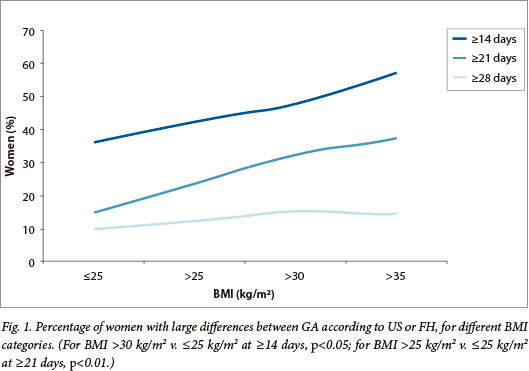
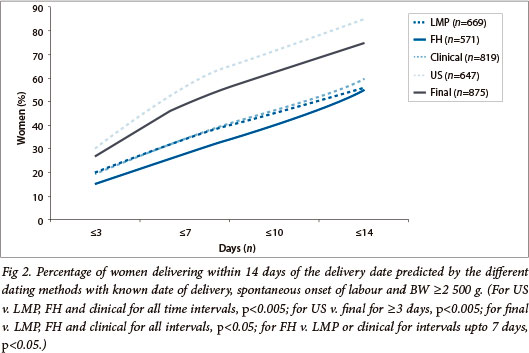
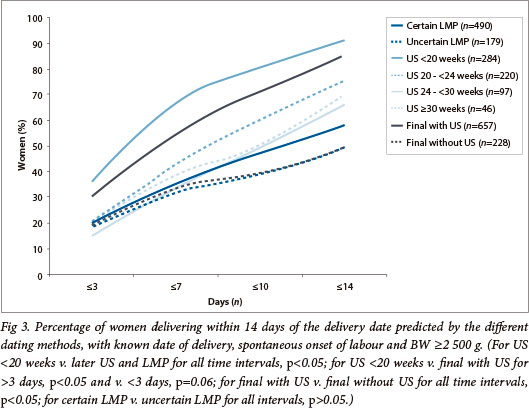
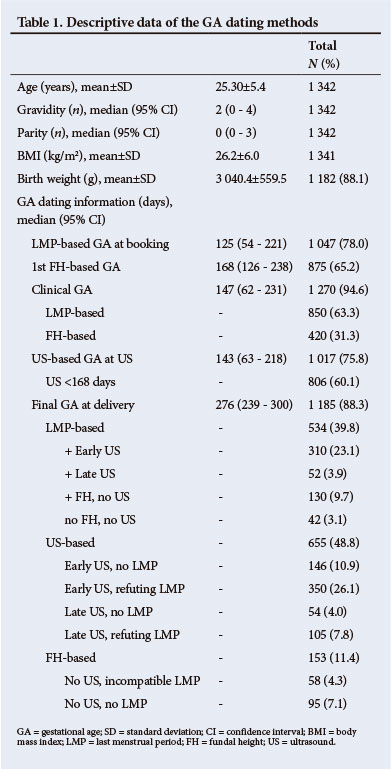
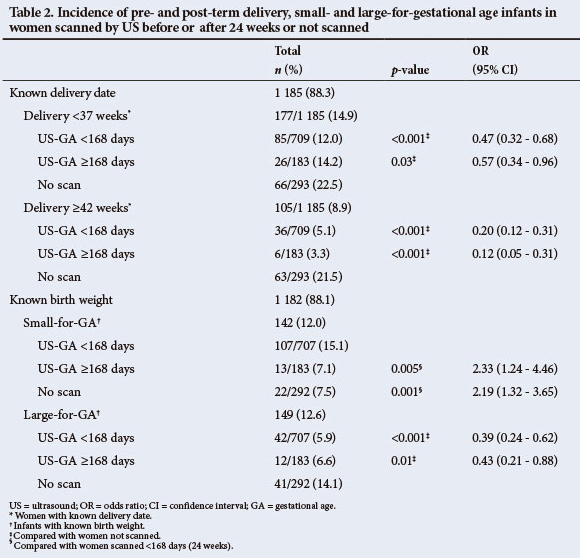
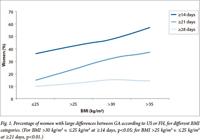
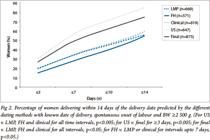
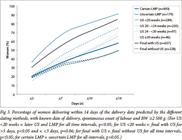
BACKGROUND: Pregnancy dating in the South African public healthcare setting is mainly based on clinical assessment. However, the accuracy of this approach is unknown. AIM: To compare the accuracy of different pregnancy dating methods. METHODS: We performed a prospective comparison of 2 ultrasound policies involving consecutive low-risk women in a midwife clinic in the Metro East region, Cape Town, Western Cape. Information on the last menstrual period (LMP), the 1st symphysis-to-fundal height measurement (FH) and average gestation by ultrasonographic (US) fetal biometry was recorded. Five dating methods: LMP, FH, US and their combinations, were assessed against the actual day of delivery (ADD). The main outcome measures were: (i) the days between the ADD and estimated date of delivery in pregnancies where spontaneous labour occurred and the baby had a normal birth weight; (ii) the incidence of gestational age-related outcomes; and (iii) the influence of clinical variables on dating discrepancies. RESULTS: A total of 1 342 pregnancies were analysed. The accuracy of dating was similar for certain and uncertain LMP. FH was less accurate with increasing obesity. US-based dating was most accurate (for 85% of predictions within 14 days) and similarly accurate at 20 - 24 weeks and at >24 weeks. US reduced the number of assumed pre-and post-term deliveries and, in addition, was better at detecting small-for-gestational age infants (p<0.001). CONCLUSION: Pregnancy dating by US, including those in more advanced pregnancies than currently permitted, is recommended since all non-ultrasound-based estimations of gestational age were considerably less accurate.
SAMJ: South African Medical Journal
 Thumbnail
 Thumbnail
 Thumbnail