Elevated triglycerides: A matter of the heart and pancreas
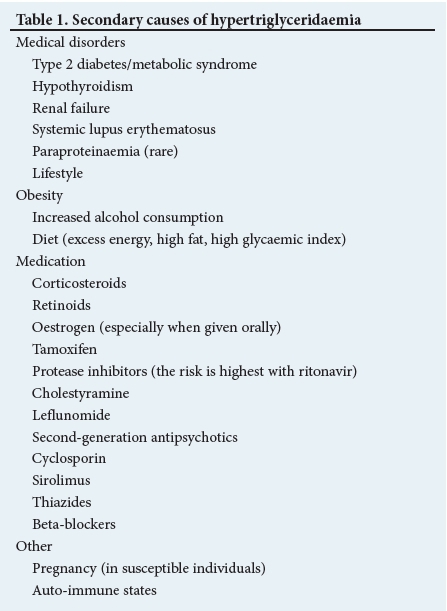
Mild-to-moderate hypertriglyceridaemia (triglyceride (TG) >1.7 - 10.0 mmol/L) is an independent cardiovascular risk factor, while severe hypertriglyceridaemia (TG >10.0 mmol/L) can cause acute pancreatitis. Hypertriglyceridaemia is polygenic in most patients, and secondary factors, such as uncontrolled diabetes, hypothyroidism, alcohol, renal disease and medication (e.g. corticosteroids, retinoids, oestrogen), often play an important role in precipitating or exacerbating the condition. Patients with mild-to-moderate hypertriglyceridaemia require cardiovascular risk assessment and are in the first instance treated with statins if their cardiovascular risk is high. Control of secondary factors and lifestyle modifications are important in managing residual hypertriglyceridaemia in patients treated with statins. Multiple trials are ongoing to determine whether there is further cardiovascular outcome benefit from adding drugs such as fibrates or omega-3 supplements to the regimen of patients who are receiving statins. Severe hypertriglyceridaemia is managed by removing or controlling secondary factors, following a very low-fat diet and prescribing a fibrate.
Continuing Medical Education • SAMJ, S. Afr. med. j. 108
(4)
• • https://doi.org/10.7196/samj.2018.v108i4.13235 copy