Assessment of the availability of colposcopy and the uptake of cervical pre-cancer screening in South Africa, 2023 - 2024: A GIS mapping cross-sectional study
BACKGROUND. Understanding the distribution of public healthcare facilities providing colposcopy services in South Africa (SA) is crucial for informing the prevention of invasive cervical cancer (CC) in this high-HIV-burden country. OBJECTIVES. To assess whether the distribution of colposcopy facilities within the public healthcare system adequately meets demand, and to evaluate the uptake of cervical pre-cancer screening from 1 April 2023 to 31 March 2024. METHOD. For this cross-sectional study, data on facilities providing colposcopy services were obtained from CC screening co-ordinators, and data on cervical pre-cancer screening were obtained from the National Health Laboratory Service. We calculated the adequacy of colposcopy facilities using a multivariable location quotient and Quantum GIS software to generate choropleth maps. RESULTS. In 2023, 87 public healthcare facilities in SA provided colposcopy services, primarily in Gauteng (n=20), Eastern Cape (n=17) and KwaZulu-Natal (n=15) provinces. Despite this, 17% of all districts within provinces lacked these services, and half were unable to meet population needs. North West, Limpopo, Gauteng, Mpumalanga and KwaZulu-Natal provinces also had inadequate distribution of colposcopy facilities. Cervical pre-cancer screening uptake remained <13%, with the lowest screening rates observed in North West, Gauteng and Limpopo provinces. Among women screened, 5.6% had abnormal results. Notably, higher proportions of abnormal results (7 - 10%) were observed in Limpopo and Gauteng provinces. CONCLUSION. The distribution of colposcopy facilities does not adequately meet the needs of women in SA. The inadequacy is mainly observed in highly populated provinces, as well as rural provinces. Co-ordinated efforts are needed to address these disparities and accelerate progress towards CC elimination through needs-based, data-driven resource allocation, service decentralisation, and community-driven interventions.
cervical cancer; colposcopy; pre-cancer; public healthcare; screening uptake; HIV prevalence; resource allocation; decentralisation; multivariable location quotient
Assessment of the availability of colposcopy and the uptake of cervical pre-cancer screening in South Africa, 2023 - 2024: A GIS mapping cross-sectional study
S MasheleI, II, III, IV; J BohliusV, VI; D VienneauVII, VIII; T DhokoteraVII, VIII; N NethavhakoneIX; V LebeseX; J Mwansa-KambafwileXI, XII; M MuchengetiXI, XIII, XIV
IMSc; National Cancer Registry, National Institute for Communicable Diseases, National Health Laboratory Service, Johannesburg, South Africa
IIMSc; Swiss Tropical and Public Health Institute, Allschwil, Switzerland
IIIMSc; University of Basel, Switzerland
IVMSc; Global and Planetary Health Working Group, Institute for Medical Epidemiology, Biostatistics and Informatics, Martin Luther University Halle-Wittenberg, Germany
VMD, PhD; Swiss Tropical and Public Health Institute, Allschwil, Switzerland
VIMD, PhD; University of Basel, Switzerland
VIIPhD; Swiss Tropical and Public Health Institute, Allschwil, Switzerland
VIIIPhD; University of Basel, Switzerland
IXBCur; National Health Laboratory Service, Johannesburg, South Africa
XMSc; National Department of Health, Pretoria, South Africa
XIMB ChB, PhD; National Cancer Registry, National Institute for Communicable Diseases, National Health Laboratory Service, Johannesburg, South Africa
XIIMB ChB, PhD; School of Public Health, Faculty of Health Sciences, University of Cape Town, South Africa
XIIIMB ChB, PhD; School of Public Health, Faculty of Health Sciences, University of the Witwatersrand, Johannesburg, South Africa
XIVMB ChB, PhD; South African DSI-NRF Centre of Excellence in Epidemiological Modelling and Analysis, Stellenbosch University, Cape Town, South Africa
BACKGROUND. Understanding the distribution of public healthcare facilities providing colposcopy services in South Africa (SA) is crucial for informing the prevention of invasive cervical cancer (CC) in this high-HIV-burden country.
OBJECTIVES. To assess whether the distribution of colposcopy facilities within the public healthcare system adequately meets demand, and to evaluate the uptake of cervical pre-cancer screening from 1 April 2023 to 31 March 2024.
METHOD. For this cross-sectional study, data on facilities providing colposcopy services were obtained from CC screening co-ordinators, and data on cervical pre-cancer screening were obtained from the National Health Laboratory Service. We calculated the adequacy of colposcopy facilities using a multivariable location quotient and Quantum GIS software to generate choropleth maps.
RESULTS. In 2023, 87 public healthcare facilities in SA provided colposcopy services, primarily in Gauteng (n=20), Eastern Cape (n=17) and KwaZulu-Natal (n=15) provinces. Despite this, 17% of all districts within provinces lacked these services, and half were unable to meet population needs. North West, Limpopo, Gauteng, Mpumalanga and KwaZulu-Natal provinces also had inadequate distribution of colposcopy facilities. Cervical pre-cancer screening uptake remained <13%, with the lowest screening rates observed in North West, Gauteng and Limpopo provinces. Among women screened, 5.6% had abnormal results. Notably, higher proportions of abnormal results (7 - 10%) were observed in Limpopo and Gauteng provinces.
CONCLUSION. The distribution of colposcopy facilities does not adequately meet the needs of women in SA. The inadequacy is mainly observed in highly populated provinces, as well as rural provinces. Co-ordinated efforts are needed to address these disparities and accelerate progress towards CC elimination through needs-based, data-driven resource allocation, service decentralisation, and community-driven interventions.
Keywords: cervical cancer, colposcopy, pre-cancer, public healthcare, screening uptake, HIV prevalence, resource allocation, decentralisation, multivariable location quotient
Cervical cancer (CC) is a preventable health problem affecting women, causing harm to families and leading to premature death. In South Africa (SA), it is the second most common cancer and the leading cause of cancer-related death among women.[1-3] In 2022, SA reported 7 499 new pathologically diagnosed invasive CC cases, with an age-standardised incidence rate of 23 per 100 000 women.[4] High-risk human papillomavirus (HPV) and HIV co-infection are key causes.[3] Women living with HIV have a higher risk of CC development and progression than HIV-negative women.[5,6] More than 65% of women are diagnosed with CC at an advanced stage, particularly in low-resourced settings, where early detection plays a crucial role in improving outcomes.[3,7]
Effective cancer control tools to reduce the CC burden in SA include HPV vaccination against high-risk infections and screening for cervical pre-cancer to detect high-grade squamous intraepithelial lesions (HSIL), followed by timely treatment and early diagnosis of invasive CC.[8] The World Health Organization (WHO) launched a global strategy in 2020 to accelerate the elimination of CC as a public health problem.[1,3,8] In 2017, SA implemented the updated CC control and prevention guidelines by utilising existing literature and the WHO's normative guidance on CC prevention and control, ensuring that all women have access to CC services (Appendix Fig. S1).[9-12]
Despite the availability of policy guidelines, CC remains the leading cause of cancer-related mortality in SA, demonstrating that barriers exist to its prevention, diagnosis and treatment.[8] Limited screening access, treatment delays, patient loss to follow-up and socioeconomic inequities contribute to SA's high CC burden. Studies have shown that 25% of screened women had abnormal results requiring treatment, but 40% were lost to follow-up, and only 24% received treatment after a delay of 15 months.[7,13] Jordaan et al.[7] found geographical disparities in access to screening. Rural women have lower access to screening, but show more abnormal results than urban women.[7] To eliminate CC in SA, understanding the geographical distribution of screening resources and generating data based on the eligible population size and HIV prevalence are crucial. Early detection and treatment of cervical pre-cancer are pivotal for eliminating CC. This study aimed to assess whether the distribution of colposcopy facilities within the public healthcare system adequately meets demand, and to evaluate cervical pre-cancer screening uptake from 1 April 2023 to 31 March 2024.
Methods
Study design and data sources
This cross-sectional study visually represents public healthcare facilities that offer colposcopy services, and assesses whether these facilities meet the population's needs. Cervical cancer screening co-ordinators from the National Health Laboratory Service (NHLS) collected data on public healthcare facilities providing colposcopy services in SA between 1 April 2023 and 31 March 2024. To confirm the existence of the colposcopy service in those public healthcare facilities, Ekurhuleni and KwaZulu-Natal cancer surveillance officers collected independent data for the Ekurhuleni Health District (EHD) in Gauteng Province, and eThekwini and Zululand districts in KwaZulu-Natal Province. Additionally, key informants from the National Department of Health (NDoH) and the EHD verified the availability of colposcopy services. The SA District Health Information System (DHIS) provided information on healthcare facilities, including geographical co-ordinates. The Municipal Demarcation Board of SA provided boundary data as shapefiles for the country's nine provinces and 52 districts. This database access occurred in December 2023. The NHLS provided data on cervical pre-cancer screening (cytology/Pap smears) conducted in SA during the financial year from 1 April 2023 to 31 March 2024. Statistics South Africa (Stats SA) provided data on eligible women (age range 20 - 54 years) for each province and district. The updated Thembisa model provided HIV prevalence data for each province and district.[14]
Identification of facilities offering colposcopy
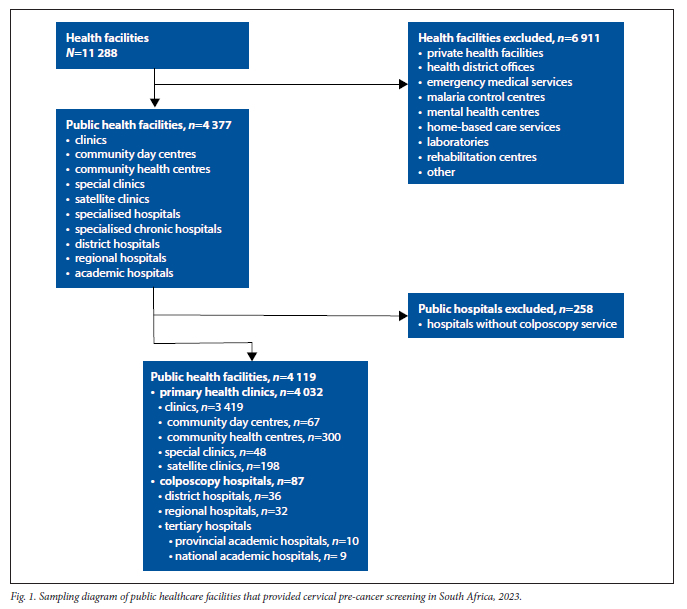
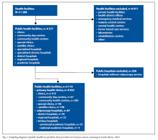
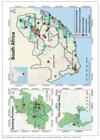
The DHIS database identified 11 288 healthcare facilities in SA. This study included all public healthcare facilities that provided cervical pre-cancer screening and/or colposcopy services, resulting in a final sample of 4 119 facilities. These comprised 4 032 primary healthcare (PHC) centres that provided cervical pre-cancer screening and 87 hospitals that provided colposcopy services. The included facilities comprised clinics, community day centres, community health centres, special clinics, satellite clinics, district and regional hospitals, and provincial and national tertiary academic hospitals. These facilities account for ~70.7% of all public healthcare facilities that provide clinical services in SA. Facilities offering non-clinical services or non-cancer-related services, private healthcare facilities and public healthcare facilities that did not provide colposcopy services were excluded from the study (Fig. 1).
Data management
An assessment was conducted to evaluate the completeness of the data on all public healthcare facilities that provide cervical pre-cancer screening and/or colposcopy services. Regarding location, 99% of healthcare facilities had geocode data for mapping. To bridge this gap, Google Maps provides manually filled geolocation data to complete the healthcare facility records. The NHLS cytology screening database contains up-to-date information on public healthcare facilities that offer Pap-based cervical pre-cancer screening in SA. Therefore, the NHLS database was used to validate the existence of healthcare facilities available in the DHIS database. This analysis calculated the HIV prevalence for each province and district using the updated Thembisa model estimates, based on the Stats SA population estimates of women aged 20 - 54 years.[14]
Data analysis
Distribution of public healthcare facilities with colposcopy services
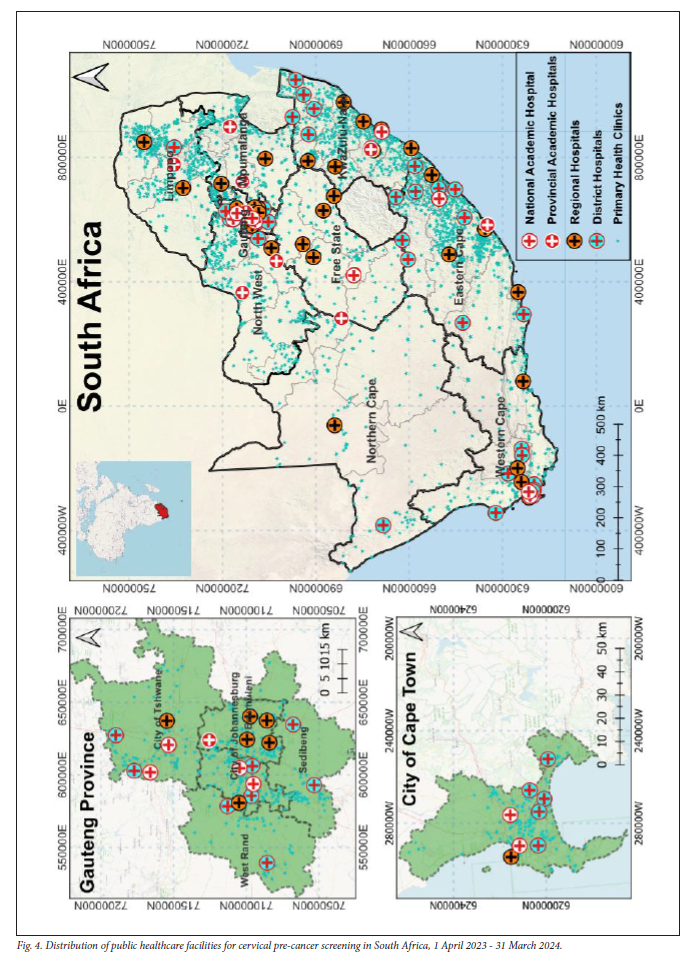
Dot distribution maps overlaid on provincial and district boundaries were used to visualise the spatial distribution of colposcopy facilities and PHC centres in SA.
Assessment of the gap between existing facilities and the requirements of the population
The adequacy of existing colposcopy facilities and of colposcopy referral volumes was estimated based on the expected follow-up of women with abnormal Pap smear screening results.
Assessment of the adequacy of existing colposcopy facilities
The adequacy of existing colposcopy facilities in meeting cervical pre-cancer screening needs across SA was assessed using the location quotient (LQ) method.[15-18] This approach, which assumes that the government maintains a representative distribution of these facilities throughout each province and district, and that the per capita consumption of each local government area closely mirrors the state-wide average, provides a robust analytical framework. The multivariable LQ (MVLQ), an advanced version of the LQ formula, was used to refine our analysis. The MVLQ extends the basic methodology by incorporating weighted factors based on the likelihood of demand for cervical pre-cancer screening. These weights were assigned to two groups within each province and district using the following equation and parameters:

where the target area represents either a province or a district. Lower-case x is the number of colposcopy facilities in a province or district, y is the number of low-risk women in a province or district, z is the number of high-risk (e.g. HIV-positive) women in a province or district, X is the number of colposcopy facilities in a province or country, Y is the number of low-risk women in a province or country, and Z is the number of high-risk women in a province or country. The province served as the denominator for the district MVLQ, while the country served as the denominator for the provincial MVLQ.
LQ ranges from 0 to infinity, with values <1 indicating an inadequate distribution of colposcopy facilities, that is, fewer facilities than the population requires. An LQ between 1 and 2 (<1 - <2) signifies an adequate distribution, where the number of facilities meets the population's needs. An LQ >2 indicates an excessive distribution, meaning that more facilities than required are available.[15-18] Choropleth maps were used to visualise the results, showing the adequacy of colposcopy facilities by province and district in SA.
Assessment of the referral burden for colposcopy facilities
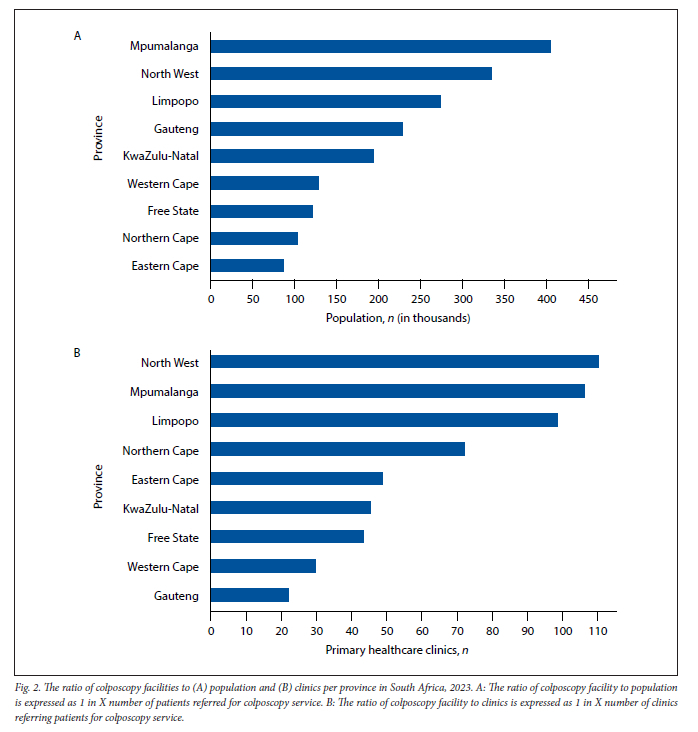
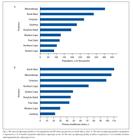
All 4 119 public health facilities were included in the analysis, with PHC facilities considered as referral sites and public hospitals as colposcopy service points to estimate the burden of colposcopy referrals. Specifically, PHC-to-colposcopy-facility ratios and women-to-colposcopy-facility ratios were calculated for each province to quantify the number of clinics and women that would require colposcopy services under increased screening uptake aligned with WHO targets. Two key indicators were constructed: (i) the ratio of colposcopy facilities to referring clinics, expressed as the number of clinics per facility; and (ii) the ratio of colposcopy facilities to the population in need, expressed as the number of patients per facility. Descriptive statistics were used to summarise variation across provinces and districts. The results were presented using graphical visualisation (Fig. 2A and B) to highlight referral burden.
Cervical pre-cancer screening uptake and abnormal screens
The total number of cervical pre-cancer screens conducted in a specific geographical area (i.e. province or district) was defined as the screening uptake concerning the total number of eligible women in that area. Cervical pre-cancer screening results suspicious for invasive carcinoma, HSIL, or atypical squamous cells (cannot exclude HSIL) (ASC-H) were defined as abnormal screens. These included high-grade pre-cancerous positive cases, positive cases in which a high-grade lesion could not be excluded, glandular-positive lesions and cases diagnosed as cancerous on cytology. The denominator for determining the proportion of screenings conducted in each province and district in SA comprised women aged 20 - 54 years. The frequency of screens served as the denominator for calculating the proportion of abnormal screens. Choropleth maps in Quantum GIS version 3.28.11-Firenze (QGIS Development Team, USA) visualised the uptake of cervical pre-cancer screening services and the proportion of abnormal screens across SA. Stata version 18.0 (Stata, USA) was used for statistical analysis.
Ethical approval
This study received approval from the Human Research Ethics Committee at the University of the Witwatersrand (ref. no. M231085 M240422- A- 0001) and the NHLS Academic Affairs (ref. no. PR2346413).
Results
Distribution of public healthcare facilities for cervical pre-cancer screening in SA
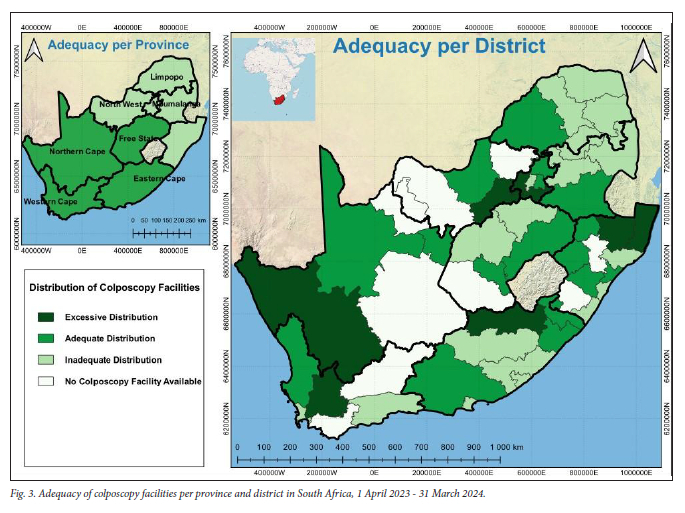
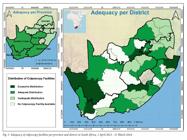
Eighty-seven public hospitals provided colposcopy services in SA during the study period. These included district hospitals (n=36, 42.4%), regional hospitals (n=32; 24.1%), provincial tertiary academic hospitals (n=10; 11.5%), and national central academic hospitals (n=9; 10.3%). Gauteng Province had the highest number (n=20; 23.0%) of colposcopy facilities, followed by Eastern Cape (n=17; 19.5%), KwaZulu-Natal (n=15; 17.2%) and Western Cape (n=15; 17.2%) provinces. Mpumalanga, North West and Northern Cape provinces had the fewest colposcopy facilities, with only three in each province. Gauteng, Limpopo, Mpumalanga and Eastern Cape provinces had at least one colposcopy facility in each district. A total of 17% of all districts did not have a colposcopy facility, with gaps in coverage noted in Western Cape, Northern Cape, KwaZulu-Natal, North West and Free State provinces, as shown by the white areas in Fig. 3. None of the PHCs widely distributed across SA (Fig. 4) provided colposcopy services. Instead, PHCs offered cervical pre-cancer screening and referrals for colposcopy to the next level of care (Appendix Fig. S1).
Assessment of the gap between existing facilities and the requirements of the population
The overall distribution of colposcopy facilities across provinces was significantly different. Limpopo, North West, Gauteng, Mpumalanga and KwaZulu-Natal provinces had an inadequate (LQ <1) distribution of these services. In contrast, Western Cape, Northern Cape, Eastern Cape and Free State provinces exhibited a more balanced and equitable distribution. Of the 52 districts in SA, only 18 (34.6%) demonstrated an adequate (LQ <1 - <2) distribution of colposcopy facilities, while 8 districts (15.4%) exhibited an excessive (LQ >2) distribution of these facilities. Seventeen (32.7%) districts had an inadequate distribution of colposcopy facilities, with nine (17.3%) lacking any such facility. This resulted in 26 (50%) districts being unable to meet the population's healthcare needs regarding colposcopy services. Provinces with at least one district without colposcopy facilities had at least one district with an excessive distribution of colposcopy facilities (Fig. 3).
Assessment of the referral burden for colposcopy facilities
Overall, all 4 032 PHCs included as referral sites revealed a substantial referral burden, with high clinic- and patient-to-colposcopy-facility ratios underscoring a pronounced mismatch between service capacity and demand. North West (n=112), Mpumalanga (n=106), Limpopo (n=99) and Northern Cape (n=72) provinces had the highest number of referral clinics per colposcopy facility. In addition to referral clinics, the colposcopy facilities in these provinces each received >200 000 patients referred for colposcopy services during the study period: 404 252 in Mpumalanga, 334 488 in North West, 274 128 in Limpopo and 228 902 per colposcopy facility in Gauteng (Fig. 2). Amathole (n=161) and Chris Hani (n=161) districts in the Eastern Cape, along with the Vhembe (n=125) and Mopani (n=110) districts in Limpopo, had the highest number of referral clinics per colposcopy facility, each exceeding 100 clinics. Furthermore, colposcopy facilities in Nkangala (n=435 257) and Ehlanzeni (n=454 843) in Mpumalanga, as well as in the City of Johannesburg (n=463 170) in Gauteng, each received >400 000 patients referred for colposcopy services. Each colposcopy facility in eThekwini District in KwaZulu-Natal Province received over half a million patients referred for colposcopy services, as shown in Appendix Fig. S2.
Cervical pre-cancer screening uptake and abnormal cervical pre-cancer screens
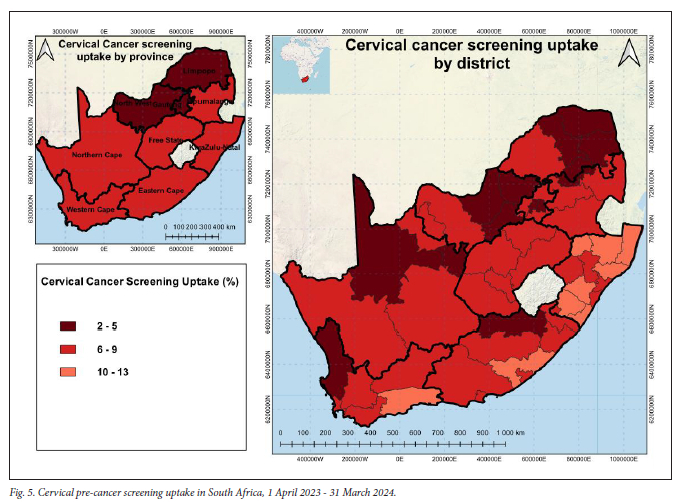
Between 1 April 2023 and 31 March 2024, 897 013 cervical pre-cancer screens were conducted in public healthcare facilities across all 52 districts in SA. Of these, 50.1% (n=448 852) were performed in KwaZulu-Natal (n=253 355; 28.2%) and Gauteng (n=195 497; 21.8%), while Northern Cape (n=16 967; 1.9%) and North West ( n=39 363; 4.4%) had the fewest screenings conducted. The districts contributing the highest proportion of screens included eThekwini in KwaZulu-Natal (n=77 947; 8.7%), the City of Cape Town in Western Cape Province (n=67 556; 7.6%), the City of Tshwane (n=63 243; 7.1%) and the City of Johannesburg (n=59 521; 6.6%) in Gauteng Province. In contrast, the Central Karoo in the Western Cape (n=1 456; 0·1%) and Namakwa in Northern Cape (n=1 735; 0.2%) provinces reported the lowest screens, each contributing <1% (Appendix Table S1).
During the study period, the uptake of cervical pre-cancer screening remained <13% in all provinces and districts. Although screening activities were present in every province, none achieved a screening uptake of >10%. North West, Gauteng and Limpopo provinces had the lowest pre-cancer screening uptake, at <5%. Some districts in the Eastern Cape and KwaZulu-Natal provinces had the highest cervical pre-cancer screening uptake, ranging from 10% to 13%, compared with nearly all districts in Limpopo and North West provinces (Fig. 5).
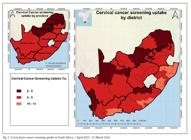
A total of 50 083 (5.6%) cervical pre-cancer screening results were classified as abnormal. The highest rates of abnormal screens, ranging from 7% to 10%, were reported in Limpopo and Gauteng provinces, whereas the Eastern Cape reported <4% abnormal results. Many districts in KwaZulu-Natal (n=6/11), Gauteng (n=2/5), Limpopo (n=4/5) and Western Cape (n=2/5) had the highest proportions of abnormal screens (>7%) (Appendix Table S1 and Appendix Fig. S3).
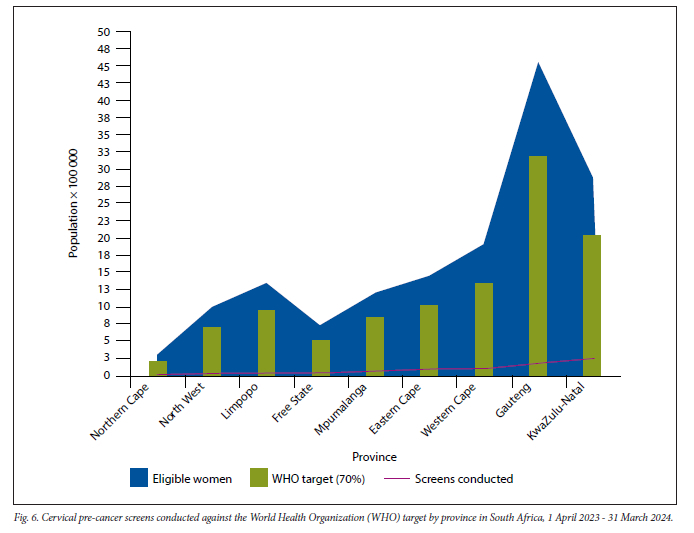
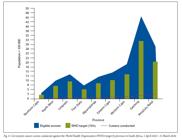
Overall, most provinces fell significantly short of the WHO target. North West, Limpopo and Mpumalanga provinces performed the poorest in terms of screening coverage, as shown in Fig. 6. KwaZulu-Natal was the only province to achieve at least 10% of the WHO target, with its eThekwini district achieving a similar 10% (Appendix Fig. S4).
Discussion
This is the first study to comprehensively evaluate the geographical distribution of public healthcare facilities offering colposcopy services, and the adequacy of these facilities in meeting population needs, considering differences in provincial HIV prevalence in SA -a significant determinant of CC risk. In addition to geographical distribution, this study assessed the uptake of cervical pre-cancer screening between 1 April 2023 and 31 March 2024. The findings revealed disparities in the distribution of colposcopy services across SA, with most services concentrated in urban areas. Notably, 17% (9/52) of SA's total districts lack colposcopy facilities entirely, requiring an estimated 6 188 296 women to seek these services in neighbouring districts. Highly populated and rural areas exhibited inadequate colposcopy coverage, highlighting significant inequities in access to these services. Cervical pre-cancer screening uptake across SA remains <13%, with very low uptake in highly populated and rural areas. Additionally, the proportion of abnormal pre-cancer screening results was alarmingly high (7 - 10%) in these areas.
Although gross disparities in health services between private and public facilities in SA have been highlighted in the literature, it is important to note that these disparities also exist within the public sector. The geographically inequitable distribution of colposcopy services identified in this study aligns with the existing literature demonstrating significant geographical and resource disparities in healthcare service provision in SA. Rural provinces and provinces with high-density populations were found to have an inadequate distribution of facilities. These findings are consistent with those of Jordaan,[7] who noted disparities in cervical pre-cancer screening between urban and rural areas, leading to unequal health outcomes. The inequitable distribution of colposcopy services is potentially rooted in the negative consequences of apartheid,[19] as well as the centralisation of cancer services such that critical services were allocated to urban areas.
The finding that most areas in SA fail to meet the population's healthcare needs regarding colposcopy services underscores the urgent need for strategic resource allocation and expansion of service availability. Gauteng Province has the most colposcopy facilities; however, inadequate distribution exists owing to high population density resulting from migration, and the province's role as a quaternary medical hub that receives referrals from other provinces. In contrast to Gauteng, Northern Cape Province has the fewest colposcopy facilities; however, owing to the lower number of women eligible for this service, it is considered to have an adequate distribution of facilities. Despite this, key informants reported that women at Montana Clinic in Pixley ka Seme district travel >5 hours to access the nearest colposcopy facility. This indicates that existing facilities are overwhelmed, disadvantaging those in need of these crucial services and potentially causing delays in cervical pre-cancer treatment or CC diagnosis. Factors such as the number of people who require the service and the frequency of demand due to their health conditions should be considered when allocating resources.
The low pre-cancer screening uptake and high abnormal pre-cancer screening results align with a previous study conducted a decade ago by Makura et al.,[8] using the NHLS cytology database, which reported 33% screening coverage with 5.5% abnormal Pap smears among women aged >30 years. We found a 20% reduction in cervical pre-cancer screenings conducted compared with previous research. This decline is primarily attributed to the use of an updated 2023 population denominator, which included women aged >20 years, representing a 17.3% increase in the denominator since 2013. These findings fall far short of the WHO recommendation of achieving 70% screening coverage among eligible women as part of the global CC elimination strategy. Cervical pre-cancer screening is primarily conducted at PHC facilities throughout the country. However, the low screening uptake and high prevalence of abnormal screening results in these underserved areas may be attributed to systemic barriers, including limited access to screening services, insufficient community awareness, socioeconomic inequities, inadequate follow-up systems for women referred for further management and increased demand for colposcopy services, which lead to potential backlogs in managing these cases. This finding highlights the importance of enhancing screening accuracy, ensuring timely referrals and implementing effective follow-up interventions.
Study strengths and limitations
The limitations of this mapping-based cross-sectional study are acknowledged. This study lacked a patient-level analysis of cervical pre-cancer screening uptake, and did not consider the number of times eligible women presented themselves for cervical pre-cancer screening, or the number of screens a single woman contributed to the public health database of cervical pre-cancer screening in SA. Limitations also include a lack of exploration into factors driving low screening uptake, such as socioeconomic or cultural barriers and healthcare system inefficiencies. This study relies on public facility-based data, which overlooks private healthcare contributions that cater to ~16% of the SA population.
However, the strengths of this study include being the first to comprehensively analyse colposcopy services and cervical pre-cancer screening uptake, highlighting disparities and service adequacy across SA. It links the uptake of cervical pre-cancer screening to abnormal Pap smear rates, and identifies high-burden areas for targeted interventions. This study provides a critical foundation for addressing disparities in colposcopy services and cervical pre-cancer screening, informing policy and programmatic strategies to improve CC prevention in SA.
To overcome the barriers to accessing colposcopy services, increase screening uptake and reduce the number of abnormal screenings, SA must prioritise the equitable distribution and upscaling of colposcopy services, considering the provincial HIV prevalence among eligible women. Areas with inadequate or absent colposcopy facilities should receive targeted investments to enhance service coverage. With the National Health Insurance (public health funding model) partially implemented in SA, priority should be given to preventing CC and to distributing adequate resources in underserved areas. Establishing colposcopy services at PHC level, where feasible, and bolstering referral systems between PHC and higher-level facilities could reduce the strain on existing colposcopy facilities and improve timely access to care.
Efforts should also focus on increasing the uptake of cervical pre-cancer screening. Interventions such as community awareness campaigns, integration of screening services with HIV care, and mobile outreach programmes have proven effective in improving access to and participation in underserved regions.[8] Strengthening the health information system to enhance follow-up mechanisms and ensure timely treatment of women with abnormal screening results is vital. This includes integrating patient-tracking systems and utilising digital health tools to effectively monitor and manage referrals and treatment adherence. It has been acknowledged that implementing this approach can take time. However, mobile colposcopy devices could be an interim solution during mobile outreach programmes in areas of concern, and lower-level staff should be adequately trained to use them.
Conclusion
We observed an inadequate distribution of colposcopy facilities and low uptake of cervical pre-cancer screening in SA. This highlights critical gaps in CC prevention efforts. Co-ordinated efforts are necessary to address disparities through targeted resource allocation, service decentralisation and community interventions, thereby accelerating progress towards the elimination of CC. Policy-makers must prioritise equitable healthcare access to ensure that women, regardless of their geographical or social status, can benefit from lifesaving CC prevention services. Every district hospital in populated provinces such as Gauteng and KwaZulu-Natal, and community health centres in rural areas such as Northern Cape, Mpumalanga, Limpopo and North West, must have a colposcope for cervical visualisation. This will reduce the travel distance and time for patients, as well as decrease referrals to current facilities. Future research should assess the impact of these interventions on access to colposcopy and the uptake of cervical pre-cancer screening. Cervical pre-cancer screening should be assessed to determine whether it achieves the 90-70-90 WHO elimination target and reduces CC mortality in SA.
Data availability. The data supporting the findings of this study are available on reasonable request to the South African National Cancer Registry through the National Health Laboratory Service Academic Affairs and Research Management System (https://aarms.nhls.ac.za).
Declaration. This study was conducted as part of the academic requirements for SM's PhD in Epidemiology at the University of Basel in Switzerland. The University of Basel requires that a research article be used only once by a single individual for the fulfilment of an academic qualification.
Acknowledgements. We acknowledge the different roles played by the following institutions and individuals: the NDoH helped to acquire additional missing data elements and validated the data collected by the cytology co-ordinators. NHLS cytology co-ordinators collected data for the study from all healthcare facilities in SA. Ekurhuleni Population-Based Cancer Registry (PBCR) surveillance officers conducted quality control of the collected data and validated the existence of colposcopic services in those public health facilities. KwaZulu-Natal PBCR case information officers were responsible for validating data on available colposcopy facilities in the province. Dr Suzette Jordan, NHLS cytology national co-ordinator, provided expertise in the operations of the NHLS cytology programme and provided access to the cytology database and software.
Author contributions. SM conceived, conducted, analysed, interpreted, and wrote the manuscript. MM, DV and JB supervised, advised, and reviewed the manuscript. NN provided expertise and reviewed the manuscript. JM-K and VL reviewed the results and provided feedback. All authors approved the final draft.
Funding. This research was supported in part by the Intramural Research Program of the National Institutes of Health (NIH) and the Swiss Cancer Research Foundation (KFS- 5415- 08- 2021). Additional support for SM's PhD stipend was co-funded by the German Federal Ministry of Research, Technology, and Space (01KA2220B), and in part by the Science for Africa Foundation to the Developing Excellence in Leadership, Training and Science in Africa (DELTAS Africa) program (Del-22-008) with support from the Wellcome Trust and the UK Foreign, Commonwealth and Development Office, and is part of the EDCPT2 programme supported by the European Union and the Vital Strategies Bloomberg Philanthropies Data for Health Initiative. The contributions of the NIH author(s) are considered works of the US Government. The findings and conclusions presented in this article are those of the author(s) and do not necessarily reflect the views of the funders. The funders had no role in the design of the study, data collection, analysis, or manuscript preparation.
Conflicts of interest. None.
References
-
1. Dhokotera T, Asangbeh S, Bohlius J, et al. Cervical cancer in women living in South Africa: A record linkage study of the National Health Laboratory Service and the National Cancer Registry. Ecancermedicalscience 2022;16:1348. https://doi.org/10.3332/ecancer.2022.1348
» https://doi.org/10.3332/ecancer.2022.1348 -
2. Saasa-Modise ML, Musonda JM, Sikwese-Musonda J, Maseko NJ, Hlophe L, Kubeka G. Cervical cancer screening in women living with HIV attending primary care clinics in a health district, South Africa: A descriptive cross-sectional study. Pan Afr Med J 2022;43:32. https://doi.org/10.11604/pamj.2022.43.32.33180
» https://doi.org/10.11604/pamj.2022.43.32.33180 -
3. Tafadzwa D, Julien R, Lina B, et al. Spatiotemporal modelling and mapping of cervical cancer incidence among HIV positive women in South Africa: A nationwide study. Int J Health Geogr 2021;20(1):30. https://doi.org/10.1186/s12942-021-00283-z
» https://doi.org/10.1186/s12942-021-00283-z -
4. National Cancer Registry. Cancer incidence in South Africa. Pretoria: NICD, 2022. https://www.nicd.ac.za/wp-content/uploads/2024/04/NCR_ASR_tables_2022_final.pdf (accessed 13 June 2024).
» https://www.nicd.ac.za/wp-content/uploads/2024/04/NCR_ASR_tables_2022_final.pdf -
5. Kawonga M. Leveraging implementation science for secondary prevention of cervical cancer in South Africa. S Afr Health Rev 2024;26 (1):1025-1715. https://doi.org/10.61473/001c.120636
» https://doi.org/10.61473/001c.120636 -
6. Rohner E, Sengayi M, Goeieman B, et al. Cervical cancer risk and impact of Pap-based screening in HIV-positive women on antiretroviral therapy in Johannesburg, South Africa. Int J Cancer 2017;141(3):488-496. https://doi.org/10.1002/ijc.30749
» https://doi.org/10.1002/ijc.30749 - 7. Jordaan S. Cervical cancer in South Africa: Screening status and policy pitfalls. Doctoral thesis. Antwerp: University of Antwerp, 2016.
-
8. Makura CBT, Schnippel K, Michelow P, et al. Choropleth mapping of cervical cancer screening in South Africa using healthcare facility-level data from the National Laboratory Network. AIMS Public Health 2016;3(4):849-862. https://doi.org/10.3934/publichealth.2016.4.849
» https://doi.org/10.3934/publichealth.2016.4.849 -
9. National Department of Health, South Africa. Cervical cancer control and prevention policy. Pretoria: NDoH, 2017. https://knowledgehub.health.gov.za/elibrary/cervical-cancer-prevention-and-control-policy (accessed 10 May 2024).
» https://knowledgehub.health.gov.za/elibrary/cervical-cancer-prevention-and-control-policy -
10. National Department of Health, South Africa. National ART clinical guidelines. Pretoria: NDoH, 2023. https://knowledgehub.health.gov.za/elibrary/2023-art-clinical-guidelines-management-hiv-adults-pregnancy-and-breastfeeding-adolescents (accessed 10 May 2024).
» https://knowledgehub.health.gov.za/elibrary/2023-art-clinical-guidelines-management-hiv-adults-pregnancy-and-breastfeeding-adolescents -
11. National Department of Health, South Africa. National cancer strategic framework 2017-2022. Contract No.: 2. Pretoria: NDoH, 2017. https://knowledgehub.health.gov.za/elibrary/national-cancer-strategic-framework-south-africa-2017-2022 (accessed 18 May 2024).
» https://knowledgehub.health.gov.za/elibrary/national-cancer-strategic-framework-south-africa-2017-2022 -
12. National Department of Health, South Africa. Referral policy for South African health services and referral implementation guidelines. Pretoria: NDoH, 2020. https://knowledgehub.health.gov.za/elibrary/referral-policy-south-african-health-services-and-referral-implementation-guidelines (accessed 5 June 2024).
» https://knowledgehub.health.gov.za/elibrary/referral-policy-south-african-health-services-and-referral-implementation-guidelines - 13. Makua M. Evaluation of the cervical cancer treatment cascade in six sentinel sites in South Africa: 2018-2020. Thesis. Pretoria: University of Pretoria, 2022.
-
14. Johnson LF, Meyer-Rath G, Dorrington RE, et al. The effect of HIV programs in South Africa on national HIV incidence trends, 2000-2019. J Acquir Immune Defic Syndr 2022;90(2):115-123. https://doi.org/10.1097/QAI.0000000000002927
» https://doi.org/10.1097/QAI.0000000000002927 -
15. Zhou Y, Bemanian A, Beyer KM. Housing discrimination, residential racial segregation, and colorectal cancer survival in southeastern Wisconsin. Cancer Epidemiol Biomarkers Prev 2017;26(4):561-568. https://doi.org/10.1158/1055-9965.EPI-16-0929
» https://doi.org/10.1158/1055-9965.EPI-16-0929 -
16. Shah T, Milosavljevic S, Bath B. Geographic availability to optometry services across Canada: Mapping distribution, need and self-reported use. BMC Health Serv Res 2020;20(1):639. https://doi.org/10.1186/s12913-020-05499-6
» https://doi.org/10.1186/s12913-020-05499-6 -
17. Pruitt SL, Lee SJ, Tiro JA, Xuan L, Ruiz JM, Inrig S. Residential racial segregation and mortality among black, white, and Hispanic urban breast cancer patients in Texas, 1995 to 2009. Cancer 2015;121(11):1845-1855. https://doi.org/10.1002/cncr.29282
» https://doi.org/10.1002/cncr.29282 -
18. Meyer DF, Niyimbanira F. Formulation and application of a multi-variable location quotient index in the Mpumalanga Province, South Africa. Local Econ 2021;36(4):273-286. https://ideas.repec.org/a/sae/loceco/v36y2021i4p273-286.html (accessed 31 March 2023).
» https://ideas.repec.org/a/sae/loceco/v36y2021i4p273-286.html -
19. Bell GJ, Ncayiyana J, Sholomon A, Goel V, Zuma K, Emch M. Race, place, and HIV: The legacies of apartheid and racist policy in South Africa. Soc Sci Med 2022;296:114755. https://doi.org/10.1016/j.socscimed.2022.114755
» https://doi.org/10.1016/j.socscimed.2022.114755
Accepted 20 April 2026