Metabolic and bariatric surgery: Surgical options and outcomes
Introduction
For most individuals with severe obesity, health behaviour interventions, perhaps effective in inducing short-lived weight loss, are frequently ineffective for long-term weight loss maintenance and durable metabolic recovery. For example, the vast majority (74%) of individuals living with severe obesity undergoing intensive behavioural intervention in the Look AHEAD (Action for Health in Diabetes) study did not maintain a weight loss greater than or equal to 10% of initial body weight after 4 years.[14] Accordingly, few benefits were observed in this study subgroup from the cardiovascular risk standpoint.[14] Compared with best medical management, metabolic and bariatric surgery (MBS) consistently provides better weight loss and long-term improvement in medical complications, such as type 2 diabetes mellitus (T2DM).[5,6,15] It is also associated with a reduction in cardiovascular disease and metabolic dysfunction-associated steatotic liver disease (MASLD).[16,17]
Which patients should be offered metabolic and bariatric surgery?
MBS has become an integral part of the management of patients with severe obesity.[18]
The 1991 indications for the surgical management of obesity were updated in 2022 by the American Society for Metabolic and Bariatric Surgery (ASMBS) and the International Federation for the Surgery and Other Therapies for Obesity (IFSO), to include all individuals with a body mass index (BMI) >35 kg/m2[1] In addition, surgical management of obesity should be considered for individuals with metabolic disease and a BMI of 30 - 34.9 kg/m2[1] BMI thresholds should be adjusted in the Asian population such that a BMI >25 kg/m22[1]
Individual patient selection for MBS should be discussed in a multidisciplinary team (MDT) meeting to consider patient-specific health benefits and perioperative risk. When a patient is selected for surgical treatment, the patient should understand the risks, benefits and alternatives, including obesity medications. The need for lifelong medical surveillance to prevent and correct potential long-term nutritional deficiencies after surgery should be emphasised.
Relative contraindications to MBS include active or recent substance abuse (alcohol, drugs), non-stable or untreated psychiatric conditions (i.e. changes in psychiatric medications in the past 6 months), a limited life expectancy, and any contraindication to general anaesthesia.[19]
There is a paucity of evidence to support an age cut-off for patients seeking surgical management of their obesity, and patients should not be denied MBS because of age alone. A recent systematic review identified and summarised 26 articles encompassing 8 149 patients to evaluate the role of age in outcomes after MBS.[20] Pooled 30-day mortality was 0.01% and the overall complication rate was 14.7%. At 1-year follow-up, mean excess weight loss (EWL) was 53.8%, diabetes resolution was 54.5%, hypertension resolution was 42.5% and lipid disorder resolution was 41.2%. The authors concluded that outcomes and complication rates of MBS in patients older than 60 years are comparable to those in a younger population, independent of the type of procedure performed. Because frailty rather than age alone is an independent indicator of increased risk for complications after surgery, a careful assessment of frailty is recommended in the older surgical candidate, and a procedure with less perioperative risk may be opted for.[21]
Literature supporting MBS in adolescents has been summarised in the recent ASMBS paediatric MBS guidelines.[22] Surgery in adolescents does not adversely affect pubertal development or bone growth, and therefore no cut-off Tanner stage or bone age should be used to determine candidacy for surgery in the paediatric population.[23] (NB: These references are given for information only, and are outside the purpose of this guideline.)
Which bariatric surgery should be offered?
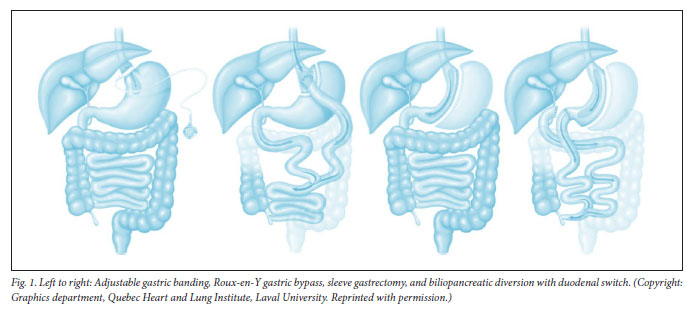
A number of surgical procedures have emerged over the past 40 years, including Roux-en-Y gastric bypass (RYGB) in 1971, adjustable gastric banding in 1980, duodenal switch (DS) in 1989, and sleeve gastrectomy (SG) in 2000 (Fig. 1).[24]
Laparoscopic SG and laparoscopic RYGB are the most common bariatric operations performed worldwide. The fourth IFSO Global Registry Report revealed they make up 92% of all bariatric procedures (46% each).[25] Other MBS procedures such as single-anastomosis duodenal-ileal bypass with SG (SADI-S), one-anastomosis gastric bypass (OAGB), endoscopic sleeve gastroplasty (ESG) and intragastric balloon (IGB) are becoming more popular and are discussed in the 'New surgical and endoscopic approaches' section of this chapter.
The decision regarding the type of surgery is made in collaboration with an MDT and based on the patient's medical condition, including weight and obesity-related diseases, expected adherence with supplementation and follow-up, and the patient's personal goals and preferences in terms of expected weight loss and resolution of comorbidities and side-effects. The goal is to decrease the complications and risk of mortality associated with obesity, improve the patient's quality of life (QoL), and reduce obesity-related diseases while aiming for acceptable short- and long-term complications and side-effects of the surgery.[25]
• Adjustable gastric banding has evolved from a non-adjustable gastric band placed at laparotomy to laparoscopic adjustable gastric banding. An adjustable silicone band is placed at the level of the cardia, creating a small stomach pouch above the band, with the rest of the stomach below the band. The gastric band is connected by a silicone tube to a subcutaneous reservoir. The band can be inflated or deflated via the access port to control the amount of restriction. Even though this procedure has the lowest short-term complication rate, it is associated with a high long-term complication rate and weight regain, which has led to its progressive replacement by SG.
• Sleeve gastrectomy was originally the first step in a staged approach to reduce perioperative complications in high-risk patients.[26] Its relative technical simplicity and good outcomes led to a worldwide surge in popularity as a stand-alone procedure, starting around 2008. The surgeon divides the omentum and short gastric vessels along the greater curve of the stomach to excise 70% of the patient's stomach, leaving a narrow gastric tube that remains in continuity with the gastrointestinal tract and without disruption of the pylorus. It promotes weight loss through reduced meal volume and reduced appetite. It has become the most frequently performed surgical approach, representing 45.9% and 58.3% of all surgeries in the world and in North America, respectively.[27] In addition, SG is typically easier to revise in the case of weight regain compared with RYGB.
• Roux-en-Y gastric bypass involves the creation of a small gastric pouch at the level of the cardia. The first 75 - 150 cm of small bowel from the duodenojejunal flexure is measured and then transected (the biliopancreatic limb). The distal small bowel is brought up to the pouch and anastomosed, after which approximately 100 - 150 cm of the alimentary limb is measured, and the biliopancreatic limb is anastomosed. Short- and long-term metabolic and hormonal effects and outcomes have been studied extensively in numerous studies, making it the gold standard in MBS.[11,28]
• Duodenal switch combines moderate restrictive and hypoabsorptive mechanisms by creating a wider SG, while the duodenum is transected distal to the pylorus and anastomosed to a 250 cm alimentary limb, leaving a 100 cm common channel for nutrient absorption. According to a 2016 worldwide IFSO survey, and in stark contrast to the rest of the world, 21% of surgeries performed in South Africa (SA) were biliopancreatic diversions.[27] In a recent report with 30-year follow-up in 199 patients undergoing biliopancreatic diversion, a nutritional complication was diagnosed in 73 of 122 patients (60%) at 20 years and in 28 of 38 (74%) at 30 years.[29] Twelve patients (6%) needed surgical revision and 4 (2%) died of liver failure. The technical complexity of a DS and the risk of long-term nutritional deficiencies associated with the procedure have led to it now representing fewer than 1.1% of the total number of MBS procedures worldwide.[27]
Risks
A systematic review and meta-analysis published in 2014 reported a mortality rate within 30 days of 0.08% (95% confidence interval [CI] 0.01 - 0.24); the mortality rate after 30 days was 0.31% (95% CI 0.01 - 0.75).[30] The overall complication rate ranged from 10% to 17%, and the reoperation rate was 7%. Perioperative mortality and complication rates were highest for RYGB and lowest for adjustable gastric banding, while SG was placed in between. A recent network meta-analysis confirmed the higher postoperative complication rate associated with RYGB compared with SG.[31]
The most common complications after bariatric surgery are bleeding, venous thromboembolism (VTE) and wound infection; each is associated with a <1% risk. Bleeding and leakage are associated with the greatest impact on reoperation rates and length of stay, and VTE can be targeted for prevention using extended thromboprophylaxis.[32] In a large analysis of MBS registries in the USA (N=134 142), SG was associated with half the risk-adjusted odds of death (0.1% v. 0.2%), serious morbidity (5.8% v. 11.7%) and leak (0.8% v. 1.6%) during the first 30 days compared with RYGB.[33] A recent systematic review and meta-analysis evaluated the safety and efficacy of MBS in the elderly population (>55 years), and concluded that high-risk elderly patients should be considered for SG given the lesser morbidity and comparable efficacy with RYGB.[21] This finding is supported by a recent umbrella review including six meta-analyses.[34]
Specific risk associated with RYGB and SG was clearly defined in two recent randomised controlled trials (RCTs), now with 5-year and 10-year follow-up.[35-37] RYGB was associated with internal herniation, kinking or obstruction of the jejunal-jejunal anastomosis, marginal ulceration and nutritional deficiencies. SG was associated with worsening or de novo reflux.
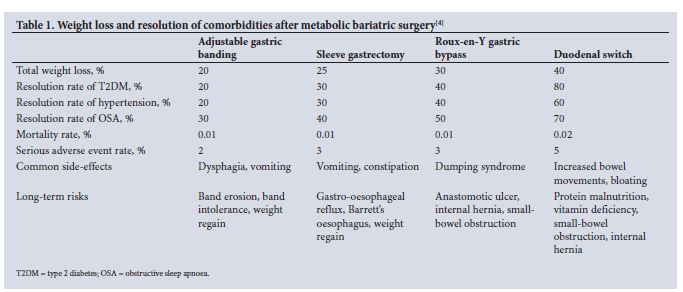
Table 1 summarises the risks and benefits of the four different surgeries.
Metabolic effects of metabolic and bariatric surgery
What is the quality of life after metabolic and bariatric surgery?
Patients living with severe obesity have lower perceived health across all dimensions of QoL.[38] For most patients, MBS has a significant positive influence on QoL. The impact varies considerably across studies, with MBS showing a significantly greater positive influence on physical QoL compared with mental QoL. Improvement in health-related QoL (HRQoL) is typically correlated with weight loss.
Improvement in HRQoL tends to correlate with weight loss, and in patients randomised to RYGB versus intensive behavioural therapy, operated patients reported significant improvement in HRQoL.[39] Meta-analyses of short-term (1 year) and long-term (>5 years) HRQoL following MBS versus non-surgical management in patients with Class 2 or 3 obesity showed evidence of a substantial and significant improvement in physical and mental health favouring the surgical group compared with controls, spanning 5 to 25 years after surgery.[40,41]
A 2025 report of HRQoL in 228 individuals randomised to MBS versus medical and lifestyle intervention confirmed significant improvement in the physical component score with no significant change in the mental component score.[42] A 2015 meta-analysis reported a positive effect on QoL, especially when looking at physical wellbeing after MBS.[7] In a more recent systematic review comparing MBS with medical treatment in adults with obesity (BMI >30 kg/m2[43] Significant differences in QoL improvements were found between different types of MBS procedures, and greater improvements in physical QoL than mental QoL were evident.
What is the impact on weight?
One of the largest prospective trials in MBS, called the Swedish Obese Subjects (SOS) study,[2,44] involved 4 047 individuals living with obesity who underwent MBS (n=2 010) or conventional treatment (n=2 037) in a matched control group. The SOS study is a prospective controlled trial with one of the longest periods of follow-up in MBS literature. The average weight change in control subjects was less than 2% during the period of follow-up to 15 years. After 10 years, the total weight loss (TWL) was 25% after gastric bypass, 16% after vertical banded gastroplasty and 14% after adjustable gastric banding. A meta-analysis of studies comparing surgery with non-surgical interventions included a total of 22 RCTs, representing altogether 1 496 patients allocated to surgery and 302 to non-surgical interventions.'4] Outcomes were similar between RYGB and SG, and both of these procedures had better outcomes than adjustable gastric banding. For people with a very high BMI, biliopancreatic diversion with DS resulted in greater weight loss than RYGB.
A series of 250 patients with an initial BMI of 45 - 60 kg/m2 [1] At 10-year follow-up, the mean (standard deviation [SD]) total body weight (TBW) loss was -42 (20) kg for gastric bypass versus -27 (15) kg for gastric banding (p<0.05). Late reoperation was significantly higher after gastric banding compared with the gastric bypass group (31% v. 8%; p<0.01). At 10 years and compared with gastric banding, RYGB was associated with better long-term weight loss, a lower rate of late reoperation and improved remission of comorbidities.
EWL was assessed after SG in a systematic review.[45] SG was furthermore compared with RYGB in two RCTs with 5-year outcomes. [35,36] Both procedures resulted in equivalent, long-standing QoL improvement. RYGB resulted in more stable weight loss (75% v. 65% EWL at 5 years; p=0.017) but was associated with higher readmission rates. Similar improvements in QoL were found in the second RCT and EWL was 49% after SG versus 57% after RYGB, but the difference did not reach significance. Overall morbidity was 19% for SG and 26% for RYGB (p=0.19). The Finnish group published their outcomes in 193 patients who reached 10 years of follow-up.'37] They reported 43.5% EWL after SG and 50.7% EWL after RYGB. Mean estimated %EWL was not equivalent between the procedures; %EWL was 8.4 (95% CI 3.1 - 13.6) higher after RYGB.
What are the effects on type 2 diabetes?
The prevalence of T2DM continues to increase, and it now affects 11.3% (95% CI 4.6 - 12.4) of adults aged 20 - 79 years in SA.[46] In 80% of cases T2DM develops as a result of excess or dysfunctional adiposity, and it has become the leading cause of macro- and microvascular disease, including diabetic nephropathy, retinopathy and limb ischaemia. MBS has consistently proven more effective than best medical treatment and psychological/behavioural interventions to induce durable control and remission of T2DM.[47]
The SOS study reported remission rates for T2DM of 72% and 36% at 2 and 10 years, respectively, in the surgical group. Reductions in glucose, insulin and homeostatic model assessment for insulin resistance increased with increasing weight loss, and changes were typically related to weight change in each surgery group.[47]
Several RCTs have specifically studied T2DM response to different surgical procedures versus medical treatment.[48]
Mingrone et al.[5] reported 75% remission of T2DM at 3 years after RYGB, compared with no response with medical intervention alone. At 5 years, remission was maintained in 37% of the RYGB patients and 63% of the DS patients.[15] Schauer et al.[6] reported remission of T2DM in 42% and 37% after RYGB and SG, respectively, compared with 12% achieved with medical therapy (N=50). At 5 years, the criterion for the primary endpoint was met by 5% of patients who received medical treatment alone, compared with 29% who underwent RYGB and 23% who underwent SG. The mean reduction in glycated haemoglobin (HbA1c) was 2.1% versus 0.3% (p=0.003) in the surgery versus medical group. Change in TBW was -23%, -19% and -5% in the RYGB, SG and medical therapy groups, respectively; triglyceride levels were -40%, -29% and -8%; high-density lipoprotein cholesterol (HDL-C) levels were 32%, 30% and 7%; use of insulin was -35%, -34% and -13%; and QoL measures were significant (p<0.05) for all comparisons. Three-year follow-up of a large cohort of randomised patients confirmed that MBS is more effective and durable than medical/lifestyle intervention in remission of T2DM, including among individuals with Class 1 obesity.[49] Superior glycaemic control is maintained in patients randomised to surgery at 12-year follow-up.[50] Five- to 20-year remission rates after DS are even higher, with observational studies showing complete remission in the range of 93% and discontinuation of insulin therapy in 97%.[51]
All studies comparing MBS with a non-surgical group consistently show superior control and remission of T2DM in the surgical arms,[52-54] including superior weight loss and lower HbA1c.[55] Variations in reported outcomes are multifactorial and include differences in study design, surgical technique, duration of follow-up and patient characteristics, such as higher pre-surgical BMI and shorter duration of T2DM (both of which may confer a higher likelihood of remission).[56] Metabolic improvement is less impressive after adjustable gastric banding than after more invasive surgical intervention.[57] Continued postoperative monitoring of glycaemia is warranted, as the effect of surgery may diminish over time with relapse of hyperglycaemia.[53]
The place of MBS in the management of T2DM was ultimately recognised by the International Diabetes Federation (IDF) in 2011[58] and by the Society for Endocrinology, Metabolism and Diabetes of South Africa (SEMDSA) in 2017,[59] both stating that surgery should be considered as an alternative treatment option in patients with a BMI between 30 and 35 kg/m2>35 kg/m2>30 kg/m2
What is the impact on other comorbidities?
Hypertension
A meta-analysis of the effect of MBS on hypertension included 57 studies.[9] Thirty-two studies reported improvement of hypertension in 64% of patients (odds ratio [OR] 13.24; 95% CI 7.7 - 22.7; p<0.00001), and 46 studies reported resolution of hypertension in 50% of patients (OR 1.7; 95% CI 1.1 - 2.6; p=0.01). A systematic review and meta-analysis on the early impact of MBS on T2DM, hypertension and dyslipidaemia reported a reduction in cardiovascular risk, with a BMI reduction of 5 kg/m2[60] The impact of SG on hypertension was assessed in a systematic review including 33 studies and 3 997 patients.[61] There was resolution of hypertension in 58% of patients and improvement or resolution in 75%.
Obstructive sleep apnoea
There is emerging evidence regarding the impact of MBS on obstructive sleep apnoea (OSA).
A meta-analysis including 15 studies (11 RCTs) and 636 patients showed a significant improvement in nocturnal hypoxaemia, although significant inter-study heterogeneity was noted.[62] A large cohort study from the National Bariatric Surgery Register of UK and Ireland demonstrated nearly 60% remission after bariatric surgery, with the greatest chance of remission after RYGB (64.5%), followed by SG (56.1%) and adjustable gastric banding (31.2%).[63]
A more recent systematic review including six studies (two RCTs) found that a comprehensive weight loss programme conferred no clinically significant effects, while MBS was associated with more robust weight loss, a reduction in OSA severity (18 - 44% reduction of the apnoea-hypopnoea index), and improvement in gas exchange (17 - 20% reduction in partial pressure of carbon dioxide in the arterial blood), ultimately leading to the resolution of obesity hypoventilation syndrome.[64]
The American Thoracic Society (ATS) recently released a clinical practice guideline on the management of OSA.[65] Their conditional recommendation for patients with OSA and a BMI >35 kg/m2
Dyslipidaemia
MBS improves serum lipids, but changes vary widely. A literature review including 178 studies and 25 189 patients reported significant reductions in total cholesterol (TC) (-0.7 mmol/L), LDL cholesterol (LDL-C) (-0.6 mmol/L) and triglycerides (-0.7 mmol/L), and a significant increase in HDL cholesterol (HDL-C) (0.2 mmol/L), at 1 year postoperatively (p<0.00001 for all).[8] The magnitude of this change was significantly greater than that seen in non-surgical control patients (e.g. LDL-C -0.6 mmol/L v. -0.1 mmol/L). When assessed separately, the magnitude of changes varied greatly by surgical type (p-interaction <0.00001; e.g. LDL-C: DS -1.1 mmol/L, RYGB -0.6 mmol/L, gastric band -0.2 mmol/L, SG -0.2 mmol/L). In the case of adjustable gastric banding (TC and LDL-C) and SG (LDL-C), the response at 1 year following surgery was not significantly different from non-surgical control patients.
Urinary incontinence
In a series of 470 patients undergoing MBS, the prevalence of urinary incontinence was 66%.[66] Other pelvic floor disorders are also frequent. A meta-analysis of the effects of MBS on pelvic floor disorders included 11 cohort studies in which a total of 784 patients were assessed with a variety of questionnaires, before and after MBS.[67] MBS was associated with a significant improvement in pelvic floor disorders, specifically with regard to urinary incontinence and pelvic organ prolapse. There was no significant improvement in faecal incontinence or sexual function. In a prospective analysis of 140 patients undergoing MBS, surgery was associated with an improvement in stress urinary incontinence (40% at baseline v. 15.5% at 1 year), urge incontinence (37% at baseline v. 8%), dysuria (20% at baseline v. 3.4%) and QoL related to urinary symptoms (all p<0.0001).[68] In addition, a reduction in the prevalence of urinary incontinence correlated significantly with weight loss (p=0.01).[69]
Metabolic dysfunction-associated steatotic liver disease
The MASLD spectrum ranges from hepatic steatosis to more severe non-alcoholic steatohepatitis and fibrosis that can progress to cirrhosis, end-stage liver disease and hepatocellular carcinoma (HCC). MASLD is strongly associated with components of the metabolic syndrome, including obesity, T2DM and hypertension.[70] MASLD prevalence is estimated to be around 25% globally and over 80% in patients with complicated obesity.[71] Prevalence/incidence data for all liver disease in sub-Saharan Africa are severely limited, and the estimated general population MASLD incidence of 13.5% is likely to be a gross underestimation.[72] Steatohepatitis develops in about a quarter of patients with MASLD, and it is set to become the leading cause of liver transplantation ahead of hepatitis C and alcoholic liver disease.[71,73] With the background of a high prevalence of hepatitis viral infection and alcoholic liver disease in sub-Saharan Africa, MASLD diagnosis and treatment will have to become a priority for the region.[74]
There is growing evidence to show improvement of MASLD after MBS, and a large meta-analysis showed 66% and 50% improvement in steatosis and fibrosis, respectively, after surgery.[75] Both SG and RYGB seem effective, without a significant difference between the procedures. In a systematic review, the pooled proportion of patients with improvement or resolution in steatosis was 91.6%, 81.3% in steatohepatitis, 65.5% in fibrosis and 69.5% for complete resolution of non-alcoholic steatohepatitis.[10]
Lassailly et al.[76] showed that 84% of patients had resolution of steatohepatitis without worsening fibrosis 5 years after surgery. There was a 70% improvement in fibrosis and a 50% resolution rate. A proportion of patients had persistent steatohepatitis, seen in patients with a suboptimal clinical response or weight regain after surgery. In patients with non-cirrhotic MASLD, surgery reduced the risk of developing a major liver event by 88% compared with a non-surgical group.[17] The risk of a major surgical complication was 9.5%.
Renal function
Obesity is an independent risk factor for the development and progression of chronic kidney disease (CKD). A systematic review and meta-analysis including 30 observational studies found a significant reduction in hyperfiltration, albuminuria and proteinuria after MBS.[77] In another systematic review of 29 studies incorporating 18 172 patients (including 4 RCTs, 5 cohort studies and 20 before-and-after studies), there was a significantly lower proportion of albuminuria (difference -21.2%; 95% CI -28.8 - -13.5) and reductions in 24-hour urine albumin excretion rate (weighted mean difference -48.78 mg/24 hours; 95% CI -75.32 - -22.24) and urine albumin-to-creatinine ratio (uACR) (weighted mean difference -16.10 mg/g; 95% CI -22.26 - -9.94) after surgery.[78] Compared with non-surgical treatment, MBS was associated with a statistically lower uACR and lower risk of new-onset albuminuria (OR 18; 95% CI 0.03 - 0.99 from RCTs). Low-quality evidence suggests that MBS improves albuminuria and uACR in patients with T2DM. However, the effect on other outcomes is uncertain.
Malignancy
MBS is increasingly recognised as a tool for reducing cancer risk.[79-81] In the SOS trial, the number of first-time cancers after inclusion was lower in the surgery group (n=117) than in the control group (n=169) (hazard ratio 'HR] 0.67; 95% CI 0.53 - 0.85; p=0.0009).[82] This effect appears to be more profound for women than for men. Evidence is particularly strong for ovarian, endometrial and breast cancer, with a recent meta-analysis demonstrating a 49%, 67% and 53% reduction in risk, respectively.[83] MBS may be used to induce weight loss and reduce the amount of oestrogen in the active management of obesity-related endometrial dysplasia or early-stage endometrial carcinoma.[84] Data show a reduction in HCC and skin cancers, including melanoma, after MBS.[85-87]
There is increasing evidence to support a reduction in colorectal cancer risk.[81,88] In contrast, limited data suggest that changes in bile salt absorption after RYGB may increase the risk of rectal cancer.[89] RYGB can lead to regression of Barrett's oesophagus and can prevent progression to advanced disease.[90] However, results from two RCTs confirm that gastro-oesophageal reflux is worsened in up to 60% of patients after SG, and concerns regarding the development of oesophageal adenocarcinoma therefore remain.[36,37,91,92] In the light of an estimated 11.6% prevalence of Barrett's oesophagus after SG, it seems prudent to offer patients postoperative endoscopic surveillance initially at 3-year and later at 5-year intervals, even if asymptomatic.[93]
Does metabolic and bariatric surgery decrease long-term mortality risk?
A large observational cohort study has shown that MBS significantly decreases overall mortality.[94] Patients who underwent MBS had significant reduction in risk of developing cardiovascular, cancer and endocrine conditions (including T2DM), as well as infectious, psychiatric and mental disorders, compared with the control group. The mortality rate in the MBS cohort was 0.68% compared with 6.17% in controls, translating to a reduction in the relative risk of death by 89%.
In the SOS study, MBS reduced the incidence of total and fatal cardiovascular events over 20 years compared with matched non-surgical controls.[2] There were 129 deaths in the control group and 101 deaths in the surgery group. The HR adjusted for age, sex and risk factors was 0.71 in the surgery group (p=0.01) compared with the control group. The most common causes of death were myocardial infarction and cancer. Analyses of the SOS data failed to demonstrate an association between initial BMI and postoperative health benefits. Weight loss did not correlate with cardiovascular events in the surgical cohort, suggesting weight loss-independent beneficial mechanisms.
A 2017 meta-analysis reported a reduction of 41% in all-cause mortality (HR 0.59; 95% CI 0.52 - 0.67; p<0.001) after MBS.[3] A more recent meta-analysis including 16 matched cohort studies and 174 772 patients demonstrated a 49% reduction in HR of death and a median increase in life expectancy of 6.1 years.[95] This effect was particularly profound for patients with pre-existing diabetes, who gained a median of 9.3 years' life expectancy after MBS compared with the non-surgical cohort.
Metabolic and bariatric surgery in patients with Class 1 obesity (BMI 30 - 35 kg/m2
Evidence supporting the updated IFSO/ASMBS indications for MBS, and especially evidence supporting surgery in patients with a BMI of 30 - 34.9 kg/m2[13]
A meta-analysis by Cohen et al.[96] evaluated patients with T2DM and a BMI of 30 - 40 kg/m22
Other metabolic outcomes are also improved in patients with mild to moderate obesity. Ikramuddin et al.[97] randomised 120 patients with a BMI 30 - 40 kg/m2
New surgical and endoscopic approaches
MBS is one of the fastest-evolving fields of general surgery. Surgical procedures are being modified, and new concepts emerge over time; however, only some withstand the test of time and scientific evaluation. The most common surgical modifications performed around the world are described below.
Single-anastomosis duodenal-ileal bypass with sleeve gastrectomy
This simplified DS technique was first described by Sánchez-Pernaute et a/.[98] It involves the creation of an SG, then the duodenum is transected and connected to an omega-shaped loop of small bowel. This procedure requires only one intestinal anastomosis instead of two as used in the traditional DS. The length of the common intestinal channel allowing digestion and absorption (250 - 300 cm) is more than doubled compared with the standard DS (100 cm), which could attenuate side-effects related to dietary fat and fat-soluble vitamin malabsorption. SADI-S is emerging as an option for SG weight regain or T2DM recurrences. As a primary MBS procedure, SADI-S is endorsed by the IFSO based on its similarities to and commonly accepted decreased risk compared with the standard DS.[99,100] However, high-level evidence in the form of randomised comparison with RYGB is limited, and surgeons performing SADI-S are advised to input their data into national registries.
One-anastomosis gastric bypass
The OAGB was initially described in 2001 by Rutledge and consists of creating a long and narrow gastric pouch (10 cm v. 3 - 5 cm in RYGB) and bypassing approximately 150 - 200 cm of small bowel from the duodenojejunal flexure, then creating a loop anastomosis between the gastric pouch and the jejunum. This technique is increasingly popular in Europe and Asia and has been endorsed by the IFSO.[101,102] Long-term benefits of OAGB compared with standard RYGB are still questioned with regard to the risk of bile reflux and long-term risk of oesophageal and gastric cancer associated with chronic exposure to bile acids. An RCT compared OAGB with RYGB and SG (200 patients in each group).[103] The authors reported superior weight loss (98% v. 76% v. 77% in the OAGB, SG and RYGB groups, respectively) and similar remission rates of metabolic syndrome, including remission of T2DM (94% v. 87% v. 90% after OAGB, SG and RYGB, respectively). However, the long-term risk associated with bile acid exposure has not yet been clearly addressed and remains a concern, and surgeons offering OAGB are therefore advised to input their data into national registries.
Gastric plication
Laparoscopic gastric plication was first described by Talebpour et al.[104] This procedure imbricates the greater curvature of the stomach with two layers of non-absorbable sutures. The overall goal is to duplicate the effects of an SG, while avoiding any gastric stapling or resection. The procedure is associated with significant postoperative nausea and food intolerance and does not seem to reduce the risk of gastric leaks. A systematic review of 14 studies and 1 450 patients[105] reported EWL ranging from 32% to 74%, with follow-up from 6 to 24 months. No mortality was reported in these studies, and the rate of major complications requiring reoperation ranged from 0% to 15.4% (average 3.7%).
Two-year outcomes were assessed in an RCT comparing SG with gastric plication.[104] At 2 years, the TWL and complication rates were not significantly different between the two groups. Additional comparative trials and long-term follow-up are needed to further define the role of laparoscopic gastric plication in the surgical management of obesity.
Current endoscopic therapies
It is conservatively estimated that approximately 70% of SA adult women and 40% of SA adult men have a BMI of more than 25 kg/m2'Epidemiology of obesity'.) Only a fraction of South Africans seek surgical intervention for obesity, and only 587 MBS procedures were performed in SA in 2017.[27] Many patients may favour less invasive procedures in view of concerns about postoperative complications, hospitalisation and risks of micronutrient deficiencies typically associated with standard surgical therapies. A number of endoscopic approaches have emerged over time and are placed between medical therapy and surgical therapy in terms of effectiveness, risks and side-effects.
Endoscopic sleeve gastroplasty
Endoscopic procedures have been developed to reduce gastric volume.
ESG employs a full-thickness endoscopic suturing device to create apposition of the anterior and posterior gastric wall. Suturing starts distally at the transition from body to antrum and passes proximally through the greater curvature. The fundus is partially reduced with the preservation of a small pouch to allow accommodation. It therefore tubularises the gastric body, altering satiety and satiation.
Abu Dayyeh et al.[106] randomised 209 patients with Class 1 or Class 2 obesity to ESG with lifestyle modification or lifestyle modification alone. At 52 weeks, mean (SD) EWL was 49.2% (32.0%) for the ESG group and 3.2% (18.6%) for the control group (p<0.0001). Mean TBW loss was 13.6% (8.0%) for the ESG group and 0.8% (5.0%) for the control group (p<0.0001). ESG-related serious adverse events occurred in three (2%) of 131 patients, without mortality or need for intensive care or surgery.
A 2024 IFSO systematic review including 44 articles and 15 714 patients undergoing ESG reported TBW loss up to 18% at 2.5 years' follow-up.[107] The Federation endorses ESG as an effective treatment for obesity, particularly beneficial for patients with Class 1 and 2 obesity, as well as for those with Class 3 obesity who are not suitable candidates for MBS.
Intragastric balloons
IGBs were first described in 1982 by Nieben etal.[108] and represent the oldest endoscopic procedure for weight loss. Modifications have improved tolerability, risk of perforation, and ease of placement and retrieval. Most IGBs still require upper gastrointestinal endoscopy with sedation or general anaesthesia and need to be retrieved after 6 to 12 months. Patients may experience side-effects such as nausea (24%), vomiting (2.7%), abdominal fullness (6.3%) or pain (14%), deflation (6%) and gastric ulcer (12.5%).[109] Rare complications including gastric or oesophageal perforation, small-bowel obstruction and hypoxia at the time of extraction have been reported.
A contemporary meta-analysis including 13 RCTs and 1 523 patients showed a significant difference in weight (4.4%, 6.1 kg) and BMI (2.13 kg/m2[110]
The latest IGB modifications allow the balloon to be swallowed[ln and even self-excreted.[112l Initial studies have demonstrated its safety and short-term efficacy. The role of IGB therapy as bridging therapy to a stapled bariatric procedure is emerging.
Endoscopic bypass
A number of endoscopic procedures have recently been developed to mimic the metabolic effect of RYGB. The most advanced endoscopic bypass (EndoBarrier®, or duodenojejunal endoscopic bypass) involves the placement of a one-metre plastic sleeve in the duodenum to prevent contact of food with bile acids and to bring undigested food into the proximal jejunum. The sleeve is placed endoscopically under sedation and is retrieved after 6 months. A small RCT reported an EWL of 32.0% (22.0 - 46.7%) versus 16.4% (4.1 - 34.6%) in the control group (p<0.05).[113' A meta-analysis identified 151 patients who underwent an endoscopic bypass, with TWL of -5.1 kg (95% CI -7.3 - -3.0) and EWL of 12.6% (95% CI 9.0 - 16.2).[114] The procedure is associated with a risk of serious adverse events, such as acute pancreatitis in 3% of patients, device migration, early explant, gastrointestinal bleeding and liver abscess.[115-117] This device is currently licensed for investigational use only.
Aspiration therapy
A percutaneous gastrostomy device (AspireAssist®) has been described to treat patients with a BMI >35 kg/m2et al.[118] randomised 207 patients in a 2:1 ratio to treatment with AspireAssist* plus behavioural counselling (n=137) or behavioural counselling alone (n=70). At 52 weeks, participants in the AspireAssist* group had lost significantly more weight (12.1 ± 9.6% TBW) than in the counselling group (3.5 ± 6.0% TBW). Adverse events included abdominal pain (38%), nausea/vomiting (17%), and peristomal bacterial infection (13.5%). Serious adverse events were reported in 3.6% of participants, including severe abdominal pain, peritonitis, gastric ulcer and tube replacement. Medium-term results are starting to appear, with studies confirming the maintenance of weight loss, at 19 ± 13% weight loss, up to 4 years.[119] Even though results seem promising, patients' and physicians' acceptability of the procedure, the need for long-term nutritional surveillance, lack of long-term data, and multiple effective and safe alternative therapies severely limit the adoption of this procedure.
Perioperative care[25]
Enhanced recovery after bariatric surgery
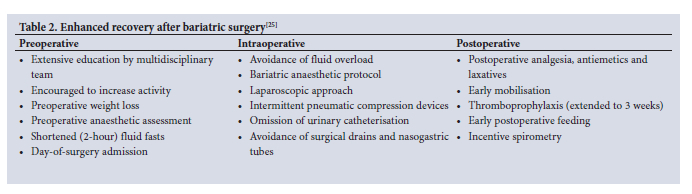
Enhanced recovery after bariatric surgery (ERABS) protocols mitigate surgical stress and are associated with reduced length of stay, without increasing readmission rates.[120] Typical interventions undertaken in the perioperative care period are outlined in Table 2. [25] Some preoperative interventions take place weeks or months before surgery. Comprehensive Enhanced Recovery After Surgery (ERAS) Society guidelines have been published by the World Journal of Surgery, incorporating the best available evidence for all aspects of perioperative care.[121]
Bariatric anaesthesia
Patients undergoing bariatric surgery present challenges in each phase of anaesthesia. Guidelines recommend that a lead for anaesthesia for the patient with obesity be appointed in each department.[122] Experienced anaesthetic staff should manage patients presenting for bariatric surgery, as they represent a higher-risk patient population. The Society for Obesity and Bariatric Anaesthesia UK (SOBAUK) has published comprehensive guidance on all aspects of anaesthetic management for this patient group.[122] The SOBAUK single-sheet guidance on anaesthesia consent for the patient with obesity is a valuable resource when discussing perioperative risks with patients in an individualised, non-stigmatising manner.[123-125] The recent ERAS Society guidance is an additional valuable source of information.[121]
General considerations for anaesthesia for the patient with obesity
Specific equipment includes larger-size non-invasive blood pressure cuffs, a head-elevating laryngoscopy position pillow or similar, high-flow nasal oxygen (HFNO), equipment for managing a difficult airway, and an inflatable mattress to facilitate positioning.
It is advisable to induce anaesthesia in the operating theatre rather than the anaesthesia induction room. Patients should be positioned while awake in the ramped position, ideally using a wedged pillow designed for this purpose. Preoperative sedation poses risks in a patient with OSA and is not generally required. Lean body weight and TBW should be calculated and used to prepare appropriate drug doses. Intravenous access is more difficult in a patient with obesity, and ultrasound should be available if possible. Invasive arterial blood pressure monitoring is advisable only in those patients with significant cardiovascular comorbidities or when non-invasive cuffs are deemed inaccurate owing to body habitus. The use of quantitative neuromuscular monitoring is of particular importance in this patient group, both intraoperatively to ensure adequate muscle relaxation to facilitate surgical access, and postoperatively to confirm the full reversal of paralysis before tracheal extubation.
Airway management
Patients with obesity have a reduced functional residual capacity (FRC) owing to cephalad displacement of the diaphragm. Patients with coexisting OSA have increased fat deposition in the upper airway and reduced pharyngeal cross-sectional area.[126] These factors predispose this patient population to more rapid oxygen desaturation during periods of apnoea. Moreover, reduction in pharyngeal tone on induction of anaesthesia reduces the cross-sectional area of the upper airway, further making mask ventilation more challenging. Careful planning and meticulous attention to detail are vital in approaching airway management of this patient group.
Preoxygenation in the ramped or semi-sitting position improves respiratory dynamics by increasing the FRC and is the optimal position for airway management. Wedge pillows ease bag-mask ventilation (BMV) and improve the laryngoscopic view by aligning the pharyngeal, laryngeal and oral airway axis compared with a neutral position.[127] Predicting the most challenging airways is essential. Obesity alone is not necessarily predictive of difficult tracheal intubation.[128] Neck circumference greater than 50 cm, the ratio of neck circumference to thyromental distance, male gender, Cormack-Lehane classification >2 and American Society of Anesthesiologists physical status classification >2 are risk factors for difficult tracheal intubation.[129,130] The prediction of difficult mask ventilation is arguably of greater importance. Factors predictive of difficult BMV are the presence of a beard, Mallampati classification 3 or 4, severely limited mandibular protrusion, and a history of snoring.[131] If difficult airway management is predicted, relevant planning must be done, including consideration of awake fibre-optic tracheal intubation.
HFNO for apnoeic oxygenation during laryngoscopy and airway management in the anaesthetised patient has been demonstrated to be an effective method for reducing the time to oxygen desaturation in patients with obesity. An RCT of 40 patients with a BMI >40 kg/ m2[132]
Venous thromboembolism
People living with obesity are at increased risk of developing VTE.[133] Symptomatic deep-vein thrombosis (DVT) and pulmonary embolism are encountered in up to 6.4% of bariatric patients.[134,135] The incidence of venous thrombotic events in the literature is variable, with DVT accounting for up to 2.2% of complications after MBS. Formal recommendations for prophylaxis include the use of intermittent compression devices and early mobilisation along with chemoprophylaxis with both low-molecular-weight heparin (LMWH) and unfractionated heparin (UH). A systematic review of 30 publications, mostly uncontrolled retrospective studies including open and laparoscopic bariatric procedures, reported variable anticoagulation dosing regimens. In the absence of RCTs and high-level evidence to guide the choice, dose and duration of anticoagulation after MBS, reviews and guidelines agree about the need for a risk-stratified prophylaxis approach.[136] The most recent American and European guidelines suggest a combination of mechanical and chemical prophylaxis, making use of LMWH (rather than UH or direct-acting oral anticoagulants), at a BMI-adjusted dose and for at least 10 days following surgery.[137,138]
Opioid-free anaesthesia
Opioid-free or opioid-sparing anaesthetic techniques are part of ERABS protocols.[139] They reduce the incidence of opioid-induced respiratory depression, postoperative nausea and vomiting (PONV), constipation and urinary retention. Drugs commonly used include paracetamol, non-steroidal anti-inflammatory drugs, ketamine, magnesium sulphate, intravenous lidocaine infusions and alpha-2-agonists.[140]
A systematic review and meta-analysis of 21 RCTs including 1 039 patients and comparing intraoperative administration of remifentanil and dexmedetomidine demonstrated the superiority of dexmedetomidine, with improved postoperative pain scores for up to 24 hours, and a lower incidence of hypotension, shivering and PONV compared with remifentanil.[141] In a meta-analysis of trials, a dexmedetomidine infusion group had lower postoperative morphine consumption, lower PONV incidence and lower pain scores postoperatively compared with conventional analgesia.[142]
Lidocaine has been found to reduce opioid consumption and the duration of postoperative ileus following laparoscopic abdominal surgery. Recent studies demonstrate that an initial bolus of lidocaine 1.5 mg/kg followed by an intraoperative infusion of 2 mg/kg/h, calculated on adjusted body weight, results in serum lidocaine concentrations in the accepted safe range.[143] Regional anaesthesia is technically challenging in this patient population. There is moderate to low-level evidence that transversus abdominus plane block improves analgesia after bariatric surgery up to 24 hours postoperatively.[144]
Drug dosing in bariatric anaesthesia
Blood pressure, cardiac workload and cardiac output are increased in patients with obesity, with variable impacts on hepatic and renal perfusion. T2DM, CKD and MASLD make dosing of anaesthetic agents challenging.[145] Current guidance advocates using lean body weight for optimal dosing of hydrophilic drugs, such as neuromuscular blocking agents, opioids, local anaesthetics and paracetamol. TBW is considered appropriate for suxamethonium given the increased plasma cholinesterase activity.[122] Actual body weight is advised when calculating the dose of sugammadex. An RCT of 207 patients with a BMI >40 kg/m2[146]
Total intravenous anaesthesia (TIVA) is associated with a reduction in postoperative nausea and vomiting; however, the Marsh and Schnider pharmacokinetic propofol TIVA models may not be accurate in the patient with obesity. The maximum weight accepted by the Marsh model is 150 kg. Newer algorithms are emerging that address this limitation. The Eleveld propofol model allows for accurate target concentrations for patients with BMIs below 52.9 kg/m2[147] Applicability, broad clinical availability, and incorporation in clinical practice are yet to be established.[148]
Acknowledgement. 'Metabolic and bariatric surgery: Surgical options and outcomes' is adapted from the Canadian Adult Obesity Clinical Practice Guideline (the 'Guideline'), which Obesity Canada owns and from whom we have a licence. SAMMSS adapted the Guideline having regard for relevant context affecting South Africa using the ADAPTE Tool. SAMMSS acknowledges that Obesity Canada and the authors of the Guideline have not formally reviewed 'Metabolic and bariatric surgery: Surgical options and outcomes' and bear no responsibility for changes made to such chapter, or how the adapted Guideline is presented or disseminated. Therefore, such parties, according to their policy, disclaim any association with such adapted materials. The original Guideline may be viewed in English at: www.obesitycanada.ca/guidelines
Author contributions. JL adapted the Canadian guideline and updated the discussion. JGMS edited and contributed. All authors edited and approved the final version of the chapter.
References
-
1. Eisenburg D, Shikora SA, Aarts E, et al. 2022 American Society for Metabolic and Bariatic Surgery (ASMBS) and International Federation for the Surgery of Obesity and Metabolic Diseases (IFSO) indications for metabolic and bariatric surgery. Obes Surg 2023;33(1):3-14. https://doi.org/10.1007/s11695-022-06332-1
» https://doi.org/10.1007/s11695-022-06332-1 -
2. Sjöström L, Narbro K, Sjöström CD, et al. Effects of bariatric surgery on mortality in Swedish obese subjects. N Engl J Med 2007;357(8):741-752. https://doi.org/10.1056/NEJMoa066254
» https://doi.org/10.1056/NEJMoa066254 -
3. Cardoso L, Rodrigues D, Gomes L, Carrilho F. Short- and long-term mortality after bariatric surgery: A systematic review and meta-analysis. Diabetes Obes Metab 2017;19(9):1223-1232. https://doi.org/10.1111/dom.12922
» https://doi.org/10.1111/dom.12922 -
4. Colquitt JL, Pickett K, Loveman E, Frampton GK. Surgery for weight loss in adults. Cochrane Database Syst Rev 2014, Issue 8. Art. No.: CD003641. https://doi.org/10.1002/14651858.CD003641.pub4
» https://doi.org/10.1002/14651858.CD003641.pub4 -
5. Mingrone G, Panunzi S, de Gaetano A, et al. Bariatric-metabolic surgery versus conventional medical treatment in obese patients with type 2 diabetes: 5-year follow-up of an open-label, single-centre, randomised controlled trial. Lancet 2015;386(9997):964-973. https://doi.org/10.1016/S0140-6736(15)00075-6
» https://doi.org/10.1016/S0140-6736(15)00075-6 -
6. Schauer PR, Bhatt DL, Kirwan JP, et al. Bariatric surgery versus intensive medical therapy for diabetes-5-year outcomes. N Engl J Med 2017;376(7):641-651. https://doi.org/10.1056/NEJMoa1600869
» https://doi.org/10.1056/NEJMoa1600869 -
7. Lindekilde N, Gladstone BP, Lubeck M, et al. The impact of bariatric surgery on quality of life: A systematic review and meta-analysis. Obes Rev 2015;16(8):639-651. https://doi.org/10.1111/obr.12294
» https://doi.org/10.1111/obr.12294 -
8. Heffron SP, Parikh A, Volodarskiy A, et al Changes in lipid profile of obese patients following contemporary bariatric surgery: A meta-analysis. Am J Med 2016;129(9):952-959. https://doi.org/10.1016/j.amjmed.2016.02.004
» https://doi.org/10.1016/j.amjmed.2016.02.004 -
9. Wilhelm SM, Young J, Kale-Pradhan PB. Effect of bariatric surgery on hypertension: A meta-analysis. Ann Pharmacother 2014;48(6):674-682. https://doi.org/10.1177/1060028014529260
» https://doi.org/10.1177/1060028014529260 -
10. Mummadi RR, Kasturi KS, Chennareddygari S, Sood GK. Effect of bariatric surgery on nonalcoholic fatty liver disease: Systematic review and meta-analysis. Clin Gastroenterol Hepatol 2008;6(12):1396-1402. https://doi.org/10.1016/j.cgh.2008.08.012
» https://doi.org/10.1016/j.cgh.2008.08.012 -
11. Nguyen NT, Kim E, Vu S, Phelan M. Ten-year outcomes of a prospective randomised trial of laparoscopic gastric bypass versus laparoscopic gastric banding. Ann Surg 2018;268(1):106-113. https://doi.org/10.1097/SLA.0000000000002348
» https://doi.org/10.1097/SLA.0000000000002348 -
12. Robert M, Espalieu P, Pelascini E, et al. Efficacy and safety of one anastomosis gastric bypass versus Roux-en-Y gastric bypass for obesity (YOMEGA): A multicentre, randomised, open-label, non-inferiority trial. Lancet 2019;393(10178):1299-1309. https://doi.org/10.1016/S0140-6736(19)30475-1
» https://doi.org/10.1016/S0140-6736(19)30475-1 -
13. De Luca M, Shikora S, Eisenberg D, et al Scientific evidence for the updated guidelines on indications for metabolic and bariatric surgery (IFSO/ASMBS). Surg Obes Relat Dis 2024;20(11):991-1025. https://doi.org/10.1016/j.soard.2024.05.009
» https://doi.org/10.1016/j.soard.2024.05.009 -
14. Unick JL, Beavers D, Bond DS, et al. The long-term effectiveness of lifestyle intervention in severely obese individuals. Am J Med 2013;126(3):236-242, 42.e1-2. https://doi.org/10.1016/j.amjmed.2012.10.010
» https://doi.org/10.1016/j.amjmed.2012.10.010 -
15. Mingrone G, Panunzi S, de Gaetano A, et al. Metabolic surgery versus conventional medical therapy in patients with type 2 diabetes: 10-year follow-up of an open-label, single-centre, randomised controlled trial. Lancet 2021;397(10271):293-304. https://doi.org/10.1016/S0140-6736(20)32649-0
» https://doi.org/10.1016/S0140-6736(20)32649-0 -
16. Aminian A, Zajichek A, Arterburn DE, et al. Association of metabolic surgery with major adverse cardiovascular outcomes in patients with type 2 diabetes and obesity. JAMA 2019;322(13):1271-1282. https://doi.org/10.1001/jama.2019.14231
» https://doi.org/10.1001/jama.2019.14231 -
17. Aminian A, Al-Kurd A, Wilson R, et al. Association of bariatric surgery with major adverse liver and cardiovascular outcomes in patients with biopsy-proven nonalcoholic steatohepatitis. JAMA 2021;326(20):2031-2042. https://doi.org/10.1001/jama.2021.19569
» https://doi.org/10.1001/jama.2021.19569 -
18. Rejeski WJ, Ip EH, Bertoni AG, et al. Lifestyle change and mobility in obese adults with type 2 diabetes. N Engl J Med 2012;366(13):1209-1217. https://doi.org/10.1056/NEJMoa1110294
» https://doi.org/10.1056/NEJMoa1110294 -
19. DuCoin C, Moore RL, Provost DA. Indications and contraindications for bariatric surgery. 2019. In: Nguyen NT, Brethauer SA, Morton JM, Ponce J, Rosenthal RJ, eds. The ASMBS Textbook of Bariatric Surgery. 2nd ed. Cham: Springer, 2019. https://link.springer.com/book/10.1007/978-3-030-27021-6 (accessed November 2024).
» https://link.springer.com/book/10.1007/978-3-030-27021-6 -
20. Giordano S, Victorzon M. Bariatric surgery in elderly patients: A systematic review. Clin Interv Aging 2015;10:1627-1635. https://doi.org/10.2147/CIA.S70313
» https://doi.org/10.2147/CIA.S70313 -
21. Shenoy SS, Gilliam A, Mehanna A, et al. Laparoscopic sleeve gastrectomy versus laparoscopic Roux-en-Y gastric bypass in elderly bariatric patients: Safety and efficacy - a systematic review and meta-analysis. Obes Surg 2020;30(11):4467-4473. https://doi.org/10.1007/s11695-020-04819-3
» https://doi.org/10.1007/s11695-020-04819-3 -
22. Pratt JSA, Browne A, Browne NT, et al. ASMBS pediatric metabolic and bariatric surgery guidelines, 2018. Surg Obes Relat Dis 2018;14(7):882-901. https://doi.org/10.1016/j.soard.2018.03.019
» https://doi.org/10.1016/j.soard.2018.03.019 -
23. Alqahtani AR, Elahmedi M, Abdurabu HY, Alqahtani S. Ten-year outcomes of children and adolescents who underwent sleeve gastrectomy: Weight loss, comorbidity resolution, adverse events, and growth velocity. J Am Coll Surg 2021;233(6):657-664. https://doi.org/10.1016/j.jamcollsurg.2021.08.678
» https://doi.org/10.1016/j.jamcollsurg.2021.08.678 -
24. Buchwald H. Metabolic surgery: A brief history and perspective. Surg Obes Relat Dis 2010;6(2):221-222. https://doi.org/10.1016/j.soard.2009.09.001
» https://doi.org/10.1016/j.soard.2009.09.001 -
25. Breen C, O'Connell J, Geoghegan J, et al Obesity in adults: A 2022 adapted clinical practice guideline for Ireland. Obes Facts 2022;15(6):736-752. https://doi.org/10.1159/000527131
» https://doi.org/10.1159/000527131 -
26. Regan JP, Inabnet WB, Gagner M, Pomp A. Early experience with two-stage laparoscopic Roux-en-Y gastric bypass as an alternative in the super-super obese patient. Obes Surg 2003;13(6):861-864. https://doi.org/10.1381/096089203322618669
» https://doi.org/10.1381/096089203322618669 -
27. Angrisani L, Santonicola A, Iovino P, et al. IFSO Worldwide Survey 2016: Primary, endoluminal, and revisional procedures. Obes Surg 2018;28(12):3783-3794. https://doi.org/10.1007/s11695-018-3450-2
» https://doi.org/10.1007/s11695-018-3450-2 -
28. Ashrafian H, le Roux CW. Metabolic surgery and gut hormones - a review of bariatric entero-humoral modulation. Physiol Behav 2009;97(5):620-631. https://doi.org/10.1016/j.physbeh.2009.03.012
» https://doi.org/10.1016/j.physbeh.2009.03.012 -
29. Papadia FS, Adami G, Razzetta A, et al. Biliopancreatic diversion for severe obesity: Long-term weight maintenance and occurrence of nutritional complications are two facets of the same coin. Br J Surg 2024;111(3):znae058. https://doi.org/10.1093/bjs/znae058
» https://doi.org/10.1093/bjs/znae058 -
30. Chang SH, Stoll CR, Song J, Varela JE, Eagon CJ, Colditz GA. The effectiveness and risks of bariatric surgery: An updated systematic review and meta-analysis, 2003-2012. JAMA Surg 2014;149(3):275-287. https://doi.org/10.1001/jamasurg.2013.3654
» https://doi.org/10.1001/jamasurg.2013.3654 -
31. Currie AC, Askari A, Fangueiro A, Mahawar K. Network meta-analysis of metabolic surgery procedures for the treatment of obesity and diabetes. Obes Surg 2021;31(10):4528-4541. https://doi.org/10.1007/s11695-021-05643-z
» https://doi.org/10.1007/s11695-021-05643-z -
32. Daigle CR, Brethauer SA, Tu C, et al. Which postoperative complications matter most after bariatric surgery? Prioritizing quality improvement efforts to improve national outcomes. Surg Obes Relat Dis 2018;14(5):652-657. https://dolorg/10.1016/j.soard2018.01.008
» https://dolorg/10.1016/j.soard2018.01.008 -
33. Kumar SB, Hamilton BC, Wood SG, Rogers SJ, Carter JT, Lin MY. Is laparoscopic sleeve gastrectomy safer than laparoscopic gastric bypass? A comparison of 30-day complications using the MBSAQIP data registry. Surg Obes Relat Dis 2018;14(3):264-269. https://doi.org/10.1016/j.soard.2017.12.011
» https://doi.org/10.1016/j.soard.2017.12.011 -
34. Kermansaravi M, Vitiello A, Valizadeh R, Shahmiri SS, Musella M. Comparing the safety and efficacy of sleeve gastrectomy versus Roux-en-Y gastric bypass in elderly (>60 years) with severe obesity: An umbrella systematic review and meta-analysis. Int J Surg 2023;109(11):3541-3554. https://doi.org/10.1097/JS9.0000000000000629
» https://doi.org/10.1097/JS9.0000000000000629 -
35. Salminen P, Helmiö M, Ovaska J, et al Effect of laparoscopic sleeve gastrectomy vs laparoscopic Roux-en-Y gastric bypass on weight loss at 5 years among patients with morbid obesity: The SLEEVEPASS randomized clinical trial. JAMA 2018;319(3):241-254. https://doi.org/10.1001/jama.2017.20313
» https://doi.org/10.1001/jama.2017.20313 -
36. Ignat M, Vix M, Imad I, et al. Randomized trial of Roux-en-Y gastric bypass versus sleeve gastrectomy in achieving excess weight loss. Br J Surg 2017;104(3):248-256. https://doi.org/10.1002/bjs.10400
» https://doi.org/10.1002/bjs.10400 -
37. Salminen P, Grönroos S, Helmiö M, et al. Effect of laparoscopic sleeve gastrectomy vs Roux-en-Y gastric bypass on weight loss, comorbidities, and reflux at 10 years in adult patients with obesity: The SLEEVEPASS Randomized Clinical Trial. JAMA Surg 2022;157(8):656-666. https://doi.org/10.1001/jamasurg.2022.2229
» https://doi.org/10.1001/jamasurg.2022.2229 -
38. Mar J, Karlsson J, Arrospide A, Mar B, Martinez de Aragon G, Martinez-Blazquez C. Two-year changes in generic and obesity-specific quality of life after gastric bypass. Eat Weight Disord 2013;18(3):305-310. https://doi.org/10.1007/s40519-013-0039-6
» https://doi.org/10.1007/s40519-013-0039-6 -
39. Karlsen TI, Lund RS, R0islien J, et al. Health related quality of life after gastric bypass or intensive lifestyle intervention: A controlled clinical study. Health Qual Life Outcomes 2013;11:17. https://doi.org/10.1186/1477-7525-11-17
» https://doi.org/10.1186/1477-7525-11-17 -
40. Driscoll S, Gregory DM, Fardy JM, Twells LK. Long-term health-related quality of life in bariatric surgery patients: A systematic review and meta-analysis. Obesity (Silver Spring) 2016;24(1):60-70. https://doi.org/10.1002/oby.21322
» https://doi.org/10.1002/oby.21322 -
41. Magallares A, Schomerus G. Mental and physical health-related quality of life in obese patients before and after bariatric surgery: A meta-analysis. Psychol Health Med 2015;20(2):165-176. https://doi.org/10.1080/13548506.2014.963627
» https://doi.org/10.1080/13548506.2014.963627 -
42. Simonson DC, Gourash WF, Arterburn DE, et al Health-related quality of life and health utility after metabolic/bariatric surgery versus medical/lifestyle intervention in individuals with type 2 diabetes and obesity: The ARMMS-T2D Study. Diabetes Care 2025;48(4):537-545. https://doi.org/10.2337/dc24-2046
» https://doi.org/10.2337/dc24-2046 -
43. Hachem A, Brennan L. Quality of life outcomes of bariatric surgery: A systematic review. Obes Surg 2016;26(2):395-409. https://doi.org/10.1007/s11695-015-1940-z
» https://doi.org/10.1007/s11695-015-1940-z -
44. Burza MA, Romeo S, Kotronen A, et al. Long-term effect of bariatric surgery on liver enzymes in the Swedish Obese Subjects (SOS) study. PLoS ONE 2013;8(3):e60495. https://doi.org/10.1371/journal.pone.0060495
» https://doi.org/10.1371/journal.pone.0060495 -
45. Fischer L, Hildebrandt C, Bruckner T, et al. Excessive weight loss after sleeve gastrectomy: A systematic review. Obes Surg 2012;22(5):721-731. https://doi.org/10.1007/s11695-012-0616-1
» https://doi.org/10.1007/s11695-012-0616-1 -
46. International Diabetes Federation. IDF Diabetes Atlas 11th edition. https://diabetesatlas.org/ (accessed November 2024).
» https://diabetesatlas.org/ -
47. Sjöholm K, Sjöström E, Carlsson LMS, Peltonen M. Weight change-adjusted effects of gastric bypass surgery on glucose metabolism: 2- and 10-year results from the Swedish Obese Subjects (SOS) study. Diabetes Care 2016;39(4):625-631. https://doi.org/10.2337/dc15-1407
» https://doi.org/10.2337/dc15-1407 -
48. Khorgami Z, Shoar S, Saber AA, Howard CA, Danaei G, Sclabas GM. Outcomes of bariatric surgery versus medical management for type 2 diabetes mellitus: A meta-analysis of randomized controlled trials. Obes Surg 2019;29(3):964-974. https://doi.org/10.1007/s11695-018-3552-x
» https://doi.org/10.1007/s11695-018-3552-x -
49. Kirwan JP, Courcoulas AP, Cummings DE, et al. Diabetes remission in the Alliance of Randomized Trials of Medicine Versus Metabolic Surgery in Type 2 Diabetes (ARMMS-T2D). Diabetes Care 2022;45(7):1574-1583. https://doi.org/10.2337/dc21-2441
» https://doi.org/10.2337/dc21-2441 -
50. Courcoulas AP, Patti ME, Hu B, et al. Long-term outcomes of medical management vs bariatric surgery in type 2 diabetes. JAMA 2024;331(8):654-664. https://doi.org/10.1001/jama.2024.0318
» https://doi.org/10.1001/jama.2024.0318 -
51. Marceau P, Biron S, Marceau S, et al Long-term metabolic outcomes 5 to 20 years after biliopancreatic diversion. Obes Surg 2015;25(9):1584-1593. https://doi.org/10.1007/s11695-015-1599-5
» https://doi.org/10.1007/s11695-015-1599-5 -
52. Ikramuddin S, Billington CJ, Lee WJ, et al. Roux-en-Y gastric bypass for diabetes (the Diabetes Surgery Study): 2-year outcomes of a 5-year, randomised, controlled trial. Lancet Diabetes Endocrinol 2015;3(6):413-422. https://doi.org/10.1016/S2213-8587(15)00089-3
» https://doi.org/10.1016/S2213-8587(15)00089-3 -
53. Ikramuddin S, Korner J, Lee WJ, et al. Durability of addition of Roux-en-Y gastric bypass to lifestyle intervention and medical management in achieving primary treatment goals for uncontrolled type 2 diabetes in mild to moderate obesity: A randomized control trial. Diabetes Care 2016;39(9):1510-1518. https://doi.org/10.2337/dc15-2481
» https://doi.org/10.2337/dc15-2481 -
54. Murphy R, Clarke MG, Evennett NJ, et al. Laparoscopic sleeve gastrectomy versus banded Roux-en-Y gastric bypass for diabetes and obesity: A prospective randomised double-blind trial. Obes Surg 2018;28(2):293-302. https://doi.org/10.1007/s11695-017-2872-6
» https://doi.org/10.1007/s11695-017-2872-6 -
55. Hedberg J, Sundbom M. Superior weight loss and lower HbA1c 3 years after duodenal switch compared with Roux-en-Y gastric bypass - a randomized controlled trial. Surg Obes Relat Dis 2012;8(3):338-343. https://doi.org/10.1016/j.soard.2012.01.014
» https://doi.org/10.1016/j.soard.2012.01.014 -
56. Panunzi S, Carlsson L, de Gaetano A, et al. Determinants of diabetes remission and glycemic control after bariatric surgery. Diabetes Care 2016;39(1):166-174. https://doi.org/10.2337/dc15-0575
» https://doi.org/10.2337/dc15-0575 -
57. Ding SA, Simonson DC, Wewalka M, et al. Adjustable gastric band surgery or medical management in patients with type 2 diabetes: A randomized clinical trial. J Clin Endocrinol Metab 2015;100(7):2546-2556. https://doi.org/10.1210/jc.2015-1443
» https://doi.org/10.1210/jc.2015-1443 -
58. Dixon JB, Zimmet P, Alberti KG, Rubino F; International Diabetes Federation Taskforce on Epidemiology and Prevention. Bariatric surgery: An IDF statement for obese type 2 diabetes. Diabet Med 2011;28(6):628-642. https://doi.org/10.1111/j.1464-5491.2011.03306.x
» https://doi.org/10.1111/j.1464-5491.2011.03306.x - 59. Society for Endocrinology, Metabolism and Diabetes of South Africa Type 2 Guidelines Expert Committee. The 2017 SEMDSA guideline for the management of type 2 diabetes. J Endocr Metab Diabetes S Afr 2017;22(1 Suppl 1):S1-S196.
-
60. Ricci C, Gaeta M, Rausa E, Macchitella Y, Bonavina L. Early impact of bariatric surgery on type II diabetes, hypertension, and hyperlipidemia: a systematic review, meta-analysis and meta-regression on 6,587 patients. Obes Surg 2014;24(4):522-528. https://doi.org/10.1007/s11695-013-1121-x
» https://doi.org/10.1007/s11695-013-1121-x -
61. Sarkhosh K, Birch DW, Shi X, Gill RS, Karmali S. The impact of sleeve gastrectomy on hypertension: A systematic review. Obes Surg 2012;22(5):832-837. https://doi.org/10.1007/s11695-012-0615-2
» https://doi.org/10.1007/s11695-012-0615-2 -
62. Zhang Y, Wang W, Yang C, Shen J, Shi M, Wang B. Improvement in nocturnal hypoxemia in obese patients with obstructive sleep apnea after bariatric surgery: A meta-analysis. Obes Surg 2019;29(2):601-608. https://doi.org/10.1007/s11695-018-3573-5
» https://doi.org/10.1007/s11695-018-3573-5 -
63. Currie AC, Kaur V, Carey I, et al. Obstructive sleep apnea remission following bariatric surgery: A national registry cohort study. Surg Obes Relat Dis 2021;17(9):1576-1582. https://doi.org/10.1016/j.soard.2021.05.021
» https://doi.org/10.1016/j.soard.2021.05.021 -
64. Kakazu MT, Soghier I, Afshar M, et al. Weight loss interventions as treatment of obesity hypoventilation syndrome: A systematic review. Ann Am Thorac Soc 2020;17(4):492-502. https://doi.org/10.1513/AnnalsATS.201907-554OC
» https://doi.org/10.1513/AnnalsATS.201907-554OC -
65. Hudgel DW, Patel SR, Ahasic AM, et al The role of weight management in the treatment of adult obstructive sleep apnea: An official American Thoracic Society clinical practice guideline. Am J Respir Crit Care Med 2018;198(6):e70-e87. https://doi.org/10.1164/rccm.201807-1326ST
» https://doi.org/10.1164/rccm.201807-1326ST -
66. Laungani RG, Seleno N, Carlin AM. Effect of laparoscopic gastric bypass surgery on urinary incontinence in morbidly obese women. Surg Obes Relat Dis 2009;5(3):334-338. https://doi.org/10.1016/j.soard.2008.12.003
» https://doi.org/10.1016/j.soard.2008.12.003 -
67. Lian W, Zheng Y, Huang H, Chen L, Cao B. Effects of bariatric surgery on pelvic floor disorders in obese women: A meta-analysis. Arch Gynecol Obstet 2017;296(2):181-189. https://doi.org/10.1007/s00404-017-4415-8
» https://doi.org/10.1007/s00404-017-4415-8 -
68. Ait Said K, Leroux Y, Menahem B, Doerfler A, Alves A, Tillou X. Effect of bariatric surgery on urinary and fecal incontinence: Prospective analysis with 1-year follow-up. Surg Obes Relat Dis 2017;13(2):305-312. https://doi.org/10.1016/j.soard.2016.08.019
» https://doi.org/10.1016/j.soard.2016.08.019 -
69. Burgio KL, Richter HE, Clements RH, Redden DT, Goode PS. Changes in urinary and fecal incontinence symptoms with weight loss surgery in morbidly obese women. Obstet Gynecol 2007;110(5):1034-1040. https://doi.org/10.1097/01.AOG.0000285483.22898.9c
» https://doi.org/10.1097/01.AOG.0000285483.22898.9c -
70. Ballestri S, Zona S, Targher G, et al. Nonalcoholic fatty liver disease is associated with an almost twofold increased risk of incident type 2 diabetes and metabolic syndrome: Evidence from a systematic review and meta-analysis. J Gastroenterol Hepatol 2016;31(5):936-944. https://doi.org/10.1111/jgh.13264
» https://doi.org/10.1111/jgh.13264 -
71. Younossi Z, Anstee QM, Marietti M, et al. Global burden of NAFLD and NASH: Trends, predictions, risk factors and prevention. Nat Rev Gastroenterol Hepatol 2018;15(1):11-20. https://doi.org/10.1038/nrgastro.2017.109
» https://doi.org/10.1038/nrgastro.2017.109 -
72. Spearman CW, Afihene M, Betiku O, et al Epidemiology, risk factors, social determinants of health, and current management for non-alcoholic fatty liver disease in sub-Saharan Africa. Lancet Gastroenterol Hepatol 2021;6(12):1036-1046. https://doi.org/10.1016/S2468-1253(21)00275-2
» https://doi.org/10.1016/S2468-1253(21)00275-2 -
73. Wong RJ, Aguilar M, Cheung R, et al. Nonalcoholic steatohepatitis is the second leading etiology of liver disease among adults awaiting liver transplantation in the United States. Gastroenterology 2015;148(3):547-555. https://doi.org/10.1053/j.gastro.2014.11.039
» https://doi.org/10.1053/j.gastro.2014.11.039 -
74. Spearman CW, Abdo A, Ambali A, et al. Health-care provision and policy for non-alcoholic fatty liver disease in sub-Saharan Africa. Lancet Gastroenterol Hepatol 2021;6(12):1047-1056. https://doi.org/10.1016/S2468-1253(21)00296-X
» https://doi.org/10.1016/S2468-1253(21)00296-X -
75. Yeo SC, Ong WM, Cheng KSA, Tan CH. Weight loss after bariatric surgery predicts an improvement in the non-alcoholic fatty liver disease (NAFLD) fibrosis score. Obes Surg 2019;29(4):1295-1300. https://doi.org/10.1007/s11695-018-03676-5
» https://doi.org/10.1007/s11695-018-03676-5 -
76. Lassailly G, Caiazzo R, Ntandja-Wandji LC, et al. Bariatric surgery provides long-term resolution of nonalcoholic steatohepatitis and regression of fibrosis. Gastroenterology 2020;159(4):1290-301.e5. https://doi.org/10.1053/j.gastro.2020.06.006
» https://doi.org/10.1053/j.gastro.2020.06.006 -
77. Li K, Zou J, Ye Z, et al Effects of bariatric surgery on renal function in obese patients: A systematic review and meta analysis. PLoS ONE 2016;11(10):e0163907. https://doi.org/10.1371/journalpone.0163907
» https://doi.org/10.1371/journalpone.0163907 -
78. Zhou X, Li L, Kwong JS, Yu J, Li Y, Sun X. Impact of bariatric surgery on renal functions in patients with type 2 diabetes: Systematic review of randomised trials and observational studies. Surg Obes Relat Dis 2016;12(10):1873-1882. https://doi.org/10.1016/j.soard.2016.05.003
» https://doi.org/10.1016/j.soard.2016.05.003 -
79. Zhang K, Luo Y, Dai H, Deng Z. Effects of bariatric surgery on cancer risk: Evidence from meta-analysis. Obes Surg 2020;30(4):1265-1272. https://doi.org/10.1007/s11695-019-04368-4
» https://doi.org/10.1007/s11695-019-04368-4 -
80. Wiggins T, Antonowicz SS, Markar SR. Cancer risk following bariatric surgery - systematic review and meta-analysis of national population-based cohort studies. Obes Surg 2019;29(3):1031-1039. https://doi.org/10.1007/s11695-018-3501-8
» https://doi.org/10.1007/s11695-018-3501-8 -
81. Madar LO, Goldberg N, Netz U, et al. Association between metabolic and bariatric surgery and malignancy: A systematic review, meta-analysis, trends, and conclusions. Surg Obes Relat Dis 2025;21(4):434-448. https://doi.org/10.1016/j.soard.2024.10.023
» https://doi.org/10.1016/j.soard.2024.10.023 -
82. Sjöström L, Gummesson A, Sjöström CD, et al Effects of bariatric surgery on cancer incidence in obese patients in Sweden (Swedish Obese Subjects Study): A prospective, controlled intervention trial. Lancet Oncol 2009;10(7):653-662. https://doi.org/10.1016/S1470-2045(09)70159-7
» https://doi.org/10.1016/S1470-2045(09)70159-7 -
83. Ishihara BP, Farah D, Fonseca MCM, Nazario A. The risk of developing breast, ovarian, and endometrial cancer in obese women submitted to bariatric surgery: A meta-analysis. Surg Obes Relat Dis 2020;16(10):1596-1602. https://doi.org/10.1016/j.soard.2020.06.008
» https://doi.org/10.1016/j.soard.2020.06.008 -
84. Aubrey C, Black K, Campbell S, Pin S. Endometrial cancer and bariatric surgery: A scoping review. Surg Obes Relat Dis 2019;15(3):497-501. https://doi.org/10.1016/j.soard.2018.12.003
» https://doi.org/10.1016/j.soard.2018.12.003 -
85. Kwak M, Mehaffey JH, Hawkins RB, Hsu A, Schirmer B, Hallowell PT. Bariatric surgery is associated with reduction in non-alcoholic steatohepatitis and hepatocellular carcinoma: A propensity matched analysis. Am J Surg 2020;219(3):504-507. https://doi.org/10.1016/j.amjsurg.2019.09.006
» https://doi.org/10.1016/j.amjsurg.2019.09.006 -
86. Taube M, Peltonen M, Sjöholm K, et al. Association of bariatric surgery with skin cancer incidence in adults with obesity: A nonrandomised controlled trial. JAMA Dermatol 2020;156(1):38-43. https://doi.org/10.1001/jamadermatol.2019.3240
» https://doi.org/10.1001/jamadermatol.2019.3240 -
87. Wang J, Qiu K, Zhou S, et al Risk factors for hepatocellular carcinoma: An umbrella review of systematic review and meta-analysis. Ann Med 2025;57(1):2455539. https://doi.org/10.1080/07853890.2025.2455539
» https://doi.org/10.1080/07853890.2025.2455539 -
88. Bailly L, Fabre R, Pradier C, Iannelli A. Colorectal cancer risk following bariatric surgery in a nationwide study of French individuals with obesity. JAMA Surg 2020;155(5):395-402. https://doi.org/10.1001/jamasurg.2020.0089
» https://doi.org/10.1001/jamasurg.2020.0089 -
89. Kant P, Sainsbury A, Reed KR, et al. Rectal epithelial cell mitosis and expression of macrophage migration inhibitory factor are increased 3 years after Roux-en-Y gastric bypass (RYGB) for morbid obesity: Implications for long-term neoplastic risk following RYGB. Gut 2011;60(7):893-901. https://doi.org/10.1136/gut.2010.230755
» https://doi.org/10.1136/gut.2010.230755 -
90. Goonawardena J, Ward S. Effect of Roux-en-Y gastric bypass on Barretts esophagus: A systematic review. Surg Obes Relat Dis 2021;17(1):221-230. https://doi.org/10.1016/j.soard.2020.09.003
» https://doi.org/10.1016/j.soard.2020.09.003 -
91. Jaruvongvanich V, Matar R, Ravi K, et al Esophageal pathophysiologic changes and adenocarcinoma after bariatric surgery: A systematic review and meta-analysis. Clin Transl Gastroenterol 2020;11(8):e00225. https://doi.org/10.14309/ctg.0000000000000225
» https://doi.org/10.14309/ctg.0000000000000225 -
92. Jaruvongvanich V, Osman K, Matar R, et al Impact of bariatric surgery on surveillance and treatment outcomes of Barrett's esophagus: A stage-matched cohort study. Surg Obes Relat Dis 2021;17(8):1457-1464. https://doi.org/10.1016/j.soard.2021.04.018
» https://doi.org/10.1016/j.soard.2021.04.018 -
93. Qumseya BJ, Qumsiyeh Y, Ponniah SA, et al Barrett's esophagus after sleeve gastrectomy: A systematic review and meta-analysis. Gastrointest Endosc 2021;93(2):343-52.e2. https://doi.org/10.1016/j.gie.2020.08.008
» https://doi.org/10.1016/j.gie.2020.08.008 -
94. Christou NV, Sampalis JS, Liberman M, et al. Surgery decreases long-term mortality, morbidity, and health care use in morbidly obese patients. Ann Surg 2004;240(3):416-423; discussion 423-424. https://doi.org/10.1097/01.sla.0000137343.63376.19
» https://doi.org/10.1097/01.sla.0000137343.63376.19 -
95. Syn NL, Cummings DE, Wang LZ, et al. Association of metabolic-bariatric surgery with longterm survival in adults with and without diabetes: A one-stage meta-analysis of matched cohort and prospective controlled studies with 174 772 participants. Lancet 2021;397(10287):1830-1841. https://doi.org/10.1016/S0140-6736(21)00591-2
» https://doi.org/10.1016/S0140-6736(21)00591-2 -
96. Cohen R, le Roux CW, Junqueira S, Ribeiro RA, Luque A. Roux-en-Y gastric bypass in type 2 diabetes patients with mild obesity: A systematic review and meta-analysis. Obes Surg 2017;27(10):2733-2739. https://doi.org/10.1007/s11695-017-2869-1
» https://doi.org/10.1007/s11695-017-2869-1 -
97. Ikramuddin S, Korner J, Lee W-J, et al. Roux-en-Y gastric bypass vs intensive medical management for the control oftype 2 diabetes, hypertension, and hyperlipidemia: The Diabetes Surgery Study randomized clinical trial. JAMA 2013;309(21):2240-2249. https://doi.org/10.1001/jama.2013.5835
» https://doi.org/10.1001/jama.2013.5835 -
98. Sánchez-Pernaute A, Herrera MAR, Perez-Aguirre ME, et al. Single anastomosis duodeno-ileal bypass with sleeve gastrectomy (SADI-S): One to three-year follow-up. Obes Surg 2010;20(12):1720-1726. https://doi.org/10.1007/s11695-010-0247-3
» https://doi.org/10.1007/s11695-010-0247-3 -
99. Brown WA, Ooi G, Higa K, Himpens J, Torres A. Single anastomosis duodenal-ileal bypass with sleeve gastrectomy/one anastomosis duodenal switch (SADI-S/OADS) IFSO position statement. Obes Surg 2018;28(5):1207-2016. https://doi.org/10.1007/s11695-018-3201-4
» https://doi.org/10.1007/s11695-018-3201-4 -
100. Brown WA, de Leon Ballesteros GP, Ooi G, et al. Single anastomosis duodenal-ileal bypass with sleeve gastrectomy/one anastomosis duodenal switch (SADI-S/OADS) IFSO position statement - update 2020. Obes Surg 2021;31(1):3-25. https://doi.org/10.1007/s11695-020-05134-7
» https://doi.org/10.1007/s11695-020-05134-7 -
101. De Luca M, Tie T, Ooi G, et al. Mini gastric bypass-one anastomosis gastric bypass (MGB-OAGB) - IFSO position statement. Obes Surg 2018;28(5):1188-1206. https://doi.org/10.1007/s11695-018-3182-3
» https://doi.org/10.1007/s11695-018-3182-3 -
102. De Luca M, Piatto G, Merola G, et al. IFSO update position statement on one anastomosis gastric bypass (OAGB). Obes Surg 2021;31(7):3251-3278. https://doi.org/10.1007/s11695-021-05413-x
» https://doi.org/10.1007/s11695-021-05413-x -
103. Ruiz-Tovar J, Carbajo MA, Jimenez JM, et al. Long-term follow-up after sleeve gastrectomy versus Roux-en-Y gastric bypass versus one-anastomosis gastric bypass: A prospective randomized comparative study of weight loss and remission of comorbidities. Surg Endosc 2019;33(2):401-410. https://doi.org/10.1007/s00464-018-6307-9
» https://doi.org/10.1007/s00464-018-6307-9 -
104. Talebpour M, Sadid D, Talebpour A, Sharifi A, Davari FV. Comparison of short-term effectiveness and postoperative complications: Laparoscopic gastric plication vs laparoscopic sleeve gastrectomy. Obes Surg 2018;28(4):996-1001. https://doi.org/10.1007/s11695-017-2951-8
» https://doi.org/10.1007/s11695-017-2951-8 -
105. Ji Y, Wang Y, Zhu J, Shen D. A systematic review of gastric plication for the treatment of obesity. Surg Obes Relat Dis 2014;10(6):1226-1232. https://doi.org/10.1016/j.soard.2013.12.003
» https://doi.org/10.1016/j.soard.2013.12.003 -
106. Abu Dayyeh BK, Bazerbachi F, Vargas EJ, et al. Endoscopic sleeve gastroplasty for treatment of class 1 and 2 obesity (MERIT): A prospective, multicentre, randomised trial. Lancet 2022;400(10350):441-451. https://doi.org/10.1016/S0140-6736(22)01280-6
» https://doi.org/10.1016/S0140-6736(22)01280-6 -
107. Dayyeh BKA, Stier C, Alqahtani A, et al. IFSO Bariatric Endoscopy Committee evidence-based review and position statement on endoscopic sleeve gastroplasty for obesity management. Obes Surg 2024;34(12):4318-4348. https://doi.org/10.1007/s11695-024-07510-z
» https://doi.org/10.1007/s11695-024-07510-z -
108. Nieben OG, Harboe H. Intragastric balloon as an artificial bezoar for treatment of obesity. Lancet 1982;1(8265):198-199. https://doi.org/10.1016/s0140-6736(82)90762-0
» https://doi.org/10.1016/s0140-6736(82)90762-0 -
109. Saber AA, Shoar S, Almadani MW, et al. Efficacy of first-time intragastric balloon in weight loss: A systematic review and meta-analysis of randomized controlled trials. Obes Surg 2017;27(2):277-287. https://doi.org/10.1007/s11695-016-2296-8
» https://doi.org/10.1007/s11695-016-2296-8 -
110. Kotinda APST, de Moura DTH, Ribeiro IB, et al Efficacy of intragastric balloons for weight loss in overweight and obese adults: A systematic review and meta-analysis of randomized controlled trials. Obes Surg 2020;30(7):2743-2753. https://doi.org/10.1007/s11695-020-04558-5
» https://doi.org/10.1007/s11695-020-04558-5 -
111. De Peppo F, Caccamo R, Adorisio O, et al. The Obalon swallowable intragastric balloon in pediatric and adolescent morbid obesity. Endosc Int Open 2017;5(1):E59-E63. https://doi.org/10.1055/s-0042-120413
» https://doi.org/10.1055/s-0042-120413 -
112. Alsabah S, Al Haddad E, Ekrouf S, Almulla A, Al-Subaie S, Al Kendari M. The safety and efficacy of the procedureless intragastric balloon. Surg Obes Relat Dis 2018;14(3):311-317. https://doi.org/10.1016/j.soard.2017.12.001
» https://doi.org/10.1016/j.soard.2017.12.001 -
113. Vix M, Diana M, Marx L, et al. Management of staple line leaks after sleeve gastrectomy in a consecutive series of 378 patients. Surg Laparosc Endosc Percutan Tech 2015;25(1):89-93. https://doi.org/10.1097/SLE.0000000000000026
» https://doi.org/10.1097/SLE.0000000000000026 -
114. Rohde U, Hedback N, Gluud LL, Vilsboll T, Knop FK. Effect of the EndoBarrier Gastrointestinal Liner on obesity and type 2 diabetes: A systematic review and meta-analysis. Diabetes Obes Metab 2016;18(3):300-305. https://doi.org/10.1111/dom.12603
» https://doi.org/10.1111/dom.12603 -
115. Betzel B, Homan J, Aarts E, et al. Acute pancreatitis as an adverse event in patients with the duodeno-jejunal bypass liner. Endoscopy 2015;47(11):1050-1053. https://doi.org/10.1055/s-0034-1392226
» https://doi.org/10.1055/s-0034-1392226 -
116. De Moura EGH, Martins BC, Lopes GS, et al Metabolic improvements in obese type 2 diabetes subjects implanted for 1 year with an endoscopically deployed duodenal-jejunal bypass liner. Diabetes Technol Ther 2012;14(2):183-189. https://doi.org/10.1089/dia.2011.0152
» https://doi.org/10.1089/dia.2011.0152 -
117. Tarnoff M, Rodriguez L, Escalona A, et al Open label, prospective, randomized controlled trial of an endoscopic duodenal-jejunal bypass sleeve versus low calorie diet for pre-operative weight loss in bariatric surgery. Surg Endosc 2009;23(3):650-656. https://doi.org/10.1007/s00464-008-0125-4
» https://doi.org/10.1007/s00464-008-0125-4 -
118. Thompson CC, Abu Dayyeh BK, Kushner R, et al. Percutaneous gastrostomy device for the treatment of Class II and Class III obesity: Results of a randomized controlled trial. Am J Gastroenterol 2017;112(3):447-457. https://doi.org/10.1038/ajg.2016.500
» https://doi.org/10.1038/ajg.2016.500 -
119. Nyström M, Machytka E, Noren E, et al. Aspiration therapy as a tool to treat obesity: 1- to 4-year results in a 201-patient multi-center post-market European registry study. Obes Surg 2018;28(7):1860-1868. https://doi.org/10.1007/s11695-017-3096-5
» https://doi.org/10.1007/s11695-017-3096-5 -
120. Malczak P, Pisarska M, Piotr M, Wysocki M, Budzynski A, Pedziwiatr M. Enhanced recovery after bariatric surgery: Systematic review and meta-analysis. Obes Surg 2017;27(1):226-235. https://doi.org/10.1007/s11695-016-2438-zj
» https://doi.org/10.1007/s11695-016-2438-zj -
121. Stenberg E, Dos Reis Falcão LF, O'Kane M, et al. Guidelines for perioperative care in bariatric surgery: Enhanced Recovery After Surgery (ERAS) Society recommendations: A 2021 update. World J Surg 2022;46(4):729-751. https://doi.org/10.1007/s00268-021-06394-9
» https://doi.org/10.1007/s00268-021-06394-9 -
122. Members of the Working Party; Nightingale CE, Margarson MP, Shearer E, et al. Peri-operative management of the obese surgical patient 2015: Association of Anaesthetists of Great Britain and Ireland Society for Obesity and Bariatric Anaesthesia. Anaesthesia 2015;70(7):859-876. https://doi.org/10.1111/anae.13101
» https://doi.org/10.1111/anae.13101 -
123. Royal College of Anaesthetists (RCOA), Society for Obesity and Bariatric Anaesthesia (SOBA). Anaesthesia and your weight London: RCOA, 2023 https://www.rcoa.ac.uk/patients/patient-information-resources/patient-information-leaflets-video-resources/anaesthesia-your-weight (accessed November 2024).
» https://www.rcoa.ac.uk/patients/patient-information-resources/patient-information-leaflets-video-resources/anaesthesia-your-weight -
124. Society for Obesity and Bariatric Anaesthesia (SOBA). SOBA consent guidelines. London: SOBA, 2021. https://www.sobauk.co.uk/guidelines-1 (accessed November 2024).
» https://www.sobauk.co.uk/guidelines-1 -
125. Selak T, Selak V Communicating risks of obesity before anaesthesia from the patient's perspective: Informed consent or fat-shaming? Anaesthesia 2021;76(2):170-173. https://doi.org/10.1111/anae.15126
» https://doi.org/10.1111/anae.15126 -
126. Mortimore IL, Marshall I, Wraith PK, Sellar RJ, Douglas NJ. Neck and total body fat deposition in nonobese and obese patients with sleep apnea compared with that in control subjects. Am J Respir Crit Care Med 1998;157(1):280-283. https://doi.org/10.1164/ajrccm.157.1.9703018
» https://doi.org/10.1164/ajrccm.157.1.9703018 -
127. Cattano D, Melnikov V, Khalil Y, Sridhar S, Hagberg CA. An evaluation of the rapid airway management positioner in obese patients undergoing gastric bypass or laparoscopic gastric banding surgery. Obes Surg 2010;20(10):1436-1441. https://doi.org/10.1007/s11695-009-9885-8
» https://doi.org/10.1007/s11695-009-9885-8 -
128. Brodsky JB, Lemmens HJ, Brock-Utne JG, Vierra M, Saidman LJ. Morbid obesity and tracheal intubation. Anesth Analg 2002;94(3):732-736; table of contents. https://doi.org/10.1097/00000539-200203000-00047
» https://doi.org/10.1097/00000539-200203000-00047 -
129. Hashim MM, Ismail MA, Esmat AM, Adeel S. Difficult tracheal intubation in bariatric surgery patients, a myth or reality? Br J Anaesth 2016;116(4):557-558. https://doi.org/10.1093/bja/aew039
» https://doi.org/10.1093/bja/aew039 -
130. Dohrn N, Sommer T, Bisgaard J, R0nholm E, Larsen JF. Difficult tracheal intubation in obese gastric bypass patients. Obes Surg 2016;26(11):2640-2647. https://doi.org/10.1007/s11695-016-2141-0
» https://doi.org/10.1007/s11695-016-2141-0 -
131. Kheterpal S, Han R, Tremper KK, et al Incidence and predictors of difficult and impossible mask ventilation. Anesthesiology 2006;105(5):885-891. https://doi.org/10.1097/00000542-200611000-00007
» https://doi.org/10.1097/00000542-200611000-00007 -
132. Wong DT, Dallaire A, Singh KP, et al High-flow nasal oxygen improves safe apnea time in morbidly obese patients undergoing general anesthesia: A randomized controlled trial. Anesth Analg 2019;129(4):1130-1136. https://doi.org/10.1213/ANE.0000000000003966
» https://doi.org/10.1213/ANE.0000000000003966 -
133. American Society for Metabolic and Bariatric Surgery Clinical Issues Committee. ASMBS updated position statement on prophylactic measures to reduce the risk of venous thromboembolism in bariatric surgery patients. Surg Obes Relat Dis 2013;9(4):493-497. https://doi.org/10.1016/j.soard.2013.03.006
» https://doi.org/10.1016/j.soard.2013.03.006 -
134. Bartlett MA, Mauck KF, Daniels PR. Prevention of venous thromboembolism in patients undergoing bariatric surgery. Vasc Health Risk Manag 2015;11:461-477. https://doi.org/10.2147/VHRM.S73799
» https://doi.org/10.2147/VHRM.S73799 - 135. Becattini C, Agnelli G, Manina G, Noya G, Rondelli F. Venous thromboembolism after laparoscopic bariatric surgery for morbid obesity: Clinical burden and prevention. Surg Obes Relat Dis 2012;8(1):108-115. https://doi.org/10.1016/j.soard.2011.09.005
-
136. Agarwal R, Hecht TE, Lazo MC, Umscheid CA. Venous thromboembolism prophylaxis for patients undergoing bariatric surgery: A systematic review. Surg Obes Relat Dis 2010;6(2):213-220. https://doi.org/10.1016/j.soard.2009.11.018
» https://doi.org/10.1016/j.soard.2009.11.018 -
137. Aminian A, Vosburg RW, Altieri MS, Hinojosa MW, Khorgami Z American Society for Metabolic and Bariatric Surgery Clinical Issues Committee. The American Society for Metabolic and Bariatric Surgery (ASMBS) updated position statement on perioperative venous thromboembolism prophylaxis in bariatric surgery. Surg Obes Relat Dis 2022;18(2):165-174. https://doi.org/10.1016/j.soard.2021.10.023
» https://doi.org/10.1016/j.soard.2021.10.023 -
138. Arcelus JI, Gouin-Thibault I, Samama CM. European guidelines on peri-operative venous thromboembolism prophylaxis: First update: Chapter 10: Surgery in the obese patient. Eur J Anaesthesiolj 2024;41(8):607-611. https://doi.org/10.1097/EJA.0000000000002000
» https://doi.org/10.1097/EJA.0000000000002000 -
139. Thorell A, MacCormick AD, Awad S, et al. Guidelines for perioperative care in bariatric surgery: Enhanced Recovery After Surgery (ERAS) Society recommendations. World J Surg 2016;40(9):2065-2083. https://doi.org/10.1007/s00268-016-3492-3
» https://doi.org/10.1007/s00268-016-3492-3 -
140. Mauermann E, Ruppen W, Bandschapp O. Different protocols used today to achieve total opioid-free general anesthesia without locoregional blocks. Best Pract Res Clin Anaesthesiol 2017;31(4):533-545. https://doi.org/ 10.1016/j.bpa.2017.11.003
» https://doi.org/ 10.1016/j.bpa.2017.11.003 -
141. Grape S, Kirkham KR, Frauenknecht J, Albrecht E. Intra-operative analgesia with remifentanil vs. dexmedetomidine: A systematic review and meta-analysis with trial sequential analysis. Anaesthesia 2019;74(6):793-800. https://doi.org/10.1111/anae.14657
» https://doi.org/10.1111/anae.14657 -
142. Singh PM, Panwar R, Borle A, Mulier JP, Sinha A, Goudra B. Perioperative analgesic profile of dexmedetomidine infusions in morbidly obese undergoing bariatric surgery: A meta-analysis and trial sequential analysis. Surg Obes Relat Dis 2017;13(8):1434-1446. https://doi.org/10.1016/j.soard.2017.02.025
» https://doi.org/10.1016/j.soard.2017.02.025 -
143. Carabalona JF, Delwarde B, Duclos A, et al. Serum concentrations of lidocaine during bariatric surgery. Anesth Analg 2020;130(1):e5-e8. https://doi.org/10.1213/ANE.0000000000003905
» https://doi.org/10.1213/ANE.0000000000003905 -
144. Grape S, Kirkham KR, Albrecht E. The analgesic efficacy of transversus abdominis plane block after bariatric surgery: A systematic review and meta-analysis with trial sequential analysis. Obes Surg 2020;30(10):4061-4070. https://doi.org/10.1007/s11695-020-04768-x
» https://doi.org/10.1007/s11695-020-04768-x -
145. Smit C, de Hoogd S, Brüggemann RJM, Knibbe CAJ. Obesity and drug pharmacology: A review of the influence of obesity on pharmacokinetic and pharmacodynamic parameters. Expert Opin Drug Metab Toxicol 2018;14(3):275-285. https://doi.org/10.1080/17425255.2018.1440287
» https://doi.org/10.1080/17425255.2018.1440287 -
146. Horrow JC, Li W, Blobner M, et al. Actual versus ideal body weight dosing of sugammadex in morbidly obese patients offers faster reversal of rocuronium- or vecuronium-induced deep or moderate neuromuscular block: A randomised clinical trial. BMC Anesthesiol 2021;21(1):62. https://doi.org/10.1186/s12871-021-01278-w
» https://doi.org/10.1186/s12871-021-01278-w -
147. Vellinga R, Hannivoort LN, Introna M, et al. Prospective clinical validation of the Eleveld propofol pharmacokinetic-pharmacodynamic model in general anaesthesia. Br J Anaesth 2021;126(2):386-394. https://doi.org/10.1016/j.bja.2020.10.027
» https://doi.org/10.1016/j.bja.2020.10.027 -
148. Kearns EC, Fearon NM, O'Reilly PO, et al Enhanced recovery after bariatric surgery: Feasibility and outcomes in a national bariatric centre. Obes Surg 2021;31(5):2097-2104. https://doi.org/10.1007/s11695-020-05220-w
» https://doi.org/10.1007/s11695-020-05220-w