Deaths from suspected mothball poisoning in children
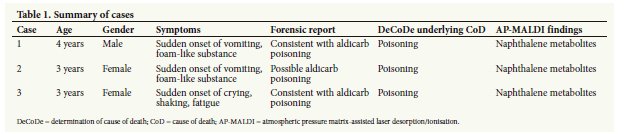
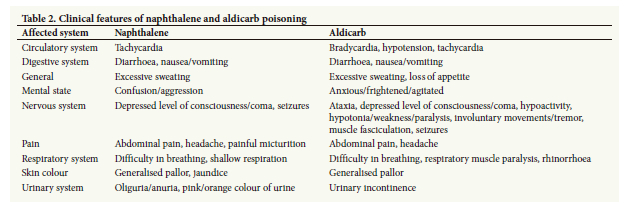
Childhood poisoning is a significant health concern in South Africa (SA), especially in densely populated informal housing settlements where children are frequently exposed to various household poisons. Poisoning accounts for 4 - 5% of paediatric hospital admissions in SA. The most common causes are fuels, pesticides and medicines, although many cases have unidentifiable causes. In this case series, three children, aged 3 - 5 years, were declared dead upon arrival at a public healthcare facility. Prior to death their symptoms included vomiting of a foam-like substance and distress (crying, shaking, fatigue). Postmortem fine-needle liver biopsies were obtained and underwent atmospheric pressure matrix-assisted laser desorption/ionisation mass spectrometry imaging (AP-MALDI-MSI) analysis. MSI analysis identified the presence of naphthalene-associated metabolites, the active component in household mothballs, suggesting death due to accidental ingestion. These cases highlight the urgent need for novel toxicology screening tools to accurately determine causes of death and guide targeted preventive strategies. Strategic efforts are needed to reduce childhood poisoning through robust toxicovigilance to monitor and regulate the sale of toxic substances and enhance access to toxicology testing.
childhood poisoning; household poisoning; naphthalene; mothballs; toxicovigilance; mass spectrometry imaging