Factors predicting walking intolerance in patients with peripheral arterial disease and intermittent claudication
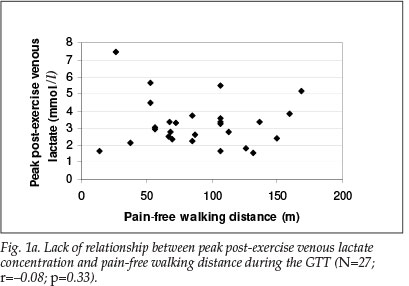
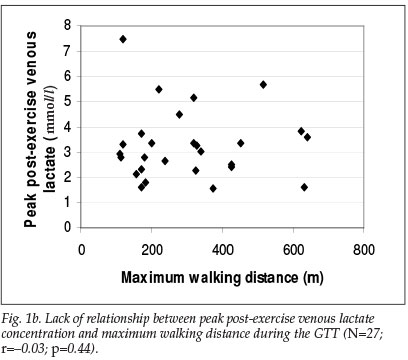
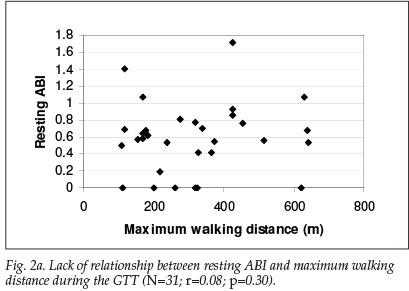
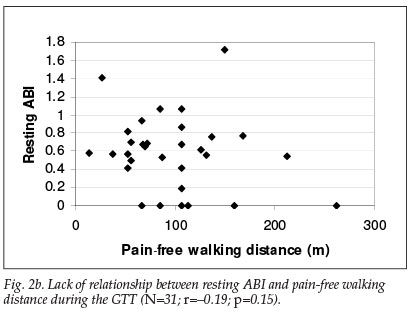
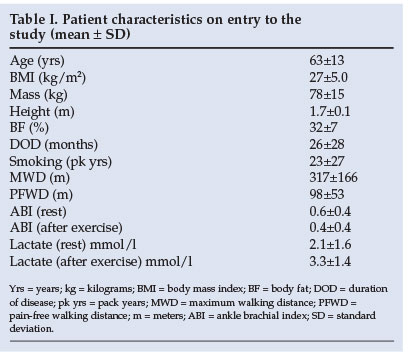
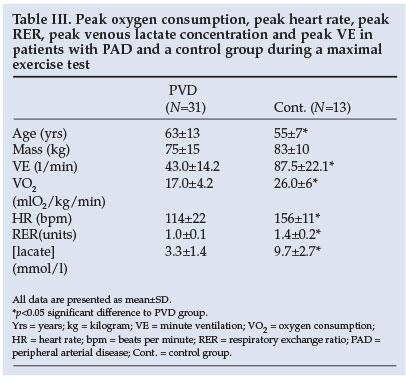
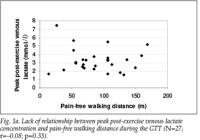
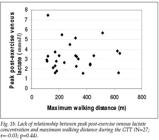
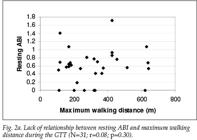
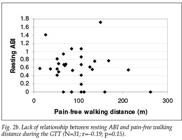
OBJECTIVE: To determine which physiological variables conduce to walking intolerance in patients with peripheral arterial disease (PAD). DESIGN: The physiological response to a graded treadmill exercise test (GTT) in patients with PAD was characterised. SETTING: Patients were recruited from the Department of Vascular Surgery, Groote Schuur Hospital, Cape Town. SUBJECTS: Thirty-one patients diagnosed with PAD were included in the study. OUTCOME MEASURES: During a GTT, peak oxygen consumption (VO2peak), peak minute ventilation (VEpeak), peak heart rate and peak venous lactate concentrations were measured and compared with those from a comparison group. Ankle-brachial index (ABI) was measured at rest and after exercise. During the GTT, maximum walking distance (MWD) and pain-free walking distance (PFWD) were measured to determine walking tolerance. RESULTS: Peak venous lactate concentrations did not correlate significantly with either PFWD (r=-0.08; p=0.3) or MWD (r=-0.03; p=0.4). Resting ABI did not correlate with either MWD (r=0.09; p=0.64) or PFWD (r=-0.19; p=0.29). Subjects terminated exercise at significantly (p<0.05) lower levels of cardiorespiratory effort and venous lactate concentrations than did a sedentary but otherwise healthy comparison group: peak heart rate 156±11 v. 114±22 beats per minute (BPM); p=0.001; and peak venous lactate concentration 9.7±2.7 mmol/l v. 3.28±1.39 mmol/l; p=0.001. CONCLUSION: Perceived discomfort in these patients is not caused by elevated blood lactate concentrations, a low ABI or limiting cardiorespiratory effort but by other factors not measured in this study.
SAMJ: South African Medical Journal
 Thumbnail
 Thumbnail
 Thumbnail
 Thumbnail