A profile of Suspected Child Abuse and Neglect Programme patients at Chris Hani Baragwanath Academic Hospital, 2018 - 2024
BACKGROUND: In South Africa (SA), few recognised centres deal specifically with cases of child abuse, resulting in limited knowledge of the profile of suspected abuse and neglect patients in SA hospitals. The Suspected Child Abuse and Neglect (SCAN) Programme assists with the detection and management of suspected child abuse and neglect in children. OBJECTIVES: To provide a retrospective description of the profile of suspected abused and neglected patients presenting to the SCAN Programme at Chris Hani Baragwanath Academic Hospital (CHBAH) from 2018 to 2024. METHOD: A retrospective, contextual, descriptive research design was used. All patients aged ≤14 years with suspected abuse and or neglect referred to the SCAN Programme at CHBAH were included. RESULTS: A total of 589 patients were included, of whom 316 (53.65%) were female, with a mean (standard deviation) age of 4.60 (4.16) years. The majority of patients (234, 39.73%) were referred from the paediatric department. Of the referrals, 338 (57.39%) were for physical abuse, 129 (21.91, 0%) for sexual abuse, 20 (3.40%) for emotional abuse and 184 (31.24%) for deliberate neglect. Three hundred and fifty-six (60.44%) patients were reported to statutory social services. A majority (76, 32.62%) of patients not reported were already known to these services. For 170 (28.86%) patients, a case docket was opened with the South African Police Service (SAPS), and of these, 35 (5.94%) were enrolled in court. Only 198 (48.65%) patients who had a SCAN Programme Clinic appointment attended the clinic. For the 182 (30.90%) patients for whom no clinic appointment was made, 40 (21.98%) patients were discharged from the SCAN Programme as no abuse or neglect was identified, 33 (18.13%) were transferred back to their referral facility, 56 (30.77%) were removed and placed by statutory social services without notifying the Programme and 37 (20.33%) patients died. Sixteen (8.79%) patients were discharged from the treating ward without notifying the Programme and had unknown outcomes. CONCLUSION: The SCAN Programme aims to detect suspected abuse and neglect of children early, to protect these patients from harm and to prevent maltreatment. The results of this study highlight the need to expand the SCAN Programme at CHABH to ensure that vulnerable patients receive the needed care.
child abuse and neglect; SCAN programme
A profile of Suspected Child Abuse and Neglect Programme patients at Chris Hani Baragwanath Academic Hospital, 2018 - 2024
A le RouxI; N PatelII; S VelaphiIII; J ScribanteIV
IMB ChB, MSc Med Bioethics and Health Law; Department of Paediatrics, School of Clinical Medicine, Faculty of Health Sciences, University of the Witwatersrand, and Chris Hani Baragwanath Academic Hospital, Johannesburg, South Africa
IIFC Paed Surg (SA), MMed (Surgery); Department of Paediatric Surgery, School of Clinical Medicine, Faculty of Health Sciences, University of the Witwatersrand, Johannesburg, South Africa; Surgeons for Little Lives, Johannesburg, South Africa
IIIFC Paed (SA), PhD; Department of Paediatrics, School of Clinical Medicine, Faculty of Health Sciences, University of the Witwatersrand, and Chris Hani Baragwanath Academic Hospital, Johannesburg, South Africa
IVPhD; Department of Paediatric Surgery, School of Clinical Medicine, Faculty of Health Sciences, University of the Witwatersrand, Johannesburg, South Africa; Surgeons for Little Lives, Johannesburg, South Africa
BACKGROUND: In South Africa (SA), few recognised centres deal specifically with cases of child abuse, resulting in limited knowledge of the profile of suspected abuse and neglect patients in SA hospitals. The Suspected Child Abuse and Neglect (SCAN) Programme assists with the detection and management of suspected child abuse and neglect in children.
OBJECTIVES: To provide a retrospective description of the profile of suspected abused and neglected patients presenting to the SCAN Programme at Chris Hani Baragwanath Academic Hospital (CHBAH) from 2018 to 2024.
METHOD: A retrospective, contextual, descriptive research design was used. All patients aged ≤14 years with suspected abuse and or neglect referred to the SCAN Programme at CHBAH were included.
RESULTS: A total of 589 patients were included, of whom 316 (53.65%) were female, with a mean (standard deviation) age of 4.60 (4.16) years. The majority of patients (234, 39.73%) were referred from the paediatric department. Of the referrals, 338 (57.39%) were for physical abuse, 129 (21.91, 0%) for sexual abuse, 20 (3.40%) for emotional abuse and 184 (31.24%) for deliberate neglect. Three hundred and fifty-six (60.44%) patients were reported to statutory social services. A majority (76, 32.62%) of patients not reported were already known to these services. For 170 (28.86%) patients, a case docket was opened with the South African Police Service (SAPS), and of these, 35 (5.94%) were enrolled in court. Only 198 (48.65%) patients who had a SCAN Programme Clinic appointment attended the clinic. For the 182 (30.90%) patients for whom no clinic appointment was made, 40 (21.98%) patients were discharged from the SCAN Programme as no abuse or neglect was identified, 33 (18.13%) were transferred back to their referral facility, 56 (30.77%) were removed and placed by statutory social services without notifying the Programme and 37 (20.33%) patients died. Sixteen (8.79%) patients were discharged from the treating ward without notifying the Programme and had unknown outcomes.
CONCLUSION: The SCAN Programme aims to detect suspected abuse and neglect of children early, to protect these patients from harm and to prevent maltreatment. The results of this study highlight the need to expand the SCAN Programme at CHABH to ensure that vulnerable patients receive the needed care.
Keywords: child abuse and neglect, SCAN programme
Child abuse and neglect are global phenomena, and a significant problem in South Africa (SA). The Optimus Study[1] conducted in SA found that 1 in 3 children has been a victim of sexual abuse. The incidence of physical abuse among children ranged from 8 - 34.8%, and the incidence of emotional abuse at some point in the life of a child ranged from 10.8 - 26.1%.[1]
Child abuse contributes to childhood morbidity and mortality.[2,3-9] The negative consequences of child abuse, as portrayed in the Adverse Childhood Events Pyramid, include: social, emotional and cognitive impairment; adoption of health risk behaviours; disease, disability and social problems; and early death.[2] Healthcare professionals have a legal and moral obligation to protect children. To protect children against abuse and neglect, suspected cases must be identified and adequately managed. Many cases of child abuse go unreported, and many children do not receive adequate treatment and rehabilitation.[10]
Detection and management, including reporting, of suspected abuse and neglect of children encounter several challenges. Inexperienced healthcare professionals may have difficulty making the diagnosis in patients presenting with medical complaints and subtle signs of abuse and/or neglect.[11] Mandatory reporters may fail to report for various reasons, including unfamiliarity with the reporting process and fear of jeopardising the doctor-patient/family relationship.[12,13]
Another challenge is the investigation of these cases at the statutory level. At Chris Hani Baragwanath Academic Hospital (CHBAH), there is often a delay in feedback from statutory social services and/or investigating officers, leading to prolonged hospital admissions. In SA, few specialised centres deal with cases of child abuse. Furthermore, the data presented in this study are not routinely collected at local, regional, or provincial healthcare facilities. At CHBAH, in the Department of Paediatrics, in association with the Surgeons for Little Lives non-profit organisation, the Suspected Child Abuse and Neglect (SCAN) Programme assists with the detection and management of suspected child abuse and neglect in children. The programme aims to ensure the safety and wellbeing of the children presenting to CHBAH, and to detect and prevent ongoing abuse and neglect.
This study aimed to retrospectively describe the profile of suspected abused and neglected patients presenting to the SCAN Programme at CHBAH from 2018 to 2024.
Methods
A retrospective, contextual, descriptive research design was used. The study was conducted in the Department of Paediatrics at CHBAH, a 2 680-bed central hospital. The SCAN Programme was established in 2018 at CHBAH and offers a referral and consultation inpatient service, as well as a dedicated clinic held once a week. At the end of 2024, 589 patients had been managed in the programme. The programme's staff complement consists of a part-time medical officer and a data capturer.
The study population consisted of all patients with suspected abuse and/or neglect referred to the SCAN Programme at CHBAH. The sample size was realised by the patients in the SCAN Programme database (an Excel (Microsoft, USA) spreadsheet capturing the case details and managed by the SCAN assistant). All patients aged ≤14 years were included in this study. A 100% quality assurance is performed on data entered in the database. Therefore all data were available, and there were no exclusion criteria. A consecutive convenience sampling method was employed.
The data were collected by one author (ALR) from the SCAN Programme database and patient files on an Excel spreadsheet. The following variables were collected from inpatients and the SCAN Clinic: demographics (age, sex), area of residence, referring disciplines, clinical presentation or diagnosis of attending physician, type of abuse and neglect as determined by the clinical diagnosis of the SCAN physician, referrals to other healthcare professionals, reporting trajectory (if and to which statutory body the case was reported), a description of the re-report of suspected abuse and neglect (patients readmitted to hospital with a new incidence of child abuse or neglect), length of hospital stay, the number of discharged inpatients followed up at the clinic, the outcome of ongoing social service evaluations, and pending court cases.
In this study, the following definitions were used:
• Child abuse or neglect is the interaction, or lack of interaction, between a person aged <18 years and a perpetrator that causes non-accidental harm that negatively affects the wellbeing of the child in any form - physical, sexual, psychological, emotional, or social.[10,14]
• A child is a person aged ≤14 years, in line with the CHBAH admission classification of paediatric patients.
• Statutory social services refer to a designated organisation with the authority to investigate circumstances pertaining to children and remove or place them in a safe place, including the Department of Social Development and Child Welfare.
• Form 22 is used to report abuse or deliberate neglect of a child, as mandated by Section 110 of the Children's Act 38 of 2005, and must be submitted to the provincial Department of Social Development, a designated child protection organisation, or a police official.
Data were analysed using Excel 2021. Categorical data were summarised using frequencies and percentages. Continuous variables that are normally distributed were summarised using means and standard deviations (SDs), while those that are not were summarised using medians and interquartile ranges (IQRs).
Ethics approval for the study was obtained from the Human Research Ethics Committee (Medical) of the University of the Witwatersrand (ref. no. M240449).
Results
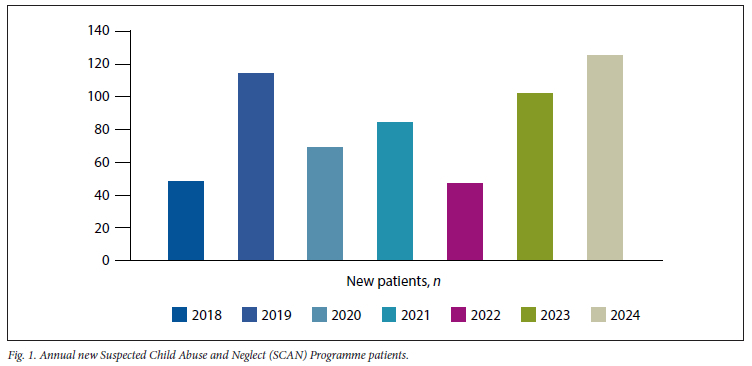
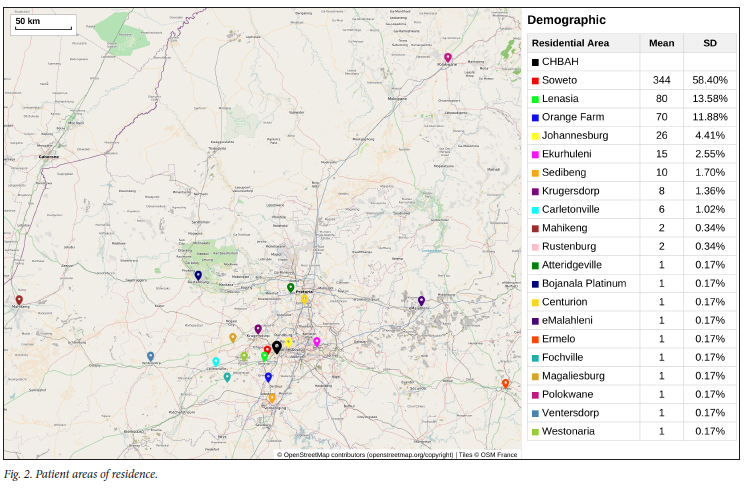
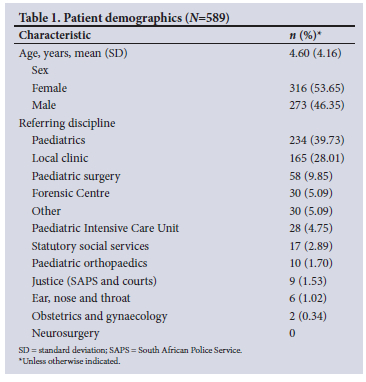
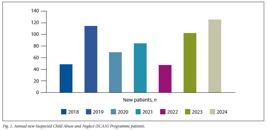
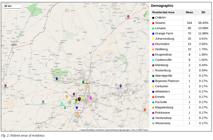
All 589 patients in the database during the study period were included. The total numbers of annual new SCAN patients are shown in (Fig. 1). The patient demographics are presented in (Table 1), and their areas of residence are shown in (Fig. 2). For 16 (2.72%) of the patients, the area of residence was unknown.
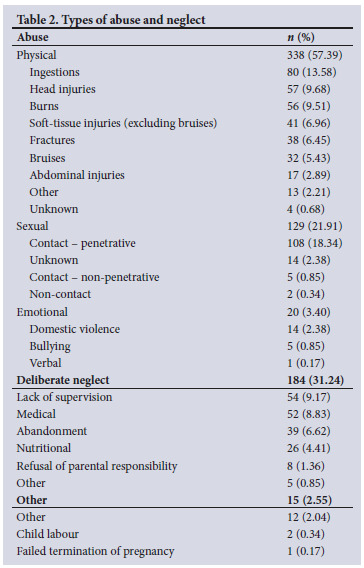
The types of abuse are presented in (Table 2). The types do not add up to 100% because 66 (11.21%) patients presented with multiple types of abuse.
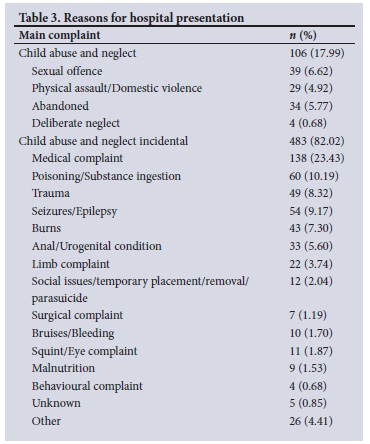
(Table 3) presents the reasons for hospital presentation for all patients.
The median (IQR) length of hospital stay was 23.5 (3 - 26.5) days. Eighteen (3.06%) patients had hospital admissions lasting >100 days. If these were excluded from the median length of hospital stay calculation, the median (IQR) length of hospital stay was 21 (3 - 24) days.
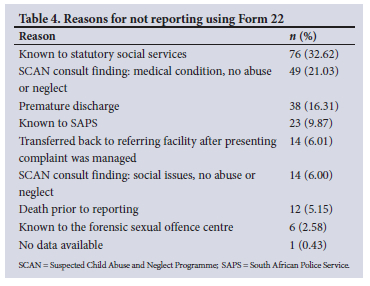
Of the total patient sample, 356 (60.44%) were reported to statutory social services using Form 22. The reasons for not reporting with Form 22 are presented in (Table 4). For 170 (28.86%) patients, a case docket was opened with the SAPS, and of these, 35 (5.94%) were subsequently enrolled in court.
Upon discharge of the 589 patients in the study, 407 (69.10%) were booked for the SCAN Programme clinic. Of these patients, 198 (48.65%) attended the clinic, while 209 (51.35%) did not attend. Of the 182 (30.90%) patients for whom no clinic appointment was made, 40 (21.98%) patients were discharged from the SCAN Programme as no abuse or neglect were identified, 33 (18.13%) were transferred back to their referral facility, 56 (30.77%) were removed and placed by statutory social services without notifying the programme, and 37 (20.33%) died. Sixteen (8.79%) patients were discharged from the treating ward without notifying the programme and had unknown outcomes.
Twenty (3.40%) patients were admitted to hospital for a second time within the study period with a new clinical presentation, and 16 (80.0%) of these patients were re-reported. The reason for not re-reporting the 4 (20%) patients was that the patients were accompanied to the hospital by the social services or the police.
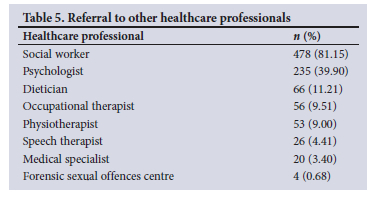
The SCAN Programme aims to follow a multidisciplinary management approach for patients. Referral to other healthcare professionals is shown in (Table 5). Most patients were referred to >1 healthcare professional, and therefore the numbers do not add up to 100%.
Discussion
A total of 589 patients were managed through the SCAN Programme at CHBAH over 7 years. The programme grew from 48 patients in 2018 to 125 patients in 2024; however, the staff complement remained unchanged. The increase in patient numbers may be ascribed to increased awareness among healthcare professionals of the service available, and their ability to identify child abuse and neglect at CHBAH. The slight decrease in patient numbers in 2020 and 2021 was due to the COVID-19 pandemic lockdown. In 2022, the absence of staff replacement during a 4-month maternity leave period was associated with a decrease in patient numbers. There remains a critical need to develop the programme into a full-time, multidisciplinary service to optimise service delivery, as a substantial number of children continue to be inadequately reached.
The mean age at presentation of patients was 4.60 years. This is in keeping with the World Health Organization's findings, which report that children aged <4 years are at higher risk of being abused than older children.[10]
The most common type of abuse was physical abuse (57.39%), followed by deliberate neglect (31.24%) and sexual abuse (21.91%).
Only 3.40% of cases reported were of emotional abuse. These findings are similar to those of a Saudi Arabian study[15] that reported physical abuse (42%), neglect (39%), sexual abuse (14%) and emotional abuse (4%) among children. However, in the Canadian Incidence Study of Reported Child Maltreatment,[16] the primary reasons for investigations were neglect (40%), physical abuse (31%), emotional abuse (19%) and sexual abuse (11%). These varying results highlight how abuse and neglect can vary in different contexts, and the importance of knowing the profile of abuse and neglect in each context to direct management and prevention programmes. Emotional abuse may be underdiagnosed. Varying definitions and presentation make its diagnosis difficult.[17] Emotional abuse does not present with specific physical symptoms, and may be overlooked by healthcare professionals. It is therefore an area that will need further attention to improve outcomes.
The majority of patients in our study originated from within the hospital's catchment area. Referrals from outside regions were primarily due to the need for specialised surgical care that was not available at the referring facilities, and child abuse and/or neglect was identified during the admission. These patients were referred to the statutory social services in the respective area to continue monitoring post discharge.
The departments of paediatrics and paediatric surgery and local clinics accounted for the highest number of referrals - 39.73%, 9.85% and 28.01%, respectively. This referral pattern likely reflects the structure and affiliations of the SCAN Programme, which is housed within the Department of Paediatrics and operates in collaboration with Surgeons for Little Lives, based in the Department of Paediatric Surgery. Additionally, intern doctors rotate through these departments before being posted to local clinics, further strengthening referral pathways. It is important to note that paediatric surgical services at CHBAH do not include orthopaedic and neurosurgical care; these specialties are managed by their respective departments. No referrals were received from the Department of Neurosurgery, while only 1.70% of patients were referred by the Department of Orthopaedic Surgery. These findings underscore the critical importance of visibility and departmental engagement in the success of programmes such as SCAN. One of the authors (ALR) proactively engages with departments that manage paediatric patients, through educational lectures and relationship-building. However, ongoing visibility and stakeholder buy-in remain essential to the programme's continued effectiveness and reach. It would be ideal to raise awareness of the programme outside the hospital environment; however, the limited staff complement and the allocated time of 1 day a week make this challenging.
The majority (82.02%) of patients presented to the hospital for reasons unrelated to suspected abuse or neglect. Only 4.92% presented with a history of physical assault, 6.62% with suspected sexual abuse, 0.68% with deliberate neglect (not including abandonment) and 5.77% with abandonment. These figures highlight the need for a high index of suspicion to identify cases of abuse or neglect. Continued efforts to raise awareness of the SCAN Programme and to facilitate broader engagement across departments and in the community - for example, community healthcare workers, social workers, teachers and police officials - are essential to ensure that all at-risk children are appropriately identified and referred. Expansion of the programme would further enhance its capacity to meet this need.
The median length of hospital stay among the study cohort was 23.5 days. However, 3.06% of patients experienced admissions exceeding 100 days, with the longest admission lasting 541 days. While some prolonged hospitalisations were attributable to ongoing medical or surgical needs, the predominant cause was the delay in receiving feedback from statutory social services regarding discharge planning. Although the programme maintains a generally positive working relationship with these services, the overall efficiency of the child protection system needs to be strengthened.
A multidisciplinary approach is one of the important principles of child abuse and neglect management.[18] Only 3.40% of patients were referred to other healthcare professionals after SCAN Programme consultation. This is not a true reflection of the involvement of other healthcare professionals in the management of patients, as they may have been the ones who made the initial referrals to the SCAN Programme, or they may already have been consulted by the treating physicians.
One hundred and eighty-two (30.9%) patients were discharged from the hospital without a scheduled SCAN Programme Clinic date for follow-up. These patients were discharged from the ward without any communication with the programme. Although all attempts are made to contact caregivers by telephone, for various reasons, this is not always successful. Educating healthcare professionals will ensure a better understanding of the implications of discharging suspected abuse and neglect patients prior to reaching the desired outcome. The development and implementation of a standard operating procedure may contribute to addressing this problem.
The study was conducted in a contextual setting at CHBAH, and the results may not be generalisable to other hospitals. The retrospective design might have contributed to the possible under-reporting of abuse and neglect by treating physicians.
To ensure more effective and comprehensive care, the following recommendations are made: (i) the expansion of the SCAN Programme to a full-time multidisciplinary programme; (ii) to maintain awareness lectures and relationship-building in various departments, with an increased focus on departments with low referral rates; (iii) screening of high-risk wards to improve the identification and reporting of abuse and neglect patients; and (iv) the development of a standard operating procedure for departments to manage maltreated patients.
Conclusion
The SCAN Programme aims to detect suspected abuse and neglect of child patients early, to protect these patients from harm and to prevent maltreatment. The results of this study highlight the need to expand the SCAN Programme at CHABH to ensure that vulnerable patients receive the care they need. Creating awareness among healthcare professionals could be extended to the community, and could be linked with community-based services, improving identification and monitoring of child abuse cases in the public health system.
Data availability. The data that support the findings of this study are available from the corresponding author upon reasonable request.
Declaration. None.
Acknowledgements. The authors acknowledge the valuable input of Ms Nkosikhona Masikana for managing the SCAN Programme Database.
Author contributions. ALR: conceptualisation, proposal, data collection and analysis, manuscript writing and final review. NP: proposal, data analysis, manuscript final review. SV: conceptualisation, proposal, manuscript final review. JS: conceptualisation, proposal, data collection and analysis, manuscript writing and final review.
Funding. None.
Conflicts of interest. None.
References
-
1. Artz L, Burton P, Ward CL, et al. Sexual victimisation of children in South Africa. Final Report of the Optimus Foundation Study. Cape Town: UBS Optimus Foundation, 2016. https://www.saferspaces.org.za/uploads/files/08_cjcp_report_2016_d.pdf (accessed 6 June 2024).
» https://www.saferspaces.org.za/uploads/files/08_cjcp_report_2016_d.pdf -
2. Felitti VJ, Anda RF, Nordenberg D, et al. Relationship of childhood abuse and household dysfunction to many of the leading causes of death in adults. Am J Preventative Med 1998;14(4):245-258. https://doi.org/10.1016/s0749-3797(98)00017-8
» https://doi.org/10.1016/s0749-3797(98)00017-8 - 3. Christian CW, Blum NJ. Child abuse and neglect. In: Marcdante KJ, Kliegman RM (eds). Nelsons Essentials of Paediatrics. 7th ed. Philadelphia: Elsevier Saunders, 2015:70-74.
-
4. Mathews S, Abrahams N, Jewkes R, Martin LJ, Lombard C. The epidemiology of child homicides in South Africa. Bull World Health Organ 2013;91(8):562-568. https://doi.org/10.2471/BLT.12.117036
» https://doi.org/10.2471/BLT.12.117036 -
5. Mathews S, Martin LJ, Coetzee D, et al. The South African child death review pilot: A multiagency approach to strengthen healthcare and protection for children. S Afr Med J 2016;106(9):895-899. https://doi.org:10.7196/SAMJ.2016.v106i9.11234
» https://doi.org:10.7196/SAMJ.2016.v106i9.11234 -
6. Abrahams N, Mathews S, Lombard C, Martin LJ, Jewkes R. Sexual homicides in South Africa: A national cross-sectional epidemiological study of adult women and children. PLoS ONE 2017;12(10):1-13. https://doi.org/10.1371/journal.pone.0186432.
» https://doi.org/10.1371/journal.pone.0186432 -
7. Zheng X, Fang X, Fry DA, et al. Association of child maltreatment with South African adults' wages: Evidence from the Cape Area Panel Study. Health Econo Rev 2018;8(20):1-12. https://doi.org/10.1186/s13561-018-0206-6
» https://doi.org/10.1186/s13561-018-0206-6 -
8. Gordon K. Good intentions, questionable results: The shortcomings of mandated reporting for child maltreatment. J Legal Stud 2019;9(1):1-21. https://doi.org/10.5206/uwojls.v9i1.6826
» https://doi.org/10.5206/uwojls.v9i1.6826 -
9. Bekink M. Reversing the 'syndrome of secrecy': Peremptory reporting obligations in cases of child abuse and neglect. S Afr Crime Q 2021;70(1):1-10. https://doi.org/10.17159/2413-3108/2021/i70a7744
» https://doi.org/10.17159/2413-3108/2021/i70a7744 -
10. World Health Organization. Child maltreatment. Geneva: WHO, 2024. https://www.who.int/news-room/fact-sheets/detail/child-maltreatment (accessed 8 April 2025).
» https://www.who.int/news-room/fact-sheets/detail/child-maltreatment -
11. AlShalhoub NM, Bin Shalhoub AA, Alshanawani HE, et al. Identifying the challenges of child abuse detection among emergency, pediatrics, and family medicine practitioners in Saudi Arabia. Cureus 2023;15(4):e38022. https://doi.org/10.7759/cureus.38022
» https://doi.org/10.7759/cureus.38022 -
12. Hendricks ML. Mandatory reporting of child abuse in South Africa: Legislation explored. S Afr Med J 2014;104(8):550-552. http://doi.org/10.7196/samj.8110.
» http://doi.org/10.7196/samj.8110 -
13. Azizi M, Shahhosseini Z. Challenges of reporting child abuse by healthcare professionals: A narrative review. J Nurs Midwifery Sci 2017;4(3):110-116. http://doi/10.4103/JNMS_3_17
» http://doi/10.4103/JNMS_3_17 - 14. South Africa. Children's Act No. 38 of 2005.
-
15. Almuneef MA, Alghamdi LA, Saleheen HN. Family profile of victims of child abuse and neglect in the Kingdom of Saudi Arabia. Saudi Med J 2016;37(8):882-888. https://doi.org/10.15537/smj.2016.8.14654
» https://doi.org/10.15537/smj.2016.8.14654 -
16. Trocmé NM, Tourigny M, MacLaurin B, Fallon B. Major findings from the Canadian incidence study of reported child abuse and neglect. Child Abuse Neglect 2003;27(12):1427-1439. https://doi.org/10.1016/j.chiabu.2003.07.003
» https://doi.org/10.1016/j.chiabu.2003.07.003 -
17. Mathews B, Dube S. Childhood emotional abuse is becoming a public health priority: Evidentiary support for a paradigm change. Child Protect Pract 2025;4(17):1-11. https://doi.org/10.1016/j.chipro.2024.100093
» https://doi.org/10.1016/j.chipro.2024.100093 -
18. Herbert JL, Bromfield L. Better together? A review of evidence for multi-disciplinary teams responding to physical and sexual child abuse. Trauma Violence Abuse 2019;20(2):214-228. https://doi.org/10.1177/1524838017697268
» https://doi.org/10.1177/1524838017697268

Accepted 29 April 2026