Snakebite: admissions at a tertiary health care centre in Maharashtra, India
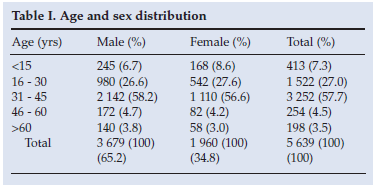
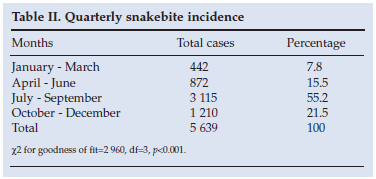
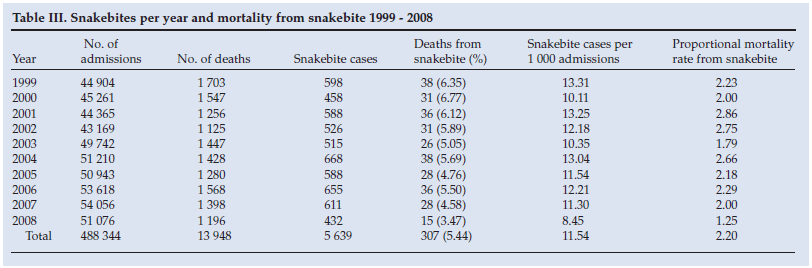
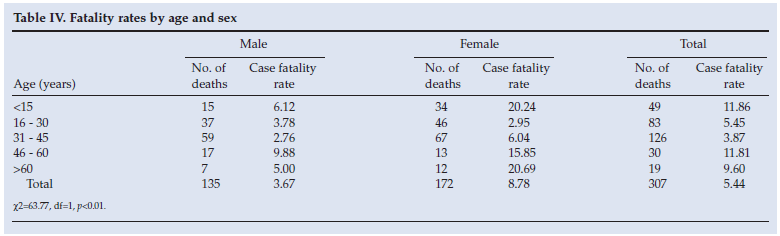
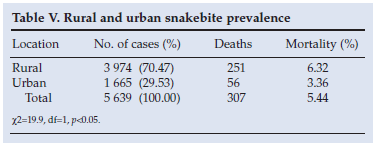
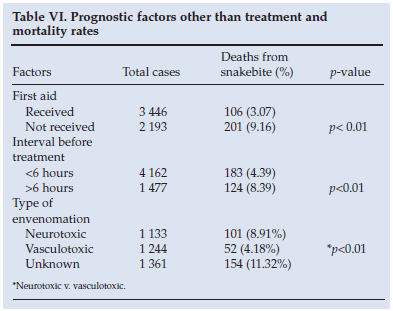
OBJECTIVES: To determine the outcome, seasonal variation, and death pattern of snakebite cases admitted at the tertiary health care centre in the last 10 years. METHODS: This was a record-based retrospective descriptive study at the Dr Shankarrao Chavan Government Medical College and Hospital in Vazirabad, a tertiary health care centre in Maharashtra, India. RESULTS: Out of 5 639 admitted snakebite cases, 65.24% were male. The 16 - 45-year age group accounted for 84.7% of cases; 46% were referred from other health centres, mostly from rural areas; 55.2% occurred during July to September, which coincided with the rainy season in this region; 94.6% of the snakebite patients survived; and 5.4% died. Case fatality rates were higher for females (8.78%) and for bites by neurotoxic snakes (8.91%). CONCLUSIONS: Snakebite is a common life-threatening emergency in the study area. Ready availability and appropriate use of antivenom, early referral when required and close monitoring of patients in the hospital will help to reduce mortality from snakebites.
SAMJ: South African Medical Journal