Rural-urban disparities and socioeconomic determinants of caesarean delivery rates in Zimbabwe: Evidence from the 2019 National Multiple Indicator Cluster Survey
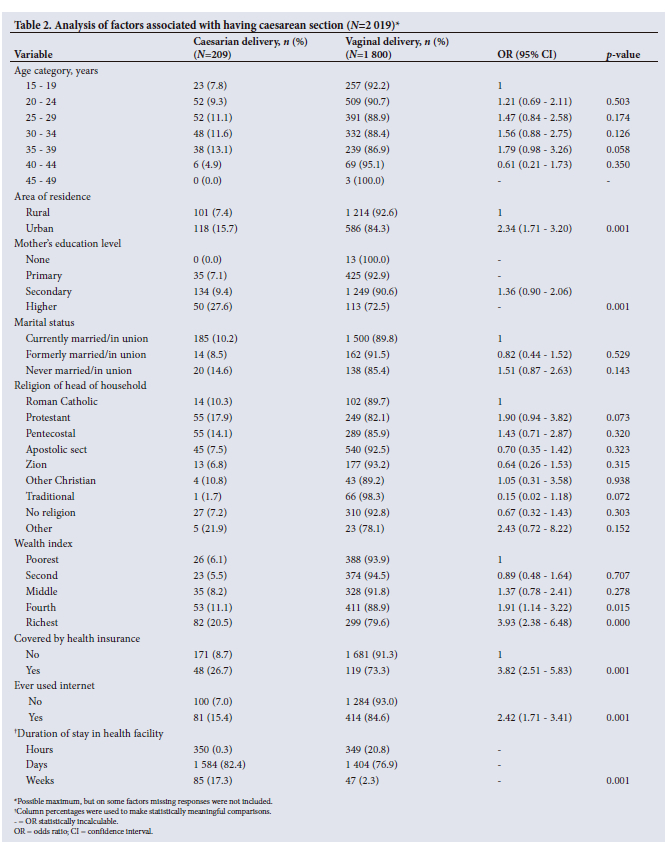
Caesarean sections (CSs) have increased globally, with concerns being raised involving overutilisation and inequalities in access. In Zimbabwe, where healthcare access varies greatly, we aimed to analyse factors associated with ever having a CS using the 2019 National Multiple Indicator Cluster Survey. The weighted national CS rate was 10.3%, and CS happened more commonly among women in urban than rural areas (15.7% v. 7.4%; odds ratio (OR) 2.34; (95% confidence interval (CI)) 1.71 - 3.20; p=0.001). Percentages of those having a CS significantly increased with education: overall χ2 for a trend of p=0.001 and wealth quintile, and overall χ2 for a trend of p=0.001. Women with insurance coverage were more likely to have had a CS than those without: 26.7% v. 8.7%; OR 3.82; 95% CI 2.51 - 5.83; p=0.001. The same was the case for women with access to the internet: 15.4% v. 7.0%, OR 2.42; 95%CI 1.71 - 3.41; p=0.001). These findings show an association that could indicate this being overutilised by insured women in urban settings, rather than being accessible based on clinical needs. Further research should explore reasons for these disparities and inform interventions to ensure equitable access to optimum childbirth in Zimbabwe.
caesarean section; women; Multiple Indicator Cluster Survey MICS 2019; Zimbabwe