A survey on the treatment of atrial fibrillation in South Africa
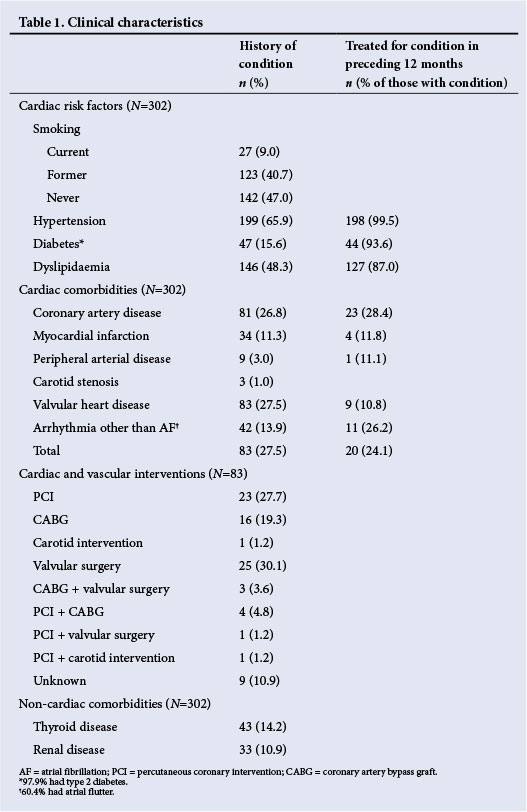
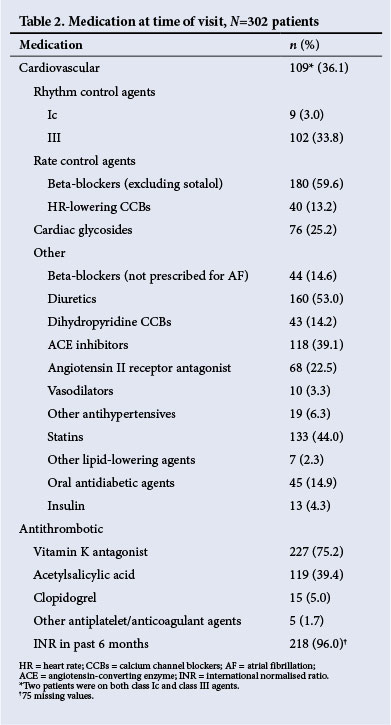
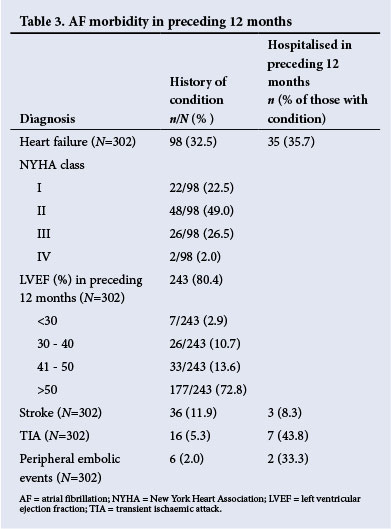
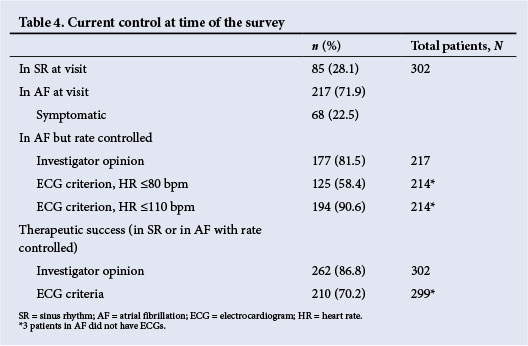
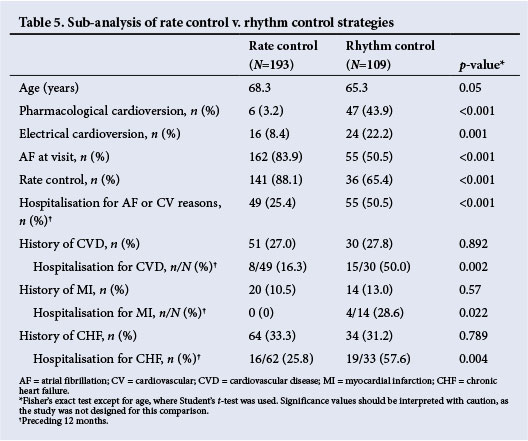
BACKGROUND: The burden of cardiovascular disease is expected to escalate in developing countries. However, studies and guidelines concerning atrial fibrillation (AF) are restricted to the developed world. OBJECTIVES: To assess the treatment modalities of AF in South Africa. METHODS: A cross-sectional, observational, multicentre, national registry of the treatment of 302 patients with AF was conducted from February 2010 to March 2011. Specific drug use for rate or rhythm control, as well as drug use for stroke prevention, was surveyed. Events during the 12 months prior to the survey were also characterised, including non-drug treatments, resource utilisation and complications. RESULTS: The single most prevalent clinical characteristic was hypertension (65.9%). Rhythm control was being pursued in 109 patients (36.1%) with class Ic and class III antiarrhythmic agents, while rate control, mainly with beta-blockers, was pursued in the remainder of the patients. Concomitant use of other cardiovascular drugs was high, and 75.2% of patients were on warfarin for stroke prevention. There was a high burden of AF-related morbidity during the preceding year, with 32.5% reporting a history of heart failure, 8.3% a stroke and 5.3% a transient ischaemic attack. Therapeutic success, as defined by either the presence of sinus rhythm or rate-controlled AF, was achieved in 86.8% as judged clinically by the treating physician, but in only 70.2% according to the electrocardiogram criterion of heart rate 80 bpm. CONCLUSION: There were no striking differences from previously reported registries worldwide. The lack of application of strict rate control criteria is highlighted.
SAMJ: South African Medical Journal