A diagnostic dilemma for a common but not-so-typical street pesticide
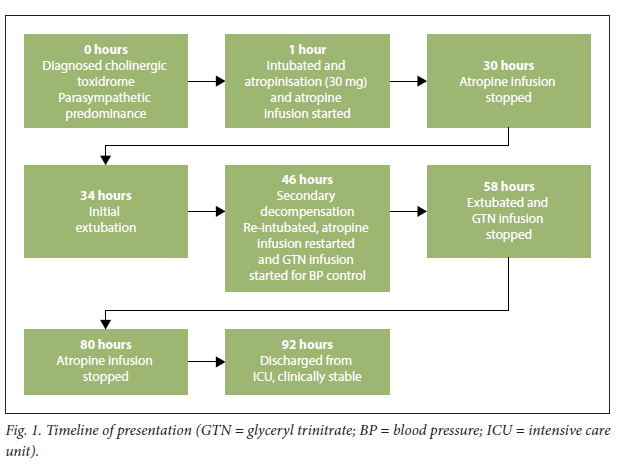
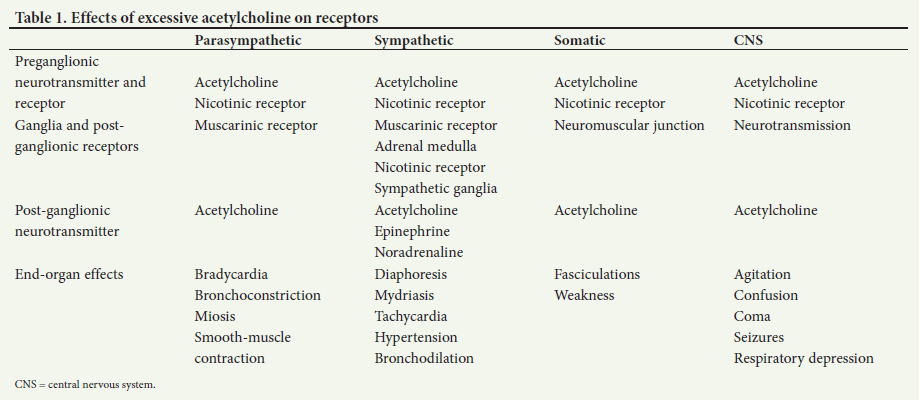
The illegal practice of combining organophosphates (OPs) with other compounds such as carbamates and pyrethroids, creating 'street pesticides', is common in South Africa. These agents contain mostly unknown quantities of unregulated toxins and contribute to atypical and unpredictable clinical presentations following human ingestion. We present such a case in a patient with intentional rodenticide ingestion. The initial presentation in the emergency department was a classic cholinergic toxidrome, and clinical resolution was achieved after provision of atropine. This was followed 12 hours later by an acute decompensation resulting from an apparent sympathetically driven episode of autonomic instability and acute pulmonary oedema requiring immediate respiratory and haemodynamic support. In our discussion, we explore this secondary decompensation and suggest various pathophysiological explanations for this atypical clinical course following what had appeared to be OP poisoning. The patient was discharged home after a total of 6 days in hospital.
SAMJ: South African Medical Journal
 Thumbnail