When politics disrupts science: Beyond the NIH policy reversal - building a more resilient and sustainable research ecosystem in South Africa
I read with interest in the August Science Insider[1] that the US National Institutes of Health (NIH) had made a decision to restore funding for research collaborations in South Africa (SA), a welcome and important reversal of a policy that had disrupted one of the world's most productive and influential scientific alliances. This, after nearly 18 months of halted studies, staff retrenchments and loss of, and ongoing threats to, hard-won research infrastructure built painstakingly over many years. While the lifting of restrictions deserves celebration and provides renewed hope for researchers at the forefront of HIV, tuberculosis (TB) and other critical health challenges, the entire debacle underscores the precarious nature of international scientific collaboration, and the ease with which geopolitical tensions and forces can undermine decades of collective progress. Following an executive order from President Donald Trump declaring the funding freeze and directing US agencies to halt foreign aid and assistance to SA early in 2025, the NIH research grants, while not designed as foreign aid, were inadvertently encompassed by a broad interpretation of the order.
The consequences were immediate and profound. SA's research ecosystem, particularly in the fields of HIV and TB, has been built on longstanding collaborations with NIH-funded research networks.[2] The disruption of these partnerships carried significant human and scientific costs. SA is not simply a beneficiary of international research funding; it is a global leader in biomedical science. Our substantial HIV and TB burden, highly experienced investigators, world-class clinical trial infrastructure and extensive community-based research networks have made our country an indispensable contributor to advances in global health. Many of the landmark breakthroughs in HIV prevention, treatment and implementation science over the past two decades have emerged from research conducted in SA, frequently through collaborations supported by the NIH.
The NIH's decision, articulated by director Jay Bhattacharya, is grounded in a crucial and pragmatic principle: scientific collaboration is fundamentally different from foreign aid.[1] Research partnerships are investments in knowledge generation, innovation and public health, producing benefits that extend well beyond national borders. They represent reciprocal relationships that advance scientific discovery and strengthen global health for all participants. By affirming that NIH-funded collaborations fall within the agency's mission to promote scientific advancement and international knowledge exchange, rather than under the remit of foreign assistance programmes, the NIH has reaffirmed a principle that has long driven progress in modern medicine: many of the world's most pressing health challenges are global in nature, and meaningful scientific advances depend on international co-operation.
The benefits of restoring NIH funding extend far beyond SA. Scientific discoveries arising from research conducted in SA populations have repeatedly shaped healthcare policy, clinical guidelines and medical practice in high-income countries, including the USA. Advances in HIV treatment and prevention, TB diagnostics and care, vaccine development and implementation science have all been informed by evidence generated through SA research programmes. In an era marked by evolving infectious diseases and emerging health threats, strong international research partnerships are not a luxury but a global necessity. Sustaining these networks is essential to advancing scientific discovery, strengthening health systems and ensuring preparedness for future public health challenges.[1,2]
The response from the scientific community has been one of considerable relief and renewed optimism. Researchers whose projects were disrupted or suspended can once again move forward with planning studies, rebuilding collaborations and restoring critical research activities. Yet the reinstatement of funding does not simply represent a return to business as usual. NIH-funded projects are now subject to additional requirements, including the need to demonstrate a clear scientific justification for conducting research outside of the USA, and to articulate how the findings may ultimately benefit the health of Americans.[1-3]
While greater accountability in the use of public funds is both appropriate and necessary, these new conditions have prompted concerns that they may inadvertently constrain the breadth and ambition of international research. Scientific advances frequently emerge from investigations that initially appear distant from domestic priorities. HIV, for example, was once regarded as a geographically limited concern, before evolving into a global public health crisis. Restricting support to research with readily identifiable US relevance risks overlooking emerging threats and limiting the exploratory science that so often generates transformative discoveries. In an increasingly interconnected world, long-term health security depends on maintaining the capacity to investigate diseases wherever they arise, and to sustain the international partnerships that make such research possible.
In addition, a decision was made to exclude SA researchers from training and career development programmes supported by the NIH's Fogarty International Centre, based on SA's classification as an upper-middle-income country and its membership in the G20, placing it outside the eligibility criteria for programmes primarily intended to support lower-income nations.[1-3] However, such classifications fail to capture the profound socioeconomic inequalities that persist within the country, and overlook the exceptional returns generated by decades of investment in research capacity development. Many SA scientists who received Fogarty support have gone on to become internationally recognised leaders in biomedical research, making contributions that have benefited global health far beyond our borders. While withdrawing this support may yield short-term financial savings, it risks undermining a successful model of scientific capacity-building, and weakening the pipeline of future research leaders whose work could shape the next generation of medical advances.
Importantly, however, the past 18 months have highlighted the resilience and adaptability of SA's scientific infrastructure and research capacity. Emergency support from the South African Medical Research Council (SAMRC), National Treasury, philanthropic foundations and international partners helped to preserve critical research capacity during a period of considerable uncertainty.[2] While these interventions played an essential stabilising role, they were never intended as long-term solutions. The task now is to rebuild disrupted programmes, restore lost expertise and regain the momentum that was interrupted. Scientific research depends on sustained investment, continuity and collaboration; it cannot simply be paused and restarted without significant consequences for people, institutions and the advancement of knowledge. Research ecosystems are built over years, but can be disrupted in a matter of months, and the consequences of such interruptions are often felt long after funding is restored.
The NIH's reversal, while a policy correction, is also a reaffirmation of the enduring value of long-term scientific partnerships, and of the principle that global health challenges are best addressed through collaboration, not isolation. Nevertheless, the charge now is not simply to restore what was lost, but to build a research landscape that is more resilient and sustainable, and less vulnerable to political and policy fluctuations.
AI contribution. Artificial intelligence (AI) was used to refine language in this editorial.
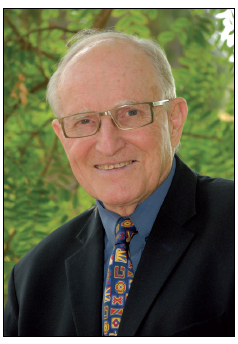
Ames Dhai
Editor

References
-
1. Cohen J. NIH lifts ban on funding research in South Africa. Researchers who study HIV, uberculosis, and other infectious disease in the country welcome policy change. Science Insider, 18 August 2026. https://www.science.org/content/article/nih-lifts-ban-funding-research-south-africa (accessed 19 August 2026).
» https://www.science.org/content/article/nih-lifts-ban-funding-research-south-africa -
2. Human L. World's largest biomedical research funder lifts ban on South Africa. GROUNDUP. Daily Maverick, 25 August 2026. https://www.dailymaverick.co.za/article/2026-08-25-world-s-largest-biomedical-research-funder-lifts-ban-on-south-africa/ (accessed 25 August 2026).
» https://www.dailymaverick.co.za/article/2026-08-25-world-s-largest-biomedical-research-funder-lifts-ban-on-south-africa/ -
3. East Africa Media Group (EAMG). US NIH restores Rearch Funding for South Africa After Foreign Aid Dispute. EAMG, 20 August 2026. https://eastafrica.media/africa/us-nih-restores-research-funding-for-south-africa-after-foreign-aid-dispute/#:~:text=The%20U.S.%20National%20Institutes%20of%20Health%20%28NIH%29%20has,halt%20foreign%20aid%20and%20assistance%20to%20the%20country (accessed 19 August 2026).
» https://eastafrica.media/africa/us-nih-restores-research-funding-for-south-africa-after-foreign-aid-dispute/#:~:text=The%20U.S.%20National%20Institutes%20of%20Health%20%28NIH%29%20has,halt%20foreign%20aid%20and%20assistance%20to%20the%20country