Evaluation of screening strategies for gestational diabetes mellitus: Risk factor-based v. universal approaches in women with and without HIV
BACKGROUND: Gestational diabetes mellitus (GDM) poses a substantial risk of adverse maternal, fetal and child health outcomes, and may be influenced by HIV infection. In South Africa (SA), risk-based GDM screening is used owing to resource constraints, but this approach may miss some cases. There is a need to optimise screening methods to efficiently identify pregnant women with GDM. OBJECTIVES: To compare risk factor-based screening, the current standard of care and screening with fasting plasma glucose (FPG) to the gold standard of universal GDM screening with an oral glucose tolerance test (OGTT). METHODS: We universally screened 399 women with and without HIV attending antenatal care in Gugulethu Community Health Centre, Cape Town, SA, for GDM at 24 - 28 weeks' gestation using a 2-hour 75 g OGTT. GDM was diagnosed based on the International Association for Diabetes in Pregnancy Study Group criteria. We used logistic regression and receiver operating characteristic curves to compare the screening performance of (i) risk factor-based screening, based on the SA National Department of Health Guidelines for maternity care; and (ii) FPG with and without clinical risk factors including age, body mass index, HIV status and family history of diabetes, with an OGTT (the gold standard). RESULTS: The median (interquartile range) age of participants was 30 (25 - 34) years, and 81% were multiparous. Using OGTT, the prevalence of GDM was 6.3% (9.0% in women with HIV and 3.5% in women without HIV). Risk factor-based screening was poor and showed no discrimination (area under the curve (AUC) 0.53, sensitivity 0.52, specificity 0.55, positive predictive value (PPV) 0.07 and negative predictive value (NPV) 0.94). FPG (AUC 0.91, sensitivity 0.50, specificity 0.98, PPV 0.25 and NPV 0.99) and FPG plus clinical risk factors (AUC 0.98, sensitivity 0.83, specificity 0.97, PPV 0.31, NPV 1.00) showed strong discrimination. FPG had low sensitivity, but this improved greatly when combined with clinical risk factors. CONCLUSION: Risk factor-based screening, which is the current standard of care, did not discriminate between those with and without GDM. Screening for GDM with FPG and clinical risk factors improved discrimination, and had high sensitivity and specificity, but low PPV. These findings suggest that combining FPG with risk factors may be a practical approach to identify women who should undergo a full OGTT for GDM screening in resource-constrained settings.
pregnancy; diabetes; hyperglycaemia; gestational diabetes; screening; South Africa
Evaluation of screening strategies for gestational diabetes mellitus: Risk factor-based v. universal approaches in women with and without HIV
H P MadlalaI; M MennenII; H GeffenIII; J JaoIV, V; M MatjilaVI; A FisherVII; G PetroVIII; S Cu-UvinIX; S T McGarveyX; J H GoedeckeXI, XII; L MyerXIII; A M BengtsonXIV
IPhD MPH; Division of Epidemiology and Biostatistics, Faculty of Health Sciences, University of Cape Town, South Africa
IIMB ChB, MPH; Department of Medicine, Faculty of Health Sciences, University of Cape Town, South Africa
IIIMSc; Division of Epidemiology and Biostatistics, Faculty of Health Sciences, University of Cape Town, South Africa
IVMD, MPH; Department of Pediatrics, Feinberg School of Medicine, Northwestern University, Evanston, USA
VMD, MPH; Department of Medicine, Feinberg School of Medicine, Northwestern University, Evanston, USA
VIMB ChB, PhD; Department of Obstetrics and Gynaecology, Faculty of Health Sciences, University of Cape Town, South Africa
VIIBNurs; Division of Epidemiology and Biostatistics, Faculty of Health Sciences, University of Cape Town, South Africa
VIIIMB ChB; Department of Obstetrics and Gynaecology, Faculty of Health Sciences, University of Cape Town, South Africa
IXMD; Department of Obstetrics and Gynaecology and Medicine, Warren Alpert School of Medicine, Brown University, Providence, USA
XMPH, PhD; Department of Epidemiology and Center for Global Public Health, School of Public Health, Brown University, Providence, USA
XIPhD; Biomedical Research and Innovation Platform, South African Medical Research Council, Cape Town, South Africa
XIIPhD; Department of Human Biology, Faculty of Health Sciences, University of Cape Town, South Africa
XIIIMB ChB, PhD; Division of Epidemiology and Biostatistics, Faculty of Health Sciences, University of Cape Town, South Africa
XIVPhD; Department of Epidemiology, Rollins School of Public Health, Emory University, Atlanta, USA
BACKGROUND: Gestational diabetes mellitus (GDM) poses a substantial risk of adverse maternal, fetal and child health outcomes, and may be influenced by HIV infection. In South Africa (SA), risk-based GDM screening is used owing to resource constraints, but this approach may miss some cases. There is a need to optimise screening methods to efficiently identify pregnant women with GDM.
OBJECTIVES: To compare risk factor-based screening, the current standard of care and screening with fasting plasma glucose (FPG) to the gold standard of universal GDM screening with an oral glucose tolerance test (OGTT).
METHODS: We universally screened 399 women with and without HIV attending antenatal care in Gugulethu Community Health Centre, Cape Town, SA, for GDM at 24 - 28 weeks' gestation using a 2-hour 75 g OGTT. GDM was diagnosed based on the International Association for Diabetes in Pregnancy Study Group criteria. We used logistic regression and receiver operating characteristic curves to compare the screening performance of (i) risk factor-based screening, based on the SA National Department of Health Guidelines for maternity care; and (ii) FPG with and without clinical risk factors including age, body mass index, HIV status and family history of diabetes, with an OGTT (the gold standard).
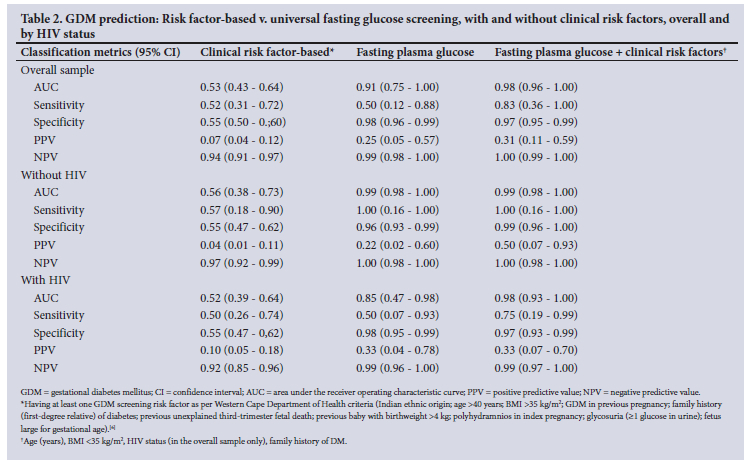
RESULTS: The median (interquartile range) age of participants was 30 (25 - 34) years, and 81% were multiparous. Using OGTT, the prevalence of GDM was 6.3% (9.0% in women with HIV and 3.5% in women without HIV). Risk factor-based screening was poor and showed no discrimination (area under the curve (AUC) 0.53, sensitivity 0.52, specificity 0.55, positive predictive value (PPV) 0.07 and negative predictive value (NPV) 0.94). FPG (AUC 0.91, sensitivity 0.50, specificity 0.98, PPV 0.25 and NPV 0.99) and FPG plus clinical risk factors (AUC 0.98, sensitivity 0.83, specificity 0.97, PPV 0.31, NPV 1.00) showed strong discrimination. FPG had low sensitivity, but this improved greatly when combined with clinical risk factors.
CONCLUSION: Risk factor-based screening, which is the current standard of care, did not discriminate between those with and without GDM. Screening for GDM with FPG and clinical risk factors improved discrimination, and had high sensitivity and specificity, but low PPV. These findings suggest that combining FPG with risk factors may be a practical approach to identify women who should undergo a full OGTT for GDM screening in resource-constrained settings.
Keywords: pregnancy, diabetes, hyperglycaemia, gestational diabetes, screening, South Africa
Gestational diabetes mellitus (GDM) is defined as hyperglycaemia with first detection in pregnancy that typically resolves after delivery.[1] GDM affects one in seven pregnancies globally.[2] GDM increases the risk of multiple adverse pregnancy outcomes, including stillbirths, macrosomia, preterm birth, fetal growth restriction, neonatal hypoglycaemia and neonatal deaths.[2] In addition, GDM increases the risk of future non-communicable diseases such as type 2 diabetes and cardiovascular conditions for women and their offspring.[3,4] Early detection and management of GDM are crucial to minimise these adverse outcomes. As a result, GDM screening is recommended by the World Health Organization (WHO).[5] The International Association of Diabetes in Pregnancy Study Group (IADPSG) encourages universal screening of GDM with a 2-hour 75 g oral glucose tolerance test (OGTT) at 24 - 28 weeks' gestation.[1] However, this is not feasible in under-resourced settings with large patient burdens - such as most public healthcare facilities in South Africa (SA). Consequently, risk factor-based screening via an OGTT of pregnant women with ≥1 risk factors for GDM remains the predominant practice.[1] The risk factor-based criteria used for women who qualify for screening (listed below) are taken from the SA National Department of Health (NDoH) guidelines for maternal and perinatal care.[6] While GDM is linked to definable risk factors, targeted risk factor-based screening may result in a significant proportion of women with GDM being missed and left untreated.[7] Therefore, there is a need to evaluate more efficient screening strategies to enable universal screening of GDM as part of routine antenatal care (ANC) services.
In the search for more universally implementable GDM screening methods in resource-constrained settings, point-of-care (POC) tests, including capillary glucose testing using a glucometer, have gained traction in recent years for their ability to provide faster turnaround times than tests performed in central laboratories, while also requiring less sample volume.[8,9] However, multiple factors related to quality assurance may interfere with the accuracy of using capillary blood and portable blood glucose devices to screen for GDM.[10-12] Some studies have investigated the role of a single fasting plasma glucose (FPG) as a low-cost alternative to universal OGTTs.[13-15] The WHO 2013 recommendations on diagnostic criteria and classification of hyperglycaemia first detected in pregnancy states that an FPG ≥5.1 mmol/L is 100% specific for GDM.[16] Sensitivities, however, vary across ethnicities.[17] High HIV rates in SA ANC clinics may also influence GDM screening method performance, as HIV can affect GDM risk. However, the evidence is mixed, with some studies reporting no association and others reporting an increased risk.[18,19] Nonetheless, considering the targeted nature of the current risk-factor based screening, there is a need for investigation of alternative methods for universal GDM screening.
The primary objective of this study was to compare risk factor-based (standard of care) GDM screening and two additional screening approaches (FPG and FPG plus clinical risk factors) with the gold standard universal OGTT, both overall and by HIV status. The secondary aim was to evaluate correlations between fasting POC capillary blood glucose testing v. laboratory venous blood glucose testing, overall and by HIV status.
Methods
Study design and participants
Data were collected from participants who were enrolled in the CArdioMetabolic Health in Pregnancy (CAMP) prospective cohort study.[20,21] A total of 399 (out of 400 enrolled in CAMP) consecutive pregnant women (n=199 without HIV and n=200 with HIV) were recruited at the Gugulethu Maternity Obstetric Unit (MOU) between November 2019 and June 2022 and included in this analysis. One participant was excluded because they had missing OGTT and POC capillary measures. Gugulethu is a peri-urban settlement situated 18 km south-east of Cape Town in the Cape Metro-West District of the Western Cape Province. Gugulethu has high levels of poverty and unemployment,[22] and is home to ~300 000 people.[20] The HIV prevalence among pregnant women is 29%.[23] The MOU, where 4 500 pregnant women receive ANC annually, is run by nurse-midwives, with onsite obstetric support provided bi-weekly by a medical officer.
The CAMP study has been previously described.[20] Briefly, eligible women were aged ≥18 years, between 24 and 28 weeks' gestation, and willing to participate in all study procedures, including allowing access to their medical records. Pregnant women with known type 2 diabetes and hypertension were excluded. All participants were screened for GDM at 24 - 28 weeks' gestation using an OGTT (fasting, 1-hour and 2-hour measurements after a 75 g glucose load). Gestational age at enrolment was primarily determined by an ultrasound operated by an experienced research sonographer (89%), while the remaining 11% were assessed by either symphysis fundal height measurement or last menstrual period. Socioeconomic status (SES) was determined by a composite score based on level of education, employment status, type of housing and presence of a toilet, running water, electricity, fridge, telephone and television in the house,[24] which were categorised into tertiles corresponding to lower, middle and higher SES group. Women with HIV (WWH) were taking either efavirenz (EFV)-based (tenofovir 300 mg + (emtricitabine 200 mg or lamivudine 300 mg) + EFV 600 mg) or dolutegravir (DTG)-based (tenofovir 300 mg + (emtricitabine 200 mg or lamivudine 300 mg) + dolutegravir 50 mg) antiretroviral therapy (ART) provided as a fixed-dose combination pill taken once daily. The study protocols were reviewed and approved by the Faculty of Health Sciences Human Research Ethics Committee of the University of Cape Town (ref. nos HREC 486/2019 and 505/2020). All women provided written informed consent prior to study participation.
Measures
GDM screening
After a 10 - 12-hour fast, OGTT was performed by a trained study nurse who collected venous blood samples at 0, 60 and 120 minutes. Real-time laboratory glucose testing with venous blood using an enzymatic reference method involving hexokinase was conducted on the Roche cobasTM 6000 analyser (Roche Diagnostics, Switzerland) at the ISO 15189-accredited National Health Laboratory Services at Groote Schuur Hospital, Cape Town. In parallel, POC capillary glucose testing was performed in all three timepoints using a hand-held glucometer (Freestyle Optium Neo, Abbott Diagnostics, USA). This device uses glucose test strips that are calibrated for whole blood, and tests capillary blood glucose concentration by means of electrochemical technology.[25] For both POC capillary and laboratory venous glucose testing, GDM was diagnosed per the IADPSG guidelines based on one elevated value: fasting blood glucose ≥5.1 mmol/L, and/or blood glucose at 1 hour post glucose intake ≥10.0 mmol/L, and/or blood glucose at 2 hours post glucose intake ≥8.5 mmol/L.[26]
Clinical risk factors
The 10 risk factors for risk factor-based GDM screening included in the SA guidelines for maternity care are age >40 years, body mass index (BMI) >35 kg/m2[6] To evaluate the presence of GDM risk factors, BMI was calculated using self-reported pre-pregnancy weight and study nurse-measured height. Self-reported pre-pregnancy weight has been shown to be similar to measured weight.[27] All other risks factors, including HIV status, were confirmed through medical record review and self-report via trained interviewer-administered questionnaires, translated into the participant's home language. Most common clinical risk factors were included with the FPG: these were age, BMI, HIV status and family history of diabetes.
Statistical analysis
We chose to assess the potential of FPG as an alternative to risk factor-based screening because most GDM cases are diagnosed through a fasting blood sample.[12] GDM screening method comparisons were based on the receiver operating characteristic curve characteristics, including area under the curve (AUC), sensitivity and specificity, as well as positive and negative predictive values (PPVs and NPVs). We used logistic regression to compare the performance of risk factor-based GDM screening, FPG and FPG plus clinical risk factors (age, BMI, family history of diabetes and HIV status (not included in HIV strata analysis)) with the gold standard OGTT to identify GDM cases. To examine the correlation between fasting glucose levels obtained using POC capillary glucose v. venous laboratory glucose, we used Lin's concordance correlation coefficient (CCC) method and related 95% confidence intervals (CIs). Because ART regimen had no effect on GDM risk in this cohort,[20] we did not analyse the differences in the performance of the screening methods by ART. All analyses were performed in the overall sample and within strata of HIV status using Stata version 14 (StataCorp, USA) and R (R Foundation for Statistical Sciences, Austria).
Results
Participant characteristics
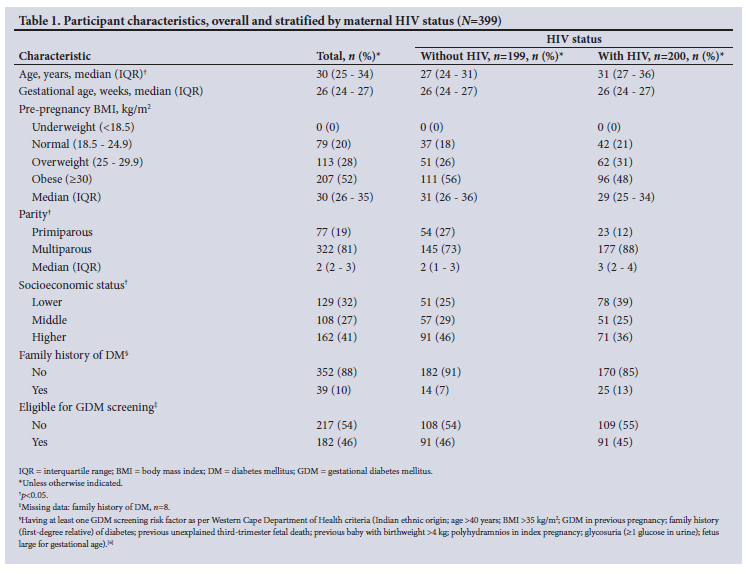
At enrolment at 24 - 28 weeks' gestation, the median interquartile range (IQR) age of the 399 participants was 30 (25 - 34) years; gestational age was 26 (24 - 27) weeks; and 81% of women were multiparous (Table 1). The median pre-pregnancy BMI was 30 (26 - 35) kg/m2
Risk factor-based selective screening v. universal OGTT
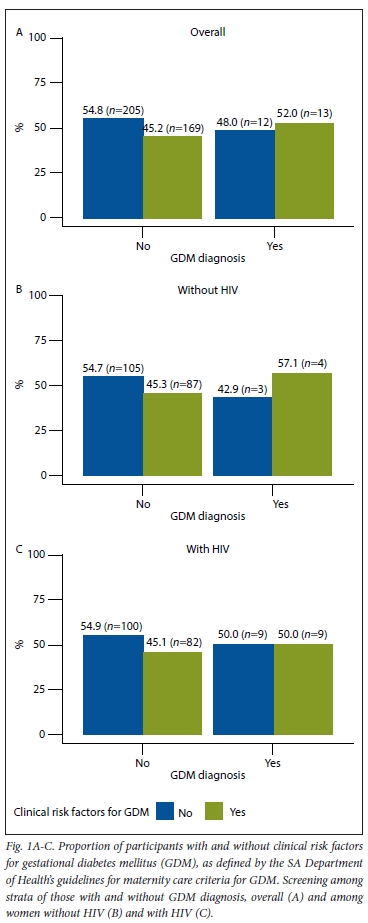
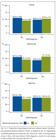
Based on OGTT at 24 - 28 weeks' gestation, 6.3% (9.0% WWH) were diagnosed with GDM. Among the 399 participants, 48% had at least one risk factor for GDM (43% of women without HIV and 50% of WWH), and therefore met the Western Cape Maternity Guidelines criteria for an OGTT (Fig. 1). However, among women without risk factors, the OGTT identified 48% of all GDM cases that would otherwise have been missed, including 43% of cases in women without HIV and 50% in WWH.
Screening methods comparison for GDM prediction
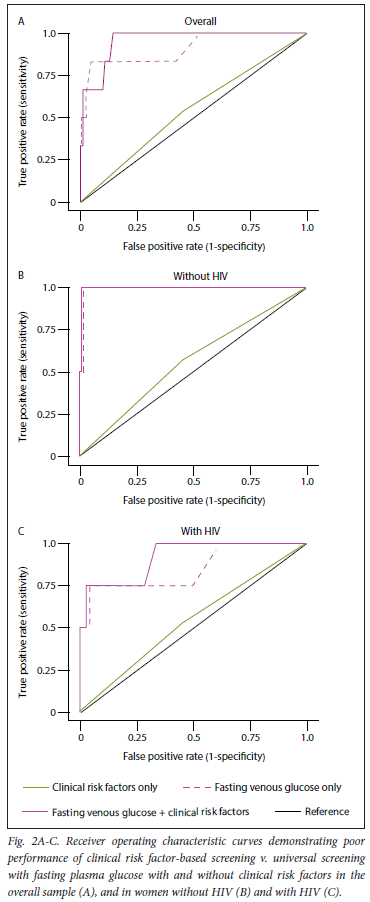
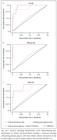
When compared with the universal OGTT, risk factor-based screening was poor and showed no discrimination (AUC 0.53, sensitivity 52%, specificity 55%) (Table 2, Fig. 2, Appendix Fig. S1). FPG had high discrimination (AUC=0.91), specificity (98%) and NPV (99%), but poor sensitivity (50%) and PPV (25%). The addition of the risk factors to FPG maintained the specificity and NPV but, importantly increased the sensitivity (83%), reducing the proportion of missed cases to 17%. However, PPV was still relatively low (31%). This was observed in the overall sample, and in the strata of women with and without HIV. In women both with and without HIV, specificity was high for FPG (98% WWH v. 96% without HIV) and FPG plus clinical risk factors (97% WWH v. 99% without HIV). However, sensitivity in detecting GDM was lower in WWH compared with women without HIV when using both FPG (50% WWH v. 100% without HIV) and FPG plus clinical risk factors (75% WWH v. 100% without HIV) (Table 2, Fig. 2, Appendix Fig. S1). Nonetheless, among WWH, sensitivity was still better with FPG plus clinical risk (25% missed cases) compared with FPG only (50% missed cases). All results were similar when exploring the performance of risk factor-based FPG and FPG plus clinical risk factors screening to identify GDM cases across BMI categories (Appendix Fig. S2).
Fasting POC capillary glucose testing v. venous laboratory testing
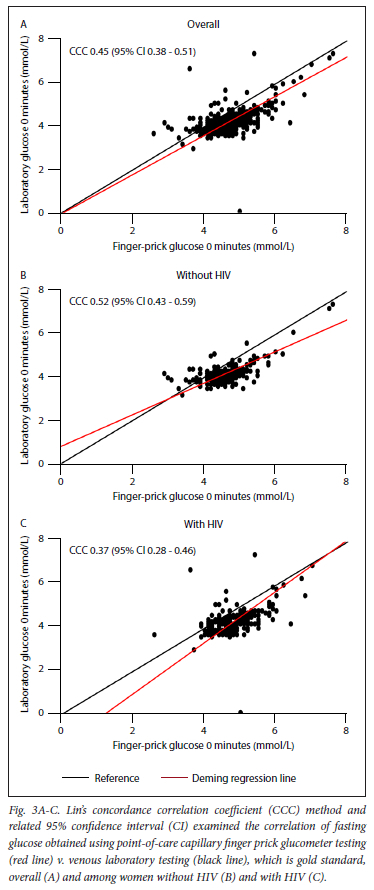
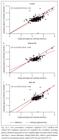
Using universal screening with the standard OGTT for laboratory glucose testing, 96% of GDM cases we identified were diagnosed through fasting plasma samples (Appendix Fig. S3). Therefore, only the fasting timepoint was compared between POC capillary blood glucose testing and laboratory venous blood testing. There was poor correlation between fasting glucose obtained with a POC capillary finger prick glucometer testing v. glucose from venous laboratory testing. The Lin's CCC was 0.45 (95% CI 0.38 - 0.51) for the overall sample, 0.52 (95% CI 0.43 - 0.59) for women without HIV and 0.37 (95% CI 0.28 - 0.46) for WWH (Fig. 3).
Discussion
In this cohort of pregnant women from a peri-urban setting in Cape Town, we found that risk factor-based screening, which is the current standard of care, does not discriminate well between those with and without GDM. Using FPG to screen for GDM in combination with clinical risk factors greatly improved discrimination, and had high sensitivity and specificity, but low PPV. These findings suggest that combining FPG with risk factors may be a practical approach to identify women who should undergo a full OGTT for GDM screening in resource-constrained settings.
In SA, diabetes screening occurs rarely in the non-pregnant population, and women are often screened for hyperglycaemia for the first time in pregnancy.[1] Under risk factor-based GDM screening, the current standard of care, we found that nearly half of all GDM cases would not have been identified. Undiagnosed and untreated GDM resulting from targeted risk factor-based screening may lead to long-term complications for both mothers and their offspring.[7] This underscores the necessity for investigation of cheap and simple universal screening methods to avert adverse outcomes.
Most women in this cohort were diagnosed with GDM owing to an elevated FPG. Poor agreement was observed between capillary glucometer and laboratory venous glucose measurements. These results were not surprising, as studies in SA and other settings have also reported this discordance.[9,12,28] Poor agreement between capillary glucometer and laboratory venous glucose measurements indicate that capillary glucose cannot be used for GDM screening. FPG had a high discrimination of GDM cases with few false positives; however, the high number of false negatives suggests that FPG may still miss a substantial number of GDM cases. The low PPV observed is likely to be related, at least in part, to the relatively low GDM prevalence (6.3%) in this community-based sample. This is because PPV is influenced by disease prevalence, where lower prevalence settings generally result in a higher proportion of false-positive results, even when test sensitivity and specificity are acceptable. Other studies have reported similar findings. For example, in SA, Dickson et al.[12] and Khambule et al.[29] demonstrated that while FPG could effectively rule in or rule out GDM in some women, false negatives still occurred depending on the diagnostic threshold used. These findings suggest that reliance on FPG alone may miss women with abnormal post-load glucose responses.
In our study, incorporation of clinical risk factors with FPG improved the sensitivity, reducing the proportion of missed cases from 50% to 17%. Although no studies in SA have investigated this approach, a study by Agarwal et al.[30] demonstrated that combining FPG with clinical risk assessment in a high-risk population improved screening performance and reduced misclassification rates compared with using FPG thresholds alone, which was also echoed in a broader review.[31] These findings underscore the importance of a multifaceted approach to screening for GDM. The improvement of GDM case detection through combining FPG with clinical risk factors is particularly pertinent given the disparities we observed by HIV status, where FPG sensitivity was lower for WWH compared with their counterparts without HIV. Despite the high burden of HIV in SA, no studies have considered potential HIV status disparities in relation to GDM screening methods. We speculate that the lower sensitivity observed in the HIV group may be related to HIV-associated metabolic changes that alter glucose homeostasis and insulin resistance patterns. These metabolic alterations may contribute to impaired glucose tolerance with relatively preserved fasting glucose levels, thereby reducing the ability of FPG-based screening to detect GDM in WWH.[32] In support of this finding, OGTT-based approaches for GDM screening in WWH identified more GDM cases than FPG alone.[33] Our findings further reinforce the importance of tailored screening strategies that can still consider individual risk profiles, particularly in vulnerable populations.
Although many African countries have in theory adopted the 2013 WHO guidelines in terms of using OGTT for universal GDM screening at 24 - 28 weeks' gestation, in reality, universal screening is uncommon owing to scarce laboratory facilities, time commitment and high cost.[34] Despite low PPV, the use of FPG plus clinical risk factors showed predictive potential to detect GDM cases with higher sensitivity and specificity compared with traditional risk-based screening approaches. High-income countries such as the USA have implemented universal GDM screening using a two-step approach, i.e. a 50 g glucose challenge test (GCT) followed by a diagnostic 100 g OGTT for those who exceed a certain glucose threshold in the GCT.[35] In support of this approach, the Belgian BEDIP-N study,[36] which evaluated a modified two-step screening strategy combining glucose testing with clinical risk factors, found that adding clinical risk factors improved sensitivity substantially and reduced the number of missed GDM cases. Because the GCT does not require fasting, future studies can evaluate the potential of GDM screening using GCT with or without clinical risk factors, as it has already been proven to perform well in other populations.
Study limitations
Our study has some limitations. Although the time delay between venous blood collection and laboratory processing may have influenced the correlation with capillary blood, processing delays were minimal, and are unlikely to account for the poor correlation observed, which has also been reported in other studies.[9,12,28]
The study took place in a single location that does not fully reflect the diverse patient demographics across SA, which may hinder the generalisability of results. A larger sample size would reduce the influence of random variation and improve the validity of study findings.
Despite these limitations, universal screening of GDM in WWH and without HIV using a gold standard 75 g OGTT with glucose tests conducted in the national laboratory is a notable strength.
Conclusion
In conclusion, universal GDM screening is essential to prevent missed cases in women without apparent risk factors. Risk factor-based screening, the current standard of care, did not discriminate GDM cases. The addition of FPG to clinical risk factors greatly improved performance. These findings suggest that combining FPG with risk factors may be a practical approach to identify women who should undergo a full OGTT for GDM screening in resource-constrained settings. This approach offers promise for transitioning towards a universal screening model that begins with a simple, low-cost fasting glucose test.
Data availability. Data used for this study are available from the authors on reasonable request.
Declaration. None.
Acknowledgements. The authors thank the participants, clinic staff at Gugulethu Community Health Clinic and staff members of the CAMP study.
Author contributions. Conceptualisation, investigation, methodology, resources: HPM, JJ, MM, GP, SC-U, STM, JHG, LM, AMB. Funding acquisition: LM, SC, AMB. Data curation, project administration: HPM, AF. Formal analysis, visualisation: HPM, MM, HG. Supervision: LM, AMB. Writing of original draft: HPM, MM. All authors reviewed, edited and approved the final manuscript.
Funding. This work was supported by the Providence/Boston Center for AIDS Research (P30AI042853), the Population Studies and Training Center at Brown University (P2CHD041020), the National Institute of Diabetes and Digestive and Kidney Diseases (NIDDK U01-DK-18-018/019) and the Fogarty International Center at the National Institutes of Health (R21TW011678, K43TW012887).
Conflicts of interest. None.
AI contribution. AI was not used for any purposes in the writing of this article.
References
-
1. Coetzee A, Hall DR, Conradie M. Hyperglycemia first detected in pregnancy in South Africa: Facts, gaps, and opportunities. Front Clin Diabetes Healthcare 2022;3:895743. https://doi.org/10.3389/fcdhc.2022.895743
» https://doi.org/10.3389/fcdhc.2022.895743 -
2. Clement NS, Abul A, Farrelly R, et al. Pregnancy outcomes in type 2 diabetes: A systematic review and meta-analysis. Am J Obstet Gynecol 2025;232(4):354-366. https://doi.org/10.1016/j.ajog.2024.11.026
» https://doi.org/10.1016/j.ajog.2024.11.026 -
3. Lowe WL Jr., Scholtens DM, Lowe LP, et al. Association of gestational diabetes with maternal disorders of glucose metabolism and childhood adiposity. JAMA 2018;320(10):1005-1016. https://doi.org/10.1001/jama.2018.11628
» https://doi.org/10.1001/jama.2018.11628 -
4. Malik N, Ahmad A, Ashraf H. Metabolic profile of offspring of mothers with gestational diabetes mellitus. Indian J Endocrinol Metab 2024;28(2):192-196. https://doi.org/10.4103/ijem.ijem_211_23
» https://doi.org/10.4103/ijem.ijem_211_23 -
5. World Health Organization. WHO recommendations on care for women with diabetes during pregnancy. Geneva: WHO, 2025. https://www.who.int/publications/i/item/9789240117044 (accessed 10 December 2025).
» https://www.who.int/publications/i/item/9789240117044 -
6. National Department of Health, South Africa. Integrated maternal and perinatal care guidelines for South Africa. 5th ed. Pretoria: NDoH, 2024. https://knowledgehub.health.gov.za/system/files/elibdownloads/2024-10/Integrated%20Maternal%20and%20Perinatal%20Care%20Guideline_23_10_2024_0.pdf (accessed 15 May 2026).
» https://knowledgehub.health.gov.za/system/files/elibdownloads/2024-10/Integrated%20Maternal%20and%20Perinatal%20Care%20Guideline_23_10_2024_0.pdf -
7. Adams S, Rheeder P. Screening for gestational diabetes mellitus in a South African population: Prevalence, comparison of diagnostic criteria and the role of risk factors. S Afri Med J 2017;107(6):523-527. https://doi.org/10.7196/SAMJ.2017.v107i6.12043
» https://doi.org/10.7196/SAMJ.2017.v107i6.12043 -
8. Shaw JL. Practical challenges related to point of care testing. Pract Lab Med 2016;4:22-29. https://doi.org/10.1016/j.plabm.2015.12.002
» https://doi.org/10.1016/j.plabm.2015.12.002 -
9. Coetzee A, van de Vyver M, Hoffmann M, et al. A comparison between point-of-care testing and venous glucose determination for the diagnosis of diabetes mellitus 6 - 12 weeks after gestational diabetes. Diabet Med 2019;36(5):591-599. https://doi.org/10.1111/dme.13903
» https://doi.org/10.1111/dme.13903 -
10. Bhavadharini B, Mahalakshmi MM, Maheswari K, et al. Use of capillary blood glucose for screening for gestational diabetes mellitus in resource-constrained settings. Acta Diabetol 2016;53(1):91-97. https://doi.org/10.1007/s00592-015-0761-9
» https://doi.org/10.1007/s00592-015-0761-9 -
11. Boriboonhirunsarn D, Robkhonburi A, Asad-dehghan M. Accuracy of capillary blood glucose for 50-g glucose challenge test for gestational diabetes screening. Diabetol Int 2022;13(3):561-565. https://doi.org/10.1007/s13340-022-00572-3
» https://doi.org/10.1007/s13340-022-00572-3 -
12. Dickson LM, Buchmann EJ, Janse van Rensburg C, et al. Accuracy of five plasma calibrated glucometers to screen for and diagnose gestational diabetes mellitus in a low resource clinic setting. J Clin Transl Endocrinol 2019;16(X):100174. https://doi.org/10.1016/j.jcte.2018.12.003
» https://doi.org/10.1016/j.jcte.2018.12.003 -
13. Dickson L, Buchmann E, Janse van Rensburg C, et al. Fasting plasma glucose and risk factor assessment: Comparing sensitivity and specificity in identifying gestational diabetes in urban black African women. S Afr Med J 2019;110(1):21-26. https://doi.org/10.7196/SAMJ.2019.v110i1.14089
» https://doi.org/10.7196/SAMJ.2019.v110i1.14089 -
14. Agarwal MM, Weigl B, Hod M. Gestational diabetes screening: The low-cost algorithm. Int J Gynecol Obstet 2011;115(1):S30-S33. https://doi.org/10.1016/S0020-7292(11)60009
» https://doi.org/10.1016/S0020-7292(11)60009 -
15. Saeedi M, Hanson U, Simmons D, et al. Characteristics of different risk factors and fasting plasma glucose for identifying GDM when using IADPSG criteria: A cross-sectional study. BMC Pregnancy Childbirth 2018;18(1):1-6. https://doi.org/10.1186/s12884-018-1875-1
» https://doi.org/10.1186/s12884-018-1875-1 -
16. World Health Organization. Diagnostic criteria and classification of hyperglycaemia first detected in pregnancy. Geneva: WHO, 2013. https://www.who.int/publications/i/item/WHO-NMH-MND-13.2 (accessed 17 June 2025).
» https://www.who.int/publications/i/item/WHO-NMH-MND-13.2 -
17. Sacks DA, Hadden DR, Maresh M, et al. Frequency of gestational diabetes mellitus at collaborating centers based on IADPSG consensus panel-recommended criteria: The Hyperglycemia and Adverse Pregnancy Outcome (HAPO) Study. Diabetes Care 2012;35(3):526-528. https://doi.org/10.2337/dc11-1641
» https://doi.org/10.2337/dc11-1641 -
18. Biadgo B, Ambachew S, Abebe M, et al. Gestational diabetes mellitus in HIV-infected pregnant women: A systematic review and meta-analysis. Diabetes Res Clin Pract 2019;155:107800. https://doi.org/10.1016/j.diabres.2019.107800
» https://doi.org/10.1016/j.diabres.2019.107800 -
19. Soepnel LM, Norris SA, Schrier VJMM, et al. The association between HIV, antiretroviral therapy, and gestational diabetes mellitus. AIDS 2017;31(1):113-125. https://doi.org/10.1097/QAD.0000000000001277
» https://doi.org/10.1097/QAD.0000000000001277 -
20. Bengtson AM, Madlala H, Matjila MJ, et al. Associations of HIV and antiretroviral therapy with gestational diabetes in South Africa. AIDS 2023;37(13):2069-2079. https://doi.org/10.1097/QAD.0000000000003678
» https://doi.org/10.1097/QAD.0000000000003678 -
21. Bengtson AM, Madlala H, Matjila MJ, et al. Cardiometabolic health in pregnancy and postpartum: Findings from a prospective cohort study in South Africa. Open For Infect Dis 2024;11(3):ofae093. https://doi.org/10.1093/ofid/ofae093
» https://doi.org/10.1093/ofid/ofae093 -
22. City of Cape Town. 2011 Census Suburb Gugulethu. Cape Town: CoCT, 2013. https://resource.capetown.gov.za/documentcentre/Documents/Maps%20and%20statistics/2011_Census_CT_Suburb_Gugulethu_Profile.pdf (accessed 2 August 2025).
» https://resource.capetown.gov.za/documentcentre/Documents/Maps%20and%20statistics/2011_Census_CT_Suburb_Gugulethu_Profile.pdf -
23. Slogrove AL, de Beer ST, Kalk E, et al. Survival and health of children who are HIV-exposed uninfected: Study protocol for the CHERISH (Children HIV-Exposed Uninfected - Research to Inform Survival and Health) dynamic, prospective, maternal-child cohort study. BMJ Open 2023;13(1):e070465. https://doi.org/10.1136/bmjopen-2022-070465
» https://doi.org/10.1136/bmjopen-2022-070465 -
24. Myer L, Stein DJ, Grimsrud A, et al. Social determinants of psychological distress in a nationally-representative sample of South African adults. Soc Sci Med 2008;66(8):1828-1840. https://doi.org/10.1016/j.socscimed.2008.01.025
» https://doi.org/10.1016/j.socscimed.2008.01.025 -
25. Abbott. Freestyle Optium user's manual. https://medaval.ie/docs/manuals/Abbott-FreeStyle-Optium-Manual.pdf (accessed 25 July 2025).
» https://medaval.ie/docs/manuals/Abbott-FreeStyle-Optium-Manual.pdf -
26. Metzger BE, Gabbe SG, Persson B, et al. International association of diabetes and pregnancy study groups recommendations on the diagnosis and classification of hyperglycemia in pregnancy: Response to Weinert. Diabetes Care 2010;33(7):e98-e. https://doi.org/10.2337/dc09-1848
» https://doi.org/10.2337/dc09-1848 -
27. Natamba BK, Sanchez SE, Gelaye B, et al. Concordance between self-reported pre-pregnancy body mass index (BMI) and BMI measured at the first prenatal study contact. BMC Pregnancy Childbirth 2016;16(1):187. https://doi.org/10.1186/s12884-016-0983
» https://doi.org/10.1186/s12884-016-0983 -
28. Topping J, Reardon M, Coleman J, et al. A comparison of venous versus capillary blood samples when measuring blood glucose using a point-of-care, capillary-based glucometer. Prehosp Disaster Med 2019;34(5):506-509. https://doi.org/10.1017/S1049023X19004850
» https://doi.org/10.1017/S1049023X19004850 -
29. Khambule L, Chauke L, Crowther NJ, et al. Fasting plasma glucose performs better than glycated hemoglobin and glycated albumin for diagnosing gestational diabetes. Int J Gynaecol Obstet 2026;172(1):549-557. https://doi.org/10.1002/ijgo.70370
» https://doi.org/10.1002/ijgo.70370 -
30. Agarwal MM, Hughes PF, Punnose J, et al. Fasting plasma glucose as a screening test for gestational diabetes in a multi-ethnic, high-risk population. Diabet Med 2000;17(10):720-726. https://doi.org/10.1046/j.1464-5491.2000.00371
» https://doi.org/10.1046/j.1464-5491.2000.00371 -
31. Agarwal MM. Gestational diabetes mellitus: Screening with fasting plasma glucose. World J Diabetes 2016;7(14):279-289. https://doi.org/10.4239/wjd.v7.i14.279
» https://doi.org/10.4239/wjd.v7.i14.279 -
32. Australasian Society for HIV, Viral Hepatitis and Sexual Health Medicine. HIV management guide for clinical care. Sydney: ASHM Health, 2024. https://hiv.guidelines.org.au/management/endocrine-disorders-in-hiv-infection-and-their-treatment/1-diabetes-mellitus/ (accessed 15 May 2026).
» https://hiv.guidelines.org.au/management/endocrine-disorders-in-hiv-infection-and-their-treatment/1-diabetes-mellitus/ -
33. Seang S, Lake JE, Tian F, et al. Oral glucose tolerance testing identifies HIV+ infected women with diabetes mellitus (DM) not captured by standard DM definition. J AIDS Clin Res 2016;7(2):545-555. https://doi.org/10.4172/2155-6113.1000545
» https://doi.org/10.4172/2155-6113.1000545 -
34. Macaulay S, Dunger DB, Norris SA. Gestational diabetes mellitus in Africa: A systematic review. PLoS ONE 2014;9(6):e97871. https://doi.org/10.1371/journal.pone.0097871
» https://doi.org/10.1371/journal.pone.0097871 -
35. Gupta Y, Kalra B, Baruah MP, et al. Updated guidelines on screening for gestational diabetes. Int J Womens Health 2015;7:539-550. https://doi.org/10.2147/IJWH.S82046
» https://doi.org/10.2147/IJWH.S82046 -
36. Benhalima K, Van Crombrugge P, Moyson C, et al. A modified two-step screening strategy for gestational diabetes mellitus based on the 2013 WHO criteria by combining the glucose challenge test and clinical risk factors. J Clin Med 2018;7(10):351. https://doi.org/10.3390/jcm7100351
» https://doi.org/10.3390/jcm7100351

Accepted 1 June 2026