The case for expanding the definition of 'key populations' to include high-risk groups in the general population to improve targeted HIV prevention efforts
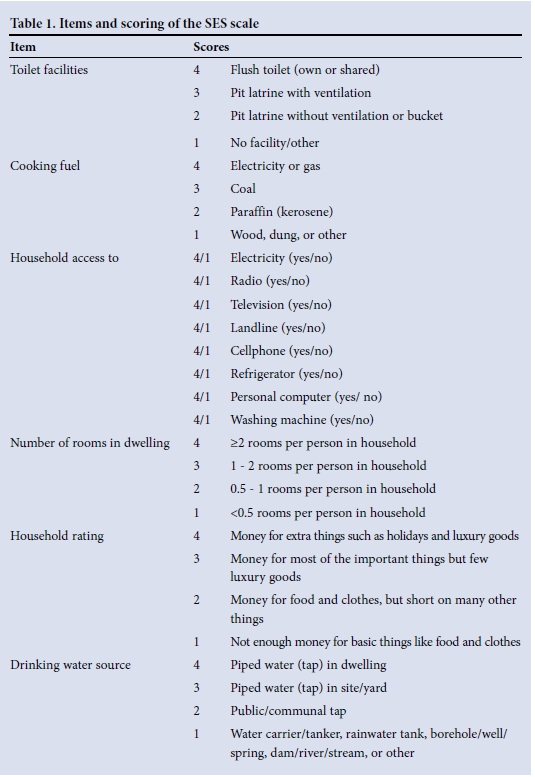
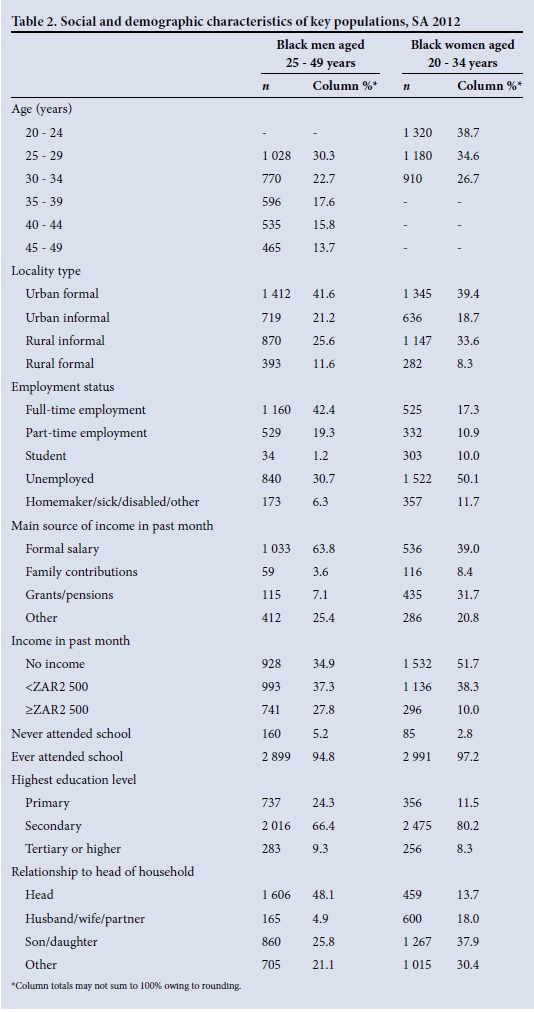
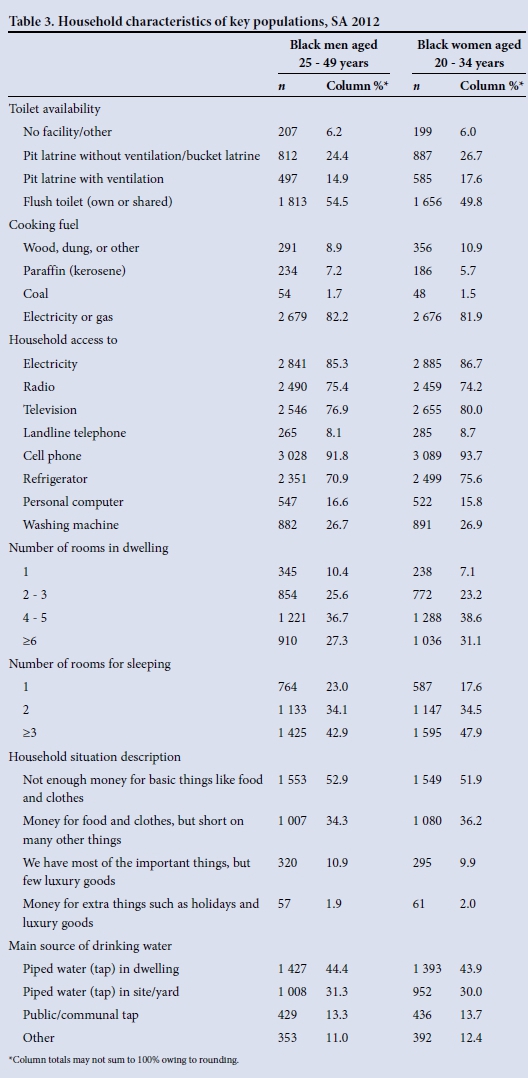
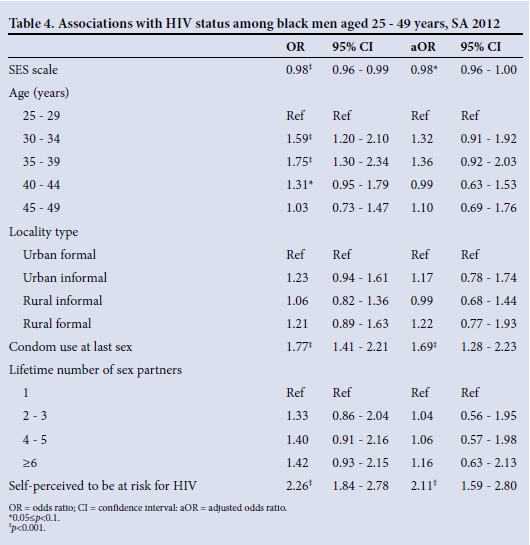
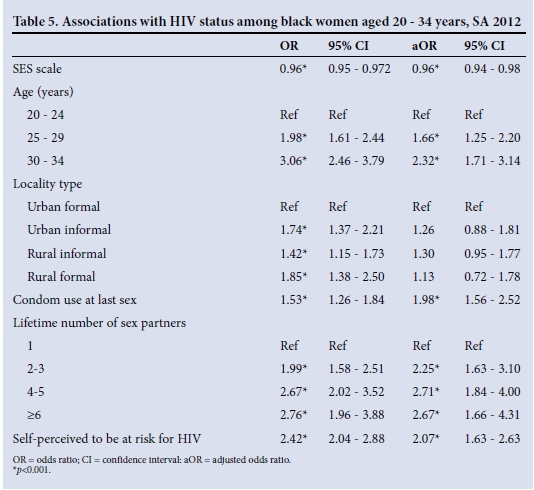
BACKGROUND: Two additional key populations within the general population in South Africa (SA) that are at risk of HIV infection are black African women aged 20 - 34 years and black African men aged 25 - 49 years. OBJECTIVE: To investigate the social determinants of HIV serostatus for these two high-risk populations. METHODS: Data from the 2012 South African National HIV Prevalence, Incidence, and Behaviour Survey were analysed for black African women aged 20 - 34 years and black African men aged 25 - 49 years. RESULTS: Of the 6.4 million people living with HIV in SA in 2012, 1.8 million (28%) were black women aged 20 - 34 years and 1.9 million (30%) black men aged 25 - 49 years. In 2012, they constituted 58% of the total HIV-positive population and 48% of the newly infected population. Low socioeconomic status (SES) was strongly associated (p<0.001) with being HIV-positive among black women aged 20 - 34 years, and was marginally significant among black men aged 25 - 49 years (p<0.1). CONCLUSION: Low SES is a critical social determinant for HIV infection among the high-risk groups of black African women aged 20 -34 years and black African men aged 25 - 49 years. Targeted interventions for these key populations should prioritise socioeconomic empowerment, access to formal housing and services, access to higher education, and broad economic transformation.
SAMJ: South African Medical Journal