Significance of HbAlc levels in diabetic retinopathy extremes in South Africa
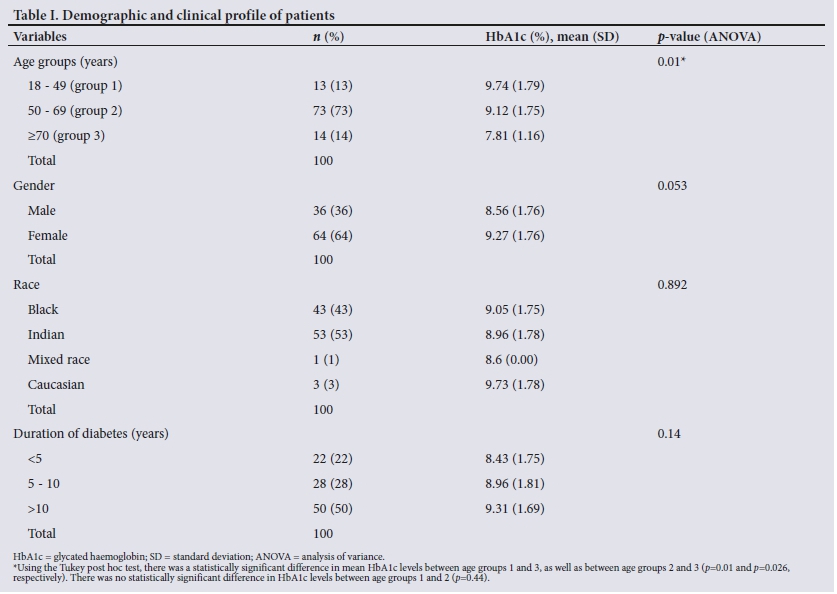
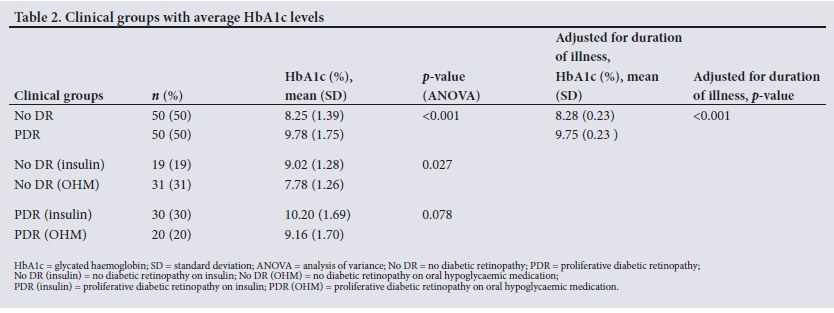
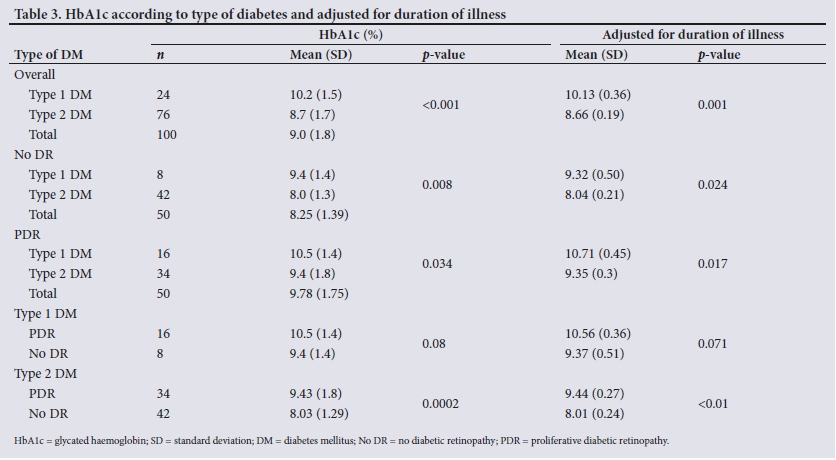
BACKGROUND. Diabetic retinopathy (DR) is one of the leading causes of blindness in sub-Saharan Africa and globally, placing a huge disease burden on patients and the public health system. DR varies in severity from non-proliferative to proliferative DR (PDR). OBJECTIVES. Using a monitor of medium- to long-term blood glucose control, to determine the association between glycated haemoglobin (HbA1c) levels in patients with PDR and those with no DR. METHODS. A prospective, cross-sectional study was conducted at McCord Provincial Eye Hospital in Durban, South Africa. We studied only patients diagnosed with diabetes mellitus (DM) for >1 year who had either PDR or no DR, and compared their HbA1c levels. Patients with non-proliferative DR were not included. RESULTS. Patients with PDR had significantly higher HbA1c levels than those with no DR. Patients with type 1 DM had higher HbA1c levels than patients with type 2 DM in both the PDR and no-DR groups. Older patients (>70 years) had lower HbA1c levels than younger patients. Gender, race and duration of diabetes had no influence on HbA1c levels. CONCLUSIONS. PDR was associated with higher HbA1c in type 2 DM in all races and age groups and was independent of duration of disease. The trend was the same for type 1 DM, but significance could not be reached, probably because of small numbers in this subset of patients.
SAMJ: South African Medical Journal