Subacute sclerosing panencephalitis in South African children following the measles outbreak between 2009 and 2011
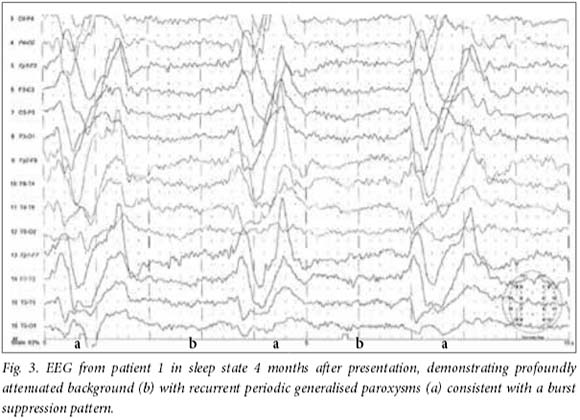
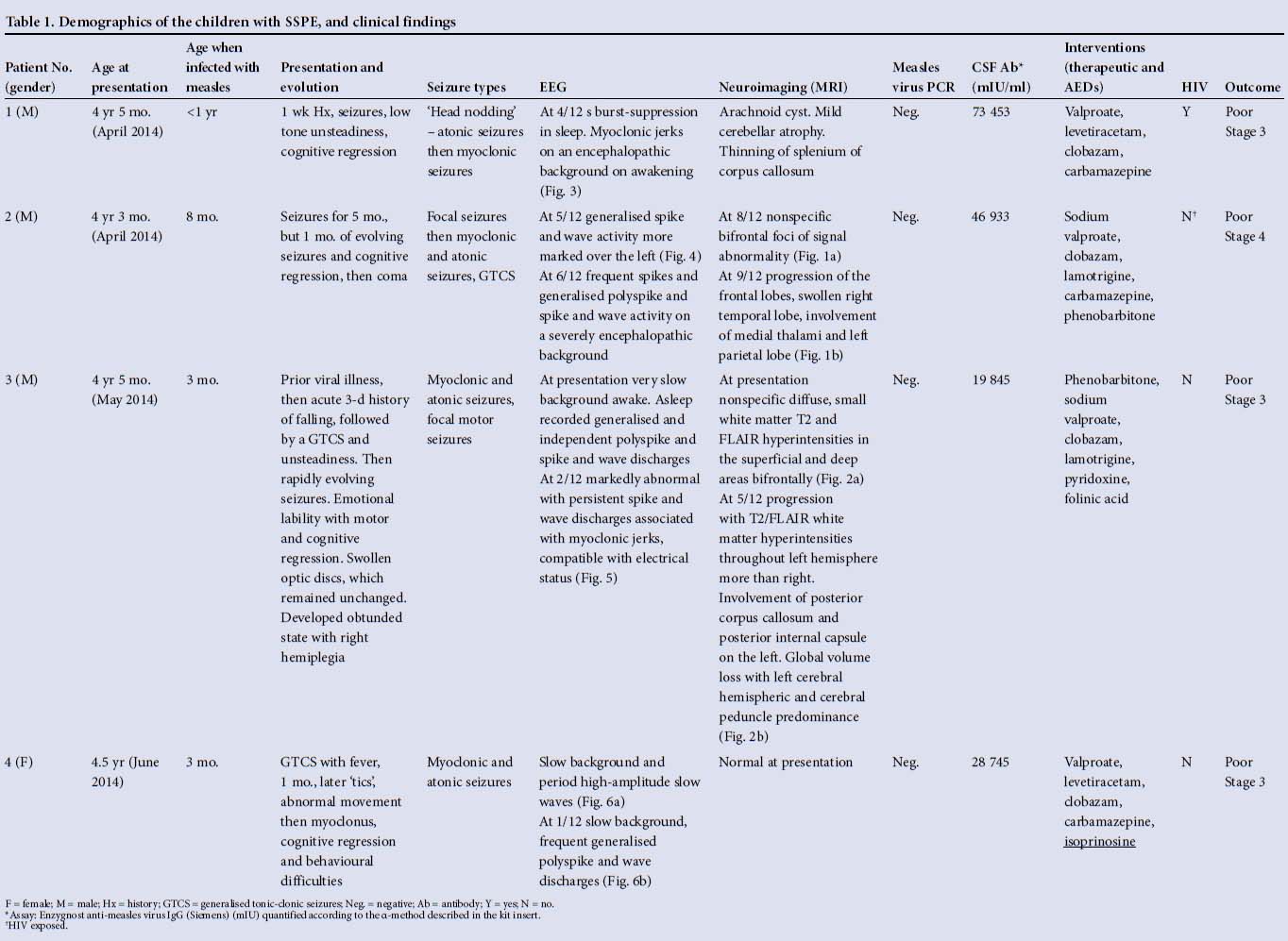
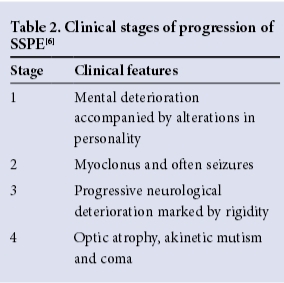
Between 2009 and 2011, there was an outbreak of measles throughout South Africa (SA). The largest age category infected was children <5 years of age. In 2014, four patients, with a median age of 4 years and 5 months (range 4 years 3 months - 4.5 years), three males and one female, presented with subacute sclerosing panencephalitis (SSPE). All were infected with measles during the period of the 2009 - 2011 outbreak in early infancy, at a time when their immune systems were immature and before they were vaccinated against the measles virus. One patient was immunocompromised, with vertically acquired HIV infection. All the children presented with cognitive and behavioural decline, abnormal movements and medically intractable myoclonic and atonic seizures. Outcome was poor in all and no reversibility was evident with standard therapeutic interventions. Optimal seizure control with carbamazepine is reported in patients with SSPE. Three of our patients who received carbamazepine experienced improved seizure control, but their neuroregression continued. Since submission of this case series, patient 1 (see Table 1) has died, and a further child has presented with the same clinical phenotype as described. On the basis of this clustering of patients in the Western Cape Province, SA, it is important to screen children admitted with acute cognitive decline and intractable seizures for SSPE, especially those who were infants during the measles outbreak.
SAMJ: South African Medical Journal
 Thumbnail
 Thumbnail
 Thumbnail
 Thumbnail
 Thumbnail