Epidemiological trends and treatment outcomes of tuberculosis patients in rural clinics in Vhembe District, South Africa: A secondary data analysis
BACKGROUND. Tuberculosis (TB) remains a significant cause of morbidity and mortality globally, with the burden disproportionately affecting resource-limited settings. In South Africa's Vhembe District, there is limited recent evidence on trends in TB burden and treatment outcomes. OBJECTIVE. To describe TB patterns between 2018 and 2023 by examining demographic and clinical distributions and assessing treatment success as a measure of programme performance. METHODS. A retrospective descriptive study was conducted using electronic medical records from six primary healthcare clinics. Data extracted from the Health Patient Registration System included age, sex, HIV status and treatment outcomes. Analyses covered annual TB prevalence, demographic and clinical profiles, and treatment outcomes, including treatment success, mortality, loss to follow-up and transfer out. Treatment success was calculated using only evaluated cases, excluding those transferred out. RESULTS. A total of 562 TB cases were recorded over the study period. Males accounted for 57.7% of cases, and individuals aged 36 - 60 years represented the largest age group (55.3%). HIV co-infection was documented in 48.8% of patients. Among evaluated cases, the treatment success rate was 85.3%, while 9.4% died, 5.1% were lost to follow-up and 0.2% experienced treatment failure. A further 9.3% of patients were transferred out and therefore not evaluated, which limits the accuracy of assessing actual treatment outcomes. The absence of a functional tracking system across clinics further hindered the determination of whether transferred patients completed treatment elsewhere. CONCLUSION. Although treatment success among evaluated cases approached the World Health Organization target, the persistent TB burden and substantial proportion of unevaluated cases highlight systemic gaps in treatment continuity and monitoring in Vhembe District. Strengthening patient-tracking mechanisms, enhancing adherence support and improving integration of TB-HIV services are critical for advancing progress towards End TB goals.
tuberculosis; prevalence; treatment outcomes; Vhembe District; South Africa
Epidemiological trends and treatment outcomes of tuberculosis patients in rural clinics in Vhembe District, South Africa: A secondary data analysis
R MusoliwaI; M S MolepoI; M S MashiloII; N T BandaI; M C RikhotsoII; L KachiengaII; M MagwalivhaII; N E MadalaII; N PotgieterII; A N TraoreII
IMSc; Department of Biochemistry and Microbiology, Faculty of Sciences, Engineering and Agriculture, University of Venda, Thohoyandou, South Africa
IIPhD; Department of Biochemistry and Microbiology, Faculty of Sciences, Engineering and Agriculture, University of Venda, Thohoyandou, South Africa
BACKGROUND. Tuberculosis (TB) remains a significant cause of morbidity and mortality globally, with the burden disproportionately affecting resource-limited settings. In South Africa's Vhembe District, there is limited recent evidence on trends in TB burden and treatment outcomes.
OBJECTIVE. To describe TB patterns between 2018 and 2023 by examining demographic and clinical distributions and assessing treatment success as a measure of programme performance.
METHODS. A retrospective descriptive study was conducted using electronic medical records from six primary healthcare clinics. Data extracted from the Health Patient Registration System included age, sex, HIV status and treatment outcomes. Analyses covered annual TB prevalence, demographic and clinical profiles, and treatment outcomes, including treatment success, mortality, loss to follow-up and transfer out. Treatment success was calculated using only evaluated cases, excluding those transferred out.
RESULTS. A total of 562 TB cases were recorded over the study period. Males accounted for 57.7% of cases, and individuals aged 36 - 60 years represented the largest age group (55.3%). HIV co-infection was documented in 48.8% of patients. Among evaluated cases, the treatment success rate was 85.3%, while 9.4% died, 5.1% were lost to follow-up and 0.2% experienced treatment failure. A further 9.3% of patients were transferred out and therefore not evaluated, which limits the accuracy of assessing actual treatment outcomes. The absence of a functional tracking system across clinics further hindered the determination of whether transferred patients completed treatment elsewhere.
CONCLUSION. Although treatment success among evaluated cases approached the World Health Organization target, the persistent TB burden and substantial proportion of unevaluated cases highlight systemic gaps in treatment continuity and monitoring in Vhembe District. Strengthening patient-tracking mechanisms, enhancing adherence support and improving integration of TB-HIV services are critical for advancing progress towards End TB goals.
Keywords: tuberculosis, prevalence, treatment outcomes, Vhembe District, South Africa
Despite the widespread availability of curative treatment and effective management strategies, tuberculosis (TB) remains a significant public health challenge and one of the leading causes of death from infectious diseases worldwide.[1,2] Between 2018 and 2024, >10 million people globally were diagnosed with TB, with the disease burden increasing over this period.[3,4] The World Health Organization (WHO) Africa Region continues to have the highest TB burden, contributing nearly one-quarter of all new cases. South Africa (SA) remains among the region's highest-burden countries, accounting for a significant proportion of TB morbidity and mortality.[5] The SA Department of Health has implemented several strategies to combat TB, including rapid molecular diagnostic tools such as the Xpert MTB/RIF assay, as well as national public health campaigns such as Cheka Impilo and Welcome Back.[6] These efforts have been complemented by expanded access to antiretroviral therapy and social support initiatives, such as food provision for impoverished communities, to improve treatment adherence and health outcomes. [7] Despite these interventions, progress was significantly disrupted by the COVID-19 pandemic, which caused a global resurgence in TB cases, rising from 9.9 million in 2020 to 10.8 million in 2023.[4] In many countries such as SA, the burden therefore remains high, with the WHO estimating ~10 000 cases of multidrug-resistant or rifampicin-resistant TB (MDR/RR-TB) in 2023 alone.[4]
The TB-fighting strategies are still in place, including the WHO's End TB Strategy, which sets ambitious global targets, aiming for a treatment success rate of at least 90% among notified TB cases, alongside goals to reduce TB incidence by 90% and TB deaths by 95% by 2035.[8] Similarly, SA's National Strategic Plan (NSP) for TB aligns with these targets, emphasising a 90% or higher treatment success rate as a critical benchmark for programme effectiveness.[6] The Directly Observed Treatment Strategy (DOTS), which remains the foundation of TB treatment and control, also relies on achieving high treatment success rates to ensure that patients complete therapy, and to prevent the emergence of drug resistance. Therefore, evaluating and monitoring treatment outcomes is essential to assess the effectiveness of DOTS and the NSP and WHO goals in each area, identify areas for improvement and raise awareness. Even with reported treatment success in some regions, SA remains below the target level required to achieve the WHO End TB Strategy goal of a 90% reduction in TB incidence by 2035.[9] Multiple determinants influence TB treatment outcomes, including HIV co-infection, demographic characteristics and socioeconomic conditions.[10,11]
Understanding these determinants is critical for enhancing treatment adherence, minimising failure rates and preventing drug resistance.[12] Treatment outcomes also serve as key indicators of programme effectiveness, particularly in resource-constrained settings.[13] While TB treatment challenges are complex, targeted interventions can significantly improve outcomes, especially those focused on understanding regional prevalence and factors affecting treatment. In response to these challenges, a retrospective descriptive cohort study was conducted across multiple clinics in Vhembe District. This study aimed to describe trends in the TB burden and treatment outcomes between 2018 and 2023 by examining the distribution of cases across demographic (age and sex) and clinical (HIV status) characteristics, and by using treatment success rates as indicators of programme performance in Vhembe District.
Methodology
Study design
This retrospective descriptive study used routinely collected data from 1 January 2018 to 31 December 2023. The study took place in the Vhembe District Municipality, a predominantly rural community located in the northern part of Limpopo Province, SA, which is the northernmost district in the country. It covers an area of ~25 597 km2 [14] The study targeted nine primary healthcare centres located in the most populous areas of the region; however, only six clinics ultimately participated and completed data collection owing to administrative and logistical constraints. The participating clinics included two located in Collins Chabane municipality (predominantly Tsonga-speaking), one in Thulamela municipality (predominantly Venda-speaking) and one in Makhado municipality (predominantly Venda-speaking). The clinics that were included ensured adequate coverage of the region's rural healthcare landscape, and maintained representation across key areas of service delivery, which applies the DOTS strategy framework in TB control.
Permission to conduct research in facilities
Permission to access healthcare facilities was granted by the Limpopo Provincial Department of Health following ethical review (ref. no. LP_2024-10-032). Additional authorisation was obtained from the Vhembe District Department of Health (ref. no. S5/4/2/3 (LP_2024-10-032)). The selected clinics were subsequently visited to introduce the study and obtain permission at facility level before data collection.
Data collection
The current study adapted and analysed existing electronic medical records extracted from the Health Patient Registration System across six participating clinics, covering the period from 2018 to 2023. Records were included if they contained data for patients diagnosed with TB at one of the six clinics during the study period and had complete information on treatment outcomes and key descriptive variables, including gender, age category, HIV status and year of diagnosis. Records were excluded if they were incomplete for any of these variables, pertained to diagnoses made outside of the study period, or had treatment outcomes not yet documented at the time of data extraction.
Data analysis
Data were initially entered and organised in Excel (Microsoft, USA), where preliminary graphs were generated to visualise trends in TB case distribution and treatment outcomes over time. After data cleaning and validation, the data set was exported to SPSS (version 29) (IBM, USA) for further analysis. Descriptive statistics (frequencies and percentages) were used to summarise patient demographics and TB case characteristics. The χ22P<0.05 was considered statistically significant. Descriptive variables (gender, age category, HIV status and year of diagnosis) were used to describe the distribution of TB cases, while the treatment success rate was used as a programme performance indicator aligned with national and WHO targets.
Treatment outcomes were categorised according to WHO definitions and the national TB reporting framework.[2] Treatment success was defined as patients who were either cured or had completed treatment (i.e. those who finished treatment without bacteriological confirmation of cure). This measure was calculated only among evaluated cases, excluding patients who were transferred out to other facilities. Treatment failure refers to patients whose sputum smear or culture remained positive at month 5 or later, excluding cases of MDR-TB. Loss to follow-up refers to patients who interrupted treatment for >2 consecutive months after receiving treatment for at least 4 weeks. All patients who died during treatment were referred to as deaths. Transferred out refers to patients who were transferred to another facility and for whom final treatment outcomes could not be evaluated. Lastly, patients who died during treatment, were lost to follow-up, or experienced treatment failure were classified as having unfavourable outcomes.
Ethical considerations
Ethical clearance for the study was obtained from the University of Venda Research Ethics Committee (ref. no. SMNS/20/MBY/13/2104).
Results
The study included a total of 562 patients diagnosed with TB across six participating clinics between 1 January 2018 and 31 December 2023. Data were extracted from electronic medical records, and only clinics with complete records for the key variables were included. Treatment outcomes, HIV status, age and gender were included. Of the 562 patients, 324 (57.7%) were male and 238 (42.3%) were female. The majority of patients were aged 36 - 60 years, and HIV co-infection was identified in 274 patients (48.8%). Among the evaluated cases, 85% achieved successful treatment outcomes, reflecting the overall performance of the programme within the district.
Prevalence of TB during the study period
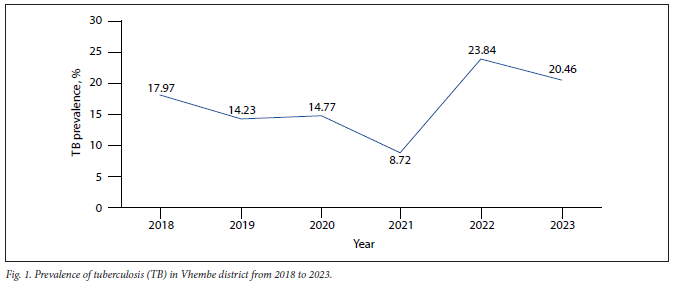
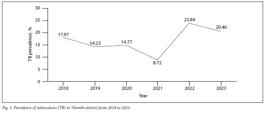
A total of 562 TB cases were recorded across the six participating clinics between 2018 and 2023, with an average of ~94 cases per year (562 ÷ 6). However, annual case numbers fluctuated markedly, ranging from a low of 49 cases in 2021 to a high of 134 cases in 2022. As illustrated in Fig. 1, the annual prevalence of TB showed significant variation over the study period. In 2018, the combined prevalence across six clinics was 17.97% (101/562 cases), but it steadily declined to a low of 8.72% (91/562) in 2021, representing an overall decrease of 9.25 percentage points. However, this downward trend reversed sharply in the year 2022, with the prevalence surging by 14.75 percentage points to a peak of 23.84% (114/562), the highest rate recorded during the study period. Although there was a slight decline in 2023 to 20.46, the prevalence remained 2.49 percentage points higher than the 2018 level.
Distribution of TB cases by demographic characteristics Gender
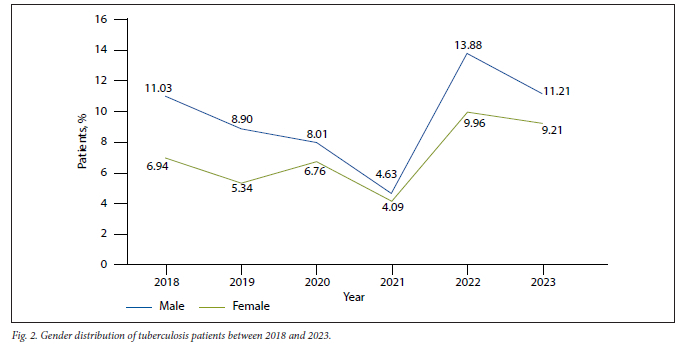
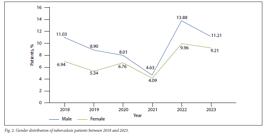
When analysing the prevalence of TB in six participating clinics, male patients accounted for the majority of cases, at 57.65% (324/562), while female patients made up 42.35% (238/562). This difference was found to be statistically significant (χ2p<0.001). The most significant difference occurred in 2018, when the TB prevalence was 11.03% (62/562) among males, compared with 6.94% (39/562) among females (Fig. 2). Over the subsequent years, this gender gap gradually narrowed, reaching its smallest difference in 2021, with 4.63% (26/562) of cases in males and 4.09% (23/562) in females. However, the trend reversed in 2022, when the proportion of male TB cases rose sharply to 13.88% (78/562), compared with 9.96% (56/562) among females. In 2023, although the prevalence declined slightly for both males and females to 11.21% (63/562) and 9.25% (52/562), respectively, the gap remained, with a difference of 1.96 percentage points. Throughout the study period, male patients consistently accounted for a higher number of TB cases than female patients.
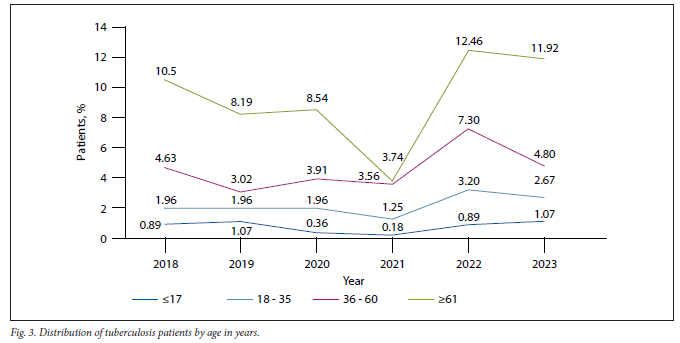
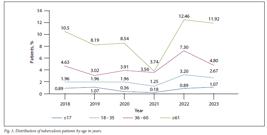
Patients aged 36 - 60 years had the highest TB burden, accounting for 55.34% (311/562) of all reported cases during the study period. In contrast, patients aged <18 years had the lowest prevalence, accounting for only 4.45% (25/562) of the total cases. Statistical analysis confirmed a significant difference in TB prevalence across age groups (χ2Fig. 3, this age-related pattern remained consistent across all study years, with adults aged 36 - 60 years consistently exhibiting the highest TB prevalence. A notable exception occurred in 2021, when TB prevalence among this age group declined to 3.74%, closely followed by individuals aged 18 - 35 years at 3.56%. Despite these fluctuations, all age groups reached their highest prevalence levels in 2022 and 2023, compared with the lower levels observed between 2019 and 2021, indicating a general upward trend over the study period.
HIV co-infection
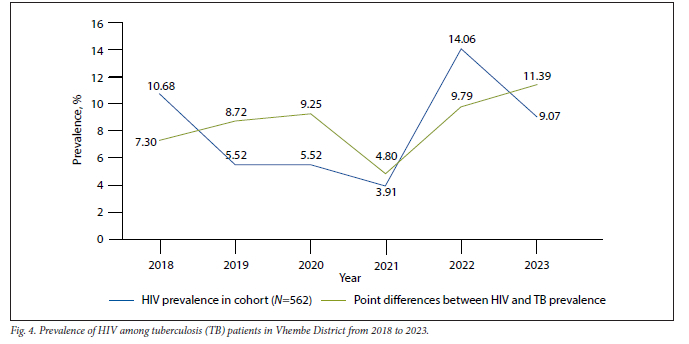
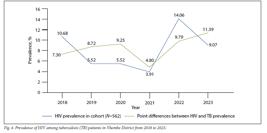
The current study found that 48.75% (274/562) of TB patients were co-infected with HIV, with an overall mean HIV prevalence of 8.13% (95% confidence interval 6.9 - 9.3%) over the 6-year study period. However, this association was insignificant (χ2=0.35, p=0.55). The highest prevalence of HIV co-infection was observed in 2022, at 14.06% (79/562), while the lowest was recorded in 2021 at 3.91%, as shown in Fig. 4. The smallest observed difference between TB and HIV prevalence was 4.80 percentage points in 2021, while the largest gap was recorded in 2023, at 11.39 percentage points. HIV prevalence fluctuated over the years and did not consistently mirror variations in TB burden. For instance, in 2023, HIV prevalence declined slightly to 9.07%, while the difference between HIV and TB prevalence widened to 11.39 percentage points.
Variation across clinics
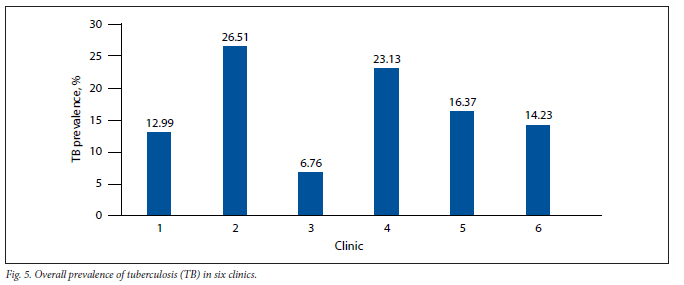
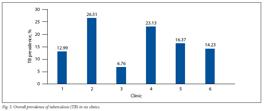
The distribution of TB prevalence varied significantly across the six selected clinics between 2018 and 2023 (χ2p<0.001). As illustrated in Fig. 5, clinic 2 reported the highest proportion of TB cases, accounting for 26.51% (149/562), followed closely by clinic 4, which reported 23.13%. In contrast, clinic 3 recorded the lowest prevalence, contributing only 6.76%, followed by clinic 1, which contributed 12.99%. The disparity between the highest (clinic 2) and lowest (clinic 3) reporting clinics was 19.75 percentage points.
Treatment outcomes
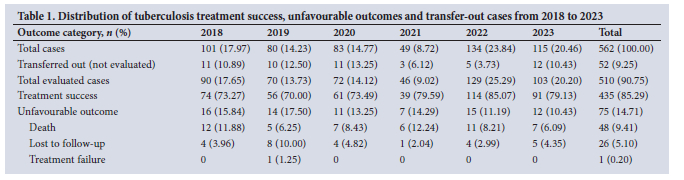
A total of 562 TB cases were recorded between 2018 and 2023, of which 510 (90.75%) were evaluated for treatment outcomes, while 52 (9.25%) were transferred out and not assessed for outcomes. Among the evaluated cases, 85.29% (435/510) achieved treatment success, with annual proportions ranging from 70.00% (56/80) in 2019 to 85.07% (114/134) in 2022. Unfavourable outcomes accounted for 14.71% (75/510) overall, comprising 9.41% (48/510) of deaths, 5.10% (26/510) loss to follow-up and 0.20% (1/510) treatment failure.
Deaths ranged between 6.25% (5/80) in 2019 and 12.24% (6/49) in 2021, while loss to follow-up ranged from 2.04% (1/49) in 2021 to 10.00% (8/80) in 2019. The number of cases evaluated per year fluctuated substantially, from 46 in 2021 to 129 in 2022. Transferred-out cases represented 9.25% (52/562) of all TB registrations, with yearly values ranging from 3.73% (5/134) in 2022 to 13.25% (11/83) in 2020. Overall, annual TB registrations varied widely across the study period, with the lowest number recorded in 2021 (49 cases) and the highest in 2022 (134 cases).
Discussion
In the current study, 562 TB cases were documented between 2018 and 2023 across six selected clinics in Vhembe District, providing insights into disease trends and treatment outcomes within the study area. Most patients were male, accounting for 57.65% of the cases, with a statistically significant difference in TB prevalence between genders (p<0.001). These findings align with those of previous studies,[15-19] further highlighting that men are more vulnerable to TB infection. Furthermore, the majority (55.34%) of TB cases occurred in individuals aged 35 - 60 years, while individuals aged 18 - 35 years were the second most affected group, accounting for 27.22% of the total cases. These results were also consistent with previous studies conducted in the same region.[20,21]
A high prevalence of TB-HIV co-infection (48.8%, 27/562) was observed among patients in this study (Fig. 3). Although this outcome association was not statistically significant (χ2p=0.55), the coexistence of TB and HIV remains a well-documented public health challenge.[22-24] The observed co-infection rate in this study is slightly higher than that previously reported in Limpopo Province (40.1%),[21] but lower than that reported in Free State (61%)[25] and KwaZulu-Natal (65%) provinces.[26] These variations reflect underlying HIV distribution patterns across different areas, which may be shaped by demographic, social and health-system factors and therefore, the risk of HIV co-infection in TB patients is also geographically uneven. There is therefore a need for location-specific interventions, where HIV/TB programmes are tailored to the epidemiological profile of each district.
Approximately 94 TB cases on average were recorded per year between 2018 and 2023 across the participating clinics in Vhembe District. Despite annual fluctuations, the overall prevalence increased from 17.97% in 2018 to 20.46% in 2023, indicating a gradual upward trend. Similar rising or variable TB patterns have been reported in other high-burden settings, including Ethiopia.[27,28] According to the WHO global TB reports, tuberculosis cases have also fluctuated internationally, increasing from 10.0 million in 2018 to 10.8 million in 2023.[4] In contrast, a study from Southwest China reported a consistent decline in TB incidence between 2016 and 2022.[29] These findings suggest that regional epidemiological patterns differ substantially depending on local health-system performance, population age structure and comorbidity profiles.
A statistically significant variation in TB prevalence was observed across clinics and study years (χ2p<0.001), underscoring the influence of local context on disease burden. Clinics 2 and 4 recorded the highest prevalence rates (26.5% and 23.1%, respectively), likely owing to their proximity to major roads and relative isolation, which draws patients from multiple surrounding communities and results in heavier caseloads. In contrast, clinic 3, situated in a remote village with limited visibility and a smaller catchment area, reported the lowest prevalence. However, community-based stigma may also contribute to lower case detection, as some residents might seek care elsewhere because of stigma due to TB.[30] These spatial and social differences highlight the need for context-specific interventions, such as mobile clinics, to extend access in high-burden areas such as clinic 2, and community education programmes to reduce stigma and encourage early care-seeking in the community around clinic 3.[31,32] Addressing disparities in both access and stigma-related behaviours is essential to prevent diagnostic delays and to reduce the presentation of advanced disease, thereby strengthening TB control efforts.[33-35]
Out of 562 overall reported cases, 510 had a final evaluation of treatment outcome. Of those, 85.29% had completed treatment and were considered to have achieved treatment success. This success rate was below the national target of 90%;[36] however, when compared with earlier reports from Limpopo Province of 74.4%,[36] and the rate observed in Gauteng's metropolitan municipalities (80%), Johannesburg (80%) and Southwest China (80.85%),[26,29,37] it is higher. Furthermore, the current study also observed an upward trend in treatment success within the clinics, from 73.27% in 2018 to 79.13% in 2023. This trend reflects gradual progress in treatment adherence and case management within the district. However, other studies have reported treatment success rates exceeding the WHO target of 90%, such as in northwest Ethiopia, which achieved 94.8%,[38] Turkey (92.6%)[38] and Addis Ababa (94.6%).[39] Such high success rates have been attributed to the strong implementation of DOTS, effective patient follow-up systems and early case detection, all of which are supported by urban healthcare infrastructure. These findings suggest that with improved treatment adherence support, strengthened monitoring and better resource allocation, districts such as Vhembe could similarly enhance treatment outcomes and move closer to national and WHO TB targets.
The cases that were not evaluated accounted for 9.25% (52/562) of patients who were transferred out during treatment. The proportion of patients transferred out in this study was higher than those reported in Ethiopia (5.6%)[40] and Uganda (5.8%),[30] but lower than the 11.4% recorded in Southeast Nigeria.[18] A high rate of patients who are transferred out may be associated with socioeconomic mobility. Vhembe District is mainly a rural area, where most people seek employment opportunities outside the district. Furthermore, migration increases transmission risk and spreads disease.[41] Such transferring out of patients during treatment interrupts treatment monitoring, limiting the ability to determine actual programme performance.[26] Currently, no standardised mechanism exists to facilitate data sharing between facilities when patients relocate, resulting in a significant gap in outcome reporting. The absence of a digital tracking system to monitor transferred patients remains a significant challenge for TB programme management. Patients who relocate remain unevaluated in the original clinic, resulting in incomplete records and fragmented follow-up. A standardised electronic transfer and follow-up platform, integrated with existing surveillance systems, could enable real-time data sharing, confirm treatment continuation and improve both accountability and patient-centred care.
A total of 48 patients (9.4%; 48/510) died during treatment between 2018 and 2023 (Table 1). This mortality rate is lower than one previously reported in Limpopo Province (13.6%),[36] indicating an improvement in treatment outcomes in the current study. Lower mortality rates have also been observed in Gauteng Province, SA (5.8%),[26] Southwest China (5.46%)[29] and Ethiopia (4.8%).[40] However, mortality remains high in several settings, such as Tshwane, SA (26.5%)[42] and Butha-Buthe, Lesotho (19.1%).[43] Several factors associated with higher mortality in previous studies include poor nutrition and unhealthy lifestyle habits, particularly cigarette smoking, and possibly inadequate pharmacovigilance. Addressing these factors can further reduce the mortality rate and improve treatment success.
In the current study, 4.63% of patients were lost to follow-up, a rate notably lower than that reported in other parts of SA. For instance, a study conducted in KwaZulu-Natal Province reported a loss-to-follow-up rate of 22.32%,[44] while another study in Johannesburg, Gauteng, reported a rate of 11%.[37] A range of socioeconomic and individual behavioural factors influences loss to follow-up and poor adherence to TB treatment. These include limited patient knowledge about TB and its treatment, lack of understanding of the consequences of non-adherence, poor communication between patients and healthcare workers, long distances to treatment centres and the side-effects of both TB and HIV medications.[45] Treatment adherence remains a significant challenge in TB control efforts.[46] Patients who discontinue therapy often do so as a result of the burdens associated with prolonged treatment duration, adverse drug reactions and logistical barriers, such as transportation costs, loss of income and a lack of social or psychological support.[47] Addressing these challenges is crucial to improving treatment outcomes and reducing TB transmission.
Study limitations and recommendations
The method of data collection in the current study used the total number of reported cases in each category to highlight the burden and did not specifically analyse how demographic characteristics disproportionately affect TB treatment outcomes. Future research should therefore investigate demographic-specific factors contributing to poor outcomes, particularly in high-burden regions. Furthermore, many patients were recorded as 'transferred out', and their final treatment outcomes remain unevaluated. This limits our ability to assess the true success of TB interventions. To address this, there is a need for integrated health information systems that enable tracking and reporting back to the original facility when patients are transferred between clinics.
The study used data from six clinics only, based in one region. Therefore, findings may not be generalisable to other regions of SA, especially considering that TB treatment outcomes vary significantly by geographical location and population. This highlights the importance of region-specific interventions and policies tailored to local epidemiological and healthcare system dynamics. Additionally, the study was based on retrospective secondary data from TB registers, which may contain errors, such as missing information or inconsistencies in data entry, particularly concerning key variables such as socioeconomic status, treatment adherence and comorbidities, e.g. HIV or diabetes. These missing factors may have influenced the outcomes, but could not be accounted for in the current study. Future studies should consider mixed-methods approaches, including patient interviews or qualitative data collection, to explore reasons behind loss to follow-up (non-adherence) and patient mobility between clinics.
Conclusion
This study analysed 562 TB cases from selected clinics in Vhembe District between 2018 and 2023. Among the evaluated patients, the treatment success rate was 85.3%, below the national target of 90%. Additionally, 9.4% of patients died, 5.1% were lost to follow-up and 0.2% experienced treatment failure. A further 9.3% of patients were transferred out and therefore not evaluated, which limits the accuracy of the district's reported actual treatment outcomes. This challenge is compounded by the absence of a functional patient-tracking system across clinics, which prevents confirmation of whether transferred patients complete their treatment elsewhere. Despite gradual improvements over time, these findings indicate that the district is not yet on track to meet national and WHO End TB targets. Strengthening patient-tracking mechanisms, improving adherence support and enhancing integration of TB-HIV services are essential to improve treatment continuity and sustain progress towards TB elimination.
Data availability. The data used during this study are available from the corresponding author upon request and subject to applicable ethical and institutional requirements.
Declaration. This article forms part of RM's research towards a PhD in biochemistry in the Department of Biochemistry and Microbiology at the University of Venda.
Acknowledgements. This research was supported by the South African Medical Research Council (SAMRC) through its Division of Research Capacity Development under the SAMRC RCDI-Nested PhD Scholarship Programme. The content is solely the responsibility of the authors and does not necessarily represent the official views of the SAMRC. The authors also acknowledge the administrative staff at the six participating healthcare facilities for their assistance with retrieving the required records. Author contributions. RM conceptualised and designed the study, collected and analysed the data, interpreted the findings and drafted the manuscript. MSMo contributed to data collection, organisation and validation. MSMa, NTB, MCR, LK and MM reviewed and edited the manuscript. NEM and NP contributed to the methodology, supervision, interpretation and critical revision of the manuscript. ANT provided overall supervision and contributed to the study conceptualisation, interpretation and critical revision. All authors approved the final manuscript and accepted accountability for the work.
Funding. This research was funded by the SAMRC.
Conflicts of interest. None.
References
-
1. Limenh LW, Kasahun AE, Sendekie AK, et al. Tuberculosis treatment outcomes and associated factors among tuberculosis patients treated at healthcare facilities of Motta Town, Northwest Ethiopia: A five-year retrospective study. Sci Rep 2024;14(1):7695. https://doi.org/10.1038/s41598-024-58080-0
» https://doi.org/10.1038/s41598-024-58080-0 -
2. Linh NN, Viney K, Gegia M, et al World Health Organization treatment outcome definitions for tuberculosis: 2021 update. Euro Respir Soc J 2021;58(2):2100804. https://doi.org/10.1183/13993003.00804-2021
» https://doi.org/10.1183/13993003.00804-2021 -
3. World Health Organization. Global tuberculosis report 2018. Geneva: WHO, 2018. https://www.who.int/publications/i/item/9789241565646 (accessed 10 September 2026).
» https://www.who.int/publications/i/item/9789241565646 -
4. World Health Organization. Global tuberculosis report 2024. Geneva: WHO, 2024. Ihttps://www.who.int/publications/i/item/9789240101531 (accessed 10 September 2026).
» Ihttps://www.who.int/publications/i/item/9789240101531 -
5. World Health Organization. Tuberculosis in the WHO African Region: 2023 progress update. Geneva: WHO, 2023. https://www.who.int/publications/i/item/9789240083851 (accessed 10 September 2026).
» https://www.who.int/publications/i/item/9789240083851 -
6. South African National AIDS Council. Let our actions count: South Africa's National Strategic Plan for HIV, TB and STIs 2017 - 2022. Pretoria: SANAC, 2017. https://www.gov.za/sites/default/files/gcis_document/201705/nsp-hiv-tb-stia.pdf
» https://www.gov.za/sites/default/files/gcis_document/201705/nsp-hiv-tb-stia.pdf -
7. South African National AIDS Council. The People's NSP: National Strategic Plan for HIV, TB and STIs 2023-2028. Pretoria: SANAC 2023. https://sanac.org.za/wp-content/uploads/2023/05/SANAC-NSP-2023-2028-Web-Version.pdf (accessed 10 September 2026).
» https://sanac.org.za/wp-content/uploads/2023/05/SANAC-NSP-2023-2028-Web-Version.pdf -
8. Uplekar M, Weil D, Lonnroth K, et al. WHO's new end TB strategy. Lancet 2015;385(9979):1799-1801. https://doi.org/10.1016/S0140-6736(15)60570-0
» https://doi.org/10.1016/S0140-6736(15)60570-0 -
9. Olivier C, Luies L. WHO goals and beyond: Managing HIV/TB co-infection in South Africa. SN Comprehensive Clin Med 2023;5(1):251. https://doi.org/10.1007/s42399-023-01568-z
» https://doi.org/10.1007/s42399-023-01568-z -
10. Faye LM, Hosu MC, Iruedo J, et al. Treatment outcomes and associated factors among tuberculosis patients from selected rural Eastern Cape hospitals: An ambidirectional study. Trop Med Infect Dis 2023;8(6):315. https://doi.org/doi:10.3390/tropicalmed8060315
» https://doi.org/doi:10.3390/tropicalmed8060315 -
11. Kigozi G, Heunis C, Chikobvu P, Botha S, van Rensburg D. Factors influencing treatment default among tuberculosis patients in a high burden province of South Africa. Int J Infect Dis 2017;54:95-102. https://doi.org/10.1016/j.ijid.2016.11.407
» https://doi.org/10.1016/j.ijid.2016.11.407 -
12. Chakaya J, Khan M, Ntoumi F, et al. Global Tuberculosis Report 2020 - reflections on the Global TB burden, treatment and prevention efforts. Int J Infect Dis 2021;113:S7-S12. https://doi.org/10.1016/j.ijid.2021.02.107
» https://doi.org/10.1016/j.ijid.2021.02.107 -
13. Moyo S, Ismail F, van der Walt M, et al. Prevalence of bacteriologically confirmed pulmonary tuberculosis in South Africa, 2017 - 19: A multistage, cluster-based, cross-sectional survey. Lancet Infect Dis 2022;22(8):1172-1180. https://doi.org/10.1016/S1473-3099(22)00149-9
» https://doi.org/10.1016/S1473-3099(22)00149-9 -
14. Department of Cooperative Governance and Traditional Affairs, South Africa. South Africa. Vhembe District Municipality: Profile and analysis. District Development Model. Pretoria: COGTA, 2020. https://www.cogta.gov.za/ddm/wp-content/uploads/2020/11/Vhembe-October-2020.pdf (accessed 10 September 2026).
» https://www.cogta.gov.za/ddm/wp-content/uploads/2020/11/Vhembe-October-2020.pdf -
15. Tsegaye B, Bedewi Z, Asnake S. The treatment outcomes of tuberculosis patients at Adare general hospital, Southern Ethiopia (a five-year retrospective study). Trop Med Infect Dis 2024;9(11):262. https://doi.org/10.3390/tropicalmed9110262
» https://doi.org/10.3390/tropicalmed9110262 -
16. Yenerçağ FNT, Aydın F. Factors affecting treatment outcomes for tuberculosis patients: A retrospective cohort study. Harran Üniversitesi Tıp Fakültesi Dergisi 2024;21(2):306-313. https://doi.org/10.35440/hutfd.1446494
» https://doi.org/10.35440/hutfd.1446494 -
17. Agazhu HW, Assefa ZM, Beshir MT, Tadesse H, Mengstie AS. Treatment outcomes and associated factors among tuberculosis patients attending Gurage Zone Public Hospital, Southern Nations, Nationalities, and People's Region, Ethiopia: An institution-based cross-sectional study. Front Med 2023;10:1105911. https://doi.org/10.3389/fmed.2023.1105911
» https://doi.org/10.3389/fmed.2023.1105911 -
18. Umeokonkwo CD, Okedo-Alex IN, Azuogu BN, Utulu R, Adeke AS, Disu YO. Trend and determinants of tuberculosis treatment outcome in a tertiary hospital in Southeast Nigeria. J Infect Pub Health 2020;13(7):1029-1033. https://doi.org/10.1016/j.jiph.2019.10.012
» https://doi.org/10.1016/j.jiph.2019.10.012 -
19. Ifebunandu NA, Ukwaja KN. Tuberculosis treatment default in a large tertiary care hospital in urban Nigeria: Prevalence, trend, timing and predictors. J Infect Pub Health 2012;5(5):340-345. https://doi.org/10.1016/j.jiph.2012.06.002
» https://doi.org/10.1016/j.jiph.2012.06.002 -
20. Magwalivha M, Rikhotso MC, Kachienga LO, et al. Bacterial co-occurrence with pulmonary TB, a respiratory tract infection (RTI): A cross-sectional study in a resource-limited setting. J Clin Tuberc Other Mycobact Dis 2025;40(1):100534. https://doi.org/10.1016/j.jctube.2025.100534
» https://doi.org/10.1016/j.jctube.2025.100534 -
21. Mkhavele B, Zondi S, Cele L, Mogale M, Mbelle M. Factors associated with successful treatment outcomes among tuberculosis patients in a district municipality of Vhembe, Limpopo. S Afr Fam Pract 2025;67(1):6030. https://doi.org/10.4102/safp.v67i1.6030
» https://doi.org/10.4102/safp.v67i1.6030 -
22. Sossen B, Kubjane M, Meintjes G. Tuberculosis and HIV co-infection: Progress and challenges towards reducing incidence and mortality. Int J Infect Dis 2025:107876. https://doi.org/10.1016/j.ijid.2025.107876
» https://doi.org/10.1016/j.ijid.2025.107876 -
23. Navasardyan I, Miwalian R, Petrosyan A, Yeganyan S, Venketaraman V. HIV-TB co-infection: Current therapeutic approaches and drug interactions. Viruses 2024;16(3):321. https://doi.org/10.3390/v16030321
» https://doi.org/10.3390/v16030321 -
24. Zhang S-X, Wang J-C, Yang J, et al. Epidemiological features and temporal trends of the co-infection between HIV and tuberculosis, 1990 - 2021: Findings from the Global Burden of Disease Study 2021. Infect Dis Poverty 2024;13(04):79-94. https://doi.org/10.1186/s40249-024-01230-3
» https://doi.org/10.1186/s40249-024-01230-3 -
25. Engelbrecht M, Kigozi N, Chikobvu P, Botha S, van Rensburg H. Unsuccessful TB treatment outcomes with a focus on HIV co-infected cases: A cross-sectional retrospective record review in a high-burdened province of South Africa. BMC Health Serv Res 2017;17(1):470. https://doi.org/10.1186/s12913-017-2406-x
» https://doi.org/10.1186/s12913-017-2406-x -
26. Berry KM, Rodriguez CA, Berhanu RH, et al. Treatment outcomes among children, adolescents, and adults on treatment for tuberculosis in two metropolitan municipalities in Gauteng Province, South Africa. BMC Public Health 2019;19(1):973. https://doi.org/10.1186/s12889-019-7257-4
» https://doi.org/10.1186/s12889-019-7257-4 -
27. Sariem CN, Odumosu P, Dapar MP, Musa J, Ibrahim L, Aguiyi J. Tuberculosis treatment outcomes: A fifteen-year retrospective study in Jos-North and Mangu, Plateau State, North-Central Nigeria. BMC Public Health 2020;20(1):1224. https://doi.org/10.1186/s12889-020-09289-x
» https://doi.org/10.1186/s12889-020-09289-x -
28. Tola A, Minshore KM, Ayele Y, Mekuria AN. Tuberculosis treatment outcomes and associated factors among TB patients attending public hospitals in Harar Town, Eastern Ethiopia: A five-year retrospective study. Tuberc Res Treat 2019;2019(1):1503219. https://doi.org/10.1155/2019/1503219
» https://doi.org/10.1155/2019/1503219 -
29. Kong D, Xia Y, Wang X, et al Prevalence trends, population characteristics and treatment outcomes of tuberculosis combined with diabetes in Southwest China: A register-based retrospective study. Front Public Health 2024;12:1445857. https://doi.org/10.3389/fpubh.2024.1445857
» https://doi.org/10.3389/fpubh.2024.1445857 -
30. Robsky KO, Hughes S, Kityamuwesi A, et al. Is distance associated with tuberculosis treatment outcomes? A retrospective cohort study in Kampala, Uganda. BMC Infect Dis 2020;20(1):406. https://doi.org/10.1186/s12879-020-05099-z
» https://doi.org/10.1186/s12879-020-05099-z -
31. Kipp AM, Olivier D, Skonje N, et al. Community variability in TB-related stigma in South Africa: An ecologic analysis from the MISSED TB Outcomes Study. medRxiv 2025:2025.04. https://doi.org/10.1101/2025.04.15.25325605
» https://doi.org/10.1101/2025.04.15.25325605 -
32. Foster I, Biewer A, Vanqa N, et al. 'This is an illness. No one is supposed to be treated badly': Community-based stigma assessments in South Africa to inform tuberculosis stigma intervention design. BMC Glob Pub Health 2024;2(1):41. https://doi.org/10.1186/s44263-024-00070-5
» https://doi.org/10.1186/s44263-024-00070-5 -
33. Teibo TKA, Andrade RLdP, Rosa RJ, et al. Barriers that interfere with access to tuberculosis diagnosis and treatment across countries globally: A systematic review. ACS Infect Dis 2024;10(8):2600-2614. https://doi.org/10.1021/acsinfecdis.4c00466
» https://doi.org/10.1021/acsinfecdis.4c00466 -
34. Van der Westhuizen H-M, Ehrlich R, Somdyala N, Greenhalgh T, Tonkin-Crine S, Butler CC. Stigma relating to tuberculosis infection prevention and control implementation in rural health facilities in South Africa - a qualitative study outlining opportunities for mitigation. BMC Glob Pub Health 2024;2(1):66. https://doi.org/10.1186/s44263-024-00097-8
» https://doi.org/10.1186/s44263-024-00097-8 -
35. Ashaba C, Musoke D, Wafula ST, Konde-Lule J. Stigma among tuberculosis patients and associated factors in urban slum populations in Uganda. Afr Health Sci 2021;21(4):1640-1650. https://doi.org/10.4314/ahs.v21i4.18
» https://doi.org/10.4314/ahs.v21i4.18 -
36. Gafar MM, Nyazema NZ, Dambisya YM. Factors influencing treatment outcomes in tuberculosis patients in Limpopo Province, South Africa, from 2006 to 2010: A retrospective study. Curationis 2014;37(1):1-7. https://doi.org/10.4102/curationis.v37i1.1169
» https://doi.org/10.4102/curationis.v37i1.1169 -
37. Budgell E, Evans D, Schnippel K, Ive P, Long L, Rosen S. Outcomes of treatment of drug-susceptible tuberculosis at public sector primary healthcare clinics in Johannesburg, South Africa: A retrospective cohort study. S Afr Med J 2016;106(10):1002-1009. https://doi.org/10.7196/SAMJ.2016.v106i10.10745
» https://doi.org/10.7196/SAMJ.2016.v106i10.10745 -
38. Endris M, Moges F, Belyhun Y, Woldehana E, Esmael A, Unakal C. Treatment outcome of tuberculosis patients at Enfraz Health Center, Northwest Ethiopia: A five-year retrospective study. Tubercul Res Treatment 2014;2014(1):726193. https://doi.org/10.1155/2014/726193.
» https://doi.org/10.1155/2014/726193 -
39. Fentie AM, Jorgi T, Assefa T. Tuberculosis treatment outcome among patients treated in public primary healthcare facility, Addis Ababa, Ethiopia: A retrospective study. Arch Pub Health 2020;78(1):12. https://doi.org/10.1186/s13690-020-0393-6
» https://doi.org/10.1186/s13690-020-0393-6 -
40. Abebe G, Bonsa Z, Kebede W Treatment outcomes and associated factors in tuberculosis patients at Jimma University Medical Center: A 5-year retrospective study. Int J Mycobacteriol 2019;8(1):35-41. https://doi.org/10.4103/ijmy.ijmy_177_18
» https://doi.org/10.4103/ijmy.ijmy_177_18 -
41. Lurie MN, Williams BG. Migration and health in Southern Africa: 100 years and still circulating. Health Psychol Behav Med 2014;2(1):34-40. https://doi.org/10.1080/21642850.2013.86689
» https://doi.org/10.1080/21642850.2013.86689 -
42. Bongongo T, van der Heever H, Nzaumvila DK, Saidiya CN. Influence of patients' living conditions on tuberculosis treatment outcomes in a South African health sub-district. S Afr Fam Pract 2020;62(3):a5036. https://doi.org/10.4102/safp.v62i1.5036
» https://doi.org/10.4102/safp.v62i1.5036 -
43. Ngah VD, Rangoanana M, Fwemba I, et al. Evaluating determinants of treatment outcomes among tuberculosis patients in the mining district of Butha Buthe, Lesotho. IJID Regions 2023;6:62-67. https://doi.org/10.1016/j.ijregi.2022.12.008
» https://doi.org/10.1016/j.ijregi.2022.12.008 -
44. Pillay S, Magula NP. Treatment outcomes of Gene Xpert positive tuberculosis patients in KwaMashu Community Health Centre, KwaZulu-Natal, South Africa: A retrospective review. South Afr J Infect Dis 2021;36(1):217. https://doi.org/10.4102/sajid.v36i1.217
» https://doi.org/10.4102/sajid.v36i1.217 -
45. Tola HH, Azar T, Shojaeizadeh D, Garmaroudi G. Tuberculosis treatment non-adherence and lost to follow up among TB patients with or without HIV in developing countries: A systematic review. Iran J Public Health 2015;44(1):1-11. https://pubmed.ncbi.nlm.nih.gov/26060770/ (accessed 10 September 2026).
» https://pubmed.ncbi.nlm.nih.gov/26060770/ -
46. Garbrah BG, Abebrese J, Owusu-Marfo J. Factors associated with tuberculosis treatment adherence among tuberculosis patients in the Kumasi metropolis in the Ashanti Region of Ghana: A cross-sectional study. J Publ Health 2024;32(12):2353-2364. https://doi.org/10.1007/s10389-023-02002-3
» https://doi.org/10.1007/s10389-023-02002-3 -
47. Appiah MA, Arthur JA, Gborgblorvor D, et al Barriers to tuberculosis treatment adherence in high-burden tuberculosis settings in Ashanti region, Ghana: A qualitative study from patient's perspective. BMC Pub Health 2023;23(1):1317. https://doi.org/10.1186/s12889-023-16259-6
» https://doi.org/10.1186/s12889-023-16259-6

Accepted 17 November 2025