Autoimmune progesterone dermatitis: Case report with history of urticaria, petechiae and palpable pinpoint purpura triggered by medical abortion
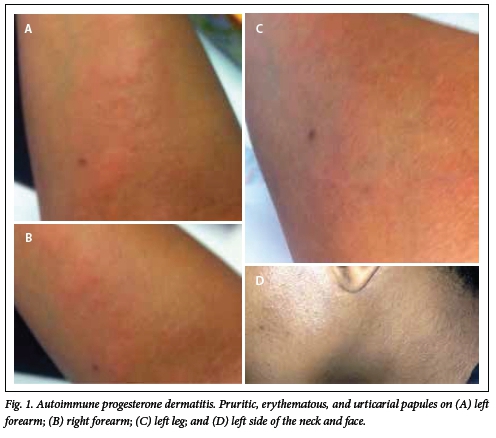
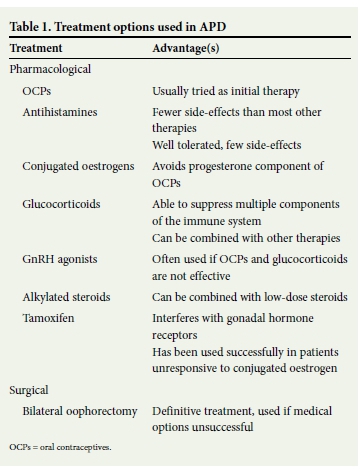
Autoimmune progesterone dermatitis (APD) is a rare autoimmune response to raised endogenous progesterone levels that occur during the luteal phase of the menstrual cycle. Cutaneous, mucosal lesions and other systemic manifestations develop cyclically during the luteal phase of the menstrual cycle when progesterone levels are elevated. APD symptoms usually start 3 - 10 days before menstruation and resolve 1 - 2 days after menstruation ceases. A 30-year-old woman presented with urticaria, petechiae and palpable pinpoint purpura lesions of the legs, forearms, neck and buttocks 1 week prior to her menses starting and 2 months after a medical abortion. She was diagnosed with allergic contact dermatitis and topical steroids were prescribed. Her skin conditions did not improve and were associated with her menstrual cycle. We performed an intradermal test using progesterone, which was positive. She was treated with oral contraceptive pills and the symptoms were resolved. This is a typical case of APD triggered by increased sensitivity to endogenous progesterone induced a few months after medical abortion.
SAMJ: South African Medical Journal
 Thumbnail