Dyspnoea: Pathophysiology and a clinical approach
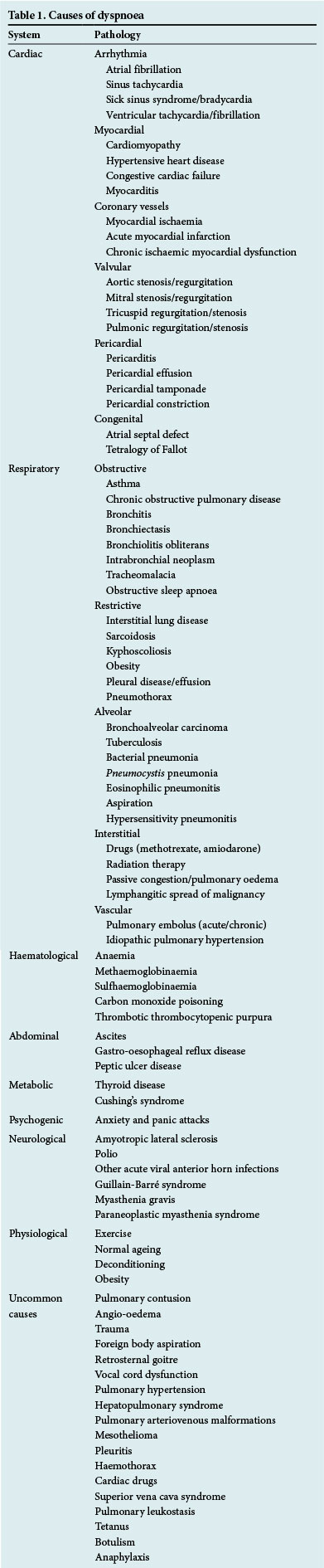
Dyspnoea, also known as shortness of breath or breathlessness, is a subjective awareness of the sensation of uncomfortable breathing. It may be of physiological, pathological or social origin. The pathophysiology of dyspnoea is complex, and involves the activation of several pathways that lead to increased work of breathing, stimulation of the receptors of the upper or lower airway, lung parenchyma, or chest wall, and excessive stimulation of the respiratory centre by central and peripheral chemoreceptors. Activation of these pathways is relayed to the central nervous system via respiratory muscle and vagal afferents, which are consequently interpreted by the individual in the context of the affective state, attention, and prior experience, resulting in the awareness of breathing. The clinical evaluation and approach to the management of dyspnoea are directed by the clinical presentation and underlying cause. The causes of dyspnoea are manifold, and include a spectrum of disorders, from benign to serious and life-threatening entities. The pathophysiology, aetiology, clinical presentation and management of dyspnoea are reviewed.
Continuing Medical Education • SAMJ, S. Afr. med. j. 106
(1)
• • https://doi.org/10.7196/SAMJ.2016.V106I1.10324 copy