Prevalence of gastrointestinal pathogenic bacteria in patients with diarrhoea attending Groote Schuur Hospital, Cape Town, South Africa
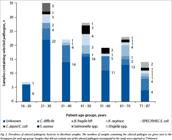
BACKGROUND: Diarrhoea due to gastrointestinal infections is a significant problem facing the South African (SA) healthcare system. Infections can be acquired both from the community and from the hospital environment itself, the latter acting as a reservoir for potential pathogenic bacteria. OBJECTIVES: To examine the prevalence of a panel of potential diarrhoea-causing bacteria in patients attending a tertiary healthcare facility in Cape Town, SA. METHODS: Polymerase chain reaction (PCR) primers specific for Clostridium difficile, Shigella spp., Salmonella spp., Klebsiella oxytoca, enteropathogenic and enterohaemorrhagic Escherichia coli (EPEC/EHEC), Staphylococcus aureus, enterotoxigenic Bacteroides fragilis and Campylobacter spp. were used to screen total bacterial genomic DNA extracted from stool samples provided by 156 patients with diarrhoea attending Groote Schuur Hospital, Cape Town, SA. RESULTS: C. difficile was the most frequently detected pathogen (16% of cases) in the 21 - 87-year-old patient range, but was not present in samples from the 16 - 20-year-old range. K. oxytoca (6%), EPEC/EHEC strains (9%) and S. aureus (6%) were also detected. The remaining pathogens were present at low frequencies (0 - 2.9%), and the occurrence of mixed infections was 5%. The majority of non-C. difficile-related diarrhoeas were community acquired. CONCLUSION: C. difficile was the main cause of infectious diarrhoea in the sampled patients, while K. oxytoca and EPEC/EHEC strains were present as relatively minor but potentially significant pathogens.
SAMJ: South African Medical Journal
 Thumbnail
 Thumbnail