Unrecognised postoperative residual curarisation in developing countries remains a common problem
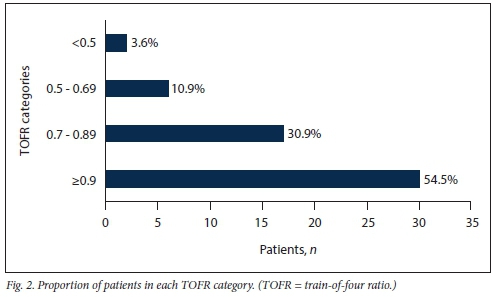
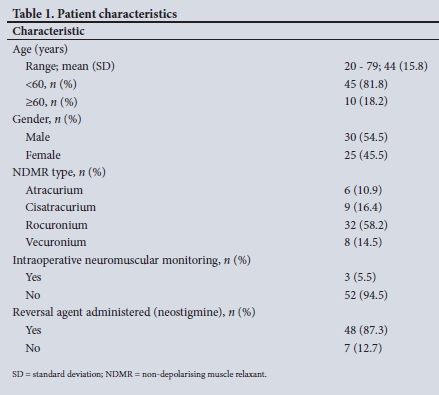
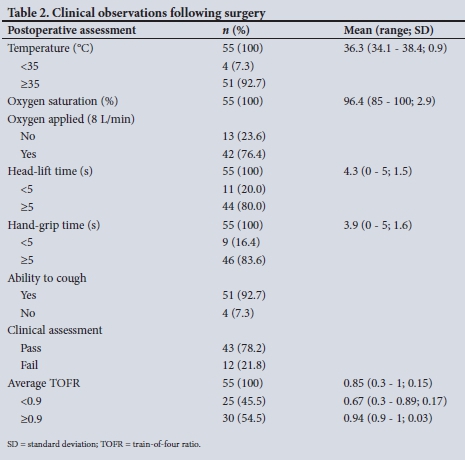
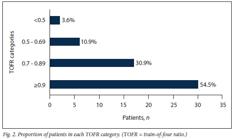
BACKGROUND. Postoperative residual curarisation (PORC) is a potentially life-threatening complication of non-depolarising muscle relaxant use in anaesthesia. Quantitative neuromuscular monitoring has the potential to reduce the risk of PORC, but many anaesthetists rely on clinical assessment of neuromuscular function alone.OBJECTIVES. To investigate the occurrence of PORC in the recovery room at an academic hospital in Gauteng, South Africa. Additionally, this prospective, cross-sectional study aimed to determine the extent of intraoperative neuromuscular monitoring and to assess clinical factors that may influence the risk of PORC.METHODS. Patient characteristics and clinical information, including whether neuromuscular monitoring had been conducted, were recorded. Patients were evaluated by clinical assessment and determination of a quantitative train-of-four ratio (TOFR). PORC assessment methods were compared and clinical characteristics were analysed for association with TOFR status.RESULTS. The incidence of PORC (TOFR <0.9) in the study group was 45.5%; however, 78% passed the clinical assessment. The specificity of clinical assessment to detect residual paralysis was 24%. Notably, only 3 patients (6%) were monitored intraoperatively for neuromuscular function. Advanced age (p=0.011, r=-0.34) and female gender (p=0.001) were shown to be associated with a TOFR <0.7.CONCLUSIONS. PORC is more common in practice than currently recognised. This deduction is supported by the low rate of intraoperative neuromuscular monitoring conducted and the high pass rate on clinical assessment. Routine use of quantitative monitoring of neuromuscular function should be encouraged to minimise the risk of this serious yet preventable condition.
SAMJ: South African Medical Journal
 Thumbnail
 Thumbnail