First case of VEXAS syndrome in South Africa
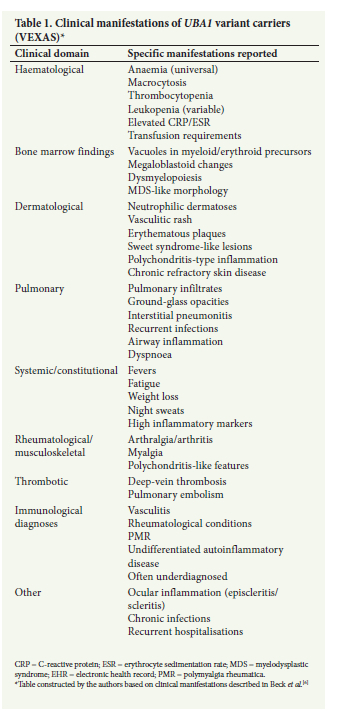
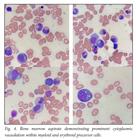
VEXAS (vacuoles, E1 enzyme, X-linked, autoinflammatory, somatic) syndrome is an adult-onset autoinflammatory disorder first described in 2020, resulting from somatic mutations in the UBA1 gene on the X chromosome. These mutations impair ubiquitin-activating enzyme function, driving a clonal, myeloid-restricted autoinflammatory state. Clinically, VEXAS is characterised by recurrent fevers, neutrophilic and vasculitic skin lesions, relapsing polychondritis, pulmonary infiltrates, venous thromboembolism and progressive cytopenias. A hallmark diagnostic feature is the presence of cytoplasmic vacuoles in myeloid and erythroid precursors. Haematological abnormalities are central to the disease presentation, and myelodysplastic syndromes are common. Given its broad multisystem presentation, VEXAS is frequently misdiagnosed as vasculitis, connective tissue disease, infection, or primary haematological pathology, often resulting in years of ineffective immunosuppression and delayed diagnosis. Mortality remains high, with approximately half of patients dying within 5 years of diagnosis. In South Africa (SA), access to advanced molecular diagnostics (including UBA1 sequencing) remains limited, contributing to under-recognition of the condition. This case is notable in that, to the best of our knowledge, it represents the first reported SA case of VEXAS syndrome with molecular confirmation of a UBA1 mutation.
VEXAS syndrome; UBA1; myelodysplastic syndrome; autoinflammation; cutaneous vasculitis; South Africa
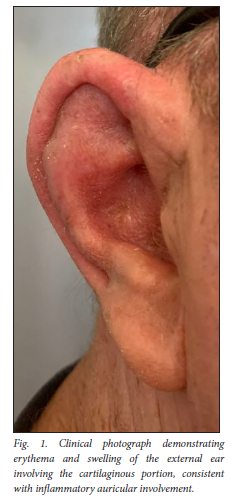
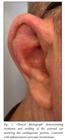 Thumbnail
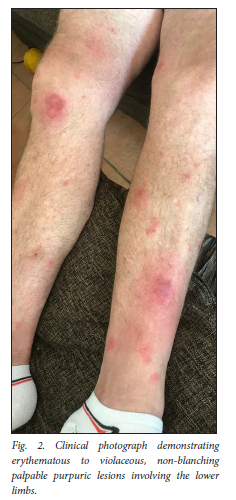
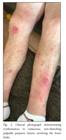 Thumbnail
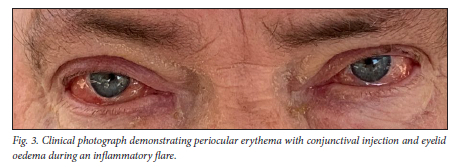
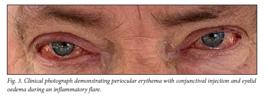 Thumbnail
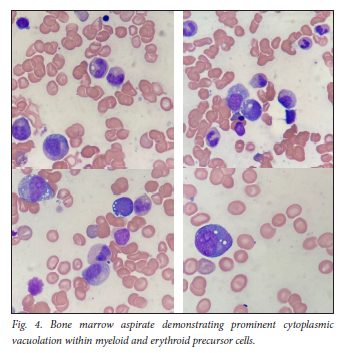
 Thumbnail