HLA typing: Conventional techniques v. next-generation sequencing
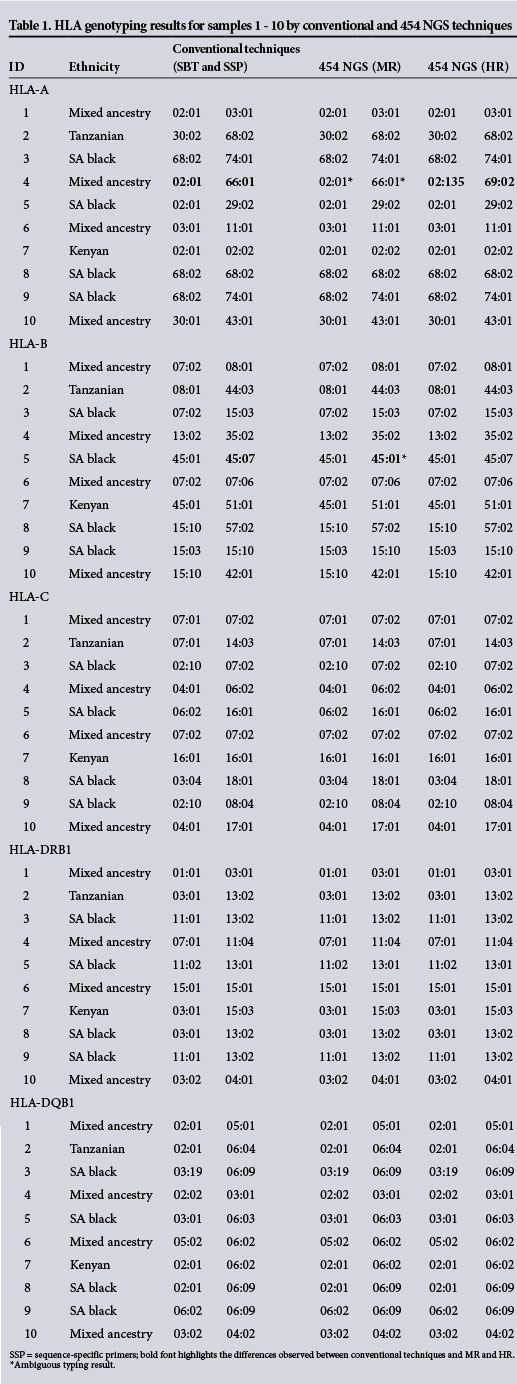
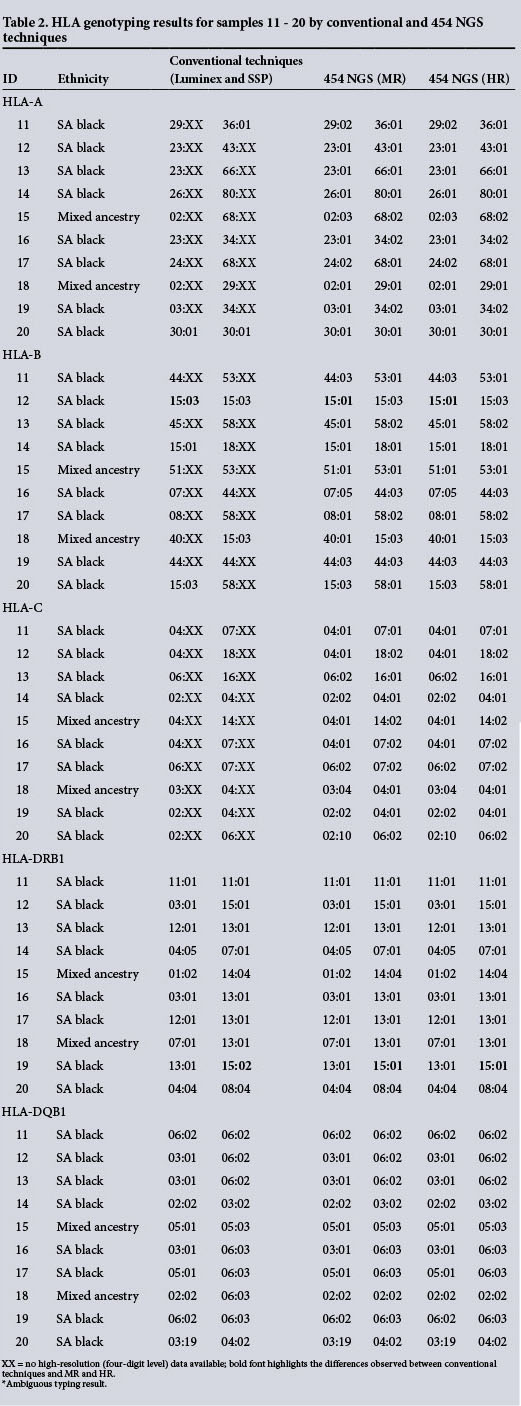
BACKGROUND. The large number of population-specific polymorphisms present in the HLA complex in the South African (SA) population reduces the probability of finding an adequate HLA-matched donor for individuals in need of an unrelated haematopoietic stem cell transplantation (HSCT). Next-generation sequencing (NGS) has numerous advantages compared with conventional typing techniques. OBJECTIVE. To evaluate whether NGS can provide any additional value over conventional techniques in the SA context for the purpose of HSCT and cord blood banking. METHODS. HLA genotyping was performed using NGS on 20 samples that had previously been HLA typed by conventional methods to evaluate whether NGS might provide any additional value over conventional HLA determination techniques. RESULTS. NGS of routinely sequenced loci and exons yielded accurate genotypes for 98.5% of the five loci of interest, compared with 98% when additional exons were included. CONCLUSION. The study shows that the additional value of NGS over conventional techniques is limited, and unless done on a large scale to reduce cost may not be appropriate in SA at this stage in the context of HSCT and cord blood banking.
SAMJ: South African Medical Journal