Expedition medicine: A southern African perspective
Abstract
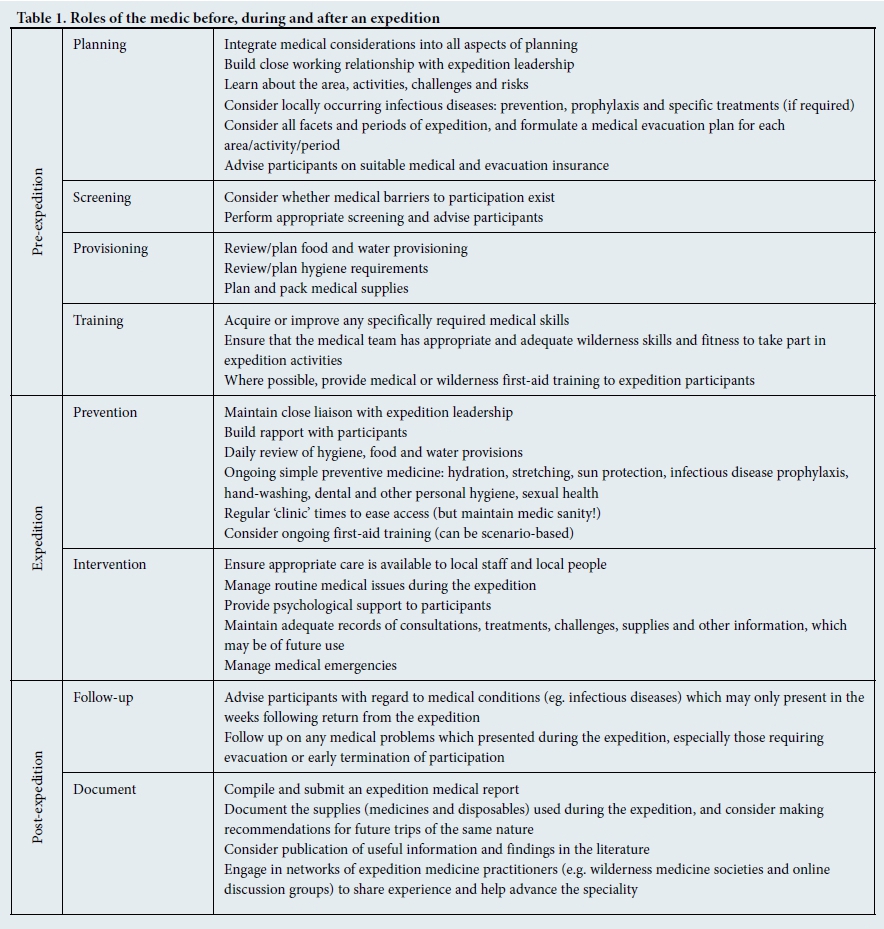
A growing number of people are undertaking expeditions and adventure travel to previously inaccessible areas. The risks posed by increasing accessibility of remote regions and interest in extreme sports have not been fully obviated by modern equipment and communications. Therefore, there remains a requirement for medical care during wilderness expeditions, for which expectations and formal standards continue to increase. Expedition medicine should take cognisance of the predicted problems, plan for contingencies, and be practised pragmatically in austere settings. Southern African medics have a broad skill set, which makes them ideally suited to the field, but they should seek to understand the epidemiology of expeditions in different environments, undergo specialised training, and become involved in all phases of planning and execution of an expedition. Routine general practice complaints and accidental trauma are ubiquitous; travel medical issues such as blisters, diarrhoea, insomnia, sunburn and dehydration occur commonly; area/activity-specific issues such as infectious disease risks and altitude illnesses must be addressed; and women's health and dental problems are frequently overlooked. The expedition medic plays a wide range of roles, and should have knowledge and skills to match the requirements of the expedition. Fortunately, many resources exist to assist medics in becoming competent in the field.
 Thumbnail
 Thumbnail