Postoperative infections: Aetiology, incidence and risk factors among neurosurgical patients in Mthatha, South Africa
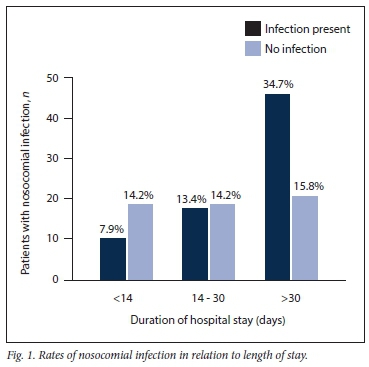
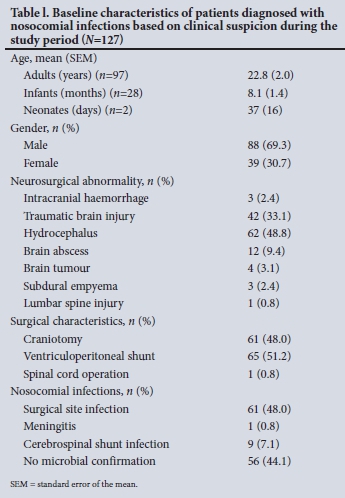
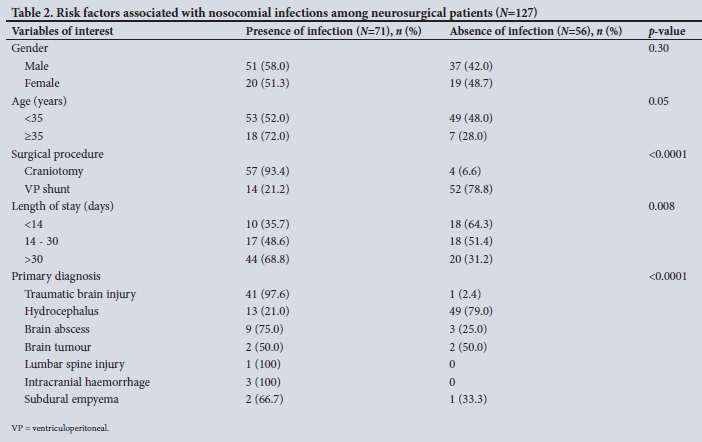
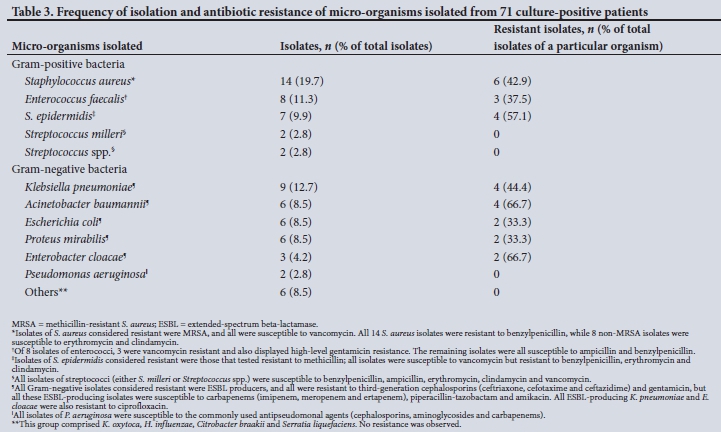
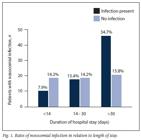
BACKGROUND. Despite progress in hospital care, infections continue to represent one of the major complications among hospitalised patients.OBJECTIVES. To determine the aetiology and incidence of hospital-acquired infections and their associated risk factors following neurosurgical procedures.METHODS. A retrospective study was conducted from October 2013 to September 2014. Data including demographics, hospitalisation period, type of operation and primary diagnosis were collected. Post-surgical infections were confirmed microbiologically. SPSS (Statistical Package for the Social Sciences) version 23 was used for statistical analysis.RESULTS. Among a total of 1 688 patients who underwent neurosurgical operations, the incidence of post-surgical infections was 4.2% per year. Post-surgical infections were significantly associated with craniotomy (p<0.0001), prolonged stay in hospital (>30 days) (p=0.008), and patient age >35 years (p=0.05). Staphylococcus aureus was the most frequently isolated pathogen (19.7%), followed by Klebsiella pneumoniae (12.7%). A total of 42.9% of S. aureus isolates were methicillin-resistant S. aureus (MRSA), but all these isolates were susceptible to vancomycin; 44.4% of K. pneumoniae isolates were extended-spectrum beta-lactamase (ESBL)-positive, but were susceptible to carbapenems, piperacillin-tazobactam and amikacin.CONCLUSIONS. Post-surgical infections remain an important problem in neurosurgery. Increased resistance to causative pathogens is a major concern.
SAMJ: South African Medical Journal
 Thumbnail