Earlier HIV diagnosis: are mobile services the answer?
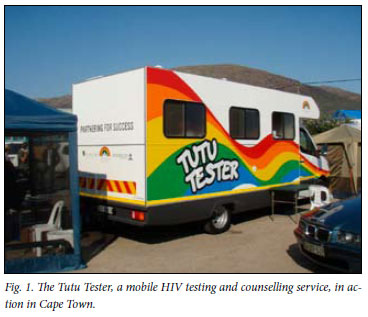
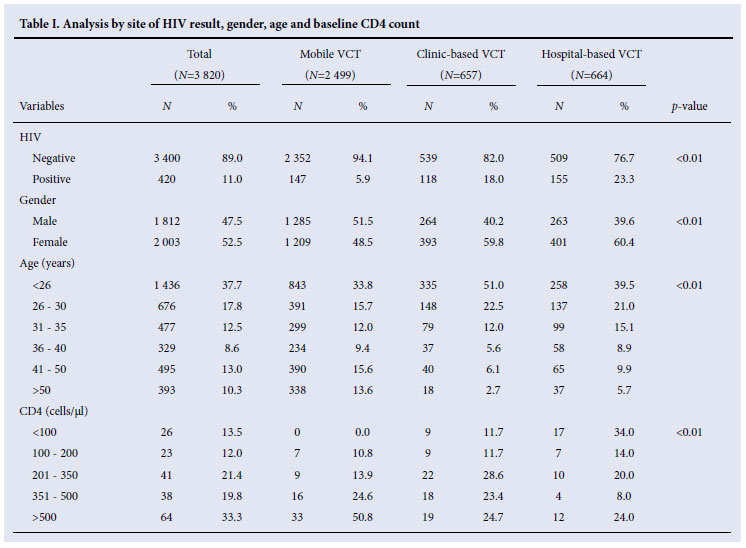
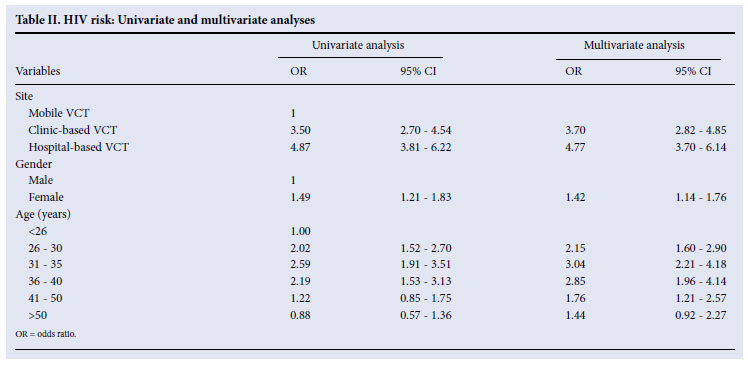
OBJECTIVES: To assess the age and gender differences of clients accessing mobile HIV counselling and testing (HCT) compared with clients accessing facility-based testing, and to determine the difference in HIV prevalence and baseline CD4 counts. METHODS: This was a prospective observational cross-sectional study of 3 different HIV testing services in Cape Town. We compared data on age, sex, HIV status and CD4 counts collected between August and December 2008 from a mobile testing service (known as the Tutu Tester), a primary health care clinic, and a district hospital. RESULTS: A total of 3 820 individuals were tested: 2 499 at the mobile, 657 at the clinic, and 664 at the hospital. Age and sex distribution differed across services, with the mobile testing more men and older individuals. HIV prevalence was lowest at the mobile (5.9%) compared with the clinic (18.0%) and hospital (23.3%). Of the HIV-infected individuals from the mobile service, 75% had a CD4 count higher than 350 cells/µl compared with 48% and 32% respectively at the clinic and hospital. Age- and sex-adjusted risk for HIV positivity was 3.5 and 4.9 times higher in the clinic-based and hospital-based services compared with the mobile service. CONCLUSION: Mobile services are accessed by a different population compared with facility-based services. Mobile service clients were more likely to be male and less likely to be HIV positive, and those infected presented with earlier disease.
SAMJ: South African Medical Journal
 Thumbnail