Effective psychological and behavioural interventions in obesity management
J BantjesI; C ArendseII; M Conradie-SmitIII; W MayIV; K MawsonV
IMA (Psych), MA (Couns Psych), PhD; Mental Health, Alcohol, Substance Use and Tobacco Research Unit, South African Medical Research Council, Cape Town; Department of Psychiatry and Mental Health, University of Cape Town Institute for Life Course Health Research, Department of Global Health, Stellenbosch University Cape Town, South Africa
IIMA (Clin Psych); Department of Psychiatry, Stellenbosch University, Cape Town; Department of Psychology, Tygerberg Academic Hospital, Cape Town, South Africa
IIIMB ChB, MMed (Int Med), FCP (SA), Cert Endocrinology & Metabolism (SA); Division of Endocrinology, Department of Medicine, Stellenbosch University and Tygerberg Academic Hospital, Cape Town, South Africa
IVMB ChB, FCP (SA), Cert Endocrinology & Metabolism (SA); Cape Town Bariatric Clinic, Life Kingsbury Hospital, Cape Town, South Africa
VMB ChB, FC Psych (SA), MMed (Psych); Department of Psychiatry, Stellenbosch University and Tygerberg Academic Hospital, Cape Town, South Africa
• Psychological and behavioural interventions should be used by all healthcare providers (HCPs) while delivering obesity-related healthcare. Using the principles of behaviour change is likely to improve the experience of people living with obesity (PLWO) and their ability to initiate and sustain behaviour change.
• Effective management of PLWO requires sustained behaviour change. To reduce and maintain their body weight, patients need to make and sustain changes to their patterns of eating, physical activity and treatment adherence. Behavioural changes can be supported by psychological interventions based on the science of behaviour change. Behaviour change plans must be individualised and premised on careful consideration of patients' individual healthcare needs, personality, culture, living circumstances and socioeconomic status.
• To deliver behaviour change interventions effectively, HCPs should:
♦ build rapport by listening carefully to the patient, communicating empathy and warmth, and adopting a non-judgemental attitude
♦ understand what the patient wants to get from the intervention and focus on goals that are important to them
♦ adopt a collaborative, patient-centred approach and deliver interventions sensitively
♦ actively respect patients' autonomy and their right to make decisions you might not agree with.
• Weight loss is often the primary goal of intervention, but other goals are also important, such as improved health, enhanced wellbeing, improvements in quality of life (QoL) and improved capacity to perform activities of daily living. Goals for behaviour should be explicitly agreed with the patient, clearly articulated, specific, measurable, written down and operationalised. Unrealistic goals about weight loss can create false hope, and lead to dissatisfaction with treatment and disengagement from the programme. Behaviour is shaped by feelings (i.e. emotions) and cognitions (i.e. thought processes and perceptions, attitudes, and beliefs about self, others and the world). Behaviour change cannot be made without understanding the thought processes and feelings that PLWO have about their weight, the unhelpful habits that contribute to their obesity, and the new habits they are trying to develop. Facilitating sustained behaviour change requires understanding and attending to patients' unhelpful beliefs about themselves and helping them develop flexible and adaptive ways to respond to uncomfortable feelings.
• Physical exercise and dietary interventions are helpful, but generally do not support long-term behaviour change and sustained weight loss, unless they are coupled with interventions to address the psychological drivers of behaviour.
• Interventions for PLWO should include elements of the following:
♦ Psychoeducation about:
a) biological factors that drive food cravings, hunger and overeating
b) healthy eating
c) how environmental cues trigger eating
d) the concept of 'best weight' (i.e. the weight that a person can achieve and maintain while living their healthiest and happiest life).
♦ Practices that promote self-monitoring (such as keeping food and exercise diaries, activity tracking, and self-weighing) can support behaviour change.
♦ Interventions are effective when they include techniques borrowed from cognitive and behavioural therapy to expressly build patients' self-worth, self-efficacy, self-confidence, self-acceptance and body image.
♦ It can be helpful to support individuals' executive function (cognitive control) through psychological skills training including goal setting, problem solving, attention control, impulse control, planning and self-monitoring.
• Sociocultural biases about weight can result in stigma and prejudice against PLWO. When stigma is internalised, it drives self-defeating and self-destructive behaviours, which undermines the effectiveness of behaviour change interventions.
• Where psychiatric problems, intellectual disability or learning difficulties are barriers to behaviour change, PLWO should be referred for additional psychological and/or psychiatric assessment and management.
The psychological and behavioural interventions described below were developed based on research predominantly in PLWO with lower body weights (body mass index <40 kg/m2
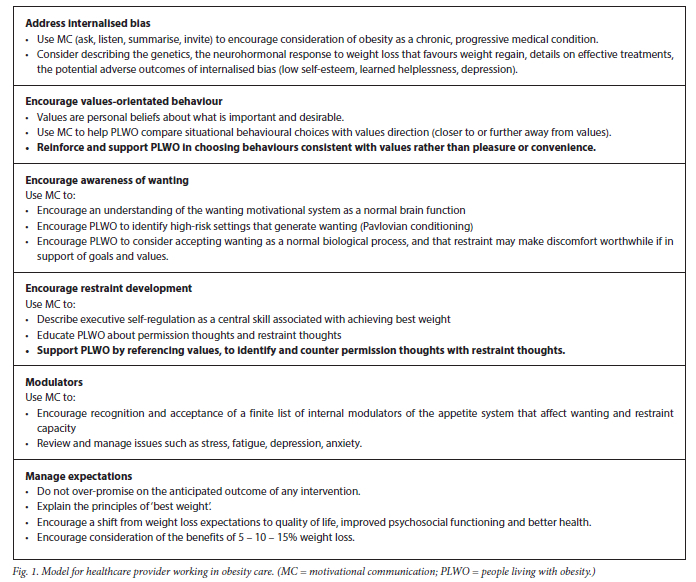
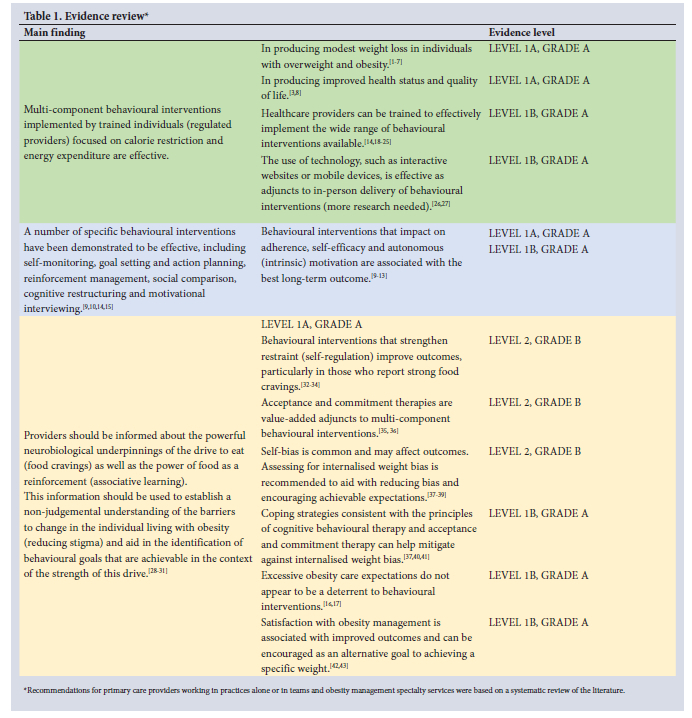
RECOMMENDATIONS1. The recommendations outlined below are summarised in the model presented in Fig. 1 and supported by the evidence summarised in Table 1.
2. Multi-component psychological interventions (combining behaviour modification [goal setting, self-monitoring, problem solving], cognitive therapy [reframing] and values-based strategies to alter nutrition and activity) should be incorporated into care plans for weight loss and improved health status and QoL (Level 1a, Grade A)[1-8] in a manner that promotes adherence, confidence and intrinsic motivation (Level 1b, Grade A).[9-13]
3. HCPs should provide longitudinal care with consistent messaging to PLWO to support the development of confidence in overcoming barriers (self-efficacy) and intrinsic motivation (personal, meaningful reasons to change), to encourage the patient to set and sequence health goals that are realistic and achievable (Level 1a, Grade A,),[9-15] to self-monitor behaviour (Level 1a, Grade A),[9,10,14,15] and to analyse setbacks using problem solving and adaptive thinking (cognitive reframing), including clarifying and reflecting on values-based behaviours (Level 1a, Grade A).[9,10,14,15]
4. HCPs should ask patients' permission to educate them that success in obesity management is related to improved health, function and QoL resulting from achievable behavioural goals, and not the amount of weight loss (Level 1a, Grade A).[16,17]
5. HCPs should provide follow-up sessions consistent with repetition and relevance to support the development of self-efficacy and intrinsic motivation.[9-15] Once an agreement to pursue a behavioural path has been established (health behaviour and/or medication and/or surgical pathways), follow-up sessions should repeat the above messages in a fashion consistent with repetition (the provider role) and relevance (the patient role) to support the development of self-efficacy and intrinsic motivation (Level 1a, Grade A).
KEY MESSAGES FOR PEOPLE LIVING WITH OBESITY• The main goal of psychological and behavioural interventions is to help individuals living with obesity make changes that are sustainable, that promote positive self-esteem and confidence, and that improve health, function and quality of life.
• There is not one pathway to success. Goals should be individualised and be important to the individual and not just the clinician or programme.
• There are many psychological and behavioural strategies that can be helpful. Seek out a healthcare provider with expertise in behaviour change to help identify relevant strategies.
• Given that healthier weights involve overcoming many challenges (cravings, habits, availability, social pressures), sustained behaviour change is more successful if the behaviours chosen by the individual are consistent with his/her core values.
Narrative review of the literature and explanation of key concepts
Psychological interventions for the management of obesity seek to support the health and wellbeing of people living with obesity (PLWO) by helping them to make sustainable lifestyle changes. Furthermore, if successful, these interventions ideally lead to improvements in individuals' health, subjective sense of wellbeing, quality of life (QoL) and capacity to perform activities of daily living (ADL).[44,45] Weight loss is important, but only inasmuch as it contributes to wellbeing. To realise these outcomes, psychological interventions help patients to make sustainable changes in two key areas of their lives: diet and physical activity. Because psychological interventions for obesity management focus on lifestyle and behaviour change, they are sometimes called lifestyle interventions or behavioural interventions. Here we use the term behavioural interventions.
Multi-component behavioural interventions are an integral part of comprehensive obesity management, along with surgical and pharmaceutical interventions. In many low-income settings where surgical and medical resources are scarce, behavioural interventions may be the most feasible way to scale up obesity management. We know from research on other chronic illnesses that behavioural interventions to promote health can be effectively delivered by suitably trained and supervised non-professionals within a task-sharing framework.[46,47] While task-sharing approaches to behavioural interventions for obesity have not been widely studied, they will be essential for scaling up access to obesity management in South Africa (SA).
Here we outline core concepts from the science of behaviour change and evidence-based techniques for designing and delivering effective behavioural interventions for PLWO. The lack of intervention research from SA, and indeed Africa more generally, makes it impossible to include specific evidence from the region.[48-51] Indeed, one of the main conclusions of our review is the need for context-sensitive and culturally appropriate intervention research in the region.
PLWO may benefit from comprehensive clinical assessment to diagnose and, if necessary, to treat mental health problems and unhelpful personality functioning. However, a thorough discussion of the links between mental health and obesity and the components of clinical psychiatric assessment for PLWO is beyond the scope of this chapter. Please refer to the chapter 'The role of mental health in obesity management' for this information.
This chapter starts with a brief discussion of how understanding obesity as a chronic disease has precipitated a shift towards behavioural interventions that are client centred, respectful, collaborative and sensitive to patients' contexts. The chapter then moves onto a discussion of evidence-based principles for designing and delivering behavioural interventions for PLWO and the most helpful techniques for facilitating sustained lifestyle changes. Wherever possible we have drawn on systematic reviews and meta-analyses, since these provide the most robust evidence to inform practice. We have only singled out individual studies to illustrate a particular point or an emerging area of research that has not yet amassed sufficient studies for meta-analysis.
Obesity is a chronic disease
It was not until the late 20th century that obesity came to be seen as a chronic disease. Before that, obesity was seen primarily as a symptom of patients' bad lifestyle choices.[43] Understanding obesity as a symptom of poor choices positioned the patient as the problem and obesity as a moral failure while framing the goal of treatment as weight loss. Doctors working within this paradigm focused on giving advice and instructing patients to change based on the doctor's assessment of what the patient needed. While these clinician-centred interventions were sometimes effective in the short term, they failed to support long-term health and enduring lifestyle change.
The World Health Organization classified obesity as a chronic disease in 1997, marking a paradigm shift in medical approaches to obesity management. We now appreciate that the outcomes of obesity management (as with the management of other chronic illnesses) are not chiefly determined by what the healthcare provider (HCP) does to the individual in the consulting room. Rather, successful management of PLWO is determined by what the patient does between consultations during their everyday life.[52,53] As such, obesity management should be patient centred, provide ongoing support, and facilitate sustained lifestyle changes by drawing on the science of behaviour change.
The science of behaviour change
The science of behaviour change is well developed and has consistently taught us that:
• Changing habits is not easy, and behavioural change happens gradually over time.
• Behaviour is not always rational, and knowledge is seldom enough to facilitate sustained changes.
• Some behaviours are learned and reinforced by conditioning from external environmental stimuli.
• Behaviour is culturally situated and shaped by sociocultural norms and the patient's context.
• Behaviour change requires internal motivation and will only be sustained if it aligns with the patient's goals and values.
• Behaviour is a function of emotional states and patients' beliefs about themselves, others and the world.
• The brain's reward system can be hijacked, resulting in compulsive pleasure-seeking and self-defeating behaviours.
• Behaviour change is facilitated by self-awareness and internal change, which can only be achieved through a therapeutic relationship in which the patient feels heard and seen.
These basic principles of behaviour change are at the core of comprehensive obesity management programmes. As such, behavioural interventions for PLWO are not simply prescriptions to change that are passively received by the patient. Instead, behavioural interventions are co-created strategies to help the PLWO achieve goals that are important to them through sustained lifestyle change that is informed by the patient's particular context.[54,55]
In order to deliver any behavioural intervention, the HCP needs to build rapport and establish a therapeutic alliance with the patient. This is done by communicating warmth and empathy, adopting a non-judgemental attitude, attending carefully to what the patient says, and validating their experience.
The goals of behavioural interventions
As noted above, the ultimate goals of behavioural interventions for obesity management are sustained lifestyle changes that lead to improved wellbeing, enhanced QoL and increased capacity to perform ADL. However, clinical trials have typically used body weight as the primary outcome to assess effectiveness of behavioural interventions. But weight loss is not the only important outcome. Other outcomes that might be important include the patient's subjective sense of wellbeing, levels of physical fitness and physical activity, QoL, and health-related measures such as cholesterol levels, high-density lipoprotein/low-density lipoprotein, and blood pressure.[1,4,45]
How the success of behavioural interventions is defined is important, not only to ensure that appropriate criteria are used to evaluate interventions but also to manage patients' expectations and help clinicians identify the most appropriate behavioural strategies and techniques for facilitating change.
Decisions about the primary outcome of behavioural interventions are not always obvious, and require some thought and discussion with the patient. The choice of these outcomes can be ideological and may reflect both the patient's and the clinician's biases about what constitutes health and physical attractiveness. Irrespective of what the primary outcomes are, they should be mutually agreed on with the patient and should directly inform what behavioural change strategies are incorporated into the intervention.
Evidence-based approaches and techniques
Several systematic reviews and meta-analyses have synthesised the scientific literature on behavioural interventions for obesity, providing a basis for evidence-based practice. These systematic reviews are cited below. There are, however, some problems with the existing evidence base. It is still unclear what the necessary and sufficient components are for effective behavioural obesity interventions. Some strategies work for some people, and no strategy works for everyone. Most studies only examine aggregate treatment effects without subgroup analysis, so we know very little about how to match individual patients to the interventions that are most likely to benefit them. Studies have used various outcomes, making it difficult to synthesise findings and draw conclusions about the comparative effectiveness of different approaches. And finally, most studies have been conducted in high-income Western settings, and it is not clear how effective they might be in other contexts and cultures. Below we describe the behavioural change techniques that have the strongest evidence base at the time of writing.
Physical activity and medical nutrition therapy
Calorie intake in excess of energy needs is one of the many factors that precipitate and maintain unhealthy body weight. Interventions for obesity therefore typically include strategies to increase energy expenditure through physical activity and to restrict calorie consumption through dietary changes.
Various approaches have been used to encourage PLWO to become more physically active, with varying degrees of success.[45] Physical activity programmes for patients who are overweight or have class 1 obesity (body mass index [BMI] 26.9 - 36.5 kg/m2[45] suggesting that programmes should have realistic activity goals for patients who have hitherto been physically inactive. While physical activity should generally be a component of all behavioural interventions for obesity, treating overweight and obese individuals with physical training alone is ineffective.'451 Physical training is, however, effective for maintaining body weight and preventing weight gain, and is therefore an important component of maintenance and relapse prevention.[45]
A systematic review of diet-focused behavioural interventions to manage non-communicable diseases (including obesity) in low- and middle-income countries noted the lack of research in this area.[56]
Nonetheless, the review concluded that most interventions produced small effects in the expected direction, which is consistent with evidence from high-income countries.
As with physical training interventions, dietary interventions are important in obesity management but are ineffective as stand-alone interventions.[2] Strategies such as counting calories and consulting a dietitian are effective techniques for promoting weight loss.[9] While diets are often a cornerstone of obesity management, evidence suggests that behavioural interventions can be effective even when they do not include diets. A systematic review that examined the impact of using non-dietary approaches to change attitudes, behaviour and health concluded that non-dietary approaches to weight loss can lead to improvements in the psychological domains of disordered eating, self-esteem and depression, although the authors noted considerable heterogeneity in the outcome measures used in these studies. Using non-dietary approaches in obesity management is not associated with weight gain or increases in blood pressure, glucose levels or cholesterol, further supporting the idea that dietary interventions may not be a necessary component of interventions.[57] Encouraging flexible eating restraint (an approach to reducing calorie intake that emphasises moderation and adaptability rather than strict rules) is an effective component of dietary interventions.[11]
The consensus is that for PLWO, the most effective behavioural interventions for reducing weight and maintaining weight loss have a combination of dietary changes, physical activity and behavioural therapy.[1] Physical activity interventions, for example, appear to be most effective when they are delivered with other cognitive and behavioural strategies, most notably the use of behavioural cues (i.e. stimulus control), prompting practice (i.e. action planning/activity scheduling), prompting rewards (i.e. reinforcement management), motivational interviewing (MI), goal setting, problem solving, relapse prevention, behavioural contracting, cognitive restructuring and self-regulation.[11,13,58] These cognitive and behavioural techniques are described in more detail below.
Multi-component interventions
There is convincing evidence that to be effective, behavioural interventions for the management of obesity need to include multiple components.[1,4,45] A systematic review that compared single versus multi-component interventions for patients with a BMI >25 kg/m2 [2] One systematic review concluded that positive changes were associated with the number of behavioural change techniques incorporated into the intervention,[10] suggesting that interventions should consist of a wide array of different techniques to support behaviour change. Nonetheless, a systematic review of behavioural change strategies used to promote behaviour change in patients who are overweight or obese (i.e. individuals with a BMI >25 kg/m2[9] Goal setting, action planning, self-monitoring and feedback are the most commonly used techniques,[9] and are discussed in more detail below.
Self-monitoring, food diaries, activity tracking and self-weighing
Weight control in the medium to long term is significantly associated with strategies to encourage self-monitoring.[11] In the context of obesity management, self-monitoring is the practice of encouraging patients to track and record various aspects of their diet, physical activity and body weight, with the goal of improving self-awareness, providing feedback, promoting accountability, facilitating goal setting and monitoring progress. This could, for example, include asking patients to monitor and record what they eat (i.e. a food diary) and/or their levels of physical activity (i.e. an exercise diary). Evidence supports the effectiveness of self-monitoring strategies in obesity management programmes.[11]
Self-weighing (i.e. a practice in which patients are encouraged to weigh themselves regularly and track fluctuations in their weight) is another example of a widely used evidence-based self-monitoring strategy. A systematic review found evidence that self-weighing was associated with weight loss without a concurrent increase in negative emotional effects such as symptoms of anxiety and depression.[59]
Self-monitoring is increasingly being facilitated by smart devices and wearables that can track health-related metrics such as levels of physical activity, quality of sleep, blood pressure and heart rate.[60] Several reviews have interrogated the efficacy of these devices in interventions for obesity in adults.[61-63] In a recent review and meta-regression, lifestyle interventions that utilised wearable devices were found to make significant changes to BMI (among other measures) compared with comparator interventions, with a certainty of evidence that was moderate to high.[63] Of further interest is the authors' suggestion that some of the positive effect may be related to the behavioural change interventions that were often paired with the use of wearable devices, such as goal-setting and provision of information.
Behaviourism, learning theory and behaviour reinforcement
Behaviourism is a theory of learning premised on the idea that behaviour is learned by observing others and is then maintained or extinguished through a process of conditioning. Behaviourists differentiate between classical conditioning and operant conditioning:
• Classical conditioning is learning by association and occurs when a previously neutral stimulus becomes capable of eliciting a behaviour after it has been repeatedly associated with another stimulus that naturally triggers the behaviour. For example, suppose a person initially eats only when hungry, but they always eat in front of the TV. Over time, watching TV (which was previously a neutral stimulus) becomes associated with eating, and every time they sit down to watch TV it triggers an urge to eat, even if the person is not hungry.
• Operant conditioning is the process through which behaviour is shaped by its consequences. A behaviour is encouraged through positive reinforcement (i.e. repeating a behaviour because it leads to some pleasant outcome) and extinguished through negative reinforcement (i.e. performing a behaviour to avoid an unpleasant stimulus).
Behaviourism focuses on how behaviour can be modified by changing stimuli that precipitate or reinforce behaviours and understanding how behaviours have been established through prior conditioning and therefore persist even in the absence of environmental stimuli. Behaviour modification is widely applied in interventions for disordered eating and the management of obesity. Typically, behaviour modification for obesity entails identifying stimuli that precipitate and reinforce unhealthy eating and exercise patterns and promoting new behaviours through rewards.
A core idea in behaviourism is that people learn by association (i.e. conditioning), and consequently learn to associate food with environmental cues, situations and/or emotional states.[64,65] The associations one has with food can contribute to unhealthy eating and weight gain.[66,67] For example, the sensory properties of some foods promote the desire to eat even in the absence of hunger.[28,30] Learning theory may offer some insight into the psychological mechanisms that caused people to eat in the absence of physiological hunger.
Food cravings and the impulse to start eating are highly responsive to external environmental stimuli. The mere presence of food, the smell of food, and the way food is presented can trigger eating.[29,30] This is one of the reasons why availability of high-calorie foods in the immediate environment contributes to obesity.[29,68]
Evidence supports the use of a few behaviour modification techniques in obesity management, including:
• Behavioural contracting (i.e. creating a written agreement with a patient that outlines specific behaviours to be performed and the positive reinforcement that will be used to reward the desired behaviour)
• Behaviour shaping (i.e. a technique to gradually teach new behaviours through reinforcement of successive approximations towards the desired behaviour)[16]
• Behaviour reinforcement (i.e. rewarding health-promoting behaviours that one wants to encourage)
• Stimulus control (i.e. identifying triggers for unhealthy behaviours, modifying the environment to reduce exposure to these triggers, and reinforcing positive associations with desired behaviours).
Reward sensitivity
Cognitive neuroscientists hypothesise that there is a biological basis for behavioural addictions, which may explain some people's compulsion to perform self-defeating behaviours that bring immediate satisfaction even though they are harmful in the long run. This theory is premised on the assumption that behaviour is in part shaped by a network of neurological structures and neurochemical pathways that create a subjective experience of pleasure when people encounter stimuli such as food, positive social interactions, exercise, sexual experiences and achievements. This brain reward system plays a crucial role in motivation, goal-directed behaviour and reinforcement learning. When the reward system is activated, people experience an internal pressure (sometimes called intrinsic motivation) to perform activities associated with the pleasant sensations. The reward system creates the experience of 'wanting' something, which acts as the initial impetus to initiate goal-directed behaviour. Once the behaviour is initiated it is either maintained or extinguished by the emotions that accompany the behaviour. For example, there is internal pressure to desist with a behaviour if it triggers feelings of guilt or physical discomfort. Conversely, the behaviour is maintained if accompanied by pleasant sensations such as a flood of dopamine. When the reward system functions well, it helps people maintain a range of prosocial and health-promoting behaviours.
It appears that some people exhibit greater reward sensitivity, which predisposes them to developing behavioural addictions such as gambling, hazardous substance use and overeating.[69,70] Reward sensitivity may be one of the reasons people experience intense food cravings and continue to eat even when they are no longer hungry.[71,72] The brain sensitivity to rewards is influenced by both neurobiological and genetic factors.[73-79]
Theories about reward sensitivity have contributed to the contemporary idea that behavioural addictions are brain diseases and that pharmaceutical interventions may change behaviour by 'fixing' the brain's impaired reward system. Biological approaches of this kind, which medicalise obesity, may be very helpful in alleviating some of the shame and self-blame that is associated with obesity and cultivating compassion towards PLWO. It is sometimes helpful to give patients information about the brain's reward system and the biological processes that mediate hunger,[80] although this is probably ineffective as a strategy on its own (see the discussion on psychoeducation below). Overly medicalised approaches to obesity may, however, also have the unintended consequence of undermining individuals' sense of agency and autonomy by implying that they are not responsible for their behaviour.
Cognitive-behavioural interventions
Cognitive-behavioural interventions focus on how behaviour is influenced by, and in turn influences, emotions (i.e. feelings) and cognitions (i.e. thought processes and beliefs). This approach borrows from the principles of behaviourism but goes further to include the role of thinking in shaping behaviour. Evidence supports the use of a range of cognitive-behavioural strategies in obesity management,[9-11,15,35,58] including strategies that directly address:
• Autonomy and agency (i.e. enhancing self-determination and a sense of personal agency by encouraging patients to make their own decisions, take responsibility, and assume control of their actions)
• Impulse control (i.e. building patients' capacity to resist or delay the urge to engage in unhealthy behaviours using techniques such as distraction, redirecting one's attention, and learning to tolerate the discomfort of not acting on an impulse)
• Self-awareness and the capacity for self-reflection (i.e. promoting insight into how beliefs about the self, others and the world shape eating and exercise behaviours, and building the capacity to recognise one's feelings)
• Modifying unhelpful beliefs and perceptions (e.g. helping patients to identify and reframe unhelpful beliefs and perceptions about physical activity and healthy eating)
• Self-efficacy (i.e. confidence to perform a behaviour in the face of barriers)
• Behavioural control (i.e. patients' perception of how much control they have over their ability to engage in the behaviour)
• Activity scheduling (i.e. setting aside time that is dedicated to health-promoting behaviours such as exercise)
• Social support (i.e. identifying how the desired behaviours can be supported and encouraged by friends, family and/or support groups)
• Social comparisons. Social comparison techniques consist of providing normative information about others' behaviour and approval, and facilitating accurate social comparisons
• Self-regulation (i.e. enhancing a patient's ability to manage and curb impulses and control emotions, thoughts and behaviours in different situations)
• Values clarification (i.e. strategies that help patients identify their values and align their behaviour with these values). This approach is central to acceptance and commitment therapy (ACT), which can be helpful to some PLWO[35]
• Problem solving (i.e. building the patient's capacity to think flexibly and overcome barriers to engaging in health-promoting behaviours)
• Time management (i.e. helping patients to manage the allocation and use of their time so that they can find time for physical activity and food preparation).
Weight bias and cognitive control are two additional evidence-based approaches informed by cognitive-behavioural theories. We discuss these two approaches in more detail in subsections of their own because they are central to behavioural interventions for obesity and merit elaboration.
Weight bias, body image and compassion
Sociocultural norms about what constitutes a desirable body can give rise to negative cultural attitudes, stereotypes, and prejudice towards overweight people. Negative attitudes towards obesity are collectively referred to as weight bias, and result in discrimination and stigma towards PLWO. Weight bias directly influences how PLWO experience themselves and the world, influencing self-esteem and body image.[81] (See the chapter 'Reducing weight bias in obesity management, practice and policy'.)
Experiencing stigma and prejudice precipitate powerful feelings of shame and anger, which in turn can give rise to self-defeating behaviours. PLWO can also internalise weight bias by adopting toxic norms about body weight and shape, leading to self-loathing, self-blame and other unhelpful negative beliefs about themselves. These experiences erode self-esteem, self-confidence and self-efficacy, influencing individuals' motivation to take care of themselves and engage in health-promoting behaviours.[38,39,82] Weight bias erodes internal motivation and directly harms healthy eating behaviours, leading to poorer outcomes in behavioural interventions for obesity.[38,41]
Individuals with higher internalised weight bias tend to respond poorly to behavioural interventions, reporting comparatively less weight loss, lower levels of physical activity, higher caloric intake, greater disordered eating behaviours, and greater cardiometabolic risk.[83,84] A study exploring the impact of explicit and implicit weight bias on weight loss outcomes in 46 overweight and obese adults concluded that individuals who reported higher weight bias assessed at baseline were more likely to drop out of behavioural interventions and reported less weight loss.[85] A recent study of internalised weight bias in 81 women with obesity found significant associations between high internalised weight bias and poorer QoL, physical health and mental wellbeing.[86]
Obesity management interventions should take account of patients' experience of weight bias and internalised stigma by directly addressing intrinsic motivation, self-esteem, perceptions of agency, and feelings of guilt and shame. Cognitive interventions can promote feelings of self-worth and personal agency, which result in better outcomes in obesity management programmes. Interventions should include cognitive techniques (such as reframing and disputing unhelpful beliefs, and behavioural experiments) to address feelings of shame associated with eating and exercise and modify beliefs about one's capacity to perform physical activities and regulate one's eating. Behavioural interventions that address patients' perceptions of themselves and their body image are effective in obesity management.[11]
Communicating empathy to individuals with obesity and encouraging self-compassion are effective antidotes to weight bias and internalised stigma, making them important components of behavioural interventions.[40] Compassion-focused therapies that aim to help patients overcome guilt, shame and self-criticism by cultivating an attitude of compassion are effective components of obesity management.[87,88] A study of 1 158 participants (mean BMI 28.22 kg/m2[89]
ACT, which aims to help patients adopt a non-judgemental attitude of self-acceptance and commit themselves to behaviours that are aligned with their values, can also be an effective component of obesity management.[35]
Crucially, HCPs are not immune to the influence of weight bias and may hold unconscious attitudes that affect how they interact with and treat PLWO. HCPs who are not aware of their own bias can unwittingly undermine obesity management by being punitive and critical towards patients who do not respond well to interventions or who do not fully comply with treatment protocols.
Executive control
Executive control (also sometimes referred to as cognitive control) refers to the mental processes that allow individuals to regulate their thoughts, emotions and behaviours to achieve specific goals. Executive control seems to be governed by the prefrontal cortex of the brain and consists of various cognitive capacities, including the ability to direct one's attention and sustained concentration, curb impulses, tolerate distress, set goals, plan, solve problems, and think flexibly. Executive control is a much broader concept than self-regulation and is understood to be an important cognitive component of goal-directed behaviour and motivation.
Severe dysfunctions in executive control (executive dysfunction) can be the result of brain injuries, intellectual disabilities and learning difficulties,[90,91] although some individuals without these conditions also experience impairments in cognitive control. Executive control can be learned and enhanced through cognitive skills training,[90,91] which has been shown to improve outcomes in obesity management interventions. PLWO seem to benefit from interventions that enhance their capacity to solve problems, think flexibly, direct their attention, control impulses, set goals and schedule activities (i.e. planning), as discussed above in the section on cognitive-behavioural approaches.
Expectations
Individuals who seek treatment for obesity typically have expectations of weight loss that far exceed what is reasonably possible.[92] One study of 60 obese women (mean [standard deviation] BMI 36.3 [4.3] kg/m2[86] In another trial of a pharmaceutical intervention, women enrolling in the study expected to lose an average of 25% of their initial weight,[93] while a more realistic goal would be a 5 - 10% reduction in weight.[94] A systematic review of behavioural interventions for people with moderate and severe obesity reported that in about 65% of studies patients only achieved a 5% reduction in weight, and in about 37% of studies a 10% reduction in weight was reported.[3]
Generally, women tend to have higher expectations of weight loss than men, as do those with higher BMIs.[17,88] Weight loss expectations tend to be more realistic when patients have more contact with HCPs.[95]
Patients' expectations about weight loss influence their motivation to engage with the intervention, their satisfaction with the treatment, and how they react when expectations are unmet.[17] When expectations are not met, patients frequently disengage and experience the intervention as a failure, which in turn can reinforce unhelpful beliefs about themselves and their ability to regulate their weight.
Patients typically report low levels of satisfaction with treatment even when the intervention has led to weight loss. In one study, 86% of participants in an obesity intervention were not satisfied with treatment, even though they had on average reduced their body weight by 19%.[96] Low levels of satisfaction with weight loss are associated with attrition from obesity interventions.[97,98] It seems that even when controlling for the actual amount of weight lost, satisfaction with treatment is associated with patients' perceptions of self-control and attractiveness as well as receiving feedback from other people and clothes fitting more comfortably.[97]
Weight loss expectations facilitate patients' initial engagement with obesity management programmes by increasing motivation to participate. However, sustained engagement with the intervention and persisting with health-promoting behaviours post intervention are influenced by satisfaction with treatment.[42] It can be difficult to influence patients' satisfaction with treatment, especially if their weight loss expectations are not met; nonetheless, thought should be given to how interventions can be delivered to enhance patients' experience of treatment and improve their treatment satisfaction. The 'Health at Every Size' approach (which emphasises that weight loss is not the same as an improvement in health) can be an effective alternative to approaches that over-emphasise weight loss. [99]
In brief, assessing and managing a patient's expectations at the start of any intervention is an important component of increasing adherence and sustained engagement when goals are not met. (See the chapter Assessment of obesity'.) Providing accurate information about what success would look like can be important for retention in obesity management interventions, and over-selling an intervention in the hope of increasing enrolment is ill advised. Creating false hope sets patients up to fail, and reinforces unhelpful beliefs about themselves and feelings of shame and guilt.[100]
Motivational interviewing
MI is a technique to help individuals increase their motivation to change behaviour through a structured conversation focused on identifying the reasons why change is needed. In obesity management, this might include helping PLWO to articulate the reasons for achieving a healthy weight and adopting a healthy lifestyle. MI is also used to help patients identify potential barriers to adopting the desired behaviour and strategies that might be used to overcome these barriers.
There is mixed evidence supporting the use of MI in the management of obesity despite the popularity of this approach in other areas of behaviour change, including addictions. One systematic review of MI-based obesity interventions found variable effectiveness, which may have been accounted for by the lack of attention to treatment fidelity in many of the studies.[101] At least one other systematic review found evidence to support the use of MI.[10]
Distress tolerance and self-soothing
Eating is one way of regulating emotions. Problems arise when individuals become overly reliant on food as a way of coping with distress and fail to develop other strategies for dealing with uncomfortable emotions. Helping patients to identify and name uncomfortable feelings and develop a range of adaptive strategies for regulating these feelings may be an important part of the behavioural management of obesity. Helping PLWO develop their distress tolerance (i.e. the ability to tolerate uncomfortable feelings without needing to act on them) may also help some patients to reduce their inflexible reliance on eating to self-soothe.[32-341 This idea is supported by evidence that emotions such as boredom and stress can trigger unhealthy eating behaviours.[11]
Evidence supports the use of interventions that intensively focus on helping patients to tolerate urges for pleasure, override drives to seek comfort in food, suppress impulses to respond to external stimuli, and tolerate uncomfortable feelings and thoughts.[36] Acceptance-based interventions that help patients acknowledge and accept urges and drives without impulsively reacting are also helpful, which may account for the success of ACT in obesity management.
Mindfulness-based interventions
Mindfulness (i.e. the practice of focusing one's attention on the present moment with a non-judgemental attitude of acceptance and an open mind) is becoming increasingly popular in the management of a range of health issues, including the field of nutrition and obesity management.[102] However, the evidence supporting the effectiveness of mindfulness practices in the management of obesity is thin and inconsistent. Several systematic reviews have explored the effectiveness of mindfulness-based interventions (MBIs) in the treatment of obesity and disordered eating.[103-106] Taken together, these reviews suggest that the quality of studies is generally poor and that MBIs are not very effective for reducing weight or BMI.
One systematic review concluded that MBIs for obesity can have a large effect size for improving eating behaviours (g = 1.08), medium effect sizes for depression (g = 0.64), anxiety (g=0.62) and eating attitudes (g = 0.57), and small effect sizes for BMI outcomes (g = 0.47).[103] Similarly, a meta-analysis that only examined randomised controlled trials (RCTs) comparing the efficacy of MBIs with lifestyle interventions (i.e. dietary and exercise-based interventions) for individuals with obesity and/ or binge-eating disorder (BED) concluded that while MBIs were effective in decreasing BED symptoms, they were no more efficacious than controls in reducing body mass.[105] Another meta-analysis of RCTs testing mindfulness training for weight loss concluded that MBIs decreased binge and impulsive eating and increased physical activity, but had no effects on weight loss in adults with excess weight.[106] In contrast, another review concluded that MBIs had a positive impact on conditions such as BED, weight loss, emotional eating and diabetes-related issues, although the authors noted the need for more rigorous studies to establish a definitive understanding of the effectiveness of MBIs and how they might be integrated into obesity management.[102]
Psychoeducation
Psychoeducation entails providing patients with useful and factually accurate information and resources so that they can better understand their condition and the strategies they can use to help themselves. Psychoeducational interventions focus on providing patients with information and are premised on the assumption that people are rational and will modify their behaviour if they are confronted with convincing evidence and/or explanations. While intuitively it makes sense to provide PLWO with as much information as possible and present all the arguments for why behaviour change is necessary, information on its own is seldom enough to facilitate sustained behaviour change.
In the context of obesity management, psychoeducational interventions could include:
• educating patients about the role of neurochemical and hormonal processes in regulating appetite
• providing nutritional information about healthy eating
• providing information about the benefits of physical exercise and instructing patients how to exercise safely
• educating patients about how eating behaviour may be triggered and maintained by internal and external stimuli mediated through associative learning and the brain's reward system
• teaching patients about decision-making processes to encourage metacognitive (i.e. thinking about our thinking) awareness.[35]
An example of a comprehensive evidence-based intervention
The Look AHEAD (Action for Health in Diabetes) programme is an example of an evidence-based intensive and comprehensive multi-component lifestyle intervention. The intervention is delivered over 8 years by experienced interventionists and consists of group and individual sessions promoting calorie restriction using meal plans and meal replacements along with unsupervised exercise. The intervention includes cognitive and behavioural strategies, and problem solving and motivational interviewing. In an RCT, the comprehensive lifestyle intervention was significantly more effective than the control intervention, with 37.9% of people in the intervention group maintaining weight loss of more than 10%. Of those who lost 10% or more by year one, 39.3% maintained this loss by year eight (average weight loss 16%). Maintenance of weight loss was associated with increased physical activity, reduced calories, use of meal replacements, regular weight monitoring and attendance at counselling visits.
While this programme aptly illustrates the effectiveness of multi-component interventions that are delivered over a long period of time, its intensiveness and duration make it unrealistic in most resource-constrained settings in low- and middle-income countries. Research is urgently needed to develop more succinct and focused interventions for use in this context, where 70% of PLWO live.[107]
Integrating behavioural interventions into primary healthcare
Several systematic reviews have explored how multi-component interventions can be delivered in primary healthcare (PHC). One review concluded that multi-component interventions that were effective when delivered in commercial programmes were ineffective when delivered in PHC,[9] while another systematic review of behavioural interventions delivered in PHC found very modest reductions in weight.[108] More research is needed to understand how to integrate behavioural obesity management interventions in PHC in SA. For further information, see the chapter 'Primary care and primary healthcare in obesity management'.
Digital interventions
There is increasing interest in the use of digital technologies to deliver behaviour change interventions, including the use of telehealth to provide counselling on phones and via video conferencing platforms, web-based interventions, and mobile phone applications (apps). Psychoeducation can be delivered effectively online and via web-based platforms.[109] Apps, smartphones and wearables could be integrated into obesity management to deliver psychoeducation, help with goal setting and problem solving, encourage self-monitoring, and facilitate tracking of activity and food intake. Several systematic reviews have been conducted on delivering behavioural interventions to manage obesity via web-based platforms and smartphone applications, but the evidence is still too thin to inform clinical practice.[110] Web-based obesity interventions may be effective, although they are still inferior to in-person interventions.[26,27,110] Self-directed app-based interventions were able to independently promote weight loss and can augment in-person interventions. Individualised electronic feedback, email counselling and online social support also appear to be helpful.[26]
A systematic review of smartphone apps to promote dietary self-regulation for obesity management identified only six studies in this area, indicating the lack of sufficient evidence. Interestingly, goal setting was a central component in all these apps and seemed to be effective.[27]
We know from research on digital interventions in other fields that there are considerable problems with low uptake and poor sustained use of these technologies.[111-113] This is likely also to be the case for digital behaviour change interventions for obesity.
For more information, please refer to the chapter 'Emerging technologies and virtual medicine in obesity management'.
Barriers and facilitators to sustained engagement with behavioural interventions
Adherence to behavioural obesity management interventions is impaired by poor motivation, lack of time, environmental, societal and social pressures, health and physical limitations, negative thoughts/moods, socioeconomic constraints, gaps in knowledge/lack of awareness, and lack of enjoyment of exercise. Conversely, sustained engagement with interventions is facilitated by early weight loss (i.e. seeing the positive effects of the intervention soon after starting). Better outcomes are reported by individuals with lower levels of depression at the onset of the intervention, males, and those of older age and with lower baseline BMI,[12] suggesting that these factors also facilitate engagement and adherence to interventions.
It is important to understand the specific barriers to and facilitators of sustained engagement faced by individual patients. These should be assessed at the onset of any intervention so that behavioural strategies can be tailored around the barriers and facilitators.
Conclusion
Behavioural change interventions should be an integral component of all obesity management programmes. Research in the behavioural sciences along with evidence from RCTs of behavioural interventions for PLWO provide clear direction for the design and implementation of behaviour change programmes. To be effective, these programmes need to be informed by theory, to be delivered by skilled practitioners, and to include multi-component strategies and techniques. We do not yet know what the minimum necessary and sufficient components are for effective interventions. However, we can identify a range of techniques that are effective for at least some PLWO. Evidence supports cognitive and behavioural interventions focused on enhancing cognitive control through cognitive skills training such as problem solving, self-monitoring, goal setting and activity scheduling. Psychoeducational interventions that help PLWO deepen their understanding of the biological and psychological processes underlying obesity are also helpful, particularly if they alleviate feelings of shame and guilt while also promoting self-insight and enhancing self-efficacy. Interventions grounded in motivational theories, including biological theories about the brain's reward system, can also help patients understand and regulate food cravings and curb unhealthy eating. Interventions informed by behaviourism can help some people to recognise how their eating behaviour has been learned and maintained by internal and external stimuli. Interventions that promote self-acceptance, self-compassion, and a commitment to aligning behaviours with values can also help PLWO to adopt health-promoting lifestyle changes that are sustainable, and that improve their sense of wellbeing and QoL.
The strategies and recommendations identified in this chapter are based on evidence that has mainly been obtained in highincome Western settings in PLWO with a BMI <40 kg/m2. Different approaches may be required in other cultural settings and when working with individuals with higher BMIs. Food and patterns of eating are culturally embedded; how and what people eat is sensitive to social, environmental and contextual circumstances. All behavioural interventions need to be culturally adapted and sensitive to the individual patient's unique circumstances. This requires HCPs working with these patients to be flexible and responsive to the individual needs and psychological makeup of each patient while also making appropriate cultural adaptations to existing evidence-based interventions.
Acknowledgement. 'Effective psychological and behavioural interventions in obesity management' is adapted from the Canadian Adult Obesity Clinical Practice Guideline (the 'Guideline'), which Obesity Canada owns and from whom we have a licence. SAMMSS adapted the Guideline having regard for relevant context affecting South Africa using the ADAPTE Tool. SAMMSS acknowledges that Obesity Canada and the authors of the Guideline have not formally reviewed 'Effective psychological and behavioural interventions in obesity management' and bear no responsibility for changes made to such chapter, or how the adapted Guideline is presented or disseminated. Therefore, such parties, according to their policy, disclaim any association with such adapted materials. The original Guideline may be viewed in English at: www.obesitycanada.ca/guidelines
Author contributions. JB wrote the chapter following extensive review of the literature, including drafting of table and figure. KM contributed to editing the text and providing conceptual input on the organisation of ideas. All authors edited and approved the final version of the chapter.
References
-
1. Ramage S, Farmer A, Eccles KA, McCargar L. Healthy strategies for successful weight loss and weight maintenance: A systematic review. Appl Physiol Nutr Metab 2014;39(1):1-20. https://doi.org/10.1139/apnm-2013-0026
» https://doi.org/10.1139/apnm-2013-0026 -
2. Johns DJ, Hartmann-Boyce J, Jebb SA, Vveyard P; Behavioural Weight Management Review Group. Diet or exercise interventions vs combined behavioral weight management programs: A systematic review and meta-analysis of direct comparisons. J Acad Nutr Diet 2014;114(10):1557-1568. https://doi.org/10.1016/j.jand.2014.07.005
» https://doi.org/10.1016/j.jand.2014.07.005 -
3. Lv N, Azar KMJ, Rosas LG, Wulfovich S, Xiao L, Ma J. Behavioral lifestyle interventions for moderate and severe obesity: A systematic review. Prev Med 2017;100:180-193. https://doi.org/10.1016/j.ypmed.2017.04.022
» https://doi.org/10.1016/j.ypmed.2017.04.022 -
4. Hassan Y Head V, Jacob D, Bachmann MO, Diu S, Ford J. Lifestyle interventions for weight loss in adults with severe obesity: A systematic review. Clin Obes 2016;6(6):395-403. https://doi.org/10.1111/cob.12161
» https://doi.org/10.1111/cob.12161 -
5. Dombrowski SU, Avenell A, Sniehott FF. Behavioural interventions for obese adults with additional risk factors for morbidity: Systematic review of effects on behaviour, weight and disease risk factors. Obes Facts 2010;3(6):377-396. https://doi.org/10.1159/000323076
» https://doi.org/10.1159/000323076 -
6. Seo DC, Sa J. A meta-analysis of psycho-behavioral obesity interventions among US multiethnic and minority adults. Prev Med 2008;47(6):573-582. https://doi.org/10.1016/j.ypmed.2007.12.010
» https://doi.org/10.1016/j.ypmed.2007.12.010 -
7. Witham MD, Avenell A. Interventions to achieve long-term weight loss in obese older people: A systematic review and meta-analysis. Age Ageing 2010;39(2):176-184. https://doi.org/10.1093/ageing/alp251
» https://doi.org/10.1093/ageing/alp251 -
8. Look AHEAD Research Group. Eight-year weight losses with an intensive lifestyle intervention: The Look AHEAD study. Obesity (Silver Spring) 2014;22(1):5-13. https://doi.org/10.1002/oby.20662
» https://doi.org/10.1002/oby.20662 -
9. Hartmann-Boyce J, Johns DJ, Jebb SA, Aveyard P; Behavioural Weight Management Review Group. Effect of behavioural techniques and delivery mode on effectiveness of weight management: Systematic review, meta-analysis and meta-regression. Obes Rev 2014;15(7):598-609. https://doi.org/10.1111/obr.12165
» https://doi.org/10.1111/obr.12165 -
10. Samdal GB, Eide GE, Barth T, Williams G, Meland E. Effective behaviour change techniques for physical activity and healthy eating in overweight and obese adults; systematic review and meta-regression analyses. Int J Behav Nutr Phys Act 2017;14(1):42. https://doi.org/10.1186/s12966-017-0494-y
» https://doi.org/10.1186/s12966-017-0494-y -
11. Teixeira PJ, Carraca EV, Marques MM, et al. Successful behavior changes in obesity interventions in adults: A systematic review of self-regulation mediators. BMC Med 2015;13:84. https://doi.org/10.1186/s12916-015-0323-6
» https://doi.org/10.1186/s12916-015-0323-6 -
12. Burgess E, Hassmen P, Welvaert M, Pumpa KL. Behavioural treatment strategies improve adherence to lifestyle intervention programmes in adults with obesity: A systematic review and meta-analysis. Clin Obes 2017;7(2):105-114. https://doi.org/10.1111/cob.12180
» https://doi.org/10.1111/cob.12180 -
13. Burgess E, Hassmen P, Pumpa KL. Determinants of adherence to lifestyle intervention in adults with obesity: A systematic review. Clin Obes 2017;7(3):123-135. https://doi.org/10.1111/cob.12183
» https://doi.org/10.1111/cob.12183 -
14. Söderlund LL, Madson MB, Rubak S, Nilsen P. A systematic review of motivational interviewing training for general health care practitioners. Patient Educ Couns 2011;84(1):16-26. https://doi.org/10.1016/j.pec.2010.06.025
» https://doi.org/10.1016/j.pec.2010.06.025 -
15. Jacob A, Moullec G, Lavoie KL, et al. Impact of cognitive-behavioral interventions on weight loss and psychological outcomes: A meta-analysis. Health Psychol 2018;37(5):417-432. https://doi.org/10.1037/hea0000576
» https://doi.org/10.1037/hea0000576 -
16. Dutton GR, Perri MG, Dancer-Brown M, Goble M, van Vessem N. Weight loss goals ofpatients in a health maintenance organization. Eat Behav 2010;11(2):74-78. https://doi.org/10.1016/j.eatbeh.2009.09.007
» https://doi.org/10.1016/j.eatbeh.2009.09.007 -
17. Linne Y, Hemmingsson E, Adolfsson B, Ramsten J, Rossner S. Patient expectations of obesity treatment -the experience from a day-care unit. Int J Obes 2002;26(5):739-741. https://doi.org/10.1038/sj.ijo.0801969
» https://doi.org/10.1038/sj.ijo.0801969 -
18. Flodgren G, Goncalves-Bradley DC, Summerbell CD. Interventions to change the behaviour of health professionals and the organisation of care to promote weight reduction in children and adults with overweight or obesity. Cochrane Database Syst Rev 2017, Issue 11. Art. No.: CD000984. https://doi.org/10.1002/14651858.CD000984.pub3
» https://doi.org/10.1002/14651858.CD000984.pub3 -
19. Fitzpatrick SL, Dickins K, Avery E, et al. Effect of an obesity best practice alert on physician documentation and referral practices. Transl Behav Med 2017;7(4):881-890. https://doi.org/10.1007/s13142-017-0514-0
» https://doi.org/10.1007/s13142-017-0514-0 -
20. Tang JW, Kushner RF, Cameron KA, Hicks B, Cooper AJ, Baker DW. Electronic tools to assist with identification and counseling for overweight patients: A randomized controlled trial. J Gen Intern Med 2012;27(8):933-939. https://doi.org/10.1007/s11606-012-2022-8
» https://doi.org/10.1007/s11606-012-2022-8 -
21. Lee NJ, Chen ES, Currie LM, et al. The effect of a mobile clinical decision support system on the diagnosis of obesity and overweight in acute and primary care encounters. ANS Adv Nurs Sci 2009;32(3):211-221. https://doi.org/10.1097/ANS.0b013e3181b0d6bf
» https://doi.org/10.1097/ANS.0b013e3181b0d6bf -
22. Goodfellow J, Agarwal S, Harrad F, et al. Cluster randomised trial of a tailored intervention to improve the management of overweight and obesity in primary care in England. Implement Sci 2016;11:77. https://doi.org/10.1186/s13012-016-0441-3
» https://doi.org/10.1186/s13012-016-0441-3 -
23. Byrne M, McSharry J, Meade O, Lavoie KL, Bacon SL. An international, Delphi consensus study to identify priorities for methodological research in behavioral trials in health research. Trials 2020;21(1):292. https://doi.org/10.1186/s13063-020-04235-z
» https://doi.org/10.1186/s13063-020-04235-z -
24. Flocke SA, Step MM, Antognoli E, et al. A randomized trial to evaluate primary care clinician training to use the Teachable Moment Communication Process for smoking cessation counseling. Prev Med 2014;69:267-273. https://doi.org/10.1016/j.ypmed.2014.10.020
» https://doi.org/10.1016/j.ypmed.2014.10.020 -
25. Malan Z, Mash B, Everett-Murphy K. Evaluation of a training programme for primary care providers to offer brief behaviour change counselling on risk factors for non-communicable diseases in South Africa. Patient Educ Couns 2016;99(1):125-131. https://doi.org/10.1016/j.pec.2015.08.008
» https://doi.org/10.1016/j.pec.2015.08.008 -
26. Tang J, Abraham C, Greaves C, Yates T. Self-directed interventions to promote weight loss: A systematic review of reviews. J Med Internet Res 2014;16(2):e58. https://doi.org/10.2196/jmir.2857
» https://doi.org/10.2196/jmir.2857 -
27. Semper HM, Povey R, Clark-Carter D. A systematic review ofthe effectiveness of smartphone applications that encourage dietary self-regulatory strategies for weight loss in overweight and obese adults. Obes Rev 2016;17(9):895-906. https://doi.org/10.1111/obr.12428
» https://doi.org/10.1111/obr.12428 -
28. Lowe MR, Butryn ML. Hedonic hunger: A new dimension of appetite? Physiol Behav 2007;91(4):432-439. https://doi.org/10.1016/j.physbeh.2007.04.006
» https://doi.org/10.1016/j.physbeh.2007.04.006 -
29. Zheng H, Lenard NR, Shin AC, Berthoud H-R Appetite control and energy balance regulation in the modern world: Reward-driven brain overrides repletion signals. Int J Obes (Lond) 2009;33(Suppl 2):S8-S13. https://doi.org/10.1038/ijo.2009.65
» https://doi.org/10.1038/ijo.2009.65 -
30. Epstein LH, Carr KA, Lin H, Fletcher KD. Food reinforcement, energy intake, and macronutrient choice. Am J Clin Nutr 2011;94(1):12-18. https://doi.org/10.3945/ajcn.110.010314
» https://doi.org/10.3945/ajcn.110.010314 -
31. Epstein LH, Temple JL, Neaderhiser BJ, et al. Food reinforcement, the dopamine D2 receptor genotype, and energy intake in obese and nonobese humans. Behav Neurosci 2007;121(5):877-886. https://doi.org/10.1037/0735-7044.121.5.877
» https://doi.org/10.1037/0735-7044.121.5.877 -
32. DelParigi A, Chen K, Salbe AD, et al. Successful dieters have increased neural activity in cortical areas involved in the control of behavior. Int J Obes (Lond) 2007;31(3):440-448. https://doi.org/10.1038/sj.ijo.0803431
» https://doi.org/10.1038/sj.ijo.0803431 -
33. Gettens KM, Gorin AA. Executive function in weight loss and weight loss maintenance: A conceptual review and novel neuropsychological model of weight control. J Behav Med 2017;40(5):687-701. https://doi.org/10.1007/s10865-017-9831-5
» https://doi.org/10.1007/s10865-017-9831-5 -
34. Stoeckel LE, Birch LL, Heatherton T, et al. Psychological and neural contributions to appetite self-regulation. Obesity (Silver Spring) 2017;25(Suppl 1):S17-S25. https://doi.org/10.1002/oby.21789
» https://doi.org/10.1002/oby.21789 -
35. Butryn ML, Forman EM, Lowe MR, Gorin AA, Zhang F, Schaumberg K. Efficacy of environmental and acceptance-based enhancements to behavioral weight loss treatment: The ENACT trial. Obesity (Silver Spring) 2017;25(5):866-872. https://doi.org/10.1002/oby.21813
» https://doi.org/10.1002/oby.21813 -
36. Forman EM, Butryn ML, Manasse SM, et al. Acceptance-based versus standard behavioral treatment for obesity: Results from the Mind Your Health randomized controlled trial. Obesity (Silver Spring) 2016;24(10):2050-2056. https://doi.org/10.1002/oby.21601
» https://doi.org/10.1002/oby.21601 -
37. Pearl RL, Puhl RM. The distinct effects of internalizing weight bias: An experimental study. Body Image 2016;17:38-42. https://doi.org/10.1016/j.bodyim.2016.02.002
» https://doi.org/10.1016/j.bodyim.2016.02.002 -
38. Mensinger JL, Calogero RM, Tylka TL. Internalized weight stigma moderates eating behavior outcomes in women with high BMI participating in a healthy living program. Appetite 2016;102:32-43. https://doi.org/10.1016/j.appet.2016.01.033
» https://doi.org/10.1016/j.appet.2016.01.033 -
39. Murakami JM, Latner JD. Weight acceptance versus body dissatisfaction: Effects on stigma, perceived self-esteem, and perceived psychopathology. Eat Behav 2015;19:163-167. https://doi.org/10.1016/j.eatbeh.2015.09.010
» https://doi.org/10.1016/j.eatbeh.2015.09.010 -
40. Lee M, Ata RN, Brannick MT. Malleability of weight-biased attitudes and beliefs: A meta-analysis of weight bias reduction interventions. Body Image 2014;11(3):251-259. https://doi.org/10.1016/j.bodyim.2014.03.003
» https://doi.org/10.1016/j.bodyim.2014.03.003 -
41. Schvey NA, Puhl RM, Brownell KD. The impact of weight stigma on caloric consumption. Obesity (Silver Spring) 2011;19(10):1957-1962. https://doi.org/10.1038/oby.2011.204
» https://doi.org/10.1038/oby.2011.204 -
42. Finch EA, Linde JA, Jeffery RW, Rothman AJ, King CM, Levy RL. The effects of outcome expectations and satisfaction on weight loss and maintenance: Correlational and experimental analyses - a randomized trial. Health Psychol 2005;24(6):608-616. https://doi.org/10.1037/0278-6133.24.6.608
» https://doi.org/10.1037/0278-6133.24.6.608 -
43. Coleman K, Austin BT, Brach C, Wagner EH. Evidence on the Chronic Care Model in the new millennium. Health Aff (Millwood) 2009;28(1):75-85. https://doi.org/10.1377/hlthaff.28.1.75
» https://doi.org/10.1377/hlthaff.28.1.75 -
44. Vallis M. Quality of life and psychological well-being in obesity management: Improving the odds of success by managing distress. Int J Clin Pract 2016;70(3):196-205. https://doi.org/10.1111/ijcp.12765
» https://doi.org/10.1111/ijcp.12765 -
45. Södlerlund A, Fischer A, Johansson T. Physical activity, diet and behaviour modification in the treatment of overweight and obese adults: A systematic review. Perspect Public Health 2009;129(3):132-142. https://doi.org/10.1177/1757913908094805
» https://doi.org/10.1177/1757913908094805 -
46. Abdel-All M, Putica B, Praveen D, Abimola S, Joshi R. Effectiveness of community health worker training programmes for cardiovascular disease management in low-income and middle-income countries: A systematic review. BMJ Open 2017;7(11):e015529. https://doi.org/10.1136/bmjopen-2016-015529
» https://doi.org/10.1136/bmjopen-2016-015529 -
47. Nachega JB, Adetokunboh O, Uthman OA, et al. Community-based interventions to improve and sustain antiretroviral therapy adherence, retention in HIV care and clinical outcomes in low-and middle-income countries for achieving the UNAIDS 90-90-90 targets. Curr HIV/AIDS Rep 2016;13(5):241-255. https://doi.org/10.1007/s11904-016-0325-9
» https://doi.org/10.1007/s11904-016-0325-9 -
48. Adom T, de Villiers A, Puoane T, Kegne AP. A scoping review of policies related to the prevention and control of overweight and obesity in Africa. Nutrients 2021;13(11):4028. https://doi.org/10.3390/nu13114028
» https://doi.org/10.3390/nu13114028 - 49. Agyemang C, Kushitor SB, Afrifa-Anane GF, et al. Obesity in Africa: A silent public health crisis. In: Ahima RS, ed. Metabolic Syndrome: A Comprehensive Textbook. Cham, Switzerland: Springer International Publishing, 2020:1-18.
-
50. Olateju IV, Ogwu D, Owolabi MO, et al. Role of behavioral interventions in the management of obesity. Cureus 2021;13(9):e18080. https://doi.org/10.7759/cureus.18080
» https://doi.org/10.7759/cureus.18080 -
51. Chandiwana N, Venter WF, Manne-Goehler JM, et al. Obesity is South Africa's new HIV epidemic. S Afr Med J 2024:114(3):e1927. https://doi.org/10.7196/SAMJ.2024.v114i3.1927
» https://doi.org/10.7196/SAMJ.2024.v114i3.1927 -
52. Vallis M, Lee-Baggley D, Sampalli T, et al. Equipping providers with principles, knowledge and skills to successfully integrate behaviour change counselling into practice: A primary healthcare framework. Public Health 2018;154:70-78. https://doi.org/10.1016/j.puhe.2017.10.022
» https://doi.org/10.1016/j.puhe.2017.10.022 -
53. Vallis M. Are behavioural interventions doomed to fail? Challenges to self-management support in chronic diseases. Can J Diabetes 2015;39(4):330-334. https://doi.org/10.1016/j.jcjd.2015.01.002
» https://doi.org/10.1016/j.jcjd.2015.01.002 -
54. Ross R, Blair S, de Lannoy L, Després J-P, Lavie CJ. Changing the endpoints for determining effective obesity management. Prog Cardiovasc Dis 2015;57(4):330-336. https://doi.org/10.1016/j.pcad.2014.10.002
» https://doi.org/10.1016/j.pcad.2014.10.002 -
55. Sharma AM, Campbell-Scherer DL. Redefining obesity: Beyond the numbers. Obesity (Silver Spring) 2017;25(4):660-661. https://doi.org/10.1002/oby.21801
» https://doi.org/10.1002/oby.21801 -
56. Chakrabarti A, Ellermeier N, Tripathi A, Thirumurthy H, Nugent R. Diet-focused behavioral interventions to reduce the risk of non-communicable diseases in low- and middle-income countries: A scoping review of existing evidence. Obes Rev 2025;26(7):e13918. https://doi.org/10.1111/obr.13918
» https://doi.org/10.1111/obr.13918 -
57. Clifford D, Ozier A, Bundros J, Moore J, Kreiser A, Morris MN. Impact of non-diet approaches on attitudes, behaviors, and health outcomes: A systematic review. J Nutr Educ Behav 2015;47(2):143-155. e141. https://doi.org/10.1016/j.jneb.2014.12.002
» https://doi.org/10.1016/j.jneb.2014.12.002 -
58. Olander EK, Fletcher H, Williams S, et al. What are the most effective techniques in changing obese individuals' physical activity self-efficacy and behaviour: A systematic review and meta-analysis. Int J Behav Nutr Phys Act 2013;10:29. https://doi.org/10.1186/1479-5868-10-29
» https://doi.org/10.1186/1479-5868-10-29 -
59. Zheng Y, Klem ML, Sereika SM, Danford CA, Ewing LJ, Burke LE. Self-weighing in weight management: A systematic literature review. Obesity (Silver Spring) 2015;23(2):256-265. https://doi.org/10.1002/oby.20946
» https://doi.org/10.1002/oby.20946 -
60. Carter MC, Burley VJ, Nykjaer C, Cade JE. Adherence to a smartphone application for weight loss compared to website and paper diary: Pilot randomized controlled trial. J Med Internet Res 2013;15(4):e32. https://doi.org/10.2196/jmir.2283
» https://doi.org/10.2196/jmir.2283 -
61. Cheatham SW, Stull KR, Fantigrassi M, Motel I. The efficacy of wearable activity tracking technology as part of a weight loss program: A systematic review. J Sports Med Phys Fitness 2018;58(4):534-548. https://doi.org/10.23736/S0022-4707.17.07437-0
» https://doi.org/10.23736/S0022-4707.17.07437-0 -
62. McDonough DJ, Su X, Gao Z. Health wearable devices for weight and BMI reduction in individuals with overweight/obesity and chronic comorbidities: Systematic review and network meta-analysis. Br J Sports Med 2021;55(16):917-925. https://doi.org/10.1136/bjsports-2020-103594
» https://doi.org/10.1136/bjsports-2020-103594 -
63. Wong SH, Tan ZYA, Cheng LJ, Lau ST. Wearable technology-delivered lifestyle intervention amongst adults with overweight and obese: A systematic review and meta-regression. Int J Nurs Stud 2022;127:104163. https://doi.org/10.1016/j.ijnurstu.2021.104163
» https://doi.org/10.1016/j.ijnurstu.2021.104163 -
64. Giesen JCAH, Havermans RC, Douven A, Tekelenburg M, Jansen A. Will work for snack food: The association of BMI and snack reinforcement. Obesity (Silver Spring) 2010;18(5):966-970. https://doi.org/10.1038/oby.2010.20
» https://doi.org/10.1038/oby.2010.20 -
65. Mela DJ. Eating for pleasure or just wanting to eat? Reconsidering sensory hedonic responses as a driver of obesity. Appetite 2006;47(1):10-17. https://doi.org/10.1016/j.appet.2006.02.006
» https://doi.org/10.1016/j.appet.2006.02.006 -
66. Hill C, Saxton J, Webber L, Blundell J, Wardle J. The relative reinforcing value of food predicts weight gain in a longitudinal study of 7-10-y-old children. Am J Clin Nutr 2009;90(2):276-281. https://doi.org/10.3945/ajcn.2009.27479
» https://doi.org/10.3945/ajcn.2009.27479 -
67. Lansigan RK, Emond JA, Gilbert-Diamond D. Understanding eating in the absence of hunger among young children: A systematic review of existing studies. Appetite 2015;85:36-47. https://doi.org/10.1016/j.appet.2014.10.032
» https://doi.org/10.1016/j.appet.2014.10.032 -
68. Castellanos EH, Charboneau E, Dietrich MS, et al. Obese adults have visual attention bias for food cue images: Evidence for altered reward system function. Int J Obes (Lond) 2009;33(9):1063-1073. https://doi.org/10.1038/ijo.2009.138
» https://doi.org/10.1038/ijo.2009.138 -
69. Davis C, Patte K, Levitan R, Reid C, Tweed S, Curtis C. From motivation to behaviour: A model of reward sensitivity, overeating, and food preferences in the risk profile for obesity. Appetite 2007;48(1):12-19. https://doi.org/10.1016/j.appet.2006.05.016
» https://doi.org/10.1016/j.appet.2006.05.016 -
70. Berridge KC, Ho CY, Richard JM, DiFeliceantonio AG. The tempted brain eats: Pleasure and desire circuits in obesity and eating disorders. Brain Res 2010;1350:43-64. https://doi.org/10.1016/j.brainres.2010.04.003
» https://doi.org/10.1016/j.brainres.2010.04.003 -
71. Franken IHA, Muris P. Individual differences in reward sensitivity are related to food craving and relative body weight in healthy women. Appetite 2005;45(2):198-201. https://doi.org/10.1016/j.appet.2005.04.004
» https://doi.org/10.1016/j.appet.2005.04.004 -
72. Finlayson G, King N, Blundell JE. Liking vs. wanting food: Importance for human appetite control and weight regulation. Neurosci Biobehav Rev 2007;31(7):987-1002. https://doi.org/10.1016/j.neubiorev.2007.03.004
» https://doi.org/10.1016/j.neubiorev.2007.03.004 -
73. Stice E, Spoor S, Bohon C, Small DM. Relation between obesity and blunted striatal response to food is moderated by TaqIA A1 allele. Science 2008;322(5900):449-452. https://doi.org/10.1126/science.1161550
» https://doi.org/10.1126/science.1161550 -
74. Wang GJ, Volkow ND, Logan J, et al. Brain dopamine and obesity. Lancet 2001;357(9253):354-357. https://doi.org/10.1016/s0140-6736(00)03643-6
» https://doi.org/10.1016/s0140-6736(00)03643-6 -
75. Burger KS, Stice E. Greater striatopallidal adaptive coding during cue-reward learning and food reward habituation predict future weight gain. Neuroimage 2014;99:122-128. https://doi.org/10.1016/j.neuroimage.2014.05.066
» https://doi.org/10.1016/j.neuroimage.2014.05.066 -
76. Demos KE, Heatherton TF, Kelley WM. Individual differences in nucleus accumbens activity to food and sexual images predict weight gain and sexual behavior. J Neurosci 2012;32(16):5549-5552. https://doi.org/10.1523/JNEUROSCI.5958-11.2012
» https://doi.org/10.1523/JNEUROSCI.5958-11.2012 -
77. Guo J, Simmons WK, Herscovitch P, Martin A, Hall KD. Striatal dopamine D2-like receptor correlation patterns with human obesity and opportunistic eating behavior. Mol Psychiatry 2014;19(10):1078-1084. https://doi.org/10.1038/mp.2014.102
» https://doi.org/10.1038/mp.2014.102 -
78. Stice E, Yokum S, Burger KS, Epstein LH, Small DM. Youth at risk for obesity show greater activation of striatal and somatosensory regions to food. J Neurosci 2011;31(12):4360-4366. https://doi.org/10.1523/JNEUROSCI.6604-10.2011
» https://doi.org/10.1523/JNEUROSCI.6604-10.2011 -
79. Volkow ND, Wang GJ, Telang F, et al. Low dopamine striatal D2 receptors are associated with prefrontal metabolism in obese subjects: Possible contributing factors. Neuroimage 2008;42(4):1537-1543. https://doi.org/10.1016/j.neuroimage.2008.06.002
» https://doi.org/10.1016/j.neuroimage.2008.06.002 -
80. Sanaeinasab H, Saffari M, Sajedi SH, Sepandi M, Al Shohaib S, Koenig H. The effect of a psycho-educational intervention on weight management in obese military personnel. Mil Psychol 2019;31(1):1-10. https://doi.org/10.1080/08995605.2018.1522926
» https://doi.org/10.1080/08995605.2018.1522926 -
81. Afriyie-Adjimi H, Nkyi AK. Impact of body image and perceived stigmatization on the psychological wellbeing of obese women in Kumasi metropolis, Ghana. PLoS ONE 2024;19(4):e0296061. https://doi.org/10.1371/journal.pone.0296061
» https://doi.org/10.1371/journal.pone.0296061 -
82. Papadopoulos S, Brennan L. Correlates of weight stigma in adults with overweight and obesity: A systematic literature review. Obesity (Silver Spring) 2015;23(9):1743-1760. https://doi.org/10.1002/oby.21187
» https://doi.org/10.1002/oby.21187 -
83. Nolan LJ, Eshleman A. Paved with good intentions: Paradoxical eating responses to weight stigma. Appetite 2016;102:15-24. https://doi.org/10.1016/j.appet.2016.01.027
» https://doi.org/10.1016/j.appet.2016.01.027 -
84. Pearl RL, Wadden TA, Hopkins CM, et al. Association between weight bias internalization and metabolic syndrome among treatment-seeking individuals with obesity. Obesity (Silver Spring) 2017;25(2):317-322. https://doi.org/10.1002/oby.21716
» https://doi.org/10.1002/oby.21716 -
85. Carels RA, Young KM, Wott CB, et al. Internalized weight stigma and its ideological correlates among weight loss treatment seeking adults. Eat Weight Disord 2009;14(2-3):e92-e97. https://doi.org/10.1007/BF03327805
» https://doi.org/10.1007/BF03327805 -
86. Latner JD, O'Brien KS, Durso LE, Brinkman LA, MacDonald T. Weighing obesity stigma: The relative strength of different forms of bias. Int J Obes (Lond) 2008;32(7):1145-1152. https://doi.org/10.1038/ijo.2008.53
» https://doi.org/10.1038/ijo.2008.53 -
87. Gale C, Gilbert P, Read N, Goss K. An evaluation of the impact of introducing compassion focused therapy to a standard treatment programme for people with eating disorders. Clin Psychol Psychother 2014;21(1):1-12. https://doi.org/10.1002/cpp.1806
» https://doi.org/10.1002/cpp.1806 -
88. Kelly AC, Carter JC, Borairi S. Are improvements in shame and self-compassion early in eating disorders treatment associated with better patient outcomes? Int J Eat Disord 2014;47(1):54-64. https://doi.org/10.1002/eat.22196
» https://doi.org/10.1002/eat.22196 -
89. Hilbert A, Braehler E, Schmidt R, Löwe B, Häuser W, Zenger M. Self-compassion as a resource in the self-stigma process of overweight and obese individuals. Obes Facts 2015;8(5):293-301. https://doi.org/10.1159/000438681
» https://doi.org/10.1159/000438681 -
90. Alonso-Alonso M, Pascual-Leone A. The right brain hypothesis for obesity. JAMA 2007;297(16):1819-1822. https://doi.org/10.1001/jama.297.16.1819
» https://doi.org/10.1001/jama.297.16.1819 -
91. Van den Bos R, de Ridder D. Evolved to satisfy our immediate needs: Self-control and the rewarding properties of food. Appetite 2006;47(1):24-29. https://doi.org/10.1016/j.appet.2006.02.008
» https://doi.org/10.1016/j.appet.2006.02.008 -
92. Foster GD, Wadden TA, Vogt RA, Brewer G. What is a reasonable weight loss? Patients' expectations and evaluations of obesity treatment outcomes. J Consult Clin Psychol 1997;65(1):79-85. https://doi.org/10.1037//0022-006x.65.1.79
» https://doi.org/10.1037//0022-006x.65.1.79 -
93. Wadden TA, Womble LG, Sarwer DB, Berkowitz RI, Clark VL, Foster GD. Great expectations: 'I'm losing 25% of my weight no matter what you say. J Consult Clin Psychol 2003;71(6):1084-1089. https://doi.org/10.1037/0022-006x.71.6.1084
» https://doi.org/10.1037/0022-006x.71.6.1084 -
94. Fabricatore AN, Wadden TA, Womble LG, et al. The role of patients' expectations and goals in the behavioral and pharmacological treatment of obesity. Int J Obes (Lond) 2007;31(11):1739-1745. https://doi.org/10.1038/sj.ijo.0803649
» https://doi.org/10.1038/sj.ijo.0803649 -
95. Dalle Grave R, Calugi S, Magri F, et al. Weight loss expectations in obese patients seeking treatment at medical centers. Obes Res 2004;12(12):2005-2012. https://doi.org/10.1038/oby.2004.251
» https://doi.org/10.1038/oby.2004.251 -
96. Gorin AA, Marinilli Pinto A, Tate DF, Raynor HA, Fava JL, Wing RR. Failure to meet weight loss expectations does not impact maintenance in successful weight losers. Obesity (Silver Spring) 2007;15(12):3086-3090. https://doi.org/10.1038/oby.2007.367
» https://doi.org/10.1038/oby.2007.367 -
97. Baldwin AS, Rothman AJ, Jeffery RW. Satisfaction with weight loss: Examining the longitudinal covariation between people's weight-loss-related outcomes and experiences and their satisfaction. Ann Behav Med 2009;38(3):213-224. https://doi.org/10.1007/s12160-009-9148-x
» https://doi.org/10.1007/s12160-009-9148-x -
98. Ames GE, Thomas CS, Patel RH, McMullen JS, Lutes LD. Should providers encourage realistic weight expectations and satisfaction with lost weight in commercial weight loss programs? A preliminary study. Springerplus 2014;3:477. https://doi.org/10.1186/2193-1801-3-477
» https://doi.org/10.1186/2193-1801-3-477 -
99. Ulian M, Aburad L, da Silva Oliveira M, et al. Effects of Health at Every Size® interventions on health-related outcomes of people with overweight and obesity: A systematic review. Obes Rev 2018;19(12):1659-1666. https://doi.org/10.1111/obr.12749
» https://doi.org/10.1111/obr.12749 -
100. Polivy J, Herman C. If at first you don't succeed: False hopes of self-change. Am Psychol 2002;57(9):677-689. https://doi.org/10.1037/0003-066X.57.9.677
» https://doi.org/10.1037/0003-066X.57.9.677 -
101. Tate DF, Lytle LA, Sherwood NE, et al. Deconstructing interventions: Approaches to studying behavior change techniques across obesity interventions. Transl Behav Med 2016;6(2):236-243. https://doi.org/10.1007/s13142-015-0369-1
» https://doi.org/10.1007/s13142-015-0369-1 -
102. Aoun A, Ghoussoub C, Farsoun C, et al. Examining the efficacy of mindfiilness-based interventions in treating obesity, obesity-related eating disorders, and diabetes mellitus. J Am Nutr Assoc 2025;44(4):292-305. https://doi.org/10.1080/27697061.2024.2428290
» https://doi.org/10.1080/27697061.2024.2428290 -
103. Rogers JM, Ferrari M, Mosely K, Lang CP, Brennan L. Mindfulness-based interventions for adults who are overweight or obese: A meta-analysis of physical and psychological health outcomes. Obes Rev 2017;18(1):51-67. https://doi.org/10.1111/obr.12461
» https://doi.org/10.1111/obr.12461 -
104. Carrière K, Khoury B, Günak MM, Knäuper B. Mindfulness-based interventions for weight loss: A systematic review and meta-analysis. Obes Rev 2018;19(2):164-177. https://doi.org/10.1111/obr.12623
» https://doi.org/10.1111/obr.12623 -
105. Mercado D, Robinson L, Gordon G, Werthmann J, Cambell IC, Schmidt U. The outcomes of mindfulness-based interventions for obesity and binge eating disorder: A meta-analysis of randomised controlled trials. Appetite 2021;166:105464. https://doi.org/10.1016/j.appet.2021.105464
» https://doi.org/10.1016/j.appet.2021.105464 -
106. Ruffault A, Czernichow S, Hagger MS, et al. The effects of mindfulness training on weight-loss and health-related behaviours in adults with overweight and obesity: A systematic review and meta-analysis. Obes Res Clin Pract 2017;11(5 Suppl 1):90-111. https://doi.org/10.1016/j.orcp.2016.09.002
» https://doi.org/10.1016/j.orcp.2016.09.002 -
107. GBD 2019 Risk Factors Collaborators. Global burden of 87 risk factors in 204 countries and territories, 1990-2019: A systematic analysis for the Global Burden of Disease Study 2019. Lancet 2020;396(10258):1223-1249. https://doi.org/10.1016/S0140-6736(20)30752-2
» https://doi.org/10.1016/S0140-6736(20)30752-2 -
108. Booth HP, Prevost TA, Wright AJ, Gulliford MC. Effectiveness of behavioural weight loss interventions delivered in a primary care setting: A systematic review and meta-analysis. Fam Pract 2014;31(6):643-653. https://doi.org/10.1093/fampra/cmu064
» https://doi.org/10.1093/fampra/cmu064 -
109. Gentile AD, Kritian YY, Cini E. Effectiveness of computer-based psychoeducational self-help platforms for eating disorders (with or without an associated app): Protocol for a systematic review. JMIR Res Protoc 2024;13:e60165. https://doi.org/10.2196/60165
» https://doi.org/10.2196/60165 -
110. Okorodudu DE, Bosworth HB, Corsino L. Innovative interventions to promote behavioral change in overweight or obese individuals: A review of the literature. Ann Med 2015;47(3):179-185. https://doi.org/10.3109/07853890.2014.931102
» https://doi.org/10.3109/07853890.2014.931102 -
111. Boucher EM, Raiker JS. Engagement and retention in digital mental health interventions: A narrative review. BMC Digit Health 2024;2:52. https://doi.org/10.1186/s44247-024-00105-9
» https://doi.org/10.1186/s44247-024-00105-9 -
112. Lipschitz JM, Pike CK, Hogan TP, Murphy SA, Burdick KE. The engagement problem: A review of engagement with digital mental health interventions and recommendations for a path forward. Curr Treat Options Psychiatry 2023;10(3):119-135. https://doi.org/10.1007/s40501-023-00297-3
» https://doi.org/10.1007/s40501-023-00297-3 -
113. Fleming T, Bavin L, Lucassen M, Stasiak K, Hopkins S. Beyond the trial: Systematic review of real-world uptake and engagement with digital self-help interventions for depression, low mood, or anxiety. J Med Internet Res 2018;20(6):e199. https://doi.org/10.2196/jmir.9275
» https://doi.org/10.2196/jmir.9275