Severe hypertriglyceridaemia as a result of familial chylomicronaemia: The Cape Town experience
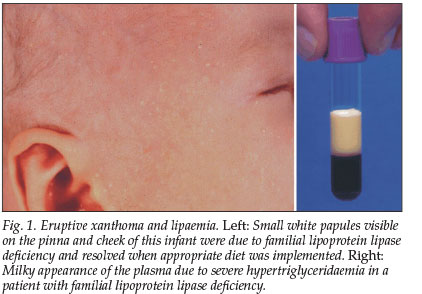
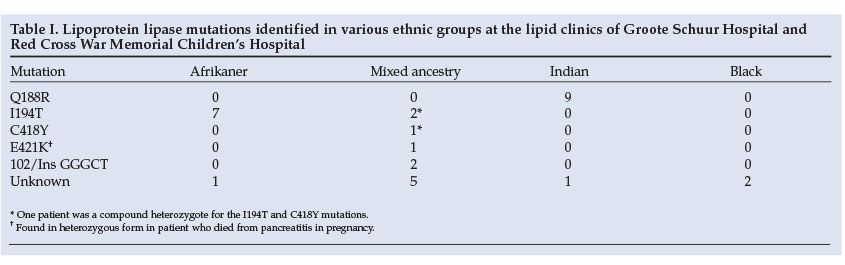
Lipoprotein lipase deficiency causes severe hypertriglyceridaemia due to chylomicronaemia, and leads to recurrent and potentially life-threatening pancreatitis. This disorder can only be managed by dietary fat restriction as drugs are ineffective. We review the experience with familial chylomicronaemia in patients who attended the lipid clinics at Groote Schuur Hospital and Red Cross Children's War Memorial Hospital in Cape Town. Criteria for inclusion were an initial plasma triglyceride concentration of >15 mmol/l and a typical type I Fredrickson hyperlipidaemia pattern on plasma lipoprotein electrophoresis. A total of 29 patients were seen over 25 years. The mean age of presentation was 10 years, but ranged from 0 to 43 years. The modes of presentation differed: pancreatitis (N=16), eruptive xanthomata (N=2), coincidental detection of hypertriglyceridaemia (N=2), screening relatives (N=7), and after death from pancreatitis (N=1). Plasma triglycerides responded rapidly and dramatically to dietary fat restriction, and some patients sustained good control of the hyperlipidaemia. The onset of pancreatitis was earlier in patients of Indian ancestry, suggesting a genotype/phenotype interaction within this disorder. Genetic work-up indicated founder effects in the Afrikaner and Indian patients. Lipaemic plasma should be taken seriously at all ages, and necessitates work-up at specialised clinics where the diagnosis of chylomicronaemia or type I hyperlipidaemia facilitates appropriate dietary management that can prevent pancreatitis.
SAMJ: South African Medical Journal
 Thumbnail