The role of interventional radiology in complications after paediatric liver transplantation
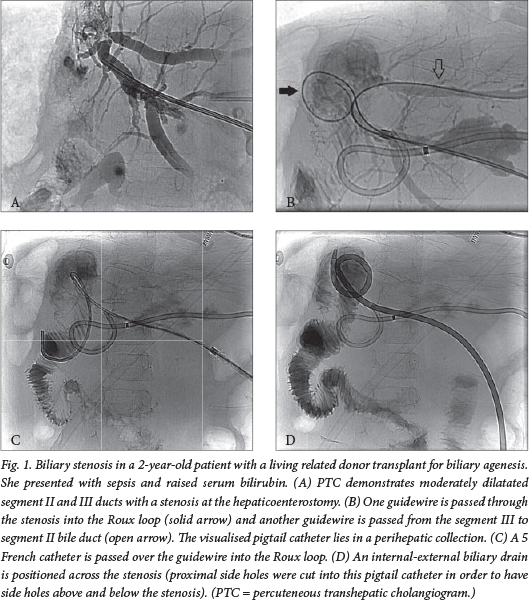
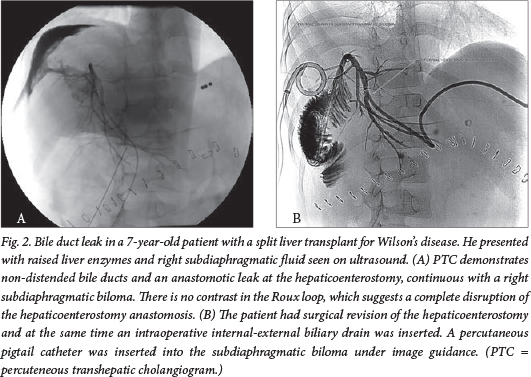
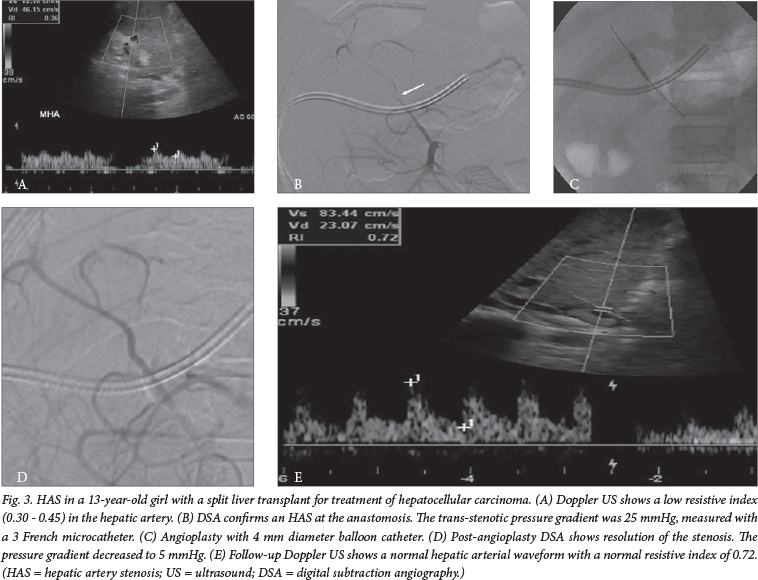
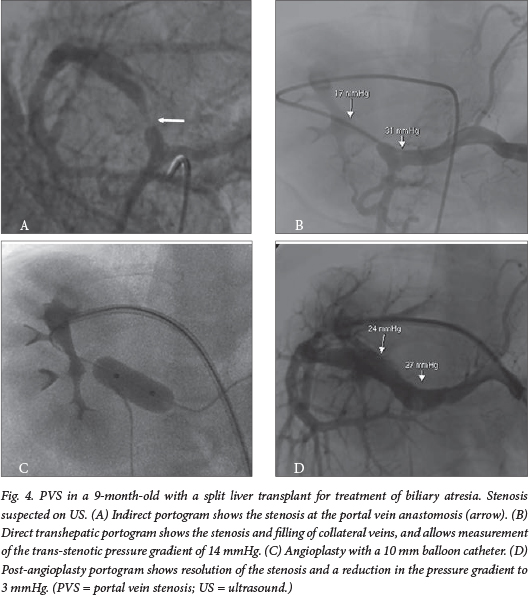
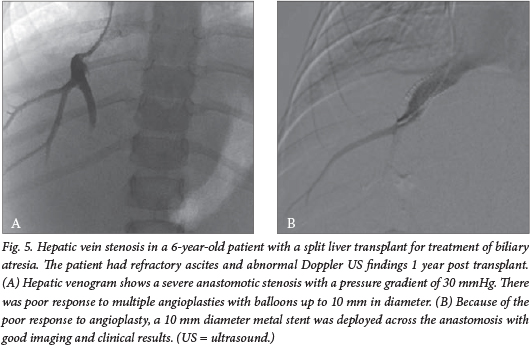
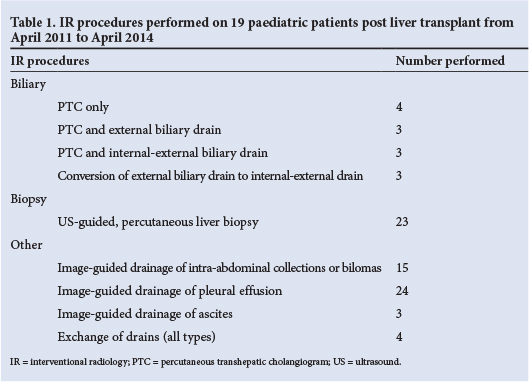
Liver transplantation has become an established treatment in both adults and children for end-stage liver disease, acute hepatic failure and certain liver tumours. There is a significant risk of complications after all forms of liver transplantation. The interventional radiologist plays a critical role in the diagnosis and treatment of these complications. The use of image-guided, minimally invasive procedures reduces the need for surgical revision or retransplantation and improves graft and patient survival rate. This article reviews some of the most common vascular and non-vascular complications after paediatric liver transplantation, and the interventional radiology techniques used to diagnose and treat them.
Paediatric Hepatobiliary • SAMJ, S. Afr. med. j. 104
(11)
• • https://doi.org/10.7196/SAMJ.8619 copy
 Thumbnail
 Thumbnail
 Thumbnail
 Thumbnail
 Thumbnail