Pharmacotherapy for obesity management
Introduction
Sustained weight loss is associated with improvements in comorbidities associated with obesity.[17-19] Healthy eating and physical activity are fundamental to successful weight management; however, these changes alone are often not sufficient for achieving sustained weight loss. Healthy behaviour changes alone generally achieve only a 3 - 5% weight loss, which is most often not sustained over the long term.[20] Pharmacotherapy for management of people living with obesity (PLWO) should be considered to decrease weight and optimise health in addition to healthy eating, physical activity and other behavioural interventions.
Despite the high prevalence of obesity,[21] obesity medications are prescribed far less frequently than medications for other chronic medical conditions, such as type 2 diabetes (T2DM).[22] The adoption rate of novel diabetes medications is greater and more rapid than the adoption rate of new pharmacotherapies for weight management.[22] This may be due to the reluctance of public health and medical organisations to recognise obesity as a chronic disease, which in turn affects reimbursement. Provider inexperience, and/or misperceptions about the efficacy and safety of available treatments, may also contribute to this gap.
This chapter provides a review of the literature pertaining to the efficacy of the obesity medications currently approved by the South African Health Products Regulatory Authority (SAHPRA). It is intended to inform primary care practitioners and specialists on the appropriate use of obesity pharmacotherapy. As this is a rapidly developing field, the chapter will be updated when required.
International regulatory authorities have established the following criteria that must be satisfied for a pharmacotherapeutic agent to receive regulatory approval for long-term weight management:
• The agent must be studied in clinical trials of at least 1 year in duration.
• The agent must produce a placebo-adjusted mean weight loss of >5% or demonstrate a >5% weight loss in at least 35% of participants, with this proportion being more than double that in placebo.
• The agent should demonstrate an improvement in obesity-related comorbidities.
Pharmacotherapy is indicated for long-term weight management in South Africa (SA) for PLWO with a body mass index (BMI) >30 kg/m2, or >27 kg/m2 with comorbidities associated with excess body fat (e.g. T2DM, hypertension, dyslipidaemia, obstructive sleep apnoea [OSA]).
There are four medications approved for long-term management of PLWO in SA: orlistat (Xenical*) 120 mg three times a day (TID), liraglutide (Saxenda*) 3.0 mg subcutaneously daily, naltrexone/ bupropion (Contrave*) 16 mg/180 mg twice a day (BID), and semaglutide (Wegovy*) 2.4 mg subcutaneously weekly. It is recognised that other medications, available in SA but not approved for management of PLWO, are used off-label for this purpose. Our literature search therefore employed an open strategy to capture all pharmacotherapeutic agents that have been studied for management of PLWO. However, except for metformin for prevention of antipsychotic medication-induced weight gain, we discourage healthcare providers (HCPs) from using agents solely for obesity management if the agents do not have regulatory approval for this indication, or do not have evidence-based recommendations for their use. We have recommended the use of metformin for prevention of antipsychotic medication-induced weight gain, given the high-quality data supporting this intervention. (See the chapter 'The role of mental health in obesity management'.)
This chapter addresses clinical questions pertaining to the efficacy of pharmacotherapy in PLWO, and summarises existing evidence for use of pharmacotherapy for obesity in persons with obesity-related comorbidities, including prediabetes, T2DM, metabolic dysfunction-associated steatotic liver disease (MASLD), dyslipidaemia, hypertension, polycystic ovary syndrome (PCOS), OSA, osteoarthritis (OA), gastro-oesophageal reflux disease (GORD), depression, heart failure with preserved ejection fraction (HFpEF), heart failure with reduced ejection fraction (HFrEF), chronic kidney disease (CKD) and atherosclerotic vascular disease.
A structured literature search was conducted using PubMed and Google Scholar to identify relevant studies in these subpopulations. The search included trials where weight loss was the primary endpoint, as well as those evaluating approved pharmacotherapies for obesity with disease-specific outcomes, regardless of whether weight loss was explicitly assessed. Studies exploring the effects of pharmacotherapy on cravings and quality of life (QoL) - two important patient-centred outcomes - were also included. The search was restricted to randomised controlled trials (RCTs) and meta-analyses of at least 6 months' duration, published between the last literature review and May 2025. While obesity is now understood as a complex chronic disease characterised by excess or abnormal adiposity that impairs health - rather than strictly defined by BMI -this chapter presents evidence using BMI-based criteria, in keeping with the eligibility criteria of most clinical trials to date. Future trials incorporating alternative diagnostic criteria may shift this framework.
Considerations in the use of pharmacotherapy for obesity management
The patient and HCP should identify the goals of therapy prior to initiating pharmacotherapy for obesity management. The targets of treatment should be determined by the PLWO's specific values and preferences relating to obesity management, as well as a discussion around reasonable expectations of pharmacotherapy. It is also recognised that there is cultural heterogeneity in what is considered acceptable or desirable in terms of body size and shape. In addition to weight loss, additional or alternative treatment targets may include improvement, remission or resolution of adiposity-related comorbidities, weight maintenance, control of cravings, and improvement in QoL.
The mechanism of action, efficacy, side-effects, safety and tolerability of each agent must be considered in the context of each person's comorbidities and existing medications. The cost of medications as well as the mode (oral versus subcutaneous) and frequency of administration should be discussed. It is important to assess concomitant medications as possible contributors to weight gain, and to consider alternatives where appropriate.
Individualised goals of treatment are important in evaluating the success of pharmacotherapy. If goals of therapy have not been achieved, factors contributing to a suboptimal response such as adequacy of dosing, challenges in adherence and barriers to health behaviour change, as well as psychosocial and medical issues, should be reassessed. There is considerable heterogeneity in the response to any pharmacotherapeutic agent, and consideration should be given to adding or substituting another obesity medication or intervention if treatment goals have not been achieved after 3 - 6 months on the maximum tolerated dose.
We do not currently have the ability to predict which medication will be most effective for PLWO, although preliminary data suggest that phenotypes of obesity may be helpful in guiding the choice of pharmacotherapy in the future,[23] especially with the evolution of hormonal and genetic profiling.
Pharmacotherapy for management of PLWO can be used not only to facilitate weight loss, but also for weight loss maintenance and to improve health. Regulatory agencies have traditionally recommended discontinuing pharmacotherapy for weight management if weight loss of >5% has not been achieved after 3 months on therapeutic dose. However, substantial health improvements may be realised without a weight loss of >5%. Pharmacotherapy can also assist in the maintenance of weight loss achieved with a prior health behaviour change or a very low-energy diet.[4,7]
Pharmacotherapy for management of PLWO should be considered early in the natural history of obesity, as weight and obesity-related health complications tend to increase and progress with time. (See the chapter 'Assessment of people living with obesity'.) Obesity medications are intended as part of a long-term treatment strategy. Clinical trials of pharmacotherapy for obesity management consistently demonstrate regain of weight when treatment is stopped.[6]
The use of pharmacotherapy for management of PLWO is not recommended in pregnant or breastfeeding women, or in women who are trying to conceive. There are no data available to inform on the timing of discontinuation of pharmacotherapy for obesity management prior to conception.
BMIs and waist circumferences that correlate with comorbidities vary by ethnicity.[24] The BMI criteria for inclusion in pharmacotherapy studies are in accordance with the BMI criteria for overweight and obesity in Caucasian, Europid and North American ethnicity, which are higher than the BMI criteria in South, Southeast or East Asian ethnicity. The prescribing physician may elect to interpret the recommendations in this chapter with ethnicity-specific BMI criteria in mind. Ethnic minorities are under-represented in clinical trials of pharmacotherapy for weight management, as well as in data from Africa; having balanced ethnic representation is important for future pharmacotherapy trials.
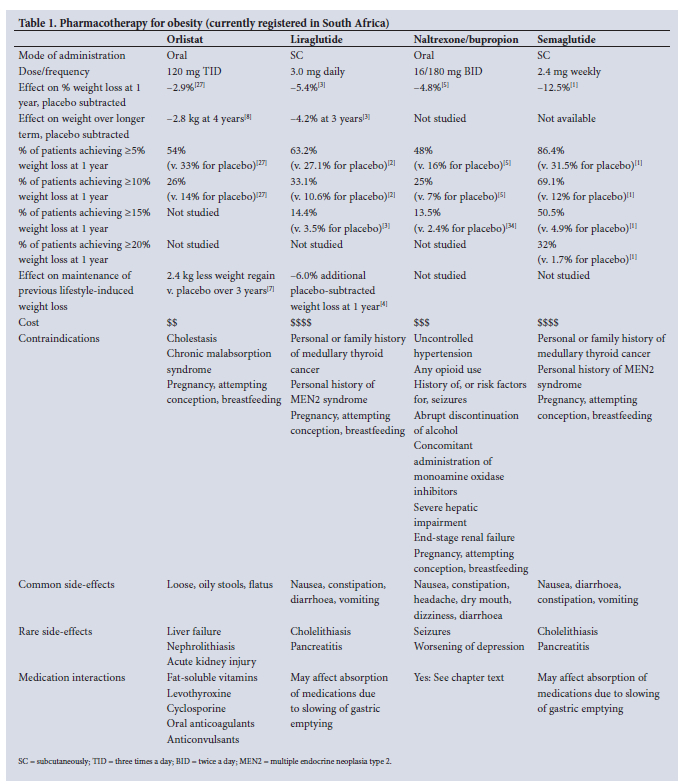
Approved pharmacotherapy for obesity management (Table 1)
Orlistat 120 mg TID
Orlistat, a semisynthetic derivative of lipstatin, was approved as pharmacotherapy for management of PLWO in SA in 1997. It is a potent and selective inhibitor of pancreatic lipase, thereby inhibiting the breakdown of dietary triglycerides into absorbable free fatty acids. As a result, approximately 30% of ingested triglycerides are excreted, primarily in the faeces, creating a caloric deficit.[25] Orlistat does not target appetite or satiety mechanisms.
Orlistat at a dose of 120 mg TID (taken during or up to 1 hour after meals) is approved by the SAHPRA for weight reduction or reducing the risk of weight regain after prior weight loss in individuals with a BMI >30 kg/m2, or >27 kg/m2 in the presence of comorbidities (e.g. hypertension, T2DM, dyslipidaemia, excess visceral fat).[26]
A systematic review and meta-analysis of RCTs of orlistat 120 mg TID reported a mean placebo-subtracted weight loss of -2.9% at 1 year. [27] Additionally, 54% and 26% of participants achieved >5% and >10% weight loss, respectively, compared with 33% and 14% for placebo.[27] Orlistat has been shown to be effective in maintaining weight loss after a very low-energy diet for 8 weeks, with less weight regain in the orlistat arm compared with placebo over 3 years (4.6 kg v. 7.0 kg).[7]
Orlistat therapy is associated with gastrointestinal side-effects, including oily spotting and loose stools, flatus with discharge, faecal urgency and increased defaecation.[27] These adverse effects may cause PLWO who do not lower their dietary fat intake to discontinue therapy. A long-term analysis of obesity medications in Canada demonstrated 6-month, 1-year and 2-year persistence rates with orlistat therapy of 18%, 6% and 2%, respectively.[28] Orlistat therapy may interfere with the absorption of fat-soluble vitamins (A, D, E and K), and patients should therefore be counselled to take a multivitamin at least 2 hours before or after taking orlistat.[27,29] Orlistat is contraindicated in PLWO with chronic malabsorption syndrome or cholestasis. Some PLWO may develop increased levels of urinary oxalate on orlistat; cases of oxalate nephropathy with renal failure have been reported.[30] There have also been rare cases of severe liver injury or acute liver failure.[31]
As orlistat may interfere with vitamin K absorption, the international normalised ratio (INR) should be monitored closely when oral anticoagulants are co-administered. Orlistat may affect absorption of levothyroxine and/or iodine salts; PLWO on levothyroxine should be monitored for changes in thyroid function. A reduction in plasma cyclosporine levels has been observed when orlistat is co-administered, and it is therefore recommended to monitor cyclosporine levels frequently. Orlistat may affect absorption of anticonvulsant medications, so PLWO on anticonvulsants and orlistat should be monitored for possible changes in the frequency and/or severity of seizures.[29]
The modest weight loss with orlistat above placebo, as well as its frequent gastrointestinal side-effects, limit its use as therapy for obesity management.
Liraglutide 3.0 mg subcutaneously daily
Liraglutide is a daily, subcutaneously administered, human glucagon-like peptide-1 receptor agonist (GLP-1 RA) that acts centrally on the pro-opiomelanocortin (POMC)/cocaine- and amphetamine-regulated transcript (CART) neurons to improve satiation and satiety and reduce hunger, with a transient effect to decrease gastric emptying.[32,33]
Liraglutide increases insulin release and suppresses glucagon during times of glucose elevation. Liraglutide is approved in SA for the management of T2DM at a dose of 1.2 mg or 1.8 mg daily, with near-maximal therapeutic efficacy for glycated haemoglobin (HbA1c) lowering at the 1.8 mg dose. Liraglutide was approved in SA in 2020 for long-term obesity management at a dose of 3.0 mg daily, in people with or without T2DM. The recommended starting dose of liraglutide is 0.6 mg daily, with up-titration by 0.6 mg each week until the 3.0 mg target dose is achieved.
Among people with normoglycaemia or prediabetes, liraglutide 3.0 mg with health behaviour modification resulted in -8.0% weight loss at 1 year, compared with -2.6% with placebo (health behaviour modification alone).[2] In terms of categorical weight loss, 63.2% of PLWO on liraglutide lost >5% body weight at 1 year, compared with 27.1% of PLWO in the placebo group; 33.1% and 10.6% of participants lost >10% of their body weight on liraglutide 3.0 mg and placebo, respectively.[2]
Patients with prediabetes were followed for 3 years, with sustained weight loss of -6.1% in the liraglutide group versus -1.9% in placebo.[3] In addition to intensive behavioural therapy, liraglutide 3.0 mg resulted in -7.5% weight loss at 1 year versus -4.0% with placebo.[45]
Following a 6.0% weight loss with a low-calorie diet, liraglutide 3.0 mg plus health behaviour counselling reduced weight by a further 6.2% at 1 year compared with 0.2% in the placebo group (ongoing health behaviour counselling alone).[4] More participants on liraglutide 3.0 mg were able to maintain the >5% run in weight loss (81.4%) compared with those receiving placebo (48.9%). Fewer patients on liraglutide 3.0 mg regained >5% body weight (1.9%) compared with placebo (17.5%).[4]
The most common side-effect of liraglutide is nausea.[2-4,45] There are likely to be many causes for the nausea, both central and peripheral, which may include a transient delay in gastric emptying.[33] PLWO may also experience constipation, diarrhoea, heartburn and/ or vomiting. More gradual titration can help mitigate gastrointestinal side-effects, should these occur. Liraglutide use is associated with a 1.4% higher risk of gallstones compared with placebo.[10]
There is a small increased risk of pancreatitis compared with placebo, with about half of the cases seen in association with gallstones.[3] Liraglutide is contraindicated in patients with a personal or family history of medullary thyroid cancer or a personal history of multiple endocrine neoplasia type 2 because of an increased risk of medullary thyroid cancer in rodent studies. There have been no cases of medullary thyroid cancer in human studies of liraglutide. Liraglutide delays gastric emptying, which may affect absorption of concomitantly administered oral medications.
Naltrexone/bupropion 16 mg/180 mg BID
Naltrexone hydrochloride/bupropion hydrochloride is a combination of two medications. Naltrexone is an opioid receptor antagonist that has been used for decades for the treatment of alcohol and opioid dependence. Bupropion is a widely used antidepressant that inhibits the reuptake of dopamine and norepinephrine. The naltrexone/ bupropion sustained-release formulation was approved for long-term obesity management in SA in 2020, at a dose of 16 mg naltrexone and 180 mg bupropion given twice daily. Bupropion induces satiety centrally by enhancing production and release of a-melanocyte-stimulating hormone and β-endorphin from the POMC cells in the arcuate nucleus of the hypothalamus. Naltrexone disrupts the auto-inhibitory effect of β-endorphin on the POMC cells by blocking the μ-opioid receptors. Naltrexone/bupropion also influences the mesolimbic reward system, resulting in a reduction in cravings.[46] This synergistic mode of action is supported by evidence that the use of bupropion or naltrexone alone does not lead to clinically meaningful weight loss.[47]
Each tablet of the naltrexone/bupropion combination contains 8 mg of naltrexone and 90 mg of bupropion. The recommended titration schedule is one tablet daily for the first week, with an increase by one tablet each week until the maintenance dose of two tablets twice daily (total daily dose 32 mg/360 mg) is reached.
Among patients with overweight or obesity without diabetes, naltrexone/bupropion 16 mg/180 mg BID with a hypocaloric diet (500 kcal/day deficit) and exercise was associated with weight loss of -6.1% versus -1.3% for placebo.[5] Weight loss of >5% was seen in 48% of patients taking naltrexone/bupropion, and >10% weight loss in 25%, compared with 16% and 7%, respectively, in the placebo group.
Naltrexone/bupropion has been demonstrated to reduce cravings.[5,34] Results from the Control of Eating Questionnaire (CoEQ) demonstrated reductions in eating in response to food cravings, and increased ability to resist food cravings and control eating.[5] A combined analysis of three naltrexone/bupropion trials found that early improvements in cravings were predictive of greater weight loss.[47]
The most common side-effects of naltrexone/bupropion include nausea, constipation, headache, vomiting, insomnia, dry mouth, dizziness and diarrhoea. Most nausea events occur during the dose escalation period and are transient.
Naltrexone/bupropion is contraindicated in patients with uncontrolled hypertension. Any opioid use is an absolute contraindication to the use of naltrexone/bupropion. Opioid therapy should be discontinued for 7 - 10 days prior to initiation of naltrexone/bupropion to prevent the precipitation of opioid withdrawal.[48] As bupropion is associated with a slightly increased risk of seizures, naltrexone/bupropion is contraindicated in seizure disorders, anorexia nervosa, bulimia, and PLWO undergoing abrupt discontinuation of alcohol, benzodiazepines, barbiturates or antiepileptic medications. Naltrexone/bupropion should be dosed with caution with any medications that lower the seizure threshold. Monoamine oxidase inhibitors can increase the risk of hypertensive reactions, and naltrexone/bupropion should therefore not be used within 14 days of taking monoamine oxidase inhibitors. Naltrexone/ bupropion should not be taken with a high-fat meal, as this significantly increases systemic exposure to the medication.[49]
There are multiple potential medication interactions with naltrexone/bupropion, which stem from the effect of bupropion and its metabolites to inhibit the hepatic CYP2D6 enzyme system. Physicians and pharmacists must be aware of the importance of evaluating potential medication interactions prior to initiating naltrexone/bupropion. Among PLWO already receiving naltrexone/ bupropion, medications metabolised by CYP2D6 should be started at the lower end of their recommended dosage range, with cautious titration (e.g. selective serotonin reuptake inhibitors, beta-blockers, antipsychotic agents, type 1C antiarrhythmic agents, and many tricyclic antidepressants, such as citalopram, metoprolol, risperidone, propafenone and desipramine).[50] For patients already receiving these medications, dose reduction should be considered when starting naltrexone/bupropion. Bupropion may result in reduced efficacy of tamoxifen and should therefore not be used in combination with it.
Bupropion is primarily metabolised by the CYP2B6 enzyme system. Naltrexone/bupropion dosing should therefore not exceed one tablet twice daily when used with CYP2B6 inhibitors (e.g. ticlopidine, clopidogrel).[51] Naltrexone/bupropion should be avoided in patients taking CYP2B6 inducers, as these may reduce efficacy of naltrexone/bupropion by reducing bupropion exposure (e.g. ritonavir, lopinavir, efavirenz, carbamazepine, phenobarbital, phenytoin).[50] Central nervous system toxicity can occur when naltrexone/bupropion is used concomitantly with dopaminergic medications (e.g. levodopa, amantadine).
Semaglutide 2.4 mg subcutaneously weekly
Semaglutide is a once-weekly, subcutaneously administered, human GLP-1 RA that acts centrally on the POMC/CART neurons to improve satiation and satiety, reduce hunger and reduce cravings.[44]
Semaglutide increases insulin release and suppresses glucagon during times of glucose elevation. Semaglutide was approved in SA in 2020 for the management of T2DM at a dose of 0.5 mg or 1.0 mg weekly, with near-maximal therapeutic efficacy for HbA1c lowering at the 1.0 mg dose. Semaglutide was approved in SA in 2024 for long-term obesity management at a dose of 2.4 mg weekly in people with or without T2DM. The recommended starting dose of semaglutide is 0.25 mg weekly, with up-titration every 4 weeks to 0.5 mg weekly, 1 mg weekly, 1.7 mg weekly, and then the maximum dose of 2.4 mg weekly.
Among 1 961 people with overweight or obesity and normoglycaemia or prediabetes, semaglutide 2.4 mg with health behaviour modification resulted in -14.9% weight loss at 68 weeks, compared with -2.4% with placebo (health behaviour modification alone).[1] In terms of categorical weight loss, 86.4% of patients lost >5% body weight with semaglutide versus 31.5% with placebo, 69.1% of patients lost >10% body weight with semaglutide versus 12.0% with placebo, and 50.5% of participants lost >15% body weight with semaglutide versus 4.9% with placebo.
In addition to a low-calorie diet for 8 weeks followed by intensive behavioural therapy for 68 weeks, semaglutide 2.4 mg resulted in -16.0% weight loss versus -5.7% with placebo.[52] Among 803 adults with overweight or obesity who completed a 20-week run-in period with semaglutide 2.4 mg weekly (with a mean weight loss of 10.6%), maintaining treatment with semaglutide resulted in continued weight loss of -7.9% over the following 48 weeks versus +6.9% weight gain with switch to placebo.[53]
In a study of semaglutide 2.4 mg weekly versus liraglutide 3 mg daily in 338 people with overweight or obesity without diabetes, mean weight loss at 68 weeks was -15.8% with semaglutide versus -6.4% with liraglutide.[54] Gastrointestinal adverse events (side-effects) were seen in similar proportions of patients with semaglutide and liraglutide, although more events occurred with semaglutide than liraglutide. Proportions of participants discontinuing treatment for any reason were 13.5% with semaglutide and 27.6% with liraglutide.
The most common side-effects of semaglutide are gastrointestinal, including nausea, vomiting, diarrhoea, constipation and heartburn. More gradual titration can help mitigate gastrointestinal side-effects, should these occur. Semaglutide use is associated with a 1.2% higher risk of gallstones compared with placebo.[1]
There is a small increased risk of pancreatitis compared with placebo.[55] Semaglutide is contraindicated in PLWO with a personal or family history of medullary thyroid cancer or a personal history of multiple endocrine neoplasia type 2 because of an increased risk of medullary thyroid cancer in rodent studies.[55] There have been no cases of medullary thyroid cancer in human studies of semaglutide 1.0 mg or 2.4 mg.[55]
Semaglutide may delay gastric emptying, which could potentially influence absorption of concomitantly administered oral medications. However, in a pharmacodynamic study, no clinically relevant effect on the rate of gastric emptying was observed with semaglutide 2.4 mg at 20 weeks.[44]
Phentermine
Phentermine is registered in SA for treatment of PLWO in doses of 15 mg daily or 30 mg daily. It is registered for short-term (maximum 3 months) treatment only and therefore falls outside the scope of this guideline. Phentermine has been withdrawn from the market in Europe and Canada owing to safety concerns.
Phentermine is a sympathomimetic amine that increases levels of norepinephrine, dopamine and serotonin in several hypothalamic nuclei. Activating these nuclei suppresses appetite, and this is the dominant mechanism of action.[56] Weight loss with phentermine use for 12 weeks was modest, with approximately 3.6% of total body weight. A recent study by Lewis et al.[57] showed that a longer duration of phentermine use was associated with clinically significant greater weight loss up to 2 years after initiating medication, with no observed increase in risk for incident cardiovascular events or death over 3 years of follow-up. Long-term use of phentermine is currently being investigated in the LEAP trial, and results are expected in 2027. Discontinuation of phentermine consistently resulted in weight regain.[56,57] Phentermine has shown benefit in reducing hepatic fat content in the immediate preoperative period in patients undergoing bariatric surgery.[58] Phentermine use should be avoided in PLWO with serious cardiovascular disease, serious psychiatric disease, or a history of substance abuse.
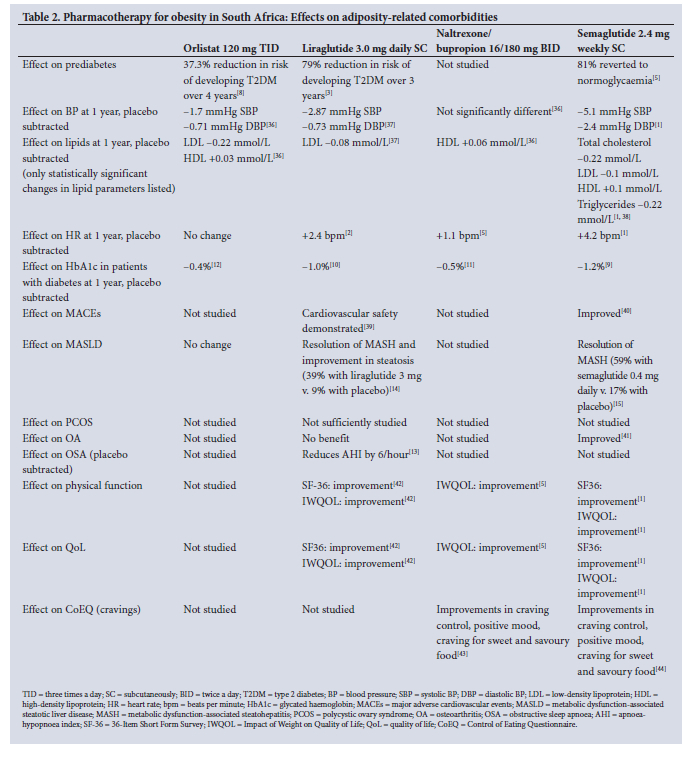
Efficacy of pharmacotherapy on health parameters (Table 2)
Prevention of type 2 diabetes mellitus
T2DM is a common complication in PLWO, and prevention of diabetes is an important goal in long-term obesity management. People with prediabetes are at high risk of developing T2DM, with about 25% of individuals with either impaired fasting glucose or impaired glucose tolerance progressing to T2DM over 3 - 5 years.[59] Among individuals with prediabetes, one kilogram of weight loss is associated with a 16% relative risk reduction in the development of T2DM.[59]
Pharmacotherapy for PLWO can prevent or delay the development of T2DM. Orlistat was evaluated for diabetes prevention in a trial of 3 305 people with obesity and either normal (79%) or impaired (21%) glucose tolerance. Patients were randomised to health behaviour changes plus either orlistat or placebo.[8] After 4 years of treatment, the cumulative incidence of diabetes was 6.2% in the orlistat group compared with 9.0% for placebo, with a corresponding 37.3% decrease in risk of progression to T2DM. Participants with impaired glucose tolerance derived the greatest benefit in terms of decreased rate of progression to T2DM, compared with those with normoglycaemia. A secondary analysis demonstrated greater weight loss to be the primary reason for diabetes prevention.[8]
Liraglutide 3.0 mg has demonstrated efficacy to prevent and delay T2DM in people with prediabetes. The SCALE Obesity and Prediabetes trial randomised 2 254 patients to receive liraglutide 3.0 mg (n=1 505) or placebo (n=749), in addition to health behaviour change.[3] The time to onset of T2DM over a 3-year treatment period in this study was 2.7 times longer with liraglutide 3.0 mg versus health behaviour alone, and the risk of developing T2DM was reduced by 79%. These improvements are likely to be due to a combined effect of the glucose-lowering effects of liraglutide and liraglutide-mediated weight loss.
An analysis of 3 375 adults with overweight/obesity across the STEP 1, 3 and 4 trials evaluated whether more participants with prediabetes had normoglycaemia after 68 weeks' treatment with semaglutide 2.4 mg weekly.[52,53,60] Significantly more participants with baseline prediabetes had normoglycaemia at week 68 versus placebo (STEP 1: 84.1% v. 47.8%; STEP 3: 89.5% v. 55.0%; STEP 4: 89.8% v. 70.4%; all p<0.0001). Among participants with obesity and prediabetes, the results of the STEP 10 trial showed that 81% of patients treated with semaglutide 2.4 mg weekly subcutaneously reverted to normoglycaemia after 52 weeks of treatment versus only 9% of patients treated with placebo.[35]
There are no published studies evaluating the efficacy of naltrexone/ bupropion on diabetes prevention.
Our literature review identified one RCT evaluating the efficacy of exenatide (a short-acting GLP-1 RA) versus placebo on body weight and glucose tolerance among people with obesity with normoglycaemia, impaired glucose tolerance or impaired fasting glucose, on a background of health behaviour intervention over a 24-week period.[61] The exenatide group demonstrated a -5.1 kg weight loss compared with -1.6 kg for placebo. Impaired glucose tolerance or impaired fasting glucose normalised in 77% of exenatide-treated participants compared with 56% in the placebo group. Exenatide is not indicated for obesity management or for the prevention of T2DM.
Type 2 diabetes mellitus
Obesity in T2DM is associated with poorer glycaemic control, blood pressure (BP) and lipid profiles, and increased use of lipid-lowering and antihypertensive medications, compared with people with diabetes who do not have obesity.[62]
The effect of glucose-lowering pharmacotherapy on weight should be considered in choosing the most appropriate medication(s) for glycaemic control. GLP-1 RAs and sodium/glucose cotransporter-2 inhibitors are associated with weight loss in addition to improving glycaemic control. Metformin, dipeptidyl peptidase-4 inhibitors and acarbose are typically weight neutral. Insulin, insulin secretagogues and thiazolidinediones are associated with weight gain.[63] Pharmacotherapy for obesity can be of benefit for weight management, improved diabetes control, and reduction in the need for other glucose-lowering medication.
Orlistat has been demonstrated to improve glycaemic control in PLWO with T2DM. A meta-analysis comprising 2 550 people with T2DM and obesity randomised to orlistat 120 mg TID or placebo found that patients treated with orlistat had significantly greater mean decreases in fasting plasma glucose and HbA1c compared with placebo (1.39 mmol/L v. 0.47 mmol/L and 0.74% v. 0.31%, respectively).[12] Weight loss in the orlistat group was -3.8 kg compared with -1.4 kg on placebo. The primary reason for improvement in glycaemic control with orlistat is weight loss, although orlistat may provide beneficial metabolic effects independent of weight loss.
In the SCALE diabetes trial, liraglutide 3.0 mg subcutaneously daily was compared with liraglutide 1.8 mg subcutaneously daily and placebo, in addition to health behaviour changes, in PLWO and T2DM managed with oral agents or health behaviours alone.[10] At 1 year, liraglutide 3.0 mg reduced weight by -6.0% (n=423) compared with -4.7% among those receiving liraglutide 1.8 mg (n=211) and -2.0% with placebo (n=212). A clinically significant weight loss of >5% was achieved by 54.3% of patients on liraglutide 3.0 mg, versus 40.4% with liraglutide 1.8 mg and 21.4% with placebo. Weight loss of >10% occurred in 25.2% of patients on liraglutide 3.0 mg, 15.9% of those on liraglutide 1.8 mg, and 6.7% of those receiving placebo. HbA1c was reduced by -1.3% in the liraglutide 3.0 mg group, -1.1% in the liraglutide 1.8 mg group and -0.3% in those receiving placebo. In addition, more participants treated with liraglutide 3.0 mg and 1.8 mg reduced their net use of oral glucose-lowering agents compared with placebo.[10] In the SCALE insulin trial, 396 participants with T2DM and obesity treated with basal insulin and two or more oral glucose-lowering agents were randomised to receive liraglutide 3 mg daily or placebo, combined with intensive behavioural therapy.[64] At 56 weeks, mean weight change was -5.8% with liraglutide 3 mg versus -1.5% with placebo. Liraglutide 3 mg was associated with significantly greater reductions in HbA1c and less need for insulin compared with placebo.[64]
The Contrave Obesity Research (COR) diabetes trial evaluated the safety and efficacy of naltrexone/bupropion 16 mg/180 mg BID in addition to health behaviour changes in adults with a BMI of 27 - 45 kg/m2 and T2DM managed with oral agents or diet.[11] Naltrexone/ bupropion-treated participants achieved a -5.0% weight reduction compared with -1.8% in the placebo group. Additionally, 44.5% of patients achieved >5% weight loss compared with 18.9% in the placebo arm, and 18.5% of patients had >10% weight loss compared with 5.7% of patients receiving placebo. Participants treated with naltrexone/bupropion demonstrated a -0.5% greater improvement in HbA1c compared with placebo and were more likely to achieve an HbA1c <7% (44.1% in the naltrexone/bupropion group v. 26.3% for placebo). The change in HbA1c was correlated with the change in body weight in both study arms. However, fewer patients receiving naltrexone/bupropion required an increase in dose or the addition of glucose-lowering agents compared with placebo (22.3% v. 35.2%, respectively).
In the STEP 2 study,[9] 1 210 people with overweight or obesity and T2DM managed with oral agents or health behaviours alone were randomised to semaglutide 2.4 mg weekly, semaglutide 1.0 mg weekly or placebo, in addition to health behaviour modification. Semaglutide 2.4 mg resulted in a superior weight loss of -9.6% at 68 weeks compared with -7.0% for semaglutide 1.0 mg and -3.4% for placebo. More participants achieved weight reductions of at least 5% with semaglutide 2.4 mg (68.8%) than with semaglutide 1.0 mg (57.1%) or placebo (28.5%). Weight loss >10% occurred in 45.6% of patients in the semaglutide 2.4 mg group, 28.7% in the semaglutide 1.0 mg group and 8.2% in the placebo group. Weight loss >15% occurred in 25.8% of participants in the semaglutide 2.4 mg group, 13.7% in the semaglutide 1.0 mg group and 3.2% in the placebo group. Reduction in HbA1c was similar at both doses of semaglutide, with -1.6% for semaglutide 2.4 mg, -1.5% for semaglutide 1.0 mg and -0.4% for placebo. A decrease in use of concomitant glucose-lowering medication was reported in 28.6% of participants receiving semaglutide 2.4 mg, 25.1% receiving semaglutide 1.0 mg and 7.1% receiving placebo.
Other cardiovascular risk factors: Hypertension and lipids
Pharmacotherapy-induced weight loss can be of benefit in improving cardiovascular risk factors.
A systematic review assessed the effect of long-term obesity pharmacotherapy (at least 1 year's duration) on various aspects of cardiometabolic risk, including blood glucose, cholesterol profile, BP and visceral adiposity.[36] Studies from inception of databases until 2017 were included. RCTs were included that evaluated adults with a BMI of >30 kg/m2, or 25 - 29.9 kg/m2 with and without obesity-associated comorbidities (hypertension, hyperlipidaemia, diabetes mellitus, impaired glucose tolerance or OSA); treated with obesity management pharmacotherapy for at least 1 year; compared with another active agent or placebo; and reporting at least one prespecified cardiometabolic outcome in addition to a primary weight loss outcome (5% of baseline weight loss or mean weight loss). There were 17 trials of orlistat versus placebo (N=10 702), three trials of liraglutide versus placebo (N=4 557) and four trials of naltrexone/ bupropion versus placebo (N=3 953).
In this systematic review,'361 orlistat, liraglutide and naltrexone/ bupropion demonstrated modest effects on cholesterol profiles. Although the effects of some of these medications on the lipid profile were statistically significant, they were of doubtful clinical significance. Orlistat, liraglutide and naltrexone/bupropion had minimal effects on BP, with very small declines in systolic and diastolic BP. As naltrexone/bupropion can increase BP on initiation, it is contraindicated in patients with uncontrolled hypertension.[61]
In PLWO and prediabetes, liraglutide reduced systolic BP by -2.8 mmHg compared with placebo over 3 years, with modest improvements in lipid parameters. A heart rate increase of two beats per minute (bpm) was observed, in keeping with what is seen in the GLP-1 RA class.[3]
Semaglutide reduced systolic BP by -6.1 mmHg versus -1.1 mmHg with placebo at 68 weeks, with modest improvement in lipid parameters, in a study of PLWO without T2DM (see Table 2). A heart rate increase of +3.5 bpm was noted versus -0.7 bpm with placebo, in keeping with what is seen in the GLP-1 RA class.[1]
Atherosclerotic cardiovascular disease
Regulatory requirements for obesity pharmacotherapy do not include a standard requirement for cardiovascular outcome trials to assess the cardiovascular safety of these medications. However, cardiovascular outcome studies may be required by regulatory agencies, particularly if there is any concern for potential adverse effects on any cardiovascular risk factor. Sibutramine was studied in a cardiovascular outcome trial because of reported increases in BP and heart rate.[65] This study found an increased risk of cardiovascular events in people with pre-existing cardiovascular disease.
In patients with T2DM, liraglutide 1.2 - 1.8 mg has been shown to reduce cardiovascular events and mortality.[39] These data have been accepted as sufficient safety data by the US Food and Drug Administration (FDA) to give reassurance on the cardiovascular safety of liraglutide in people with obesity without T2DM, at the therapeutic dose of 3.0 mg. The cardiovascular safety of liraglutide 3.0 mg was evaluated post hoc using data from five randomised, double-blind, placebo-controlled clinical trials comprising 5 908 participants, the majority (97%) of whom did not have diabetes. Liraglutide 3.0 mg was not associated with excess cardiovascular risk, with a hazard ratio (HR) of 0.42 (95% confidence interval [CI] 0.17 - 1.08) versus pooled comparators (n=1 941 receiving placebo, n=95 receiving orlistat).[66]
The Cardiovascular Outcomes Study of Naltrexone SR/Bupropion SR in Overweight and Obese Subjects with Cardiovascular Risk Factors (LIGHT) study was a cardiovascular outcome trial undertaken to assess the cardiovascular safety of naltrexone/bupropion. Interim results were released after 25% of the planned number of major adverse cardiovascular events (MACEs) occurred, compromising the integrity of the trial.'67- Although the trial was terminated on the recommendation of the lead investigator, the results of the preplanned 50% interim analysis were released and demonstrated an HR for the time to the first MACE of 0.88 (95% CI 0.57 - 1.34).[67] These results could not be used to establish non-inferiority owing to the compromise of the trial.
A subsequent meta-analysis including 12 RCTs comprising 19 176 patients was conducted to evaluate the relationship of bupropion, naltrexone or naltrexone/bupropion in combination with MACEs.[68] The additive network meta-analysis model for random effects showed no significant effect of bupropion (odds ratio [OR] 0.90; 95% CI 0.65 - 1.25), naltrexone (OR 1.08; 95% CI 0.71 - 1.63) or naltrexone/ bupropion (OR 0.97; 95% CI 0.75 - 1.24) on MACEs.
Semaglutide 0.5 - 1 mg has been shown to decrease cardiovascular events in people living with T2DM with established cardiovascular disease or at high risk of cardiovascular disease compared with placebo.[55] The SELECT trial enrolled 17 604 patients with overweight/obesity and pre-existing cardiovascular disease but without diabetes. Of these patients, 8 803 received treatment with semaglutide 2.4 mg.[40] It was a primary cardiovascular event-driven trial. Of the 8 803 participants in the group treated with semaglutide 2.4 mg, 569 (6.5%) developed a primary cardiovascular event compared with 701/8 891 (8.0%) in the placebo group (HR 0.80; 95% CI 0.72 - 0.90; p<0.001).
There are no cardiovascular outcome trials for orlistat.
Heart failure with preserved ejection fraction
Over 80% of people with HFpEF have overweight or obesity.[69] As weight loss has been shown to improve HFpEF,[70] it is of interest whether pharmacotherapy for obesity management may be of benefit in people with HFpEF.
In adults with HFpEF and obesity, once-weekly treatment with semaglutide was associated with greater reductions in HF-related symptoms and physical limitations and greater weight loss than placebo over 52 weeks.[71]
Heart failure with reduced ejection fraction
The effect of the GLP-1 RA liraglutide was studied in three small trials enrolling patients with HFrEF. Liraglutide was used in two trials and albiglutide in the third.[72] The FIGHT trial enrolled PLWO with severely symptomatic HFrEF who had recently been hospitalised for worsening heart failure (HF), and the LIVE trial enrolled patients with stable HFrEF.[73,74] Patients were randomly assigned to treatment with liraglutide or placebo. Both trials showed an increased risk of adverse cardiac events in the groups treated with liraglutide.
A meta-analysis of the EXSCEL and FIGHT trials suggested an increased risk of HF hospitalisations with GLP-1 RAs in patients with left ventricular ejection fraction <40%, with little heterogeneity across studies: meta-analysed OR 1.49 (95% CI 1.05 - 2.10) (overall treatment effect p=0.02 and heterogeneity I2=0%).[75]
These results suggest that GLP-1 RAs may be associated with an increased risk of HF hospitalisations in patients with HFrEF. Until further randomised studies are available, GLP-1 RAs should be avoided in this patient group.
The use of GLP-1 RAs must be individualised, and active screening for HF is advised. Before starting GLP-1 RAs, all patients should be evaluated for symptoms and signs of HF and have natriuretic peptide levels measured. If natriuretic peptides are elevated (>35 pg/mL for BNP and >125 pg/mL for NT-pro-BNP), an echocardiogram should be performed, as recommended by international guidelines.[76,77]
Metabolic dysfunction-associated steatotic liver disease
MASLD (previously known as non-alcoholic fatty liver disease [NAFLD] and non-alcoholic steatohepatitis 'NASH-) is currently recognised as the most prevalent chronic liver disease, and globally affects approximately 25% of the adult population.[78] Metabolic comorbidities associated with MASLD include obesity (51.3%), T2DM (22.5%), hyperlipidaemia (69.1%), hypertension (39.3%) and metabolic syndrome (42.5%).[79] Weight loss is recognised as the cornerstone of treatment of people with MASLD and overweight or obesity.'801 Fifty participants who were overweight (BMI >27) with biopsy-proven NASH were randomised to receive a 1 400 kcal/day diet plus vitamin E (800 IU) daily with or without orlistat (120 mg TID) for 36 weeks.[81] The primary study endpoint was improvement in steatosis, NAFLD activity score and fibrosis score on follow-up liver biopsy obtained at 36 weeks. Twenty-three participants in the orlistat/diet/vitamin E group and 18 in the diet/vitamin E group completed the study. Orlistat did not enhance weight loss or improve liver enzymes, measures of insulin resistance or histopathological features compared with placebo. However, participants in either group who lost >5% body weight had improved insulin resistance and steatosis, and participants who lost >9% also achieved improved hepatic histological changes.
A 48-week, multicentre, randomised, double-blind, placebo-controlled study assessed the efficacy of liraglutide 1.8 mg subcutaneously daily in 52 adults with NASH and BMI >25 kg/m2.[14] Participants treated with liraglutide achieved a mean weight loss of -5.5% versus -0.7% with placebo. The study demonstrated that 39% of patients in the liraglutide group met the primary endpoint of histological resolution of NASH without worsening of fibrosis, versus 9% in the placebo group. Additionally, 36% of those in the placebo group had progression of fibrosis compared with only 9% with liraglutide. Steatosis improved in 83% of those receiving liraglutide versus 45% of those receiving placebo. The changes in body weight were not different between those who had resolution of NASH and those who did not with liraglutide, suggesting that the hepatic effects of liraglutide may be independent of weight loss.
The effect of semaglutide in patients with NASH was evaluated in a 72-week, phase 2, double-blind trial involving 320 participants with BMI >25 and biopsy-confirmed NASH and liver fibrosis of stage F1, F2 or F3.'15] Patients received subcutaneous semaglutide at a dose of 0.1 mg, 0.2 mg or 0.4 mg once daily, or placebo. The proportion of participants who experienced NASH resolution with no worsening of fibrosis was 40% in the 0.1 mg group, 36% in the 0.2 mg group, 59% in the 0.4 mg group and 17% in the placebo group (p<0.001 for semaglutide 0.4 mg daily v. placebo). Weight loss was -5%, -9%, -13% and -1% in the semaglutide 0.1 mg, 0.2 mg and 0.4 mg and placebo groups, respectively. Semaglutide 2.4 mg weekly was studied in people with MASH in the ESSENCE trial.[82-84] This showed that semaglutide is the first GLP-1 RA to demonstrate efficacy in a phase 3 MASLD trial, with superiority confirmed for semaglutide versus placebo with regard to MASLD resolution with no worsening of fibrosis, improvement in liver fibrosis with no worsening of steatohepatitis, and resolution of steatohepatitis with improvement in liver fibrosis.
No studies of naltrexone/bupropion in patients with MASLD were identified.
Although data are conflicting, some small studies have suggested that metformin may cause a small decrease in BMI of -0.5 kg/m2 to -1.3 kg/m2 with an improvement in aminotransferases and/or liver histological features in patients with NAFLD.[85,86]
Current literature suggests that GLP-1 RAs are likely to be the optimal choice for obesity management in a person with MASLD. Medications in this class have consistently demonstrated reductions in liver fat and have frequently also shown benefits in terms of reducing serum markers of liver injury.
Polycystic ovary syndrome
Among women with PCOS, liraglutide 1.8 mg daily has been shown in a small study to induce placebo-subtracted weight loss of -5.2 kg and reduce liver fat content, visceral fat and the presence of NAFLD over 26 weeks.[87] A meta-analysis of six studies (randomised and non-randomised) with 401 women evaluated the effect of liraglutide monotherapy and add-on pharmacotherapy on weight, BMI, waist circumference and homeostatic model assessment for insulin resistance (HOMA-IR) among women with a diagnosis of PCOS.[88] Weight, BMI and waist circumference were significantly reduced in comparison with placebo by -4.33 kg (95% CI -6.05 - -2.61), -2.53 kg/m2 (95% CI -2.79 - -2.27) and -6.28 cm (95% CI -7.89 - -4.67), respectively. Follicle-stimulating hormone and luteinising hormone showed a decline in the liraglutide group, and there was a moderate decline in HOMA-IR. These studies did not evaluate menstrual frequency, fertility or hirsutism.
There are no studies of sufficient quality evaluating orlistat, naltrexone/bupropion or semaglutide in patients with PCOS. Semaglutide 0.5 mg weekly subcutaneously was evaluated in one small study, and almost 80% of PCOS participants with obesity who were unresponsive to a lifestyle plan achieved an at least 5% decrease in their body weight. This was associated with a significant improvement in basal glucose and insulin resistance (calculated by HOMA-IR).[89]
Metformin with health behaviour changes may be associated with a small reduction in BMI (-0.73 kg/m2) and improved menstruation in women with PCOS over 6 months compared with health behaviour alone, according to one systematic review and meta-analysis.[90] However, another systematic review and meta-analysis showed no effect of metformin on weight in this population.[91]
In a small study comparing exenatide, metformin and the combination of exenatide and metformin in women with PCOS and overweight, weight loss in both exenatide arms was superior to metformin, with weight loss of -6.0 kg on the combination of exenatide and metformin, -3.2 kg with exenatide alone and -1.6 kg on metformin alone. The combination of exenatide and metformin was superior to either medication as monotherapy to improve menstrual cyclicity and ovulation rate.[92]
A small open-label study (N=119) compared the effect of once-weekly exenatide, exenatide and dapagliflozin in combination, dapagliflozin and metformin in combination, and phentermine/ topiramate (a weight management pharmacotherapy not available in SA) on weight and metabolic health parameters in women with PCOS and obesity without diabetes.[93] Phentermine/topiramate and the combination of exenatide and dapagliflozin resulted in the greatest weight loss of -9.0 kg and -6.0 kg, respectively. Testosterone and free androgen index were significantly improved in all treatment groups. Exenatide/dapagliflozin and exenatide resulted in significant improvements in mean blood glucose and insulin sensitivity. Improvements in menstrual cyclicity were not assessed.
Obstructive sleep apnoea
The only obesity pharmacotherapy available in SA that has been specifically studied in patients with OSA is liraglutide. Among PLWO with moderate or severe OSA who were unable or unwilling to use a continuous positive airway pressure machine, liraglutide 3.0 mg combined with health behaviour modification significantly reduced the number of apnoea-hypopnoea index events by -12.2 events per hour, compared with a reduction of -6.1 events per hour with health behaviour modification alone.[13]
Osteoarthritis
In a trial of 156 adults with BMI >27 and knee OA, participants were randomised to receive liraglutide 3.0 mg or placebo, following 5% weight loss with an 8-week dietary intervention.[94] At week 52, there was a significant difference in body weight between the liraglutide and placebo group (-2.8 kg v. +1.2 kg, respectively), but no difference in knee OA pain as assessed by the Knee Injury and Osteoarthritis Outcome Score. The lack of benefit in this trial is likely to be due to insufficient magnitude of weight loss; weight loss goals of >10% of body weight are advised for symptomatic and functional improvement among people with overweight or obesity and OA of weight-bearing joints.[95]
In the STEP 9 trial, 407 patients with OA of the knees were enrolled. [41] The mean age was 56 years and mean BMI 40.3 kg/m2. The mean WOMAC pain score was 70.9. At week 68 the mean change in body weight was -13.7 % in the group treated with semaglutide and -3.2 % in the placebo group. The mean change in WOMAC pain score at week 68 was -41.7 points in the semaglutide-treated group versus -27.5 points in the placebo group (estimated treatment difference 14.1; p<0.001). The SF-36 (36-Item Short Form Survey) physical function score improved by 12 points in the semaglutide-treated group at week 68 versus 6.5 points in the placebo group (p<0.001).
Chronic kidney disease
Elevated BMI has consistently been associated with an increased risk of CKD and kidney failure.[96,97] Consideration of efficacy and safety of any medication is important in people with chronic kidney disease.
Liraglutide and semaglutide are endogenously metabolised without a specific organ as a major route of elimination. The efficacy and safety of liraglutide and semaglutide at T2DM treatment doses have been established in patients with T2DM and CKD.[39,55] Liraglutide and semaglutide resulted in lower rates of development and progression of albuminuria compared with placebo. Semaglutide 1.0 mg weekly in patients with T2DM and CKD reduced the risk of important kidney outcomes and death from cardiovascular disease.[98] Semaglutide 2.4 mg weekly for 24 weeks resulted in a clinically meaningful reduction in albuminuria in patients with overweight/obesity and non-diabetic CKD.[99]
Dose adjustment is not required for liraglutide 3 mg in patients with mild/moderate renal insufficiency. Liraglutide 3.0 mg is not recommended in people with severe renal insufficiency, including end-stage renal disease, owing to very limited or no clinical experience in this population.[100]
For semaglutide 2.4 mg weekly, no dosage adjustment is required for PLWO with renal insufficiency. Semaglutide 2.4 mg is not recommended in people with end-stage renal disease.[101] Naltrexone/bupropion has not been studied in PLWO with renal impairment. Based on data available for the individual constituents, systemic exposure is significantly higher for bupropion, naltrexone and metabolites in patients with moderate to severe renal impairment. The maximum recommended daily maintenance dose for naltrexone/ bupropion is one tablet (8 mg/90 mg) BID in patients with moderate or severe renal impairment. Naltrexone/bupropion is contraindicated in patients with end-stage renal disease. There is a lack of adequate information to guide naltrexone/bupropion dosing in patients with mild renal impairment. All patients with renal impairment should be closely monitored for possible adverse effects.
Orlistat has not been studied in PLWO with renal impairment. There are no dosage adjustments provided in the manufacturer's labelling. However, the need for dosage adjustment in renal insufficiency is unlikely owing to low systemic absorption. The major route of excretion is in the faeces, with <2% excretion in the urine.[102]
Gastro-oesophageal reflux disease
GORD is common in people with overweight and obesity,[103] and can improve with weight loss.[104] Onset of GORD, or exacerbation of pre-existing GORD, can occur with obesity pharmacotherapy, in particular with the GLP-1 RAs liraglutide and semaglutide. This is typically transient and mild to moderate in severity.[1,3]
No studies of pharmacotherapy for obesity management in the subpopulation of patients with GORD were identified.
Mental health
HCPs should consider the impact on weight when prescribing medication for treatment of mental health concerns such as depression or psychosis. (See the chapter 'The role of mental health in obesity management'.) Pharmacotherapy for binge-eating disorder and attention deficit hyperactivity disorder may also affect weight.
While the relationship between mental health and obesity is complex, most studies show that successful weight management is associated with an improvement in mental health parameters. As most obesity medications are active in the brain, it is important to ascertain their effect and safety on mental health parameters.
There has been a long-standing concern that in rare cases antidepressants can, paradoxically, worsen depression and/or cause worsening or emergence of suicidal ideation or behaviour during the early phases of treatment. In the placebo-controlled clinical trials with naltrexone/bupropion for the treatment of PLWO, no suicides or suicide attempts were reported in studies up to 56 weeks' duration. In these studies, suicidal ideation was reported by three (0.20%) of 1 515 participants treated with placebo compared with one (0.03%) of 3 239 treated with naltrexone/bupropion. The same precautions pertaining to antidepressants should be considered when treating patients with naltrexone/bupropion, including screening patients for suicidal behaviours and ideation.
Liraglutide 3.0 mg has demonstrated neuropsychiatric safety.[105]
Neuropsychiatric concerns have not been identified with semaglutide.[106]
Weight gain is a common side-effect of some antipsychotic medications. A systematic review and meta-analysis were conducted to assess the effect of metformin on preventing weight gain associated with mental health medications.[107] Twelve double-blind, randomised, placebo-controlled trials of 12 weeks' to 24 weeks' duration, including a total of 743 participants with schizophrenia or schizoaffective disorder, were included in the study. The study found that metformin was effective for the management of antipsychotic-induced weight gain in this population, with a mean weight loss in adults of -3.2 kg compared with placebo. Metformin is most impactful earlier in the course of antipsychotic treatment or with initiation of antipsychotic medication, with a mean difference in weight of -5.9 kg compared with placebo, versus -2.1 kg in patients who had been on antipsychotic medication longer term before starting metformin.[107]
No studies of obesity pharmacotherapy conducted specifically among PLWO with depression were identified.
Craving and control of eating
Food craving is the intense desire to eat a particular food, and can be distinguished from hunger, as cravings occur spontaneously, whereas hunger increases in intensity over the time spent without food. Food craving has been shown to contribute to adherence difficulties with health behaviour interventions; reducing and managing food cravings is a key component in the management of PLWO and successful weight loss maintenance.[7,108]
An integrated analysis of four RCTs with naltrexone/bupropion assessed food craving using the CoEQ. The study demonstrated that early improvements in craving control and reductions in craving for sweet throughout the 56-week trial period were greater in the patients treated with naltrexone/bupropion, and these scores were predictive of greater reductions in BMI at the end of the trial.[43
In a study of 72 patients over 20 weeks, semaglutide 2.4 mg weekly improved control of eating and reduced cravings, based on the results from the CoEQ. The study found overall better control of eating, fewer food cravings, less hunger and, subsequently, less energy intake with semaglutide 2.4 mg versus placebo.[44]
Orlistat and liraglutide 3.0 mg have not been evaluated with regard to control of eating or cravings. Orlistat would not be expected to have a benefit in this regard, as it does not have a central nervous system mechanism of action.
Quality of life
Quality of life (QoL) broadly encompasses how an individual measures the 'goodness' of multiple aspects of their life.[109] Obesity has a negative impact on many aspects of health-related QoL (HRQoL).[110] Measuring QoL for weight loss interventions has been challenging, as the SF-36 is the traditional tool used for assessment, but it is not specific to PLWO. The recently developed Impact of Weight on Quality of Life (IWQOL)-Lite Clinical Trials (CT) version, which is more specific to PLWO, is now being utilised in many clinical trials.[111]
Weight loss is associated with improved QoL in most studies and is a component of the FDA submission for approval.[112]
The SCALE 3-year extension study evaluated the effect of liraglutide 3.0 mg daily on HRQoL versus placebo in participants with overweight or obesity and prediabetes.[42] The IWQOL-Lite questionnaire and SF-36 survey were used. Both tools demonstrated long-term, statistically significant improvement in HRQoL and physical function with liraglutide versus placebo.
Patients in the COR trials programme receiving naltrexone/ bupropion also demonstrated significant improvements in QoL.[5] Scores on the IWQOL-Lite assessment tool were improved compared with placebo in the following subscales: physical function, self-esteem, sexual life, public distress and work. This improvement in IWQOL-Lite total and subscale scores occurred as early as week eight.
Semaglutide 2.4 mg has been shown to improve QoL and physical functioning.[1,9,52] The STEP 1 trial assessed QoL changes from baseline to week 68 using the IWQOL-Lite CT version. Significantly greater improvements in IWQOL-Lite CT were reported with semaglutide versus placebo for all composite and total scores. Semaglutide-treated participants were more likely to achieve clinically meaningful improvements from baseline to week 68 in physical function, physical, psychosocial and total scores versus placebo.
Medications with insufficient data for obesity management
We recognise that a variety of unapproved pharmacotherapeutic approaches are sometimes being utilised in the clinical setting in an attempt to assist with obesity management. Based on our review of the literature, there is insufficient evidence to support the use of pharmacotherapies or hormonal treatment strategies (e.g. testosterone, thyroid hormone) that are not discussed in this document.
Two separate randomised, placebo-controlled trials evaluated the efficacy of topiramate on weight loss among PLWO and T2DM over 24 - 40 weeks. These trials demonstrated clinically meaningful weight loss of 4.5 - 6.6% and 6.5 - 9.1% in the 96 mg/day group and 192 mg/ day group, respectively, compared with weight losses of 1.7 - 2.5% in the placebo groups.[113,114] While topiramate is not intended as pharmacotherapy for obesity, it could be considered in PLWO who require topiramate for other indications (e.g. antiseizure or migraine therapy) and for whom weight gain is a clinically relevant concern.
A systematic review and meta-analysis evaluating the metabolic effects and weight loss of fluoxetine 60 mg/day in 215 adults with overweight or obesity and T2DM demonstrated a -4.3 kg weight loss compared with placebo.[115] These patients did not have depression. Follow-up was 6 - 12 months in four studies, but only 2 months in the fifth study included. Fluoxetine should not be prescribed for weight loss but could be considered in PLWO who require it for other indications, such as depression, and for whom weight gain is a clinically relevant concern.[115]
A review summarises medications available in Canada that cause weight gain, as well as alternative choices.[116]
Emerging obesity pharmacotherapy
Tirzepatide is a once-weekly, subcutaneously administered, dual gastric inhibitory polypeptide (also known as glucose-dependent insulinotropic polypeptide) (GIP)/GLP-1 RA that is approved in SA as a treatment for T2DM. In the SURPASS clinical trial programme, tirzepatide 5 mg, 10 mg and 15 mg once weekly, administered subcutaneously, were evaluated as monotherapy, with metformin in comparison with semaglutide 1 mg, in comparison with basal insulin, and as an add-on to basal insulin therapy.[117-120] Superior and robust HbA1c reduction was seen with tirzepatide versus comparators, with most tirzepatide arms achieving HbA1c reduction >2%. Weight loss with tirzepatide 15 mg weekly ranged from -9.5% to -12.9% and was superior to comparator arms. In the SURPASS-4 trial, which evaluated tirzepatide in comparison with open-label insulin glargine, study completion was driven by the accrual of MACEs.[120] Adjudicated MACEs were not increased on tirzepatide compared with glargine (HR 0.74; 95% CI 0.51 - 1.08).
In the SURMOUNT-1 study, 2 539 participants with overweight or obesity, without diabetes, were randomised to receive tirzepatide 5 mg, 10 mg, 15 mg or placebo.[121] Prediabetes was present in 40.6% of participants at baseline. At 72 weeks, weight loss was -15%, -19.5% and -20.9% with tirzepatide 5 mg, 10 mg and 15 mg, respectively, versus -3.1% with placebo. The proportions of patients achieving at least 5% weight loss were 85%, 89% and 91% for tirzepatide 5 mg, 10 mg and 15 mg, respectively, versus 35% of participants receiving placebo. The proportions of participants achieving at least 20% weight loss were 30%, 50% and 57% with tirzepatide 5 mg, 10 mg and 15 mg, respectively, versus 3% of participants receiving placebo. Over 95% of participants with prediabetes at baseline converted to normoglycaemia versus 62% with placebo. Significant improvements were seen in systolic and diastolic BP. The most common adverse events were gastrointestinal side-effects, of mild to moderate severity and transient, occurring primarily during dose escalation.
Tirzepatide lowered the risk of worsening HF and death from cardiovascular causes and improved health status in patients with HFpEF compared with placebo.[122]
Treatment with tirzepatide (52 weeks) in patients with MASLD and moderate/severe fibrosis was more effective than placebo with regard to resolution of MASLD without worsening of fibrosis.[123]
The approval of tirzepatide by SAHPRA as an obesity treatment in SA occurred after the finalisation of this document; nonetheless, it represents a notable milestone that will be reflected in future guideline updates.
Cagrilintide is a long-acting, once-weekly, subcutaneously administered amylin RA under investigation for obesity management in combination with semaglutide 2.4 mg weekly. In the phase 2 trial of cagrilintide monotherapy, 706 participants with a BMI >30 kg/ m2 or >27 kg/m2 with hypertension or dyslipidaemia were randomly assigned various doses of once-weekly cagrilintide, once-daily liraglutide 3.0 mg or placebo for 26 weeks.[124] Mean percentage weight reductions were greater with all doses of cagrilintide versus placebo, and superior for the highest dose of cagrilintide studied (4.5 mg weekly) versus liraglutide 3.0 mg daily (-10.8% v. -9.0%, respectively). The most frequent adverse events were gastrointestinal, predominantly nausea, constipation and diarrhoea.
Setmelanotide has been granted marketing authorisation in Canada, the USA and the EU for long-term obesity management in PLWO caused by POMC, proprotein convertase subtilisin/kexin type 1 (PCSK1) or leptin receptor (LEPR) deficiency. Obesity due to POMC, PCSK1 or LEPR deficiency is extremely rare. Variants in POMC, PCSK1 or LEPR genes impair the MC4R pathway, causing extreme, insatiable hunger beginning at a young age and resulting in early-onset, severe obesity.[125,126] As an MC4R agonist, setmelanotide is designed to restore impaired MC4R pathway activity arising as a result of genetic deficits upstream of the MC4 receptor.[127] Adults and children with POMC deficiency (homozygous or compound heterozygous variants in POMC or PCSK1) were treated with open-label setmelanotide, with adult dosing starting at 1.0 mg subcutaneously once daily, then titrated to achieve weight loss of 2 kg/week to 3 kg/week, with a maximum dose of 3 mg/day.[128] Of 10 participants enrolled in the trial (including four adults), 80% achieved >10% weight loss at approximately 1 year, and mean weight loss was -25.6%. Hunger scores decreased by -27.1%. In a study of 11 patients (including eight adults) with LEPR deficiency (homozygous or compound heterozygous variants in LEPR), using the same dosing protocol described above,[128] 45% of participants achieved >10% weight loss at 1 year, and mean weight loss was -12.5%. Hunger score decreased by -43.7%. The most common adverse events were injection site reactions, skin disorders (including hyperpigmentation) and nausea.
Multiple treatment options are being studied, including monotherapy and dual or tri-agonist combinations of various hormones such as GLP-1, GIP, glucagon, oxyntomodulin and PYY3-36. It is anticipated that administering combinations of these hormones will be beneficial to address the highly redundant hormonal physiology that defends body weight.
Acknowledgement. 'Pharmacotherapy for obesity management' is adapted from the Canadian Adult Obesity Clinical Practice Guideline (the 'Guideline'), which Obesity Canada owns and from whom we have a licence. SAMMSS adapted the Guideline having regard for relevant context affecting South Africa using the ADAPTE Tool.
SAMMSS acknowledges that Obesity Canada and the authors of the Guideline have not formally reviewed 'Pharmacotherapy for obesity management' and bear no responsibility for changes made to such chapter, or how the adapted Guideline is presented or disseminated. Therefore, such parties, according to their policy, disclaim any association with such adapted materials. The original Guideline may be viewed in English at: www.obesitycanada.ca/guidelines
Author contributions. MN adapted the Canadian guideline, with extensive review as to local applicability. All authors edited and approved the final version of the chapter.
References
-
1. Wilding JPH, Batterham RL, Calanna S, et al. Once-weekly semaglutide in adults with overweight or obesity. N Engl J Med 2021;384(11):989-1002. https://doi.org/10.1056/NEJMoa2032183
» https://doi.org/10.1056/NEJMoa2032183 -
2. Pi-Sunyer X, Astrup A, Fujioka K, et al. A randomised, controlled trial of 3.0 mg of liraglutide in weight management. N Engl J Med 2015;373(1):11-22. https://doi.org/10.1056/NEJMoa1411892
» https://doi.org/10.1056/NEJMoa1411892 -
3. Le Roux CW, Astrup A, Fujioka K, et al. 3 years of liraglutide versus placebo for type 2 diabetes risk reduction and weight management in individuals with prediabetes: A randomised, double-blind trial. Lancet 2017;389(10077):1399-1409. https://doi.org/10.1016/s0140-6736(17)30069-7
» https://doi.org/10.1016/s0140-6736(17)30069-7 -
4. Wadden TA, Hollander P, Klein S, et al. Weight maintenance and additional weight loss with liraglutide after low-calorie-diet-induced weight loss: The SCALE maintenance randomized study. Int J Obes (Lond) 2013;37(11):1443-1451. https://doi.org/10.1038/ijo.2013.120
» https://doi.org/10.1038/ijo.2013.120 -
5. Greenway FL, Fujioka K, Plodkowski RA, et al. Effect of naltrexone plus bupropion on weight loss in overweight and obese adults (COR-I): A multicentre, randomised, double-blind, placebo-controlled, phase 3 trial. Lancet 2010;376(9741):595-605. https://doi.org/10.1016/S0140-6736(10)60888-4
» https://doi.org/10.1016/S0140-6736(10)60888-4 -
6. Sjöström L, Rissanen A, Andersen T, et al. Randomised placebo-controlled trial of orlistat for weight loss and prevention of weight regain in obese patients. Lancet 1998;352(9123):167-172. https://doi.org/10.1016/s0140-6736(97)11509-4
» https://doi.org/10.1016/s0140-6736(97)11509-4 -
7. Richelsen B, Tonstad S, Rössner S, et al. Effect of orlistat on weight regain and cardiovascular risk factors following a very-low-energy diet in abdominally obese patients: A 3-year randomized, placebo-controlled study. Diabetes Care 2007;30(1):27-32. https://doi.org/10.2337/dc06-0210
» https://doi.org/10.2337/dc06-0210 -
8. Torgerson JS, Hauptman J, Boldrin MN, Sjöström L. XENical in the prevention of diabetes in obese subjects (XENDOS) study: A randomized study of orlistat as an adjunct to lifestyle changes for the prevention of type 2 diabetes in obese patients. Diabetes Care 2004;27(1):155-161. https://doi.org/10.2337/diacare.27.1.155
» https://doi.org/10.2337/diacare.27.1.155 -
9. Davies M, Fœrch L, Jeppesen OK, et al. Semaglutide 2·4 mg once a week in adults with overweight or obesity, and type 2 diabetes (STEP 2): A randomised, double-blind, double-dummy, placebo-controlled, phase 3 trial. Lancet 2021;397(10278):971-984. https://doi.org/10.1016/s0140-6736(21)00213-0
» https://doi.org/10.1016/s0140-6736(21)00213-0 -
10. Davies MJ, Bergenstal R, Bode B, et al. Efficacy of liraglutide for weight loss among patients with type 2 diabetes: The SCALE diabetes randomized clinical trial. JAMA 2015;314(7):687-699. https://doi.org/10.1001/jama.2015.9676
» https://doi.org/10.1001/jama.2015.9676 -
11. Hollander P, Gupta AK, Plodkowski R, et al. Effects of naltrexone sustained-release/bupropion sustained-release combination therapy on body weight and glycemic parameters in overweight and obese patients with type 2 diabetes. Diabetes Care 2013;36(12):4022-4029. https://doi.org/10.2337/dc13-0234
» https://doi.org/10.2337/dc13-0234 -
12. Jacob S, Rabbia M, Meier MK, Hauptman J. Orlistat 120 mg improves glycaemic control in type 2 diabetic patients with or without concurrent weight loss. Diabetes Obes Metab 2009;11(4):361-371. https://doi.org/10.1111/j.1463-1326.2008.00970.x
» https://doi.org/10.1111/j.1463-1326.2008.00970.x -
13. Blackman A, Foster GD, Zammit G, et al. Effect of liraglutide 3.0 mg in individuals with obesity and moderate or severe obstructive sleep apnoea: The SCALE sleep apnoea randomised clinical trial. Int J Obes (Lond) 2016;40(8):1310-1319. https://doi.org/10.1038/ijo.2016.52
» https://doi.org/10.1038/ijo.2016.52 -
14. Armstrong MJ, Gaunt P, Aithal GP, et al. Liraglutide safety and efficacy in patients with non-alcoholic steatohepatitis (LEAN): A multicentre, double-blind, randomised, placebo-controlled phase 2 study. Lancet 2016;387(10019):679-690. https://doi.org/10.1016/S0140-6736(15)00803-X
» https://doi.org/10.1016/S0140-6736(15)00803-X -
15. Newsome PN, Buchholtz K, Cusi K, et al. A placebo-controlled trial of subcutaneous semaglutide in nonalcoholic steatohepatitis. N Engl J Med 2021;384(12):1113-1124. https://doi.org/10.1056/NEJMoa2028395
» https://doi.org/10.1056/NEJMoa2028395 -
16. Taylor VH, Sockalingam S, Hawa R, Hahn M. Canadian Adult Obesity Clinical Practice Guidelines: The role of mental health in obesity management. https://obesitycanada.ca/guidelines/mentalhealth/ (accessed November 2024).
» https://obesitycanada.ca/guidelines/mentalhealth/ -
17. Knowler WC, Barrett-Connor E, Fowler SE, et al. Reduction in the incidence of type 2 diabetes with lifestyle intervention or metformin. N Engl J Med 2002;346(6):393-403. https://doi.org/10.1056/NEJMoa012512
» https://doi.org/10.1056/NEJMoa012512 -
18. Promrat K, Kleiner DE, Niemeier HM, et al. Randomized controlled trial testing the effects of weight loss on nonalcoholic steatohepatitis. Hepatology 2010;51(1):121-129. https://doi.org/10.1002/hep.23276
» https://doi.org/10.1002/hep.23276 - 19. Stevens VJ, Corrigan SA, Obarzanek E, et al. Weight loss intervention in phase 1 of the Trials of Hypertension Prevention. Arch Intern Med 1993;153(7):849-858.
-
20. Mann T, Tomiyama AJ, Westling E, Lew A-M, Samuels B, Chatman J. Medicare's search for effective obesity treatments: Diets are not the answer. Am Psychol 2007;62(3):220-233. https://doi.org/10.1037/0003-066x.62.3.220
» https://doi.org/10.1037/0003-066x.62.3.220 -
21. Twells LK, Janssen I, Kuk L. Canadian Adult Obesity Clinical Practice Guidelines: Epidemiology of adult obesity. https://obesitycanada.ca/guidelines/epidemiology (accessed November 2024).
» https://obesitycanada.ca/guidelines/epidemiology -
22. Thomas CE, Mauer EA, Shukla AP, Rathi S, Aronne LJ. Low adoption of weight loss medications: A comparison of prescribing patterns of antiobesity pharmacotherapies and SGLT2s. Obesity (Silver Spring) 2016;24(9):1955-1961. https://doi.org/10.1002/oby.21533
» https://doi.org/10.1002/oby.21533 -
23. Acosta A, Camilleri M, Abu Dayyeh B, et al. Selection of antiobesity medications based on phenotypes enhances weight loss: A pragmatic trial in an obesity clinic. Obesity (Silver Spring) 2021;29(4):662-671. https://doi.org/10.1002/oby.23120
» https://doi.org/10.1002/oby.23120 -
24. Rueda-Clausen CF, Poddar M, Lear SA, Poiner P, Sharma AM. Canadian Adult Obesity Clinical Practice Guidelines: Assessment of people living with obesity. https://obesitycanada.ca/guidelines/assessment/ (accessed November 2024).
» https://obesitycanada.ca/guidelines/assessment/ -
25. McNeely W, Benfield P. Orlistat. Drugs 1998;56(2):241-249. https://doi.org/10.2165/00003495-199856020-00007
» https://doi.org/10.2165/00003495-199856020-00007 -
26. Wharton S, Lee J, Christensen RAG. Weight loss medications in Canada - a new frontier or a repeat of past mistakes? Diabetes Metab Syndr Obes 2017;10:413-417. https://doi.org/10.2147/DMSO.S141571
» https://doi.org/10.2147/DMSO.S141571 -
27. Rucker D, Padwal R, Li SK, Curioni C, Lau DCW. Long term pharmacotherapy for obesity and overweight: Updated meta-analysis. BMJ 2007;335(7631):1194-1199. https://doi.org/10.1136/bmj.39385.413113.25
» https://doi.org/10.1136/bmj.39385.413113.25 -
28. Padwal R, Kezouh A, Levine M, Etminan M. Long-term persistence with orlistat and sibutramine in a population-based cohort. Int J Obes (Lond) 2007;31(10):1567-1570. https://doi.org/10.1038/sj.ijo.0803631
» https://doi.org/10.1038/sj.ijo.0803631 -
29. McDuffie JR, Calis KA, Booth SL, Uwaifo GI, Yanovski JA. Effects of orlistat on fatHsoluble vitamins in obese adolescents. Pharmacotherapy 2002;22(7):814-822. https://doi.org/10.1592/phco.22.11.814.33627
» https://doi.org/10.1592/phco.22.11.814.33627 -
30. Weir MA, Beyea MM, Gomes T, et al. Orlistat and acute kidney injury: An analysis of 953 patients. Arch Intern Med 2011;171(7):703-704. https://doi.org/10.1001/archinternmed.2011.103
» https://doi.org/10.1001/archinternmed.2011.103 -
31. Wilson NS, Shah N, Manitpisitkul W, et al. Liver failure requiring transplantation after orlistat use. Pharmacotherapy 2011;31(11):1145-1145. https://doi.org/10.1592/phco.31.11.1145
» https://doi.org/10.1592/phco.31.11.1145 -
32. Secher A, Jelsing J, Baquero AF, et al. The arcuate nucleus mediates GLP-1 receptor agonist liraglutide-dependent weight loss. J Clin Invest 2014;124(10):4473-4488. https://doi.org/10.1172/s41366-024-01632-
» https://doi.org/10.1172/s41366-024-01632- -
33. Jelsing J, Vrang N, Hansen G, et al. Liraglutide: Short-lived effect on gastric emptying -long lasting effects on body weight. Diabetes Obes Metab 2012;14(6):531-538. https://doi.org/10.1111/j.1463-1326.2012.01557.x
» https://doi.org/10.1111/j.1463-1326.2012.01557.x -
34. Apovian CM, Aronne L, Rubino D, et al. A randomised, phase 3 trial of naltrexone SR/bupropion SR on weight and obesity-related risk factors (COR-II). Obesity (Silver Spring) 2013;21(5):935-943. https://doi.org/10.1002/oby.20309
» https://doi.org/10.1002/oby.20309 -
35. McGowan BM, Bruun JM, Capehorn M, et al. Efficacy and safety of once-weekly semaglutide 2.4 mg versus placebo in people with obesity and prediabetes (STEP 10): A randomised, double-blind, placebo-controlled, multicentre phase 3 trial. Lancet Diabetes Endocrinol 2024;12(9):631-642. https://doi.org/10.1016/S2213-8587(24)00182-7
» https://doi.org/10.1016/S2213-8587(24)00182-7 -
36. Khera R, Pandey A, Chandar AK, et al. Effects of weight-loss medications on cardiometabolic risk profiles: A systematic review and network meta-analysis. Gastroenterology 2018;154(5):1309-1319. e1307. https://doi.org/10.1053/j.gastro.2017.12.024
» https://doi.org/10.1053/j.gastro.2017.12.024 -
37. Moon S, Lee J, Chung HS, et al. Efficacy and safety of the new appetite suppressant, liraglutide: A meta-analysis of randomized controlled trials. Endocrinol Metab (Seoul) 2021;36(3):647-660. https://doi.org/10.3803/EnM.2020.934
» https://doi.org/10.3803/EnM.2020.934 -
38. Chae Y, Kwon SH, Nam JH, et al. Lipid profile changes induced by glucagon-like peptide-1 receptor agonists in patients with type 2 diabetes: A systematic review and network meta-analysis. Expert Rev Clin Pharmacol 2024;17(8):721-729. https://doi.org/10.1080/17512433.2024.2363838
» https://doi.org/10.1080/17512433.2024.2363838 -
39. Marso SP, Daniels GH, Brown-Frandsen K, et al. Liraglutide and cardiovascular outcomes in type 2 diabetes. N Engl J Med 2016;375(4):311-322. https://doi.org/10.1056/NEJMoa1603827
» https://doi.org/10.1056/NEJMoa1603827 -
40. Lincoff AM, Brown-Frandsen K, Colhoun HM, et al. Semaglutide and cardiovascular outcomes in obesity without diabetes. N Engl J Med 2023;389(24):2221-2232. https://doi.org/10.1056/NEJMoa2307563
» https://doi.org/10.1056/NEJMoa2307563 -
41. Bliddal H, Bays H, Czernichow S, et al. Once weekly semaglutide in persons with obesity and knee osteoarthritis. N Engl J Med 2024;391(17):1573-1583. https://doi.org/10.1056/NEJMoa2403664
» https://doi.org/10.1056/NEJMoa2403664 -
42. Kolotkin RL, Gabriel Smolarz B, Meincke HH, Fujioka K. Improvements in health-related quality of life over 3 years with liraglutide 3.0 mg compared with placebo in participants with overweight or obesity. Clin Obes 2018;8(1):1-10. https://doi.org/10.1111/cob.12226
» https://doi.org/10.1111/cob.12226 -
43. Dalton M, Finlayson G, Walsh B, Halseth AE, Duarte C, Blundell JE. Early improvement in food cravings are associated with long-term weight loss success in a large clinical sample. Int J Obes (Lond) 2017;41(8):1232-1236. https://doi.org/10.1038/ijo.2017.89
» https://doi.org/10.1038/ijo.2017.89 -
44. Friedrichsen M, Breitschaft A, Tadayon S, Wizert A, Skovgaard D. The effect of semaglutide 2.4 mg once weekly on energy intake, appetite, control of eating, and gastric emptying in adults with obesity. Diabetes Obes Metab 2021;23(3):754-762. https://doi.org/10.1111/dom.14280
» https://doi.org/10.1111/dom.14280 -
45. Wadden TA, Tronieri JS, Sugimoto D, et al. Liraglutide 3.0 mg and intensive behavioral therapy (IBT) for obesity in primary care: The SCALE IBT randomized controlled trial. Obesity (Silver Spring) 2020;28(3):529-536. https://doi.org/10.1002/oby.22726
» https://doi.org/10.1002/oby.22726 -
46. Greenway FL, Whitehouse MJ, Guttadauria M, et al. Rational design of a combination medication for the treatment of obesity. Obesity (Silver Spring) 2009;17(1):30-39. https://doi.org/10.1038/oby.2008.461
» https://doi.org/10.1038/oby.2008.461 -
47. Smith SR, Fujioka K, Gupta AK, et al. Combination therapy with naltrexone and bupropion for obesity reduces total and visceral adiposity. Diabetes Obes Metab 2013;15(9):863-866. https://doi.org/10.1111/dom.12095
» https://doi.org/10.1111/dom.12095 -
48. Lazarus E. Appropriate use of the fixed-dose, extended-release combination of naltrexone and bupropion as treatment for obesity in primary care. Obes Pillars 2025;14:100170. https://doi.org/10.1016/j.obpill.2025.100170
» https://doi.org/10.1016/j.obpill.2025.100170 -
49. Booth K, Clements JN. Role of bupropion plus naltrexone for the management of obesity. J Pharm Technol 2016;32(3):125-132. https://doi.org/10.1177/8755122515624220
» https://doi.org/10.1177/8755122515624220 -
50. Bjornsson TD, Callaghan JT, Einolf HJ, et al. The conduct of in vitro and in vivo drug-drug interaction studies: A PhRMA perspective. J Clin Pharmacol 2003;43(5):443-469. https://doi.org/10.1177/0091270003252519
» https://doi.org/10.1177/0091270003252519 -
51. Turpeinen M, Tolonen A, Uusitalo J, Jalonen J, Pelkonen O, Laine K. Effect of clopidogrel and ticlopidine on cytochrome P450 2B6 activity as measured by bupropion hydroxylation. Clin Pharmacol Ther 2005;77(6):553-559. https://doi.org/10.1016/j.clpt.2005.02.010
» https://doi.org/10.1016/j.clpt.2005.02.010 -
52. Wadden TA, Bailey TS, Billings LK, et al. Effect of subcutaneous semaglutide vs placebo as an adjunct to intensive behavioral therapy on body weight in adults with overweight or obesity: The STEP 3 randomized clinical trial. JAMA 2021;325(14):1403-1413. https://doi.org/10.1001/jama.2021.1831
» https://doi.org/10.1001/jama.2021.1831 -
53. Rubino D, Abrahamsson N, Davies M, et al. Effect of continued weekly subcutaneous semaglutide vs placebo on weight loss maintenance in adults with overweight or obesity: The STEP 4 randomized clinical trial. JAMA 2021;325(14):1414-1425. https://doi.org/10.1001/jama.2021.3224
» https://doi.org/10.1001/jama.2021.3224 -
54. Rubino DM, Greenway FL, Khalid U, et al. Effect of weekly subcutaneous semaglutide vs daily liraglutide on body weight in adults with overweight or obesity without diabetes: The STEP 8 randomized clinical trial. JAMA 2022;327(2):138-150. https://doi.org/10.1001/jama.2021.23619
» https://doi.org/10.1001/jama.2021.23619 -
55. Marso SP, Bain SC, Consoli A, et al. Semaglutide and cardiovascular outcomes in patients with type 2 diabetes. N Engl J Med 2016;375(19):1834-1844. https://doi.org/10.1056/NEJMoa1607141
» https://doi.org/10.1056/NEJMoa1607141 -
56. Lewis KH, Gudzune KA, Ard JD. Phentermine in the modern era of obesity pharmacotherapy: Does it still have a role in treatment? Curr Obes Rep 2024;13(1):132-140. https://doi.org/10.1007/s13679-023-00546-9
» https://doi.org/10.1007/s13679-023-00546-9 -
57. Lewis KH, Fischer H, Ard J, et al. Safety and effectiveness of longerHterm phentermine use: Clinical outcomes from an electronic health record cohort. Obesity (Silver Spring) 2019;27(4):591-602. https://doi.org/10.1002/oby.22430
» https://doi.org/10.1002/oby.22430 -
58. Pérez-Cruz E, Guevara-Cruz M, Ortiz-Gutiérrez S, et al. Effect of phentermine on hepatic steatosis in bariatric surgery: A pilot study. Med Princ Pract 2022;31(3):254-261. https://doi.org/10.1159/000524805
» https://doi.org/10.1159/000524805 -
59. Diabetes Prevention Program Research Group; Knowler WC, Fowler SE, Hamman RF, et al. 10-year follow-up of diabetes incidence and weight loss in the Diabetes Prevention Program Outcomes Study. Lancet 2009;374(9702):1677-1686. https://doi.org/10.1016/S0140-6736(09)61457-4
» https://doi.org/10.1016/S0140-6736(09)61457-4 -
60. Le Roux CW, Davies M, Frias JP. Once-weekly semaglutide 2.4 mg improved metabolic syndrome in adults with overweight or obesity: Post-hoc analysis of the STEP 1 trial. Obes Facts 2021;14(Suppl 1):52. http://doi.org/10.1159/000515911
» http://doi.org/10.1159/000515911 -
61. Rosenstock J, Klaff LJ, Schwartz S, et al. Effects of exenatide and lifestyle modification on body weight and glucose tolerance in obese subjects with and without pre-diabetes. Diabetes Care 2010;33(6):1173-1175. https://doi.org/10.2337/dc09-1203
» https://doi.org/10.2337/dc09-1203 -
62. Daousi C, Casson IF, Gill GV, MacFarlane IA, Wilding JPH, Pinkney JH. Prevalence of obesity in type 2 diabetes in secondary care: Association with cardiovascular risk factors. Postgrad Med J 2006;82(966):280-284. https://doi.org/10.1136/pmj.2005.039032
» https://doi.org/10.1136/pmj.2005.039032 -
63. Diabetes Canada Clinical Practice Guidelines Expert Committee; Lipscombe L, Booth G, Butalia S, et al. Pharmacologic glycemic management of type 2 diabetes in adults. Can J Diabetes 2018;42(Suppl 1):S88-S103. https://doi.org/10.1016/j.jcjd.2017.10.034
» https://doi.org/10.1016/j.jcjd.2017.10.034 -
64. Garvey WT, Birkenfeld AL, Dicker D, et al. Efficacy and safety of liraglutide 3.0 mg in individuals with overweight or obesity and type 2 diabetes treated with basal insulin: The SCALE insulin randomized controlled trial. Diabetes Care 2020;43(5):1085-1093. https://doi.org/10.2337/dc19-1745
» https://doi.org/10.2337/dc19-1745 -
65. James WP, Astrup A, Finer N, et al Effect of sibutramine on weight maintenance after weight loss: A randomised trial. Storm Study Group. Sibutramine Trial of Obesity Reduction and Maintenance. Lancet 2000;356(9248):2119-2125. https://doi.org/10.1016/s0140-6736(00)03491-7
» https://doi.org/10.1016/s0140-6736(00)03491-7 -
66. Davies MJ, Aronne LJ, Caterson ID, et al. Liraglutide and cardiovascular outcomes in adults with overweight or obesity: A post hoc analysis from SCALE randomized controlled trials. Diabetes Obes Metab 2018;20(3):734-739. https://doi.org/10.1111/dom.13125
» https://doi.org/10.1111/dom.13125 -
67. Nissen SE, Wolski KE, Prcela L, et al. Effect of naltrexone-bupropion on major adverse cardiovascular events in overweight and obese patients with cardiovascular risk factors: A randomized clinical trial. JAMA 2016;315(10):990-1004. https://doi.org/10.1001/jama.2016.1558
» https://doi.org/10.1001/jama.2016.1558 -
68. Sposito AC, Bonilha I, Luchiari B, et al. Cardiovascular safety of naltrexone and bupropion therapy: Systematic review and meta-analyses. Obes Rev 2021;22(6):e13224. https://doi.org/10.1111/obr.13224
» https://doi.org/10.1111/obr.13224 -
69. Haykowsky MJ, Nicklas BJ, Brubaker PH, et al. Regional adipose distribution and its relationship to exercise intolerance in older obese patients who have heart failure with preserved ejection fraction. JACC Heart Fail 2018;6(8):640-649. https://doi.org/10.1016/j.jchf.2018.06.002
» https://doi.org/10.1016/j.jchf.2018.06.002 -
70. Kitzman DW, Brubaker P, Morgan T, et al. Effect of caloric restriction or aerobic exercise training on peak oxygen consumption and quality of life in obese older patients with heart failure with preserved ejection fraction: A randomized clinical trial. JAMA 2016;315(1):36-46. https://doi.org/10.1001/jama.2015.17346
» https://doi.org/10.1001/jama.2015.17346 -
71. Kosiborod MN, Abildstrem SZ, Borlaug BA, et al Semaglutide in patients with heart failure with preserved ejection fraction and obesity. N Engl J Med 2023;389(12):1069-1084. https://doi.org/10.1056/NEJMoa2306963
» https://doi.org/10.1056/NEJMoa2306963 -
72. Ferreira JP, Sharma A, Butler J, et al. Glucagon-like peptide-1 receptor agonists across the spectrum of heart failure. J Clin Endocrinol Metab 2024;109(1):4-9. https://doi.org/10.1210/clinem/dgad398
» https://doi.org/10.1210/clinem/dgad398 -
73. Margulies KB, Hernandez AF, Redfield MM, et al. Effects of liraglutide on clinical stability among patients with advanced heart failure and reduced ejection fraction: A randomized clinical trial. JAMA 2016;316(5):500-508. https://doi.org/10.1001/jama.2016.10260
» https://doi.org/10.1001/jama.2016.10260 -
74. Neves JS, VasquesHNóvoa F, BorgesHCanha M, et al. Risk of adverse events with liraglutide in heart failure with reduced ejection fraction: A post hoc analysis of the FIGHT trial. Diabetes Obes Metab 2023;25(1):189-197. https://doi.org/10.1111/dom.14862
» https://doi.org/10.1111/dom.14862 -
75. Neves JS, Packer M, Ferreira JP. Increased risk of heart failure hospitalization with GLP-1 receptor agonists in patients with reduced ejection fraction: A meta-analysis of the EXSCEL and FIGHT trials. J Card Fail 2023;29(7):1107-1109. https://doi.org/10.1016/j.cardfail.2023.03.017
» https://doi.org/10.1016/j.cardfail.2023.03.017 -
76. McDonagh TA, Metra M, Adamo M, et al. 2021 ESC guidelines for the diagnosis and treatment of acute and chronic heart failure. Eur Heart J 2021;42(36):3599-3726. https://doi.org/10.1093/eurheartj/ehab368
» https://doi.org/10.1093/eurheartj/ehab368 -
77. Yancy CW, Jessup M, Bozkurt B, et al. 2017 ACC/AHA/HFSA focused update of the 2013 ACCF/AHA guideline for the management of heart failure: A report of the American College of Cardiology/American Heart Association Task Force on Clinical Practice Guidelines and the Heart Failure Society of America. Circulation 2017;136(6):e137-e161. https://doi.org/10.1161/CIR.0000000000000509
» https://doi.org/10.1161/CIR.0000000000000509 -
78. Chan W-K, Chuah K-H, Rajaram RB, et al. Metabolic dysfunction-associated steatotic liver disease (MASLD): A state-of-the-art review. J Obes Metab Syndr 2023;32(3):197-213. https://doi.org/10.7570/jomes23052
» https://doi.org/10.7570/jomes23052 -
79. Younossi ZM, Koenig AB, Abdelatif D, Fazel Y, Henry L, Wymer M. Global epidemiology of nonalcoholic fatty liver disease - meta-analytic assessment of prevalence, incidence, and outcomes. Hepatology 2016;64(1):73-84. https://doi.org/10.1002/hep.28431
» https://doi.org/10.1002/hep.28431 -
80. Musso G, Cassader M, Rosina F, Gambino R. Impact of current treatments on liver disease, glucose metabolism and cardiovascular risk in non-alcoholic fatty liver disease (NAFLD): A systematic review and meta-analysis of randomised trials. Diabetologia 2012;55(4):885-904. https://doi.org/10.1007/s00125-011-2446-4
» https://doi.org/10.1007/s00125-011-2446-4 -
81. Harrison SA, Fecht W, Brunt EM, Neuschwander-Tetri BA. Orlistat for overweight subjects with nonalcoholic steatohepatitis: A randomized, prospective trial. Hepatology 2009;49(1):80-86. https://doi.org/10.1002/hep.22575
» https://doi.org/10.1002/hep.22575 - 82. Phase 3 ESSENCE trial: Semaglutide in metabolic dysfunction-associated steatohepatitis. Gastroenterol Hepatol (N Y) 2024;20(12 Suppl 11):6-7.
- 83. Alkhouri N. Recent data from the ESSENCE trial on semaglutide in metabolic dysfunction-associated steatohepatitis. Gastroenterol Hepatol (N Y) 2025;21(2):133-135.
-
84. Newsome PN, Sanyal AJ, Engebretsen KA, et al. Semaglutide 2.4 mg in participants with metabolic dysfunctionHassociated steatohepatitis: Baseline characteristics and design of the phase 3 ESSENCE trial. Aliment Pharmacol Ther 2024;60(11-12):1525-1533. https://doi.org/10.1111/apt.18331
» https://doi.org/10.1111/apt.18331 -
85. Bugianesi E, Gentilcore E, Manini R, et al. A randomised controlled trial of metformin versus vitamin E or prescriptive diet in nonalcoholic fatty liver disease. Am J Gastroenterol 2005;100(5):1082-1090. https://doi.org/10.1111/j.1572-0241.2005.41583.x
» https://doi.org/10.1111/j.1572-0241.2005.41583.x -
86. Uygun A, Kadayifci A, Isik AT, et al. Metformin in the treatment of patients with non-alcoholic steatohepatitis. Aliment Pharmacol Ther 2004;19(5):537-544. https://doi.org/10.1111/j.1365-2036.2004.01888.x
» https://doi.org/10.1111/j.1365-2036.2004.01888.x -
87. Fr0ssing S, Nylander M, Chabanova E, et al. Effect of liraglutide on ectopic fat in polycystic ovary syndrome: A randomized clinical trial. Diabetes Obes Metab 2018;20(1):215-218. https://doi.org/10.1111/dom.13053
» https://doi.org/10.1111/dom.13053 -
88. Tian D, Chen W, Xu Q, Li X, Lv Q. Liraglutide monotherapy and add on therapy on obese women with polycystic ovarian syndromes: A systematic review and meta-analysis. Minerva Med 2022;113(3):542-550. https://doi.org/10.23736/S0026-4806.21.07085-3
» https://doi.org/10.23736/S0026-4806.21.07085-3 -
89. Carmina E, Longo RA. Semaglutide treatment of excessive body weight in obese PCOS patients unresponsive to lifestyle programs. J Clin Med 2023;12(18):5921. https://doi.org/10.3390/jcm12185921
» https://doi.org/10.3390/jcm12185921 -
90. Naderpoor N, Shorakae S, de Courten B, Misso ML, Moran LJ, Teede HJ. Metformin and lifestyle modification in polycystic ovary syndrome: Systematic review and meta-analysis. Hum Reprod Update 2015;21(5):560-574. https://doi.org/10.1093/humupd/dmv025
» https://doi.org/10.1093/humupd/dmv025 -
91. Wang FF, Wu Y, Zhu YH, et al. Pharmacologic therapy to induce weight loss in women who have obesity/ overweight with polycystic ovary syndrome: A systematic review and network meta-analysis. Obes Rev 2018;19(10):1424-1445. https://doi.org/10.1111/obr.12720
» https://doi.org/10.1111/obr.12720 -
92. Elkind-Hirsch K, Marrioneaux O, Bhushan M, Vernor D, Bhushan R. Comparison of single and combined treatment with exenatide and metformin on menstrual cyclicity in overweight women with polycystic ovary syndrome. J Clin Endocrinol Metab 2008;93(7):2670-2678. https://doi.org/10.1210/jc.2008-0115
» https://doi.org/10.1210/jc.2008-0115 -
93. Elkind-Hirsch KE, Chappell N, Seidemann E, Storment J, Bellanger D. Exenatide, dapagliflozin, or phentermine/topiramate differentially affect metabolic profiles in polycystic ovary syndrome. J Clin Endocrinol Metab 2021;106(10):3019-3033. https://doi.org/10.1210/clinem/dgab408
» https://doi.org/10.1210/clinem/dgab408 -
94. Gudbergsen H, Overgaard A, Henriksen M, et al Liraglutide after diet-induced weight loss for pain and weight control in knee osteoarthritis: A randomized controlled trial. Am J Clin Nutr 2021;113(2):314-323. https://doi.org/10.1093/ajcn/nqaa328
» https://doi.org/10.1093/ajcn/nqaa328 -
95. Garvey WT, Mechanick JI, Brett EM, et al. American Association of Clinical Endocrinologists and American College of Endocrinology comprehensive clinical practice guidelines for medical care of patients with obesity. Endocrine Pract 2016;22(Suppl 3):1-203. https://doi.org/10.4158/EP161365.GL
» https://doi.org/10.4158/EP161365.GL -
96. Madero M, Katz R, Murphy R, et al. Comparison between different measures of body fat with kidney function decline and incident CKD. Clin J Am Soc Nephrol 2017;12(6):893-903. https://doi.org/10.2215/CJN.07010716
» https://doi.org/10.2215/CJN.07010716 -
97. Kramer H, Shoham D, McClure LA, et al. Association of waist circumference and body mass index with all-cause mortality in CKD: The REGARDS (Reasons for Geographic and Racial Differences in Stroke) study. Am J Kidney Dis 2011;58(2):177-185. https://doi.org/10.1053/j.ajkd.2011.02.390
» https://doi.org/10.1053/j.ajkd.2011.02.390 -
98. Novo Nordisk A/S (Responsible Party). A research study to see how semaglutide works compared to placebo in people with type 2 diabetes and chronic kidney disease (FLOW). https://clinicaltrials.gov/ct2/show/NCT03819153 (accessed November 2024).
» https://clinicaltrials.gov/ct2/show/NCT03819153 -
99. Apperloo EM, Gorriz JL, Soler MJ, et al. Semaglutide in patients with overweight or obesity and chronic kidney disease without diabetes: A randomized double-blind placebo-controlled clinical trial. Nature Med 2025;31(1):278-285. https://doi.org/10.1038/s41591-024-03327-6
» https://doi.org/10.1038/s41591-024-03327-6 -
100. Jacobsen LV, Hindsberger C, Robson R, Zdravkovic M. Effect of renal impairment on the pharmacokinetics of the GLPH1 analogue liraglutide. Br J Clin Pharmacol 2009;68(6):898-905. https://doi.org/10.1111/j.1365-2125.2009.03536.x
» https://doi.org/10.1111/j.1365-2125.2009.03536.x -
101. Marbury TC, Flint A, Jacobsen JB, Derving Karsb0l J, Lasseter K. Pharmacokinetics and tolerability of a single dose of semaglutide, a human glucagon-like peptide-1 analog, in subjects with and without renal impairment. Clin Pharmacokinet 2017;56(11):1381-1390. https://doi.org/10.1007/s40262-017-0528-2.
» https://doi.org/10.1007/s40262-017-0528-2 -
102. Chintam K, Chang AR. Strategies to treat obesity in patients with CKD. Am J Kidney Dis 2021;77(3):427-439. https://doi.org/10.1053/j.ajkd.2020.08.016
» https://doi.org/10.1053/j.ajkd.2020.08.016 -
103. Anand G, Katz PO. Gastroesophageal reflux disease and obesity. Gastroenterol Clin North Am 2010;39(1):39-46. https://doi.org/10.1016/j.gtc.2009.12.002
» https://doi.org/10.1016/j.gtc.2009.12.002 -
104. Khan A, Kim A, Sanossian C, Francois F. Impact of obesity treatment on gastroesophageal reflux disease. World J Gastroenterol 2016;22(4):1627-1638. https://doi.org/10.3748/wjg.v22.i4.1627
» https://doi.org/10.3748/wjg.v22.i4.1627 -
105. O'Neil PM, Aroda VR, Astrup A, et al. Neuropsychiatry safety with liraglutide 3.0 mg for weight management: Results from randomized controlled phase 2 and 3a trials. Diabetes Obes Metab 2017;19(11):1529-1536. https://doi.org/10.1111/dom.12963
» https://doi.org/10.1111/dom.12963 -
106. Xie Y, Choi T, Al-Aly Z. Mapping the effectiveness and risks of GLP-1 receptor agonists. Nat Med 2025;31(3):951-962. https://doi.org/10.1038/s41591-024-03412-w
» https://doi.org/10.1038/s41591-024-03412-w -
107. De Silva VA, Suraweera C, Ratnatunga SS, Dayabandara M, Wanniarachchi N, Hanwella R. Metformin in prevention and treatment of antipsychotic induced weight gain: A systematic review and meta-analysis. BMC Psychiatry 2016;16(1):341. https://doi.org/10.1186/s12888-016-1049-5
» https://doi.org/10.1186/s12888-016-1049-5 - 108. Ferguson KJ, Brink PJ, Wood M, Koop PM. Characteristics of successful dieters as measured by guided interview responses and Restraint Scale scores. J Am Diet Assoc 1992;92(9):1119-1121.
-
109. Felce D, Perry J. Quality of life: Its definition and measurement. Res Dev Disabil 1995;16(1):51-74. https://doi.org/10.1016/0891-4222(94)00028-8
» https://doi.org/10.1016/0891-4222(94)00028-8 -
110. Ul-Haq Z, Mackay DF, Fenwick E, Pell JP. Meta-analysis of the association between body mass index and health-related quality of life among adults, assessed by the SF-36. Obesity (Silver Spring) 2013;21(3):E322-E327. https://doi.org/10.1002/oby.20107
» https://doi.org/10.1002/oby.20107 -
111. Kolotkin RL, Williams VSL, Ervin CM, et al. Validation of a new measure of quality of life in obesity trials: Impact of weight on Quality of Life-Lite Clinical Trials Version. Clin Obes 2019;9(3):e12310. https://doi.org/10.1111/cob.12310
» https://doi.org/10.1111/cob.12310 -
112. Colman E. Food and Drug Administration's Obesity Drug Guidance Document: A short history. Circulation 2012;125(17):2156-2164. https://doi.org/10.1161/CIRCULATIONAHA.111.028381
» https://doi.org/10.1161/CIRCULATIONAHA.111.028381 -
113. Toplak H, Hamann A, Moore R, et al Efficacy and safety of topiramate in combination with metformin in the treatment of obese subjects with type 2 diabetes: A randomized, double-blind, placebo-controlled study. Int J Obes (Lond) 2007;31(1):138-146. https://doi.org/10.1038/sj.ijo.0803382
» https://doi.org/10.1038/sj.ijo.0803382 -
114. Stenlöf K, Rössner S, Vercruysse F, et al Topiramate in the treatment of obese subjects with drug-naive type 2 diabetes. Diabetes Obes Metab 2007;9(3):360-368. https://doi.org/10.1111/j.1463-1326.2006.00618.x
» https://doi.org/10.1111/j.1463-1326.2006.00618.x -
115. Serralde-Zúñiga AE, Gonzalez Garay AG, Rodríguez-Carmona Y, Melendez G. Fluoxetine for adults who are overweight or obese. Cochrane Database Syst Rev 2019, Issue 10. Art. No.: CD011688. https://doi.org/10.1002/14651858.CD011688.pub2
» https://doi.org/10.1002/14651858.CD011688.pub2 -
116. Wharton S, Raiber L, Serodio KJ, Lee J, Christensen RA. Medications that cause weight gain and alternatives in Canada: A narrative review. Diabetes Metab Syndr Obes 2018;11:427-438. https://doi.org/10.2147/DMSO.S171365
» https://doi.org/10.2147/DMSO.S171365 -
117. Rosenstock J, Wysham C, Frías JP, et al. Efficacy and safety of a novel dual GIP and GLP-1 receptor agonist tirzepatide in patients with type 2 diabetes (SURPASS-1): A double-blind, randomised, phase 3 trial. Lancet 2021;398(10295):143-155. https://doi.org/10.1016/S0140-6736(21)01324-6
» https://doi.org/10.1016/S0140-6736(21)01324-6 -
118. Frías JP, Davies MJ, Rosenstock J, et al. Tirzepatide versus semaglutide once weekly in patients with type 2 diabetes. N Engl J Med 2021;385(6):503-515. https://doi.org/10.1056/NEJMoa2107519
» https://doi.org/10.1056/NEJMoa2107519 -
119. Ludvik B, Giorgino F, Jódar E, et al. Once-weekly tirzepatide versus once-daily insulin degludec as add-on to metformin with or without SGLT2 inhibitors in patients with type 2 diabetes (SURPASS-3): A randomised, open-label, parallel-group, phase 3 trial. Lancet 2021;398(10300):583-598. https://doi.org/10.1016/s0140-6736(21)01443-4
» https://doi.org/10.1016/s0140-6736(21)01443-4 -
120. Del Prato S, Kahn SE, Pavo I, et al. Tirzepatide versus insulin glargine in type 2 diabetes and increased cardiovascular risk (SURPASS-4): A randomised, open-label, parallel-group, multicentre, phase 3 trial. Lancet 2021;398(10313):1811-1824. https://doi.org/10.1016/S0140-6736(21)02188-7
» https://doi.org/10.1016/S0140-6736(21)02188-7 -
121. Jastreboff AM, Aronne LJ, Ahmad NN, et al. Tirzepatide once weekly for the treatment of obesity. N Engl J Med 2022;387(3):205-216. https://doi.org/10.1056/NEJMoa2206038
» https://doi.org/10.1056/NEJMoa2206038 -
122. Packer M, Zile MR, Kramer CM, et al. Tirzepatide for heart failure with preserved ejection fraction and obesity. N Engl J Med 2024;392(5):427-437. https://doi.org/10.1056/NEJMoa2410027
» https://doi.org/10.1056/NEJMoa2410027 -
123. Loomba R, Hartman ML, Lawitz EJ, et al. Tirzepatide for metabolic dysfunction-associated steatohepatitis with liver fibrosis. N Engl J Med 2024;391(4):299-310. https://doi.org/10.1056/NEJMoa2401943
» https://doi.org/10.1056/NEJMoa2401943 -
124. Lau DCW, Erichsen L, Francisco AM, et al. Once-weekly cagrilintide for weight management in people with overweight and obesity: A multicentre, randomised, double-blind, placebo-controlled and active-controlled, dose-finding phase 2 trial. Lancet 2021;398(10317):2160-2172. https://doi.org/10.1016/s0140-6736(21)01751-7
» https://doi.org/10.1016/s0140-6736(21)01751-7 -
125. Kühnen P, Clément K, Wiegand S, et al. Proopiomelanocortin deficiency treated with a melanocortin-4 receptor agonist. N Engl J Med 2016;375(3):240-246. https://doi.org/10.1056/NEJMoa1512693
» https://doi.org/10.1056/NEJMoa1512693 -
126. Ryan DH. Setmelanotide: What does it mean for clinical care of patients with obesity? Lancet Diabetes Endocrinol 2020;8(12):933-935. https://doi.org/10.1016/s2213-8587(20)30366-1
» https://doi.org/10.1016/s2213-8587(20)30366-1 -
127. Markham A. Setmelanotide: First approval. Drugs 2021;81(3):397-403. https://doi.org/10.1007/s40265-021-01470-9
» https://doi.org/10.1007/s40265-021-01470-9 -
128. Clément K, van den Akker E, Argente J, et al; Setmelanotide POMC and LEPR Phase 3 Trial Investigators. Efficacy and safety of setmelanotide, an MC4R agonist, in individuals with severe obesity due to LEPR or POMC deficiency: Single-arm, open-label, multicentre, phase 3 trials. Lancet Diabetes Endocrinol 2020;8(12):960-970. https://doi.org/10.1016/s2213-8587(20)30364-8
» https://doi.org/10.1016/s2213-8587(20)30364-8