Factors associated with unplanned colorectal cancer operations in South Africa: An audit of the National Cancer Registry
BACKGROUND. South Africa (SA) has one of the highest incidences of colorectal cancer (CRC) in sub-Saharan Africa. Surgery is the mainstay of treatment and should be planned with appropriate staging and preoperative biopsy. A large proportion of unplanned colorectal cancer resections could indicate gaps in national oncology care. OBJECTIVES. To estimate the proportion of unplanned CRC resections and to identify associated risk factors. METHODS. This was a national retrospective observational study of pathology-confirmed CRC from 2015 to 2020 in SA using data available from the National Cancer Registry. Operations without preoperative biopsy were used to estimate the proportion of unplanned CRC surgical resections. Risk factors for unplanned resections were modelled using multivariable logistic regression, and time to resection was reported in days from biopsy to resection. RESULTS. Overall, 10 466 CRC resections were identified. Of these, 5 973 (57.1%) were unplanned and 4 493 (42.9%) were planned. On multivariable analysis, being uninsured (odds ratio (OR) 2.81, p<0.001), black (OR 1.83, p<0.001), or Asian (OR 1.26, p=0.021) were significantly associated with an increased risk of unplanned resection. The median time to resection for the uninsured was significantly longer than for the insured for both colon cancer (26 v. 15 days, p<0.001) and rectal cancer (167.5 v. 95, p <0.001). CONCLUSION. The majority of CRC resections were unplanned, highlighting the likelihood that many individuals present with surgical complications requiring emergency surgery. Socio-determinants of health, such as population group and insurance status, result in delays to access to quality cancer care. Efforts to improve early identification of CRC may reduce unplanned operations and improve outcomes in SA.
colorectal cancer; resections; biopsy; South Africa
Factors associated with unplanned colorectal cancer operations in South Africa: An audit of the National Cancer Registry
T MacQueneI, *; M LopezII, *; N SanganaII; N ParkerIII; E WillsonIV; H GarnieIV; G LydonV; J van HeerdenVI; M C GompertsVII; M MuchengetiVIII, IX, X; W C ChenVIII, XI, XII, XIII; T ForganXIV; A BoutallXV; K M ChuXVI
IBMedSci Hons, MSc; Centre for Global Surgery, Department of Surgical Sciences, Faculty of Medicine and Health Sciences, Stellenbosch University, Cape Town, South Africa
IIMD; Department of Surgery, University of Texas Southwestern, Dallas, USA
IIIMB ChB; Centre for Global Surgery, Department of Surgical Sciences, Faculty of Medicine and Health Sciences, Stellenbosch University, Cape Town, South Africa
IVMB ChB; Division of Surgery, Faculty of Medicine and Health Sciences, Stellenbosch University, Cape Town, South Africa
VMD; Department of Surgery, Medical University of South Carolina, Charleston, USA
VIBS; Department of Surgery, Drexel University College of Medicine, Philadelphia, USA
VIIBSc; Department of Surgery, Indiana University School of Medicine, Indianapolis, USA
VIIIPhD; National Cancer Registry, National Health Laboratory Service, Pretoria, South Africa
IXPhD; Division of Epidemiology and Biostatistics, School of Public Health, Faculty of Health Sciences, University of the Witwatersrand, Johannesburg, South Africa
XPhD; South African DSI-NRF Centre of Excellence in Epidemiological Modelling and Analysis (SACEMA), Stellenbosch University, Stellenbosch, South Africa
XIPhD; Strengthening Oncology Services Research Unit, Faculty of Health Sciences, University of the Witwatersrand, Johannesburg, South Africa
XIIPhD; Sydney Brenner Institute for Molecular Bioscience, Faculty of Health Sciences, University of the Witwatersrand, Johannesburg, South Africa
XIIIPhD; Network for Oncology Research in Africa (NORA), Global Health Working Group, Martin-Luther-University, Halle-Wittenberg, Germany
XIVMMed (Surg); Division of Surgery, Faculty of Medicine and Health Sciences, Stellenbosch University, Cape Town, South Africa
XVMB ChB, FCSSA; Colorectal Unit, Groote Schuur Hospital, University of Cape Town, South Africa
XVIMD; Centre for Global Surgery, Department of Surgical Sciences, Faculty of Medicine and Health Sciences, Stellenbosch University, Cape Town, South Africa
BACKGROUND. South Africa (SA) has one of the highest incidences of colorectal cancer (CRC) in sub-Saharan Africa. Surgery is the mainstay of treatment and should be planned with appropriate staging and preoperative biopsy. A large proportion of unplanned colorectal cancer resections could indicate gaps in national oncology care.
OBJECTIVES. To estimate the proportion of unplanned CRC resections and to identify associated risk factors.
METHODS. This was a national retrospective observational study of pathology-confirmed CRC from 2015 to 2020 in SA using data available from the National Cancer Registry. Operations without preoperative biopsy were used to estimate the proportion of unplanned CRC surgical resections. Risk factors for unplanned resections were modelled using multivariable logistic regression, and time to resection was reported in days from biopsy to resection.
RESULTS. Overall, 10 466 CRC resections were identified. Of these, 5 973 (57.1%) were unplanned and 4 493 (42.9%) were planned. On multivariable analysis, being uninsured (odds ratio (OR) 2.81, p<0.001), black (OR 1.83, p<0.001), or Asian (OR 1.26, p=0.021) were significantly associated with an increased risk of unplanned resection. The median time to resection for the uninsured was significantly longer than for the insured for both colon cancer (26 v. 15 days, p<0.001) and rectal cancer (167.5 v. 95, p <0.001).
CONCLUSION. The majority of CRC resections were unplanned, highlighting the likelihood that many individuals present with surgical complications requiring emergency surgery. Socio-determinants of health, such as population group and insurance status, result in delays to access to quality cancer care. Efforts to improve early identification of CRC may reduce unplanned operations and improve outcomes in SA.
Keywords: colorectal cancer, resections, biopsy, South Africa
Colorectal cancer (CRC) is the second leading cause of cancer deaths globally, and the third most commonly diagnosed cancer.[1] While CRC incidence rates in high-income countries (HICs) are four times higher than in low- and middle-income countries (LMICs), the incidence of CRC in LMICs is rising, mainly attributed to changes in demographic and lifestyle habits.[2] However, the apparent gap in incidence data between HICs and LMICs may partly reflect under-reporting in LMIC settings, where under-diagnosis, limited screening infrastructure and incomplete cancer registry coverage can lead to systematic underestimation of the true disease burden.[2] Many HICs have implemented population-based screening with optimal care pathways,[3,4] yet this has not occurred on a similar scale in LMICs, where CRC mortality rates are 17% higher.[5] Multiple factors affect CRC mortality rates, such as the stage at diagnosis, the availability and timeliness of treatment and the quality of care.[2,5]
Early detection is crucial in the treatment of CRC, as patients diagnosed with earlier stages of cancer have better outcomes.[6,7] The pathway starts with screening for prevention and early detection of CRC.[8] A sigmoidoscopy or colonoscopy confirms anatomical location and the diagnosis of CRC is made through endoscopic biopsy. This allows for better preoperative planning, especially in cases such as rectal malignancies, which often require neoadjuvant chemotherapy and radiation.[9] Globally, without appropriate screening or early detection, up to one-third of CRC cases will present with symptoms requiring acute or emergency (unplanned) surgical interventions.[10,11] Even in HICs, up to one-third of CRC resections are emergent. [12] Operations done on individuals with CRC without preoperative biopsy are not standard of care; however, they may occur in extenuating circumstances, possibly in urgent settings such as secondary to large-bowel obstruction or perforation. The national proportion of CRC resections that are planned with preoperative biopsy can be a proxy for a well-functioning cancer treatment care system. [13,14]
South Africa (SA) has one of the highest incidences of CRC in sub-Saharan Africa, yet there is no national CRC screening programme.[15] The primary objective of this study was to estimate the proportion of unplanned CRC resections and to assess time to surgical resection. The secondary objective was to identify associated risk factors for unplanned resections in SA. Previous SA studies have been limited to single institutions or provinces. This study provides the first national study representing all CRC resections in both the private and public sectors, offering more generalisable insights into patterns of unplanned surgery and preoperative care.
Methods
Study design and data collection
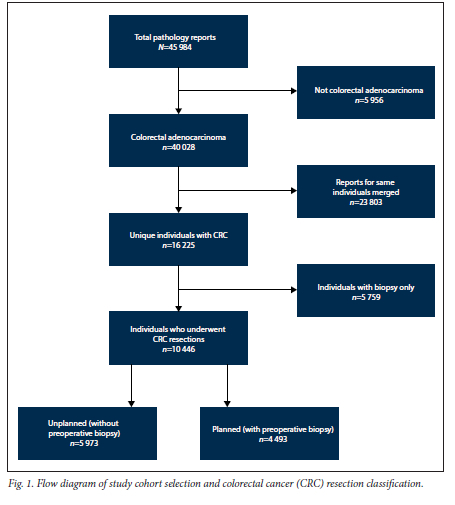
This was a retrospective observational study using all pathology-confirmed CRC reports in the National Cancer Registry (NCR) from 2015 to 2020. The time period was selected owing to availability of data. The NCR is an electronic database used for national cancer surveillance and is based on pathology specimens submitted from all SA private and public sector laboratories. Established in 1986, the NCR serves as the the primary source of national cancer incidence data in SA, and has played a critical role in informing national cancer prevention and control policy. Histological types other than colorectal adenocarcinoma were excluded. De-identified pathology reports were provided by the National Health Laboratory Service (NHLS) Corporate Data Warehouse for all CRC cases, and recorded using International Classification of Diseases (ICD-10 codes) C18.0 and C18.2-20 (Fig. 1).
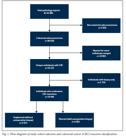
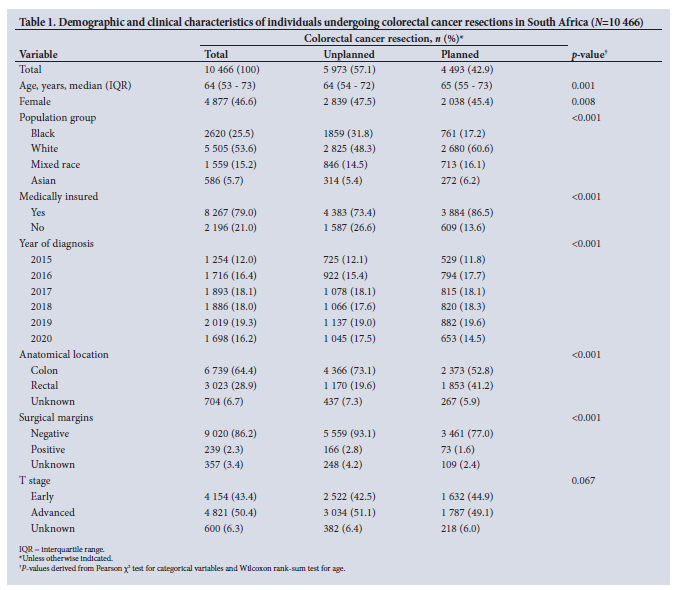
Variables recorded included age, sex, population group (black, white, mixed race, Asian), province, year of diagnosis, public v. private sector laboratory, and a free text section. Cases from public laboratories were classified as medically uninsured, and those from the private ones as medically insured. For individuals with discordant public/private reports, the sector linked to the resection was used. Age was categorised using a cut-off of 50 years to distinguish early-onset CRC from cases occurring at older age, consistent with commonly used clinical and epidemiological thresholds in CRC research. Province location was known for public sector cases only. Population groups were classified by a previously verified NCR method using a hot-deck imputation algorithm based on known surname-ethnicity pairings from the NCR reference panel dataset, a method with an overall performance of 94% across all population groups.[16] Population group categories used in our analysis follow Statistics South Africa's official classifications, which align with the country's constitutional and policy framework recognising race as a key dimension of inequality that is needed for accurate epidemiological modelling and equity monitoring.[17] However, an inherent error rate may result in misclassification because surnames do not always accurately reflect an individual's self-identified population group.
Free-text information was manually coded to determine sample type (biopsy v. resection), surgical margins (positive v. negative), T stage (early (T1/T2) v. advanced (T3/T4)) and anatomical location (colon, rectal or unknown). Reports with missing specimen type (biopsy v. resection) were dropped from analysis. Reports belonging to the same individual were linked using probabilistic record linkage implemented through the DTAlink module in Stata version 17 (StataCorp, USA). This approach applies probabilistic weighting to identify likely matches across records based on agreement patterns in key variables such as name, sex and date of birth. The method has been described in a previous study that validated the approach for linking patient records across large administrative data sets in SA.[16] Probabilistic record linkage was performed by the data custodians prior to data release using identifiable variables. Following completion of the linkage process, all personal identifiers were removed and a fully de-identified dataset was provided for analysis. Unplanned resections were classified as those without preoperative biopsy, while planned resections were those with preoperative biopsy. We used cases without a preoperative biopsy as a surrogate marker for unplanned or emergency surgery, and for surgical complications such as perforation or obstruction. This was not confirmed through medical records. Time to resection was defined as days between biopsy and resection. Specimens involving any part of the rectum, including the rectosigmoid junction, were classified as rectal.
Data analysis
The analysis was restricted to pre-2020 data because more recent registry data were not yet finalised at the time of analysis, and patterns of cancer diagnosis and access to surgical care may have been affected by COVID-19-related disruptions. Stata version 17.0 (StataCorp, USA) was used for statistical analysis. Categorical data were described using frequencies and percentages, and χ2p<0.10 on univariate analyses were included and adjusted for in the multivariable logistic regression model. Variables were considered significant in the multivariable model if p<0.05. Multicollinearity among covariates was assessed using variance inflation factors (VIF) calculated following an equivalent ordinary least squares regression, with VIF values >5 considered indicative of problematic collinearity. Model calibration was evaluated using the Hosmer-Lemeshow goodness-of-fit test, and model discrimination was assessed using the area under the receiver operating characteristic curve (AUC, C-statistic).
Ethical considerations
Ethical approval was provided by the Human Research Ethics Committee at Stellenbosch University (ref. no. N22/04/038), and the NHLS Academic Affairs and Research Management System (AARMS). A waiver of informed consent was approved because the study used secondary, de-identified data already in use for surveillance purposes, and no patient contact or hospital visits were conducted during the study.
Results
There were 10 466 CRC resections during the 6-year study period. Of these, 5 973 (57.1%) were unplanned and 4 493 (42.9%) were planned. The median (interquartile range (IQR)) age of these patients was 64 (55 - 73) years, and 4 877 (46.6%) were female. For population group, 5 505 (53.6%) were classified as white, 2 620 (25.5%) black, 1 559 (15.2%) mixed race and 586 (5.7%) Asian. The majority were insured (n=8 267, 79.0%). Anatomical location was reported in 9 762 (93.3%) cases; 3 023 (28.9%) were rectal (Table 1).
Surgical margins were reported in 9 616 (91.9%) cases. Positive surgical margins were found in 239 (2.3%): 166 (2.8%) for unplanned compared with 73 (1.6%) for planned resections (p<0.001) (Table 1).
Resection by province
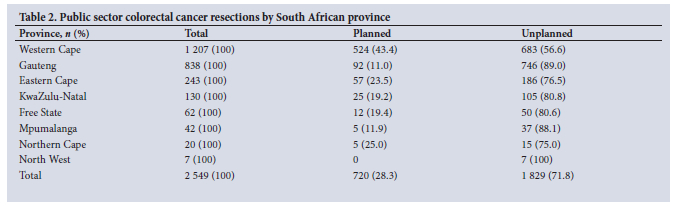
Province was reported for public sector resections (n=2 549). The Western Cape Province performed most of these resections (n=1 207, 47.0%), followed by Gauteng (n=838, 32.9%) and the Eastern Cape (n=243, 9.5%). The proportion of unplanned operations by province ranged from 56.6% to 100%. No resection data were available for Limpopo province in the NCR dataset (Table 2).
Associations with unplanned resection
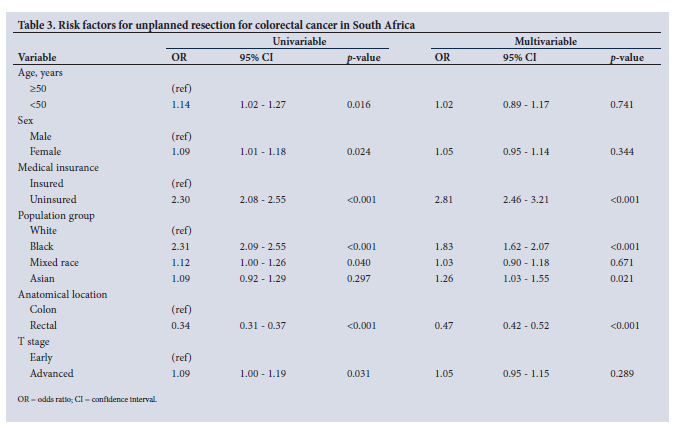
On multivariable analysis, uninsured status (odds ratio (OR) 2.81, p<0.001), being black (OR 1.83, p<0.001), or being Asian (OR 1.26, p=0.021) were significantly associated with an increased risk of unplanned resection. Rectal cancer resections (OR 0.47, p<0.001) were significantly less likely to be unplanned (Table 3). Model diagnostics demonstrated acceptable calibration on the Hosmer-Lemeshow goodness-of-fit test (χ2p=0.608), indicating good agreement between predicted and observed outcomes, and modest discrimination with an AUC of 0.67 (Table 3).
Time to resection
Time to colon cancer resection was available for 818 (46.0%) of 1 777 planned cases. Median (IQR) time to colon cancer resection was 20 (9 - 43) days overall: 26 (12.5 - 49) days for uninsured and 15 (8 - 39) days for insured patients (p<0.001). Time to rectal cancer resection was available for 799 (45.05%) of 1 777 planned cases. Median (IQR) time to rectal cancer resection was 125 (26 - 217) days overall: 167.5 (57 - 237.5) days for the uninsured and 95 (19 - 201) days for the insured (p<0.001).
Discussion
This study, to our knowledge, is the first national analysis to report on CRC resection and biopsy patterns using two types of reports to estimate resections. We found that over half of resections were performed without a preoperative biopsy, suggesting a potentially high proportion of emergency or non-standard-pathway operations. There was significant variation by province, population group and insurance status, demonstrating inequity in access. Times to resection for colon and rectal cancer were significantly longer for the uninsured.
Our study showed a high proportion of unplanned resections. While we did not know the exact reasons for not having a preoperative biopsy, we surmised that most of these cases might have been surgical emergencies, presenting with perforation, bleeding, or obstruction, but this could not be confirmed from our data. In a SA central hospital, 20% of CRC cases had malignant obstruction.[18] Over half of CRC patients in SA present with a late-stage diagnosis, which is independently associated with higher postoperative mortality and morbidity, and lower long-term survival rates.[12,14,19] In addition, the higher frequency of positive margins in unplanned resections likely reflects both later stage and limited preoperative planning, emphasising the importance of timely detection and structured surgical assessment to optimise R0 resection.
Overall, our findings highlight substantial challenges in the diagnosis and management of CRC in SA, particularly the high proportion of CRC resections done without a preoperative biopsy. These results suggest important gaps in access to diagnostic care within the existing health system.
To address this issue, population-based screening is needed. Previously cited barriers in SA include limited infrastructure, insufficient endoscopic capacity, high costs of colonoscopy, shortages of trained personnel and pathologists, poor patient awareness, and cultural and sociodemographic obstacles.[20] In addition, delays to diagnosis and treatment for symptomatic individuals with CRC also occur. One reason is that cancer care is concentrated in urban tertiary facilities, which are often located far from marginalised populations. Getting to these facilities requires timely inter-facility referrals, financial protection and available transport, which are not currently accessible to all.[20,21] In this context, faecal immunochemical tests followed by diagnostic colonoscopy, if indicated, could facilitate earlier diagnosis and reduce emergency presentation.[22] Specific national cancer policies are needed to prevent morbidity and mortality.
In our study, population group and insurance status were independent risk factors for unplanned (emergency) resection. An English study of over a quarter of a million individuals with CRC showed that blacks, Hispanics and Chinese were at increased risk of emergency surgery. [23] Similarly in our study, black and Asian patients were associated with an increased risk of unplanned resection.
Marked inequities between those with and without health insurance were evident. A total of 86% of the population is uninsured and relies on the under-resourced and overburdened public health sector, and these patients are therefore six times more likely to have an unplanned resection.[24,25] Similar trends have been observed in the USA, where uninsured or socioeconomically disadvantaged patients have higher rates of emergency CRC presentation.[26,27]
Even among the uninsured, there was geographical inequity in access to planned CRC operations. Previous research has demonstrated that disparities in access to diagnostic imaging, oncology services and operating theatres contribute to poorer cancer outcomes in the SA public sector.[28] There was a six-fold difference in absolute CRC resection numbers and a two-fold difference in the proportion of planned resections between SA provinces, suggesting that varying levels of urbanisation, health budget allocation and health-seeking behaviour could affect access to surgical oncology.[29,30] For example, in the Northern Cape, large distances to and between health facilities might be contributing to poorer access to surgical resection.[31] In addition, rural provinces such as the Eastern Cape and Mpumalanga may have lower health-seeking cancer behaviour in terms of formal health services owing to use of indigenous health systems.[32-34] In contrast, the Western Cape, which has the highest concentration of surgeons and healthcare expenditure per capita, had the highest proportion of planned resections.[35]
Patients with rectal cancer were more likely to have planned resections than individuals with colon cancer. There could be several reasons. Firstly, local symptoms of bleeding from rectal cancer might prompt earlier presentation.[36,37] Histological confirmation for rectal cancers is easier than that for colon cancer, as the latter requires colonoscopy, a procedure usually performed only by gastroenterologists and surgeons.[38] In contrast, 10% of rectal cancers can be diagnosed with digital rectal examination or rigid proctoscopy, a procedure that primary care doctors can perform. In addition, primary care physicians can do rigid or flexible sigmoidoscopy to biopsy rectosigmoid cancers.[39]
The median time to colon cancer resection was <30 days, even for the uninsured. Some treatment guidelines suggest that colon cancer care should be initiated within 28 days of diagnosis, although a survival benefit has not been shown.[40,41] Rectal cancer treatment often begins with varying neoadjuvant chemoradiation regimens, so the longer median time to rectal cancer resection (125 days) was difficult to interpret. We hypothesise that the insured had a shorter time to resection, which may have been influenced by limitations in neoadjuvant options rather than reflecting a true delay to resection. This cannot be confirmed through our data.
Study limitations
This study has several limitations owing to its retrospective design. First, a major limitation of our study was potential misclassification of non-biopsied individuals having emergency resection. It is possible, although less likely, that they had planned resection of non-histologically confirmed CRC, especially if oncological resection was surgically possible. Preoperative biopsies may have been under-reported and/or not linked to the correct individual, thus overestimating unplanned resections. Secondly, reasons for the lack of preoperative biopsy were not known. For individuals without a preoperative biopsy, we have made the assumption that the resection was emergent; however it is possible that there were other reasons. For example, some CRC patients may have had diagnostic imaging (i.e. computed tomography of the abdomen and pelvis) suspicious for malignancy followed by a resection without preoperative biopsy, although this is not standard of care. Geographical comparisons by province were limited to public sector data, so national comparisons are incomplete. In addition, a potential bias is that the time-to-care results are mostly representative of the private sector. Finally, the planned resection rate for rectal cancer may have been overestimated by some emergent cases getting an initial diverting stoma without resection (and therefore not categorised as unplanned). This would have allowed delayed staging, biopsy, appropriate neoadjuvant therapy and planned resection, effectively moving them from the unplanned to the planned cohort. Despite these limitations, the large sample size enabled robust statistical analysis and has provided valuable insight into factors associated with unplanned CRC resection, as defined in this study by the absence of a preoperative biopsy. These findings should therefore be interpreted within the context of this operational definition and do not imply a causal relationship between preoperative biopsy status and surgical planning. The findings of this study also highlight the urgent need for a national oncology care strategy in SA. Integrating CRC screening with existing non-communicable disease platforms as well as with universal health coverage through the ongoing National Health Insurance planning offers a pragmatic step forward.
Conclusion
In conclusion, more than half of CRC resections in SA occurred without a preoperative (confirmatory) biopsy, raising concerns about late presentation and deviations from standard diagnostic pathways. The uninsured, black and Asian patients, and residents of certain provinces face disproportionately higher risks of unplanned surgery, reflecting entrenched structural inequities in access to cancer care. Addressing these inequities requires an integrated approach that combines early detection, equitable access to diagnostic services and expansion of surgical oncology capacity. In addition, development of a national CRC screening programme and improving referral pathways should be key policy priorities to improve survival and reduce preventable mortality from CRC in SA.
Data availability. The data used in this study are held by the SA NCR and are not publicly available because of ethical, legal and confidentiality restrictions. Data may be made available by the NCR upon reasonable request and subject to the required approvals and data-access procedures.
Declaration. None.
Acknowledgements. None.
Author contributions. Study conception: KMC, AB, TM; data acquisition: TM, ML, NS, NP, EW, HG, GL, JvH, MCG, MM, WC; data analysis and interpretation: TM, KMC, WCC; draft write-up: TM, KMC; critical revision: TM, KMC, TF, AB; final review and approval given by all authors.
Funding. None.
Conflicts of interest. None.
References
-
1. Sung H, Ferlay J, Siegel RL, et al. Global Cancer Statistics 2020: GLOBOCAN estimates of incidence and mortality worldwide for 36 cancers in 185 countries. CA Cancer J Clin 2021;71(3):209-249. https://doi.org/10.3322/caac.21660
» https://doi.org/10.3322/caac.21660 -
2. Irabor DO. Emergence of colorectal cancer in West Africa: Accepting the inevitable. Niger Med J 2017;58(3):87-91. https://doi.org/10.4103/0300-1652.234076
» https://doi.org/10.4103/0300-1652.234076 -
3. Schliemann D, Ramanathan K, Matovu N, et al. The implementation of colorectal cancer screening interventions in low-and middle-income countries: A scoping review. BMC Cancer 2021;21(1):1125. https://doi.org/10.1186/s12885-021-08809-1
» https://doi.org/10.1186/s12885-021-08809-1 -
4. International Agency for Research on Cancer. Global cancer observatory Colorectum. GLOBOCAN 2024. https://gco.iarc.who.int/media/globocan/factsheets/cancers/41-colorectum-fact-sheet.pdf (accessed 17 September 2026).
» https://gco.iarc.who.int/media/globocan/factsheets/cancers/41-colorectum-fact-sheet.pdf -
5. Araghi M, Soerjomataram I, Jenkins M, et al. Global trends in colorectal cancer mortality: Projections to the year 2035. Int J Cancer 2019;144(12):2992-3000. https://doi.org/10.1002/ijc.32055
» https://doi.org/10.1002/ijc.32055 -
6. Hawkes N. Cancer survival data emphasise importance of early diagnosis. Br Med J 2019;364:l408. https://doi.org/10.1136/bmj.l408
» https://doi.org/10.1136/bmj.l408 -
7. Bell D, Morash C, Dranitsaris G, et al. Does prolonging the time to testicular cancer surgery impact long-term cancer control: A systematic review of the literature. Can J Urol 2006;13(Suppl 3):30-36. https://pubmed.ncbi.nlm.nih.gov/16818010/ (accessed 17 September 2026).
» https://pubmed.ncbi.nlm.nih.gov/16818010/ -
8. Liu SC, Zhang H. Early diagnostic strategies for colorectal cancer. World J Gastroenterol 2024;30(33):3818-3822. https://doi.org/10.3748/wjg.v30.i33.3818
» https://doi.org/10.3748/wjg.v30.i33.3818 -
9. Fitzpatrick-Lewis D, Ali MU, Warren R, Kenny M, Sherifali D, Raina P. Screening for colorectal cancer: A systematic review and meta-analysis. Clin Colorectal Cancer 2016;15(4):298-313. https://doi.org/10.1016/j.clcc.2016.03.003
» https://doi.org/10.1016/j.clcc.2016.03.003 -
10. Barnett A, Cedar A, Siddiqui F, Herzig D, Fowlkes E, Thomas CR, Jr. Colorectal cancer emergencies. J Gastrointest Cancer 2013;44(2):132-142. https://doi.org/10.1007/s12029-012-9468-0
» https://doi.org/10.1007/s12029-012-9468-0 -
11. Gunnarsson H, Holm T, Ekholm A, Olsson LI. Emergency presentation of colon cancer is most frequent during summer. Colorectal Dis 2011;13(6):663-668. https://doi.org/10.1111/j.1463-1318.2010.02270.x
» https://doi.org/10.1111/j.1463-1318.2010.02270.x -
12. Cuffy M, Abir F, Audisio RA, Longo WE. Colorectal cancer presenting as surgical emergencies. Surg Oncol 2004;13(2):149-157. https://doi.org/10.1016/j.suronc.2004.08.002
» https://doi.org/10.1016/j.suronc.2004.08.002 -
13. Jestin P, Nilsson J, Heurgren M, Pâhlman L, Glimelius B, Gunnarsson U. Emergency surgery for colonic cancer in a defined population. Br J Surg 2005;92(1):94-100. https://doi.org/10.1002/bjs.4780
» https://doi.org/10.1002/bjs.4780 -
14. McArdle CS, Hole DJ. Emergency presentation of colorectal cancer is associated with poor 5-year survival. Br J Surg 2004;91(5):605-609. https://doi.org/10.1002/bjs.4456
» https://doi.org/10.1002/bjs.4456 -
15. Ntombela XH, Zulu BM, Masenya M, Sartorius B, Madiba TE. Is the clinicopathological pattern of colorectal carcinoma similar in the state and private healthcare systems of South Africa; Analysis of a Durban colorectal cancer database. Trop Doct 2017;47(4):360-364. https://doi.org/10.1177/0049475517710887
» https://doi.org/10.1177/0049475517710887 -
16. Chen WC, Kellett P, Greyling M, Singh E, Sengayi-Muchengeti M. The use of surnames to impute missing ethnicity data in the South African National Cancer Registry database. 2022;(epub ahead of print). https://doi.org/10.21203/rs.3.rs-2033699/v1
» https://doi.org/10.21203/rs.3.rs-2033699/v1 -
17. Sengayi M, Spoerri A, Egger M, et al. Record linkage to correct under-ascertainment of cancers in HIV cohorts: The Sinikithemba HIV clinic linkage project. Int J Cancer 2016;139(6):1209-1216. https://doi.org/10.1002/ijc.30154
» https://doi.org/10.1002/ijc.30154 -
18. Ndlovu N, Kader S, Moodley Y, Cheddie S, Madiba TE. A South African central hospital's experience with malignant colorectal obstruction. S Afr J Surg 2023;61(2):139-143. https://doi.org/10.36303/SAJS.3854
» https://doi.org/10.36303/SAJS.3854 -
19. Zhou H, Jin Y, Wang J, Chen G, Chen J, Yu S. Comparison of short-term surgical outcomes and long-term survival between emergency and elective surgery for colorectal cancer: A systematic review and meta-analysis. Int J Colorectal Dis 2023;38(1):41. https://doi.org/10.1007/s00384-023-04334-8
» https://doi.org/10.1007/s00384-023-04334-8 -
20. Lee R, Holmes D. Barriers and recommendations for colorectal cancer screening in Africa. Glob Health Act 2023;16(1):2181920. https://doi.org/10.1080/16549716.2023.2181920
» https://doi.org/10.1080/16549716.2023.2181920 -
21. Mac Quene T, Smith L, Odland ML, et al. Prioritising and mapping barriers to achieve equitable surgical care in South Africa: A multi-disciplinary stakeholder workshop. Glob Health Action 2022;15(1):2067395. https://doi.org/10.1080/16549716.2022.2067395
» https://doi.org/10.1080/16549716.2022.2067395 -
22. Cheney CP, Rosier L, Cantrell S, Thielman NM, Sullivan BA. Fecal immunochemical testing for colorectal cancer screening outside high-income countries: A systematic review and meta-analysis. J Clin Gastroenterol 2025;(epub ahead of print). https://doi.org/10.1097/mcg.0000000000002214
» https://doi.org/10.1097/mcg.0000000000002214 -
23. Askari A, Nachiappan S, Currie A, et al. Who requires emergency surgery for colorectal cancer and can national screening programmes reduce this need; Int J Surg 2017;42:60-68. https://doi.org/10.1016/j.ijsu.2017.04.050
» https://doi.org/10.1016/j.ijsu.2017.04.050 -
24. Ataguba JE, McIntyre D. Paying for and receiving benefits from health services in South Africa: Is the health system equitable? Health Pol Planning 2012;27(Suppl_1):i35-45. https://doi.org/10.1093/heapol/czs005
» https://doi.org/10.1093/heapol/czs005 -
25. Lehohla P. Use of health facilities and levels of selected health conditions in South Africa: Findings from the General Household Survey, 2011. Pretoria: Statistics South Africa, 2013. https://www.statssa.gov.za/publications/Report-03-00-05/Report-03-00-052011.pdf (accessed 18 September 2026).
» https://www.statssa.gov.za/publications/Report-03-00-05/Report-03-00-052011.pdf -
26. Tawk R, Abner A, Ashford A, Brown CP. Differences in colorectal cancer outcomes by race and insurance. Int J Environmental Res Pub Health 2016;13(1):48. https://doi.org/10.3390/ijerph13010048
» https://doi.org/10.3390/ijerph13010048 -
27. Byrd T, Boland S, Klem ML, et al. Health equity and emergency colorectal surgery in the United States: A scoping review. J Surg Res 2025;307:86-92. https://doi.org/10.1016/j.jss.2025.01.019
» https://doi.org/10.1016/j.jss.2025.01.019 -
28. Brand M, Gaylard P, Ramos J. Colorectal cancer in South Africa: An assessment of disease presentation, treatment pathways and 5-year survival. S Afr Med J 2018;108(2):118-122. https://doi.org/10.7196/SAMJ.2018.v108i2.12338
» https://doi.org/10.7196/SAMJ.2018.v108i2.12338 -
29. Van der Hoeven M, Kruger A, Greeff M. Differences in health care seeking behaviour between rural and urban communities in South Africa. Int J Equity Health 2012;11(1):31. https://doi.org/10.1186/1475-9276-11-31
» https://doi.org/10.1186/1475-9276-11-31 -
30. Stuckler D, Basu S, McKee M. Health care capacity and allocations among South Africa's provinces: Infrastructure-inequality traps after the end of apartheid. Am J Public Health 2011;101(1):165-172. https://doi.org/10.2105/AJPH.2009.184895
» https://doi.org/10.2105/AJPH.2009.184895 -
31. Northern Cape Department of Health, South Africa. First quarterly performance report of the Northern Cape Department of Health. Kimberley: NCDoH, 2022/2023. https://www.spotlightnsp.co.za/wp-content/uploads/2024/09/2022-23-ar-final-ncdoh-1.pdf (accessed 17 September 2026).
» https://www.spotlightnsp.co.za/wp-content/uploads/2024/09/2022-23-ar-final-ncdoh-1.pdf -
32. Ncitakalo N, Mnyaka OR, Khosa NV, Chitha WW, Mabunda SA. Barriers to accessing cancer care services in Eastern Cape and Mpumalanga provinces of South Africa: Cancer survivors' perspectives. BMC Cancer 2026;26(1):322. https://doi.org/10.1186/s12885-026-15662-7
» https://doi.org/10.1186/s12885-026-15662-7 -
33. Willie MM. Examining the scarcity of oncology healthcare providers in cancer management: A case study of the Eastern Cape Province, South Africa. Open Health 2025;6(1):20250058. https://doi.org/10.1515/ohe-2025-0058
» https://doi.org/10.1515/ohe-2025-0058 -
34. Sangana N, Rodi P, Tshabalala N, et al The role of indigenous healers in treating surgical conditions in the rural Eastern Cape of South Africa. World J Surg 2024;48(11):2708-2715. https://doi.org/10.1002/wjs.12356
» https://doi.org/10.1002/wjs.12356 -
35. Gilson LB, Pienaar D, Brady L, et al. Development of the health system in the Western Cape: Experiences since 1994. S Afr Health Rev 2017(1):59-69. http://hdl.handle.net/10520/EJC-c80cad871 (accessed 16 September 2026).
» http://hdl.handle.net/10520/EJC-c80cad871 -
36. Lee YM, Law WL, Chu KW, Poon RT. Emergency surgery for obstructing colorectal cancers: A comparison between right-sided and left-sided lesions. J Am Coll Surg 2001;192(6):719-725. https://doi.org/10.1016/S1072-7515(01)00833-X
» https://doi.org/10.1016/S1072-7515(01)00833-X -
37. Moolla Z, Madiba TE. Trends in demographics and management of obstructing colorectal cancer. World J Surg 2014;38(9):2466-2470. https://doi.org/10.1007/s00268-014-2595-y
» https://doi.org/10.1007/s00268-014-2595-y -
38. Davila RE, Rajan E, Adler D, et al. ASGE guideline: The role of endoscopy in the diagnosis, staging, and management of colorectal cancer. Gastrointest Endosc 2005;61(1):1-7. https://doi.org/10.1016/S0016-5107(04)02391-0
» https://doi.org/10.1016/S0016-5107(04)02391-0 -
39. Lewis JD, Asch DA, Ginsberg GG, et al. Primary care physicians' decisions to perform flexible sigmoidoscopy. J Gen Intern Med 1999;14(5):297-302. https://doi.org/10.1046/j.1525-1497.1999.00337.x
» https://doi.org/10.1046/j.1525-1497.1999.00337.x -
40. Rydbeck D, Bock D, Haglind E, Angenete E, Onerup A. Survival in relation to time to start of curative treatment of colon cancer: A national register-based observational noninferiority study. Colorectal Dis 2023;25(8):1613-1621. https://doi.org/10.1111/codi.16638
» https://doi.org/10.1111/codi.16638 -
41. Hangaard Hansen C, Gögenur M, Tvilling Madsen M, Gögenur I. The effect of time from diagnosis to surgery on oncological outcomes in patients undergoing surgery for colon cancer: A systematic review. Eur J Surg Oncol 2018;44(10):1479-1485. https://doi.org/10.1016/j.ejso.2018.06.015
» https://doi.org/10.1016/j.ejso.2018.06.015

Accepted 25 August 2026