Evaluation of the visual prostate symptom score in a male population with great language diversity and limited education: A study from Namibia
Abstract
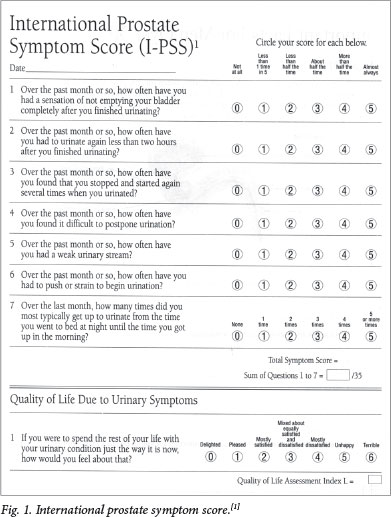
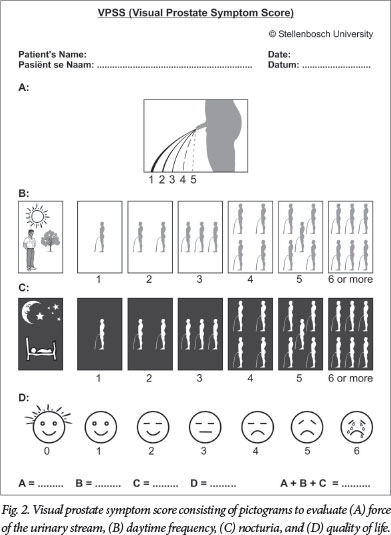
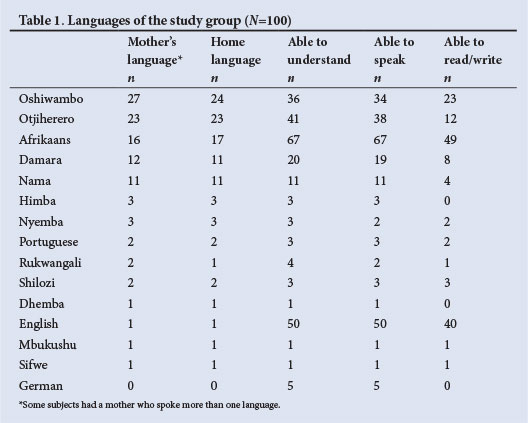
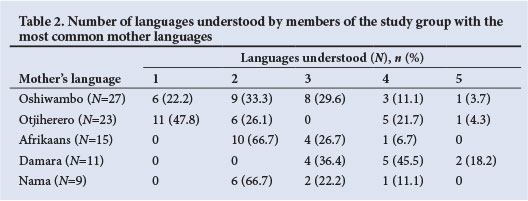
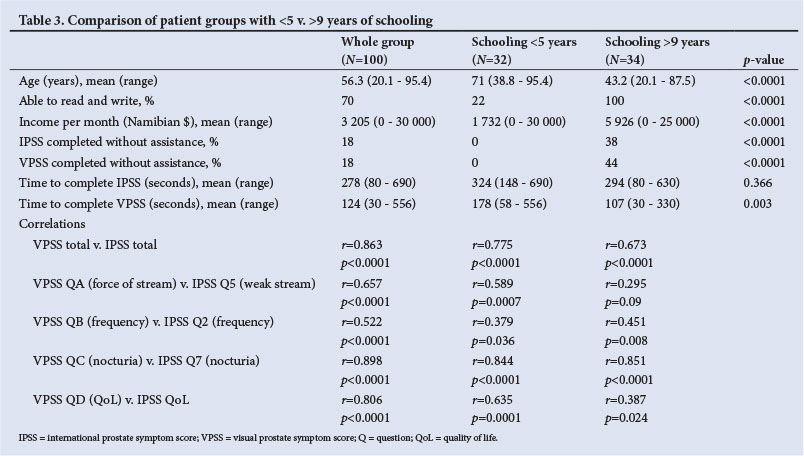
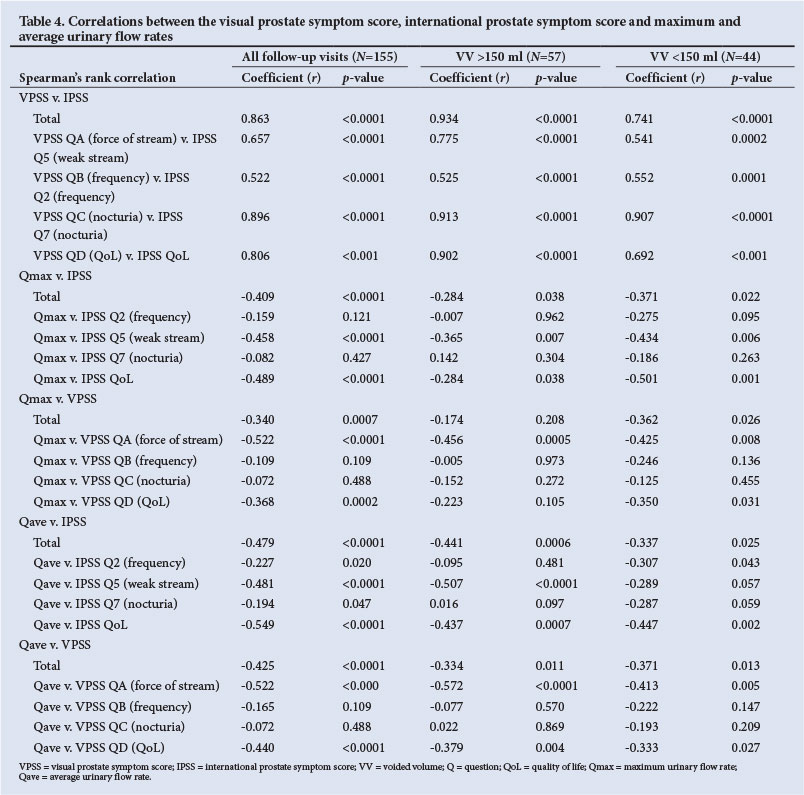
BACKGROUND: A visual prostate symptom score (VPSS) using pictograms was developed to assess the force of the urinary stream, urinary frequency, nocturia and quality of life (QoL). OBJECTIVE: To compare the VPSS with the international prostate symptom score (IPSS) and maximum (Qmax) and average (Qave) urinary flow rates in men from diverse language groups with limited schooling. METHODS: Men with lower urinary tract symptoms admitted to the urology ward at Windhoek Central Hospital, Namibia, were evaluated. Patients who were unable to complete the questionnaires alone were assisted by a doctor or nurse. Local ethics committee approval was obtained. Statistical analysis was performed using Student's t-test and Spearman's rank correlation test. RESULTS: One hundred men (mean age 56.3 years, range 20.1 - 95.4) were evaluated over a period of one year. All the men understood one or more of 15 languages, and 30 were illiterate; 32 had <5 years of schooling, 34 had 5 - 9 years and 34 had >9 years. The VPSS took significantly less time to complete than the IPSS. There were statistically significant correlations between the total VPSS and IPSS scores, between the four VPSS questions and the corresponding IPSS questions, and between Qmax and Qave and the VPSS total and VPSS questions on the force of the urinary stream and QoL. CONCLUSION: The VPSS pictograms depicting the force of the urinary stream and QoL correlated significantly with Qmax and Qave, indicating that they can be used as single-item questions to rapidly assess bladder outflow obstruction in men with limited education.
 Thumbnail
 Thumbnail