Determinants of mortality in Nigerian children with severe anaemia
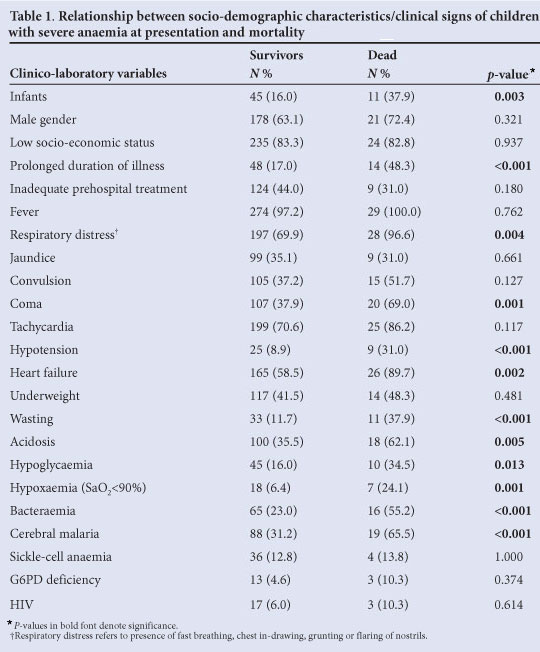
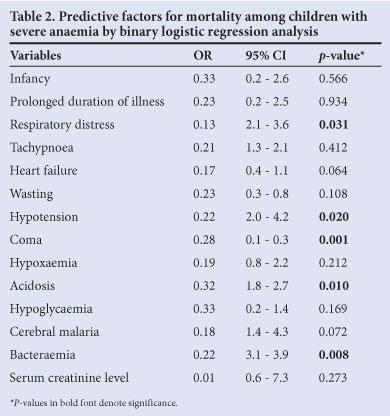
BACKGROUND: Severe anaemia (haemoglobin concentration <50 g/l) is a major cause of paediatric hospital admissions and deaths in the tropics. OBJECTIVES: To examine the pattern and predictors of mortality among severely anaemic children. METHODS: A prospective cross-sectional study was conducted among children with severe anaemia at the Children's Emergency Room of the University Teaching Hospital, Ado-Ekiti, Nigeria. Sociodemographic characteristics, clinical features, laboratory findings and co-morbidities of the survivors and those who died were compared by logistic regression analysis. RESULTS: Of the 1 735 children admitted, 311 (17.9%) had severe anaemia, with a case-fatality rate of 9.3%. The presence of respiratory distress (95% confidence interval (CI) 2.1 - 3.6, p=0.031); acidosis (95% CI 1.8 - 2.7, p=0.010); coma (95% CI 0.1 - 0.3, p=0.001); hypotension (95% CI 2.0 - 4.2, p=0.020); and bacteraemia (95% CI 3.1 - 3.9; p=0.008) were the significant independent predictors of death with regression analysis. CONCLUSION: Early recognition with prompt and appropriate anticipatory intervention is essential to reduce mortality from severe anaemia.
SAMJ: South African Medical Journal