Child consent in South African law - implications for researchers, service providers and policy-makers
To the Editor: Our article1
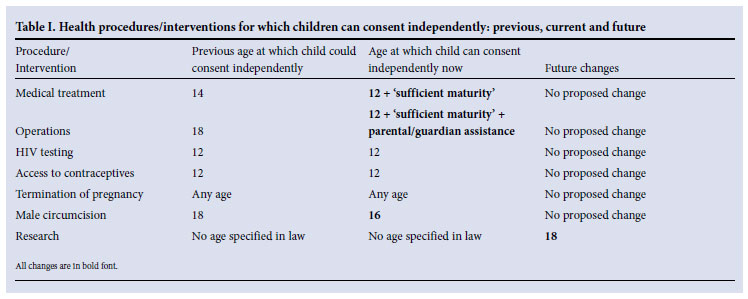
Tables I and II highlight where information has been updated. Table I shows the ages at which children can consent independently to 7 key health-related interventions, previously, currently and in the future.1
II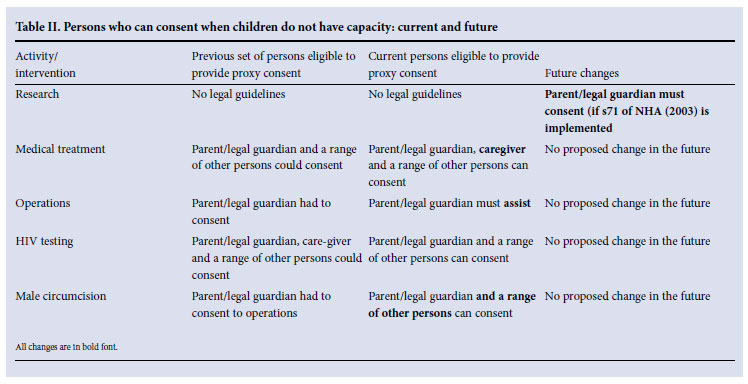
Table II sets out the persons who can provide proxy consent for children who do not have the capacity to consent themselves. Again, research is the only area where there may be future changes. The key change introduced by the Children's Act (2010) is the recognising of caregivers as authorised to provide proxy consent.
This conceptual research was funded by the South African AIDS Vaccine Initiative (SAAVI). The views expressed here do not necessarily reflect those of SAAVI.
Ann Strode
Faculty of Law and HIV/AIDS Vaccines Ethics Group
University of KwaZulu-Natal
Pietermaritzburg; and
HIV/AIDS Vaccines Ethics Group
University of KwaZulu-Natal
Catherine Slack
Zaynab Essack
University of KwaZulu-Natal