Detection of karakin poisoning using a targeted mass spectrometric workflow
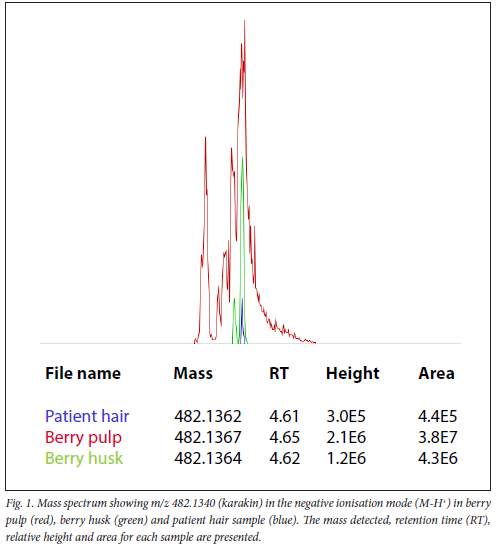
Treatment and management of plant toxicosis is made more difficult when an alien plant species is ingested, as identification of the toxin may pose a challenge. High-resolution mass spectrometers are required for the toxicological analysis of samples in these cases owing to their ability to scan large mass ranges and accurately identify mass features. We present this case to highlight the value of this technology in clinical toxicology. A middle-aged woman reported visual impairment, dizziness and numbness of her mouth and tongue following the ingestion of a berry. Over time her condition deteriorated, warranting toxicological analysis. The tree the berry came from was identified as Cornynocarpus laevigatus, which is known to produce the karakin neurotoxin. The patient's samples and the husk and pulp of the berries were analysed using a high-resolution mass spectrometer. This resulted in the identification of the toxin in the berry kernel and husk and patient's hair, suggesting that karakin could have contributed to the patient's condition.
In Practice • SAMJ, S. Afr. med. j. 112
(12)
• • https://doi.org/10.7196/SAMJ.2022.v112i12.16667 copy
 Thumbnail