E-referrals to a general paediatric outpatient service -lessons learned
BACKGROUND. Use of electronic patient referral platforms may improve access to specialist paediatric care, but research on its implementation in resource-constrained settings is lacking. OBJECTIVES. To characterise the utilisation, participant demographics, clinical conditions and outcome of e-referrals to a South African specialist general paediatric service. METHODS. A retrospective review of e-referrals at Tygerberg Hospital's general paediatric department was performed assessing referral patterns and indications, clinical advice provided and response time (1 April 2020 - 31 March 2022). RESULTS. A total of 579 e-referrals were analysed; referral volumes increased by 50% in the second year. Most e-referrals originated from primary healthcare facilities (355/579, 61.3%) and registered professional nurses (197/355, 55.3%). Children under 5 years of age predominated (375/579, 64.7%), and a quarter of cases were referred after hours. Three-quarters were referred for medical conditions (435/579, 75.5%), most commonly neurological disorders (89/435, 20.4%) and infectious diseases (62/435, 14.3%). E-referral outcomes included: urgent emergency department transfer (92/579, 15.9%); advice for local case management (104/579, 18.0%); outpatient department bookings (132/579, 22.8%); and referral to lower levels of care (63/579, 10.9%). Most e-referrals received a response within <1 hour (444/579, 76.7%). CONCLUSION. An electronic referral platform supported a large and increasing volume of paediatric referrals, predominantly from nurses in primary care settings. The e-referral platform successfully delivered prompt access to clinical care advice and directed central hospital transfer of urgent cases. E-referral applications present a viable alternative to telephonic referrals in this setting.
paediatric; e-referral; primary healthcare; outpatient
E-referrals to a general paediatric outpatient service -lessons learned
A da CostaI; L GreybeII; M KerspuyIII; S MurrayIV; K KeyserV; A RedfernVI; T WesselsVII; L SmitVIII; A DramowskiVIII
IFC Paed (SA) MMed (Paed); Department of Paediatrics and Child Health, Faculty of Medicine and Health Sciences, Stellenbosch University, Cape Town, South Africa
IIMMed (Paed), MPhil (Paed ID); Department of Paediatrics and Child Health, Faculty of Medicine and Health Sciences, Stellenbosch University, Cape Town, South Africa
IIIMB ChB, DCH (SA); Department of Paediatrics and Child Health, Faculty of Medicine and Health Sciences, Stellenbosch University, Cape Town, South Africa
IVMB ChB, MBA; Department of Mother, Woman, Child and Adolescent Health, Groote Schuur Hospital, Cape Town, South Africa
VMB ChB; Department of Paediatrics and Child Health, Faculty of Medicine and Health Sciences, Stellenbosch University, Cape Town, South Africa
VIFC Paed (SA), MPhil; Department of Paediatrics and Child Health, Faculty of Medicine and Health Sciences, Stellenbosch University, Cape Town, South Africa
VIIMB ChB, FCPaed; Department of Paediatrics and Child Health, Faculty of Medicine and Health Sciences, Stellenbosch University, Cape Town, South Africa
VIIIPhD, FC Paed (SA); Department of Paediatrics and Child Health, Faculty of Medicine and Health Sciences, Stellenbosch University, Cape Town, South Africa
BACKGROUND. Use of electronic patient referral platforms may improve access to specialist paediatric care, but research on its implementation in resource-constrained settings is lacking.
OBJECTIVES. To characterise the utilisation, participant demographics, clinical conditions and outcome of e-referrals to a South African specialist general paediatric service.
METHODS. A retrospective review of e-referrals at Tygerberg Hospital's general paediatric department was performed assessing referral patterns and indications, clinical advice provided and response time (1 April 2020 - 31 March 2022).
RESULTS. A total of 579 e-referrals were analysed; referral volumes increased by 50% in the second year. Most e-referrals originated from primary healthcare facilities (355/579, 61.3%) and registered professional nurses (197/355, 55.3%). Children under 5 years of age predominated (375/579, 64.7%), and a quarter of cases were referred after hours. Three-quarters were referred for medical conditions (435/579, 75.5%), most commonly neurological disorders (89/435, 20.4%) and infectious diseases (62/435, 14.3%). E-referral outcomes included: urgent emergency department transfer (92/579, 15.9%); advice for local case management (104/579, 18.0%); outpatient department bookings (132/579, 22.8%); and referral to lower levels of care (63/579, 10.9%). Most e-referrals received a response within <1 hour (444/579, 76.7%).
CONCLUSION. An electronic referral platform supported a large and increasing volume of paediatric referrals, predominantly from nurses in primary care settings. The e-referral platform successfully delivered prompt access to clinical care advice and directed central hospital transfer of urgent cases. E-referral applications present a viable alternative to telephonic referrals in this setting.
Keywords: paediatric, e-referral, primary healthcare, outpatient
The use of telemedicine and electronic or e-referral systems has been shown to assist primary healthcare (PHC) practitioners to obtain rapid specialist advice and to book outpatient appointments where necessary, decreasing the number of non-urgent referrals to emergency departments.[1-5] Approximately one-third of South Africa (SA)'s population are children, most of whom rely on public sector facilities to meet their healthcare needs.[6] These services are free for children <6 years of age, with a major focus on primary care.[7] Healthcare services are provided at different levels of care: community, primary, secondary and tertiary. PHC services for children are generally nurse-led and doctor-supported, and include the provision of preventive activities, vaccination and nutrition programmes, and acute care using the World Health Organization Integrated Management of Childhood Illnesses.[8,9] Packages of care and referral pathways are entrenched in the system, in an effort to ensure timely access to hospital-based and specialist care for children with acute illness or more complex health needs. Appropriate and timely access to specialist paediatric services is essential to achieve optimal child health outcomes, although challenges with referring and co-ordinating care for children with acute and long-term health conditions have been documented.[10] Health outcomes and access to healthcare continue to vary substantially by province and location, with better health outcomes seen in urban areas than rural areas.[11] A decrease in primary care consultations with a concomitant increase in non-urgent emergency department visits have been noted not only in SA, but also globally.[10] E-referrals are a mechanism of improving timely access to appropriate levels of care even in remote areas.
In an SA study, users found e-referrals challenging in the emergency setting owing to the time-sensitive nature of referrals. Telephonic consultations were preferred, with e-referral use for non-urgent cases.[12] Each e-referral consultation takes time to respond to, as many practitioners who receive the e-referral initially need to ask questions before providing input.[1] Internationally, it has been reported that e-referrals increase the daily workload of receiving practitioners, with many referrals taking ~10 - 20 minutes to complete the consultation, with an international study documenting referral response time occurring within 3 days of the referral being made.[1,13] Another challenge described in a local study was lack of reliable cellphone reception.[12]
Despite concerns about technological challenges and potential medicolegal liability issues, the use of e-referral platforms for paediatric healthcare has grown globally.[1,3,4,12,14] Internationally and locally, users of e-referral systems report high levels of satisfaction with e-referrals, including improved education of primary care practitioners and increased access to specialist advice.[1,12] E-referrals also reduce healthcare costs for patients and the health system by decreasing unnecessary specialist visits.[1] Keely et al.[13] described some clinical areas being able to manage 50% of e-referrals remotely without requiring a patient to visit specialist services, which is beneficial to both the patient and the specialist services. Optimal use of an e-referral platform can improve care for vulnerable paediatric patients, particularly in resource-limited settings, although research from such contexts has been very limited to date.
There is a paucity of data describing the use of electronic paediatric clinical referrals in the sub-Saharan context. To address this gap, we conducted a retrospective review of patterns of referrals made to a SA general specialist paediatric service. We aimed to describe the utilisation, participant demographics, clinical conditions and outcome of e-referrals to an SA specialist general paediatric service at Tygerberg Hospital.
Methods
Study setting
Tygerberg Hospital is a public, central academic hospital in Cape Town's eastern metropole, in the Western Cape Province of SA, with a bed capacity of 1 384 including 300 paediatric and neonatal ward beds (0 - 13 years). The hospital provides secondary-level care to the surrounding health districts, and tertiary care to half of the provincial paediatric population.
We conducted a retrospective, descriptive study including all participants <13 years of age who were e-referred to the Tygerberg Hospital General Paediatric Outpatient service using the Vula mobile application. The referrals to general outpatient services are mainly from surrounding health districts, and enable referrals from both nurses and doctors. Many PHC clinics in our setting are nurse-led, with infrequent doctor oversight. Urgent referrals to the Paediatric Emergency Service at Tygerberg Hospital are generally made telephonically. Non-urgent referrals have been sent via the Vula mobile application since 2019.
Study population
All paediatric patients (age <13 completed years) referred to the Tygerberg Hospital General Paediatric Service using the Vula mobile application between 1 April 2020 and 31 March 2022 were included. We excluded patients aged >13 completed years and those with substantial missing data.
Ethical considerations
The study protocol was approved with a waiver of individual informed consent by the Stellenbosch University Health Research Ethics Committee (ref. no. N23/11/132) and Tygerberg Hospital management.
The electronic referral system
At the time of the study, Vula mobile was the official e-referral application service used by the Western Cape Department of Health and Wellness. It is primarily used to facilitate electronic referrals between healthcare professionals, within and between various facilities. These also include referrals from private providers. The mobile phone-based application allows non-specialist nurses and doctors to communicate directly with a medical specialist based at a referral hospital. Vula allows specialists to rapidly screen referrals, provide clinical advice and decide which patients should be accepted for specialist care v. continued management at the existing care facility by the referring healthcare professional.
This e-referral platform is utilised for non-urgent referrals, and only monitored during working hours; there is no after-hours cover. It serves as a referral platform for nurses and doctors at primary healthcare facilities, private practices and hospitals in Cape Town's Metro East region for non-urgent cases. A dedicated medical officer in charge of the outpatient department (OPD) managed the Vula referrals, supported by a registrar or specialist paediatrician when on leave, on a rotational basis. Oversight was provided by consultants in the general paediatric service.
Data collection and analysis
Anonymised referral data were retrospectively downloaded as an Excel (Microsoft, USA) data report from the Vula mobile application. Descriptive analysis using counts and percentages was conducted to describe referral volumes, patterns, the level of care of the referring facilities, geographical locations, patient demographics and clinical problems or diagnoses. Lastly, the outcomes of referrals (provision of advice v. referral to higher levels of care) were also analysed in this manner.
Descriptive statistics were summarised using Excel. Associations between categorical variables (including comparisons of referral characteristics and outcomes between year 1 and year 2) were assessed using Pearson's χ2
Results
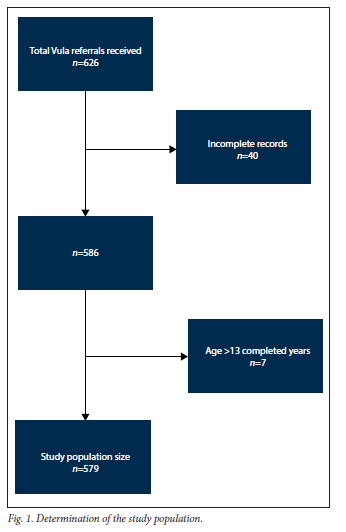
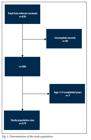
Over the 2-year study period, 626 children were e-referred via the Vula mobile application. After exclusion for missing data and referrals >13 years (n=47), 579 referral episodes were analysed, of which 435 (75.1%) were medical, 139 (24.0%) surgical and 5 (0.8%) for administrative reasons (Fig. 1).
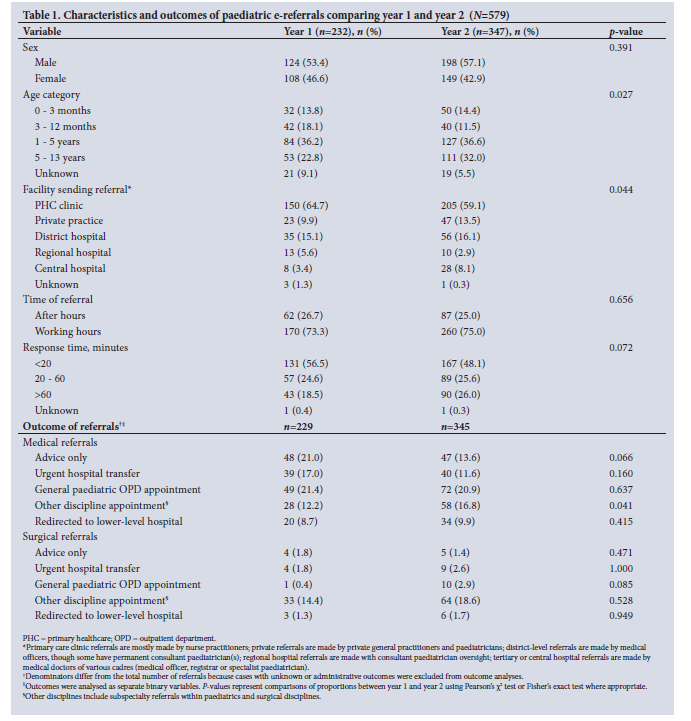
Young children <5 years old made up the majority of referrals (375/579, 64.7%). The proportion of children aged 5 - 13 years referred in year 2 was higher than in year 1 (53/232 v. 111/347, p=0.027). Most cases (355/579, 61.3%) were referred from PHC facilities, including 101 (28.5%) registered professional nurses (RPNs), 197 (55.3%) medical doctors and 57 (16.2%) of unknown cadre. Referrals from rural facilities outside of the Cape Town Metropole accounted for 9.2% of all cases. Doctors from private practices referred 12.1% (70/579) of the cohort. The characteristics and outcomes of cases compared between year 1 and year 2 are summarised in Table 1.
The response times for the majority (444/579, 76.7%) of referrals were within 60 minutes, with half responded to within 20 minutes. Responses were more likely to be delayed beyond 60 minutes for referrals received after hours (45/149 v. 87/428, p=0.013). Over a third (33/149) of after-hours e-referrals required urgent transfer to the central hospital, including two cases of upper gastrointestinal bleeds, a case of bowel obstruction and a head injury. Other after-hours referrals were for medical cases (118/149, 79.1%), with 37.3% (44/118) of these for neurological and neurodevelopmental disorders (Table 1).
Five referrals were for administrative enquiries. For the rest of the cohort, a quarter of e-referrals received an appointment for review at the hospital's paediatric OPD (POPD). Advice to treat and follow up care at the referring facility was given in 18.2% (104/574) of cases. The proportion of those who received advice to treat and follow up at the referring facility was higher for RPNs at PHC clinics compared with medical doctors (107/355 v. 195/355, p=0.011). Urgent transfer to the emergency department was requested for 16.1% (92/574) (Table 1). Overall, 31.6% (183/574) of cases were referred to other disciplines for appointments. Patients with surgical conditions were more likely to be redirected to other departments (99/139 v. 89/435, p<0.001), with <2% requiring POPD review for secondary opinion prior to referral. Referrals from rural facilities were more likely to be redirected to other hospitals (18/53 v. 54/512, p<0.001).
There was a 50% increase in referrals between year 1 and year 2, with referral volumes ranging from 6 to 39 patients per month. There was an increase in surgical referrals in year 2 (45/229 v. 94/345, p=0.038).
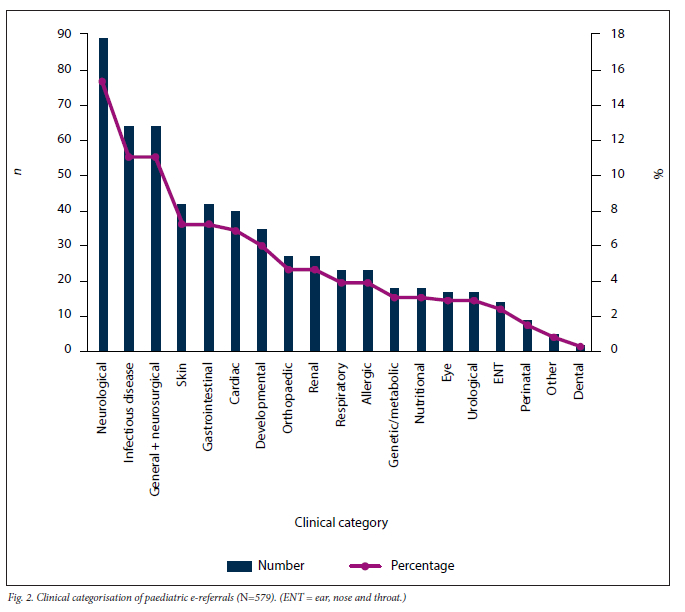
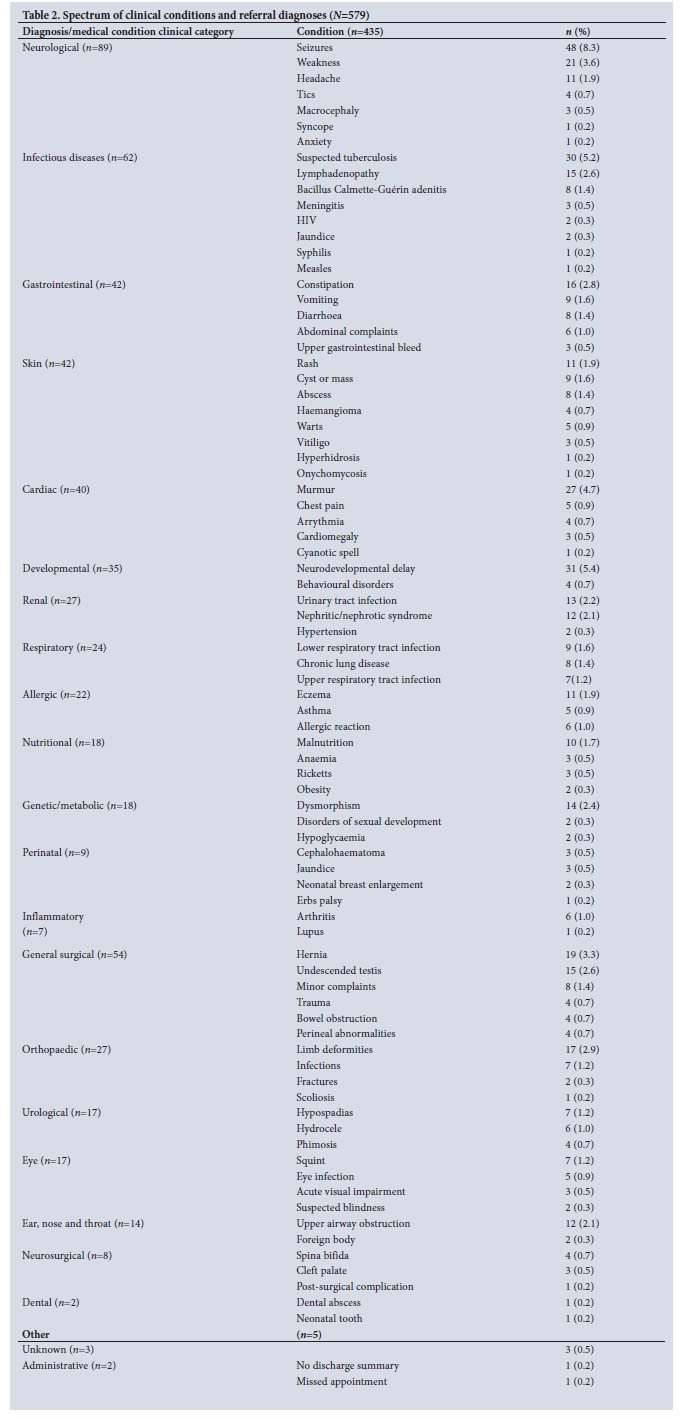
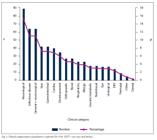
Clinical categories of paediatric referrals are summarised in Fig. 2. Half of the referrals (289/579, 49.9%) were neurological, general surgical, skin and gastrointestinal disorders and infectious diseases. Neurological conditions (89/435, 20.5%) were the most frequent category overall, of which over 50% were for seizures. The next most frequent category was infectious diseases (62/435, 14.3%), of which the majority of referrals were for suspected tuberculosis (TB) or lymphadenopathy. Among surgical conditions, general surgical (54/139, 39%) and orthopaedic referrals (27/139, 19%) were the most frequent, with hernias, undescended testes and limb deformities being the most common diagnoses (Table 2).
Discussion
Our study described the utilisation and outcomes of referrals made to a paediatric outpatient service at a large central hospital using an e-referral platform. Many referrals were made from PHC level by RPNs. Most referrals were responded to timeously. Many patients could be managed by the referral facilities with paediatric advice without transfer to the tertiary hospital. The most frequently referred medical categories were neurological disorders and infectious diseases. Fewer than a quarter of referrals were given a POPD date. We demonstrated a 50% increase in paediatric e-referral volumes over 2 years, in keeping with another study in the Western Cape Province that showed rising uptake of use for the Vula e-referral platform.[5]
In our study, most e-referrals were made for children <5 years old and for children attending PHC. At least a quarter of all referrals were made by RPNs, although nurse-referred patients were significantly more likely to receive advice to treat and follow up at the referral facility only. These findings are in keeping with another SA study, which highlighted the benefit of e-referral platforms for improving access to specialist advice for patients at PHC level.[4] Given that most e-referrals from RPNs required advice only, a more sustainable approach could include regular outreach and education on common paediatric conditions.
This result may also be explained by the infrequent availability of doctor oversight at PHC level. Training, and improved implementation of provincial PHC guidelines with guidance from medical doctors, at PHC level may improve efficiency and care and potentially reduce the number of inappropriate e-referrals to specialist services. In a primary care-focused health system, care for children should be focused within PHC services. However, co-ordination of and pathways for acute and chronic care have persistent challenges. Historic and current trends in referral characteristics have not been reported in SA, and therefore cannot be commented on, but the importance of continuous evaluation of referral need and the optimisation of PHC is an important potential outcome of this type of research.[4]
The majority of response times to referrals in our study were within an hour. Using e-referral platforms facilitated quick responses to referrals, which has been reported elsewhere in SA.[4,5] Our time is also shorter than the 3 days reported internationally.[1] Timeous responses to e-referrals are particularly valuable in resource-limited settings with high patient loads and few healthcare workers, and may contribute to an improved patient care experience.
A significant proportion of referrals in this study were made after hours, resulting in delayed responses, similar to findings from a local study.[5] Some of these required urgent transfers, which may have resulted in delayed care as the service was only monitored during working hours. In contrast, another SA study reported that users avoided e-referrals for emergencies because responses were slow and the cases were time-sensitive.[12] Some after-hours referrals could be explained by practitioners consulting after hours and completing the referral at that time, or underestimation of severity of disease, or uncertainty regarding appropriate referral pathways. These findings highlight the need to clarify the indications to use this e-referral platform.
In our study, two-fifths of referrals were redirected to alternative healthcare services, including surgical and subspecialist referrals or services provided at lower-level hospitals. This was similar to the half of referrals for paediatric assessment found at another paediatric specialist centre.[14] What is of concern is that most referrals redirected to lower-level hospitals were from rural facilities, suggesting that referral pathways within the rural health service need strengthening.
Overall, fewer than a quarter of referrals were given a general POPD date, which is the purpose of the platform. This is low compared with local and international literature, which suggests figures of 40 - 85%, with higher numbers reported for e-service referral to emergency and surgical services.[1,7,11,14,15] Notably, three groups of referrals were inappropriately made to this e-referral service - surgical referrals, referrals for urgent transfer and referrals after working hours. Inappropriate referrals to this platform may point to gaps in recognising the severity or complexity of the clinical condition, or a misunderstanding of the intended function of the service. This will need further evaluation. The implementation of specific disease referral pathways may also optimise referral services.[16]
Neurological conditions were the most frequently referred in our study. Seizures were the most common diagnosis for referral in this category. The misdiagnosis of epilepsy has been described in up to 70% of cases internationally, highlighting this condition as an important area for healthcare provider education and quality assurance.[15] When best practices are followed and modern diagnostic aids are utilised, this would ensure favourable outcomes for patients.[16] The second most frequent condition referred was neurodevelopmental delay (NDD), although behavioural issues were very infrequent. The proportions of NDD and behavioural problems were lower than expected. In high-income settings, developmental and behavioural problems have been found to comprise >10 - 50% of outpatient paediatrician consultations, and 85% of referrals to a community paediatric clinic.['17-20] The relatively low proportion of these referrals has at least two potential explanations. Firstly, this is a general service, with a broad range of conditions being referred, whereas other studies describing NDD referrals may be less broad in their scope. Secondly, it is likely that some NDD referrals are made directly to the tertiary neurodevelopmental clinic. Given the lack of school-based healthcare services, together with the severely constrained community paediatric and tertiary subspecialist developmental capacity in our context, the relatively low proportion of developmental and behavioural referral represents a potentially unmet need that warrants further investigation.
Suspected pulmonary TB and lymphadenopathy (which is likely to be linked to suspected extrapulmonary TB) were the most frequent reasons for infectious disease-related referral in our study. It is well documented that confirmatory diagnosis of TB in children is difficult.[21] Improved diagnostic capacity (including gastric washings, sputum collection at PHC facilities and fine-needle aspiration biopsy at all hospitals) could reduce the burden on limited central hospital paediatric outpatient services. In the absence of improved diagnostic capacity, treatment-decision algorithms could be used.[21]
Surgical conditions comprised just under a quarter of all referrals in our cohort. At the time of the study, ear, nose and throat, ophthalmology and urology all received e-referrals via the same mobile application, while the paediatric surgery and orthopaedic services did not. Most e-referrals for surgical diagnoses received were redirected to a different discipline for an appointment, with <2% receiving POPD dates for review. Similar findings were noted in a local study by Steyn et al.,[12] where not all departments used e-referrals, and knowledge of each department's preferred referral system was required for adequate patient care.
The strengths of this study include describing how an e-referral system can be utilised in the paediatric setting to improve healthcare access and access to specialist care and to prevent incorrect referrals. As it was a retrospective review, limitations included having incomplete or missing records. Future studies should review the final outcomes of cases, and time- and cost-saving measures using e-referral pathways.
Conclusion
The utilisation of e-referrals locally and globally is increasing. While the use of an e-referral platform poses some challenges, it has the potential to improve patient care by increasing accessibility to advice from experienced providers. The ability to provide specialist advice, virtually, to practitioners who are at the patient bedside, referral to appropriate levels of care and scheduled appointments are all benefits noted with the use of e-referrals. Challenges that should be addressed include referrals to the incorrect discipline, inappropriate level of care and erroneous use for emergency referrals to an OPD platform. Therefore, a combination of investing in improving PHC though education, proper use of provincial resources, increased availability of a general doctor on site who can provide initial advice, strengthening of referral pathways and investing in e-referral platforms would result in improved healthcare for vulnerable children while also decreasing cost to the patient and the overall healthcare system.
Data availability. Anonymised and aggregated data will be made available upon reasonable request to the author team.
Declaration. None.
Acknowledgements. None.
Author contributions. All authors contributed to the study concept and design, data acquisition, data analysis and interpretation, draft writing and accountability and integrity of answers to questions arising.
Funding. None.
Conflicts of interest. None.
AI contribution. No large language models were used in the production of this work. Grammarly was used to check grammar. No images were created using AI tools.
References
-
1. Vimalananda VG, Gupte G, Seraj SM, et al. Electronic consultations (e-consults) to improve access to specialty care: A systematic review and narrative synthesis. J Telemed Telecare 2015;21(6):323-330. https://doi.org/10.1177/1357633x15582108
» https://doi.org/10.1177/1357633x15582108 -
2. Shah AC, Badawy SM. Telemedicine in pediatrics: Systematic review of randomized controlled trials. JMIR Pediatr Parent 2021;4(1):e22696. https://doi.org/10.2196/22696
» https://doi.org/10.2196/22696 -
3. Pulcini CD, Coller RJ, Houtrow AJ, et al. Preventing emergency department visits for children with medical complexity through ambulatory care: A systematic review. Acad Pediatr 2021;21(4):605-616. https://doi.org/10.1016/j.acap.2021.01.006
» https://doi.org/10.1016/j.acap.2021.01.006 -
4. Gloster P, Mash R Swartz S. Investigating the effect of the Vula Mobile app on coordination of care and capacity building in district health services, Cape Town: Convergent mixed methods study. S Afr Fam Pract 2021;63(1):e1-13. https://doi.org/10.4102/safp.v63i1.5251
» https://doi.org/10.4102/safp.v63i1.5251 -
5. Blanckenberg N, Motala T. Facilitating remote access to specialist medical expertise through the scaled-up adoption of a smartphone application: A South African case. S Afr Med J 2022;112(2):e15799. https://doiorg/10.7196/SAMJ.2022.v112i2.15799
» https://doiorg/10.7196/SAMJ.2022.v112i2.15799 -
6. Statistics South Africa. Education Series Volume VII: Children's education and well-being in South Africa, 2018. Pretoria: Stats SA, 2018. https://www.statssa.gov.za/?p=14044 (accessed 27 February 2025).
» https://www.statssa.gov.za/?p=14044 -
7. Constitution of the Republic of South Africa. https://www.gov.za/documents/constitution/constitution-republic-south-africa-04-feb-1997 (accessed 4 March 2025).
» https://www.gov.za/documents/constitution/constitution-republic-south-africa-04-feb-1997 -
8. National Department of Health, South Africa. Standard Treatment Guidelines and Essential Medicines List (STGs and EML). Pretoria: NDoH, 2025. https://www.health.gov.za/nhi-edp-stgs-eml/ (accessed 9 June 2025).
» https://www.health.gov.za/nhi-edp-stgs-eml/ -
9. World Health Organization. Child health and development: Integrated management of childhood illness. Geneva: WHO, 2014. https://www.who.int/teams/maternal-newborn-child-adolescent-health-and-ageing/child-health/integrated-management-of-childhood-illness (accessed 9 June 2025).
» https://www.who.int/teams/maternal-newborn-child-adolescent-health-and-ageing/child-health/integrated-management-of-childhood-illness -
10. Viner RM, Hargreaves DS. A forward view for child health: Integrating across the system to improve health and reduce hospital attendances for children and young people. Arch Dis Child 2018;103(2):117-118. https://doi.org/10.1136/archdischild-2017-314032
» https://doi.org/10.1136/archdischild-2017-314032 -
11. Achoki T, Sartorius B, Watkins D, et al. Health trends, inequalities and opportunities in South Africa's provinces, 1990 - 2019: Findings from the Global Burden of Disease 2019 Study. J Epidemiol Commun Health 2022;76(5):471-481. https://doi.org/10.1136/jech-2021-217480
» https://doi.org/10.1136/jech-2021-217480 -
12. Steyn L, Mash RJ, Hendricks G. Use of the Vula App to refer patients in the West Coast District: A descriptive exploratory qualitative study. S Afr Fam Pract 2022;64(1):e1-9. https://doi.org/10.4102/safp.v64i1.5491
» https://doi.org/10.4102/safp.v64i1.5491 -
13. Keely E, Liddy C, Afkham A. Utilisation, benefits, and impact of an e-consultation service across diverse specialties and primary care providers. Telemed J E Health 2013;19(10):733-738. https://doi.org/10.1089/tmj.2013.0007
» https://doi.org/10.1089/tmj.2013.0007 -
14. Schuttner L, Sindano N, Theis M, et al. A mobile phone-based, community health worker program for referral, follow-up, and service outreach in rural Zambia: Outcomes and overview. Telemed J E Health 2014;20(8):721-728. https://doi.org/10.1089/tmj.2013.0240
» https://doi.org/10.1089/tmj.2013.0240 -
15. Oto MM. The misdiagnosis of epilepsy: Appraising risks and managing uncertainty. Seizure 2017;44:143-146. https://doi.org/10.1016/j.seizure.2016.11.029
» https://doi.org/10.1016/j.seizure.2016.11.029 -
16. Pellinen J, Foster EC, Wilmshurst JM, et al. Improving epilepsy diagnosis across the lifespan: Approaches and innovations. Lancet Neurol 2024;23(5):511-521. https://doi.org/10.1016/S1474-4422(24)00079-6
» https://doi.org/10.1016/S1474-4422(24)00079-6 -
17. Thompson E, Todd P, Ni Bhrolchain C. The epidemiology of general paediatric outpatient referrals: 1988 and 2006. Child Care Health Dev 2013;39(1):44-49. https://doi.org/10.1111/j.1365-2214.2011.01346.x
» https://doi.org/10.1111/j.1365-2214.2011.01346.x -
18. Coscini N, Heyes P, Bedford H, et al. Multicountry review: Developmental surveillance, assessment and care by outpatient paediatricians. Arch Dis Child 2023;108(3):153-159. https://doi.org/10.1136/archdischild-2021-322799
» https://doi.org/10.1136/archdischild-2021-322799 -
19. Hiscock H, Danchin MH, Efron D, et al. Trends in paediatric practice in Australia: 2008 and 2013 national audits from the Australian Paediatric Research Network. J Paediatr Child Health 2017;53(1):55-61. https://doi.org/10.1111/jpc.13280
» https://doi.org/10.1111/jpc.13280 -
20. Thompson E, Ni Bhrolchain C. The epidemiology of community paediatric outpatient referrals 2006. Child Care Health Dev 2013;39(1):50-54. https://doi.org/10.1111/j.1365-2214.2011.01346.x
» https://doi.org/10.1111/j.1365-2214.2011.01346.x -
21. Gunasekera KS, Marcy O, Muñoz J, et al. Development of treatment-decision algorithms for children evaluated for pulmonary tuberculosis: An individual participant data meta-analysis. Lancet Child Adolesc Health 2023;7(5):336-346. https://doi.org/10.1016/S2352-4642(23)00004-4
» https://doi.org/10.1016/S2352-4642(23)00004-4

Accepted 31 March 2026