Recommendations for the use of immunoglobulin therapy for immunomodulation and antibody replacement
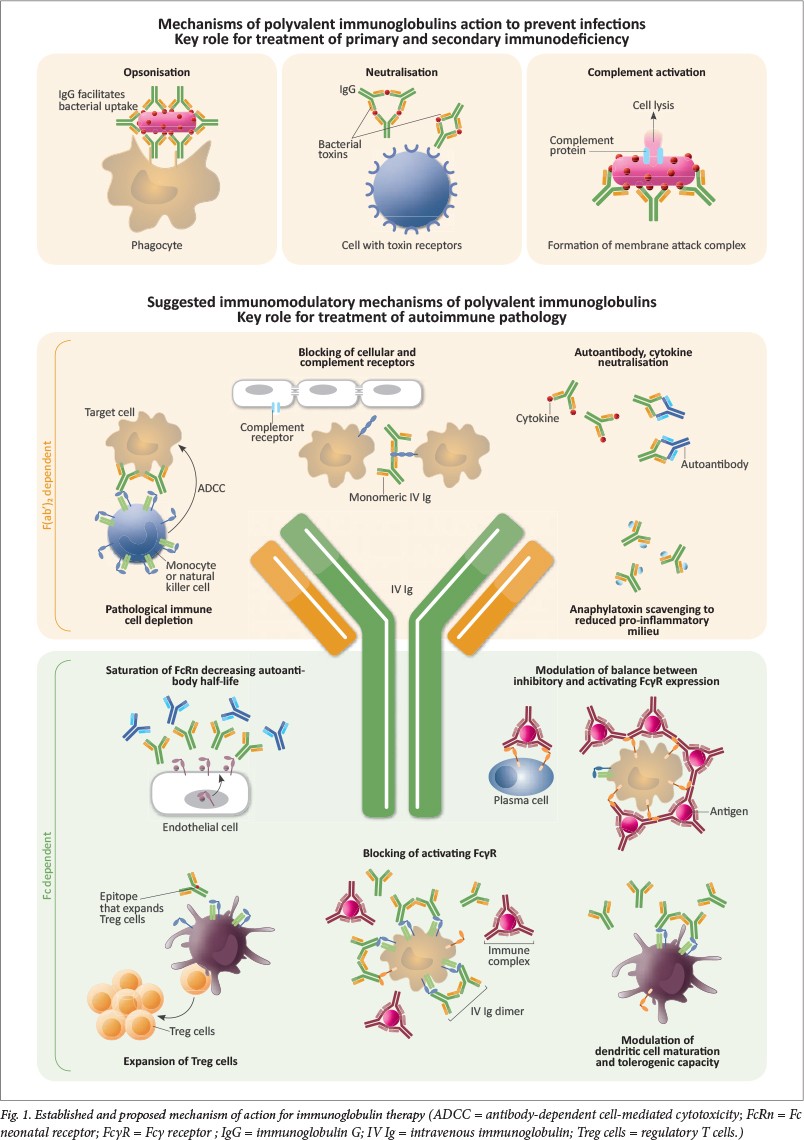
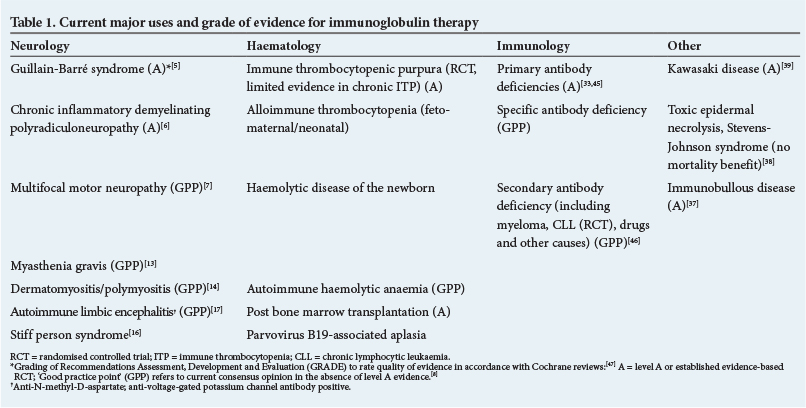
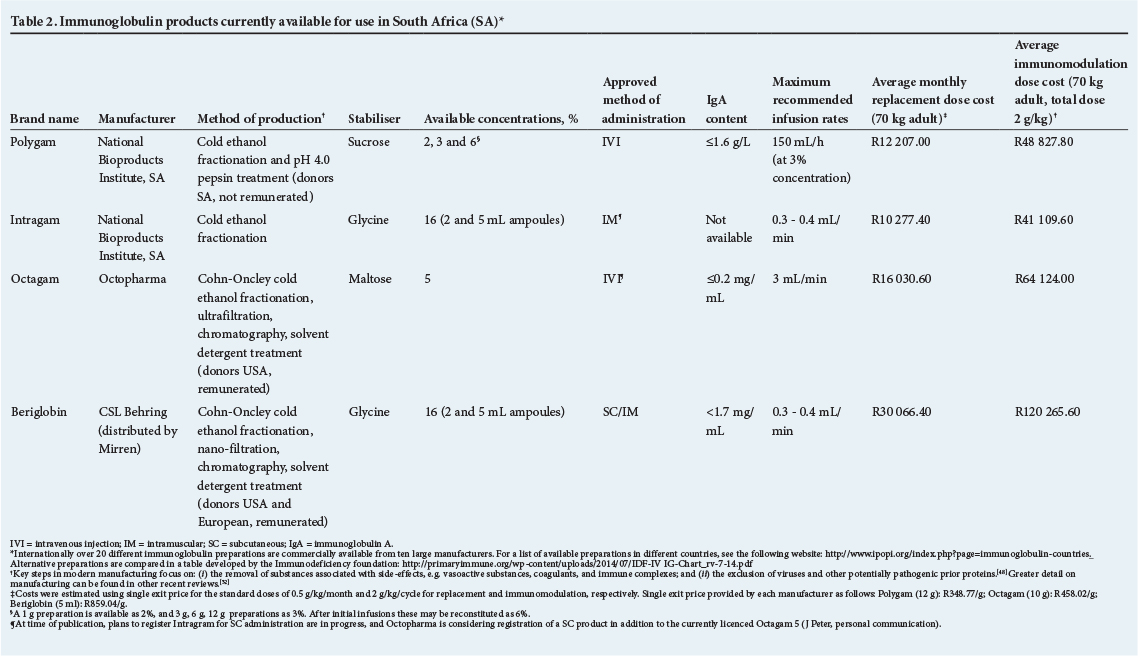
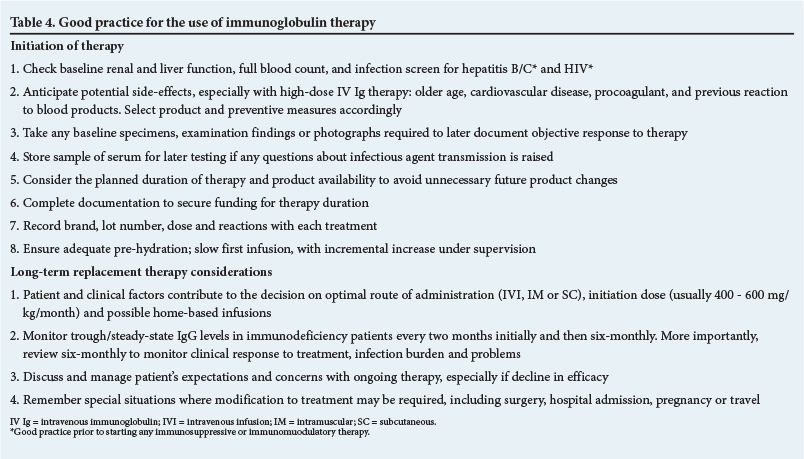
Polyvalent immunoglobin, derived from pooled human plasma, can be administered via the intravenous, subcutaneous or intramuscular route. Therapy is standard of care in the treatment of a number of immune-mediated pathologies across disciplines. By volume, the majority is used in neurology (~40%). In primary immunodeficiencies, therapy reconstitutes humoral immunity at replacement doses (0.4 - 0.6 g/kg/month), decreasing infections, and is usually lifelong. However, high doses, usually 2 g/kg total dose over five days, are required for immunomodulation in autoimmune and inflammatory indications. A high-quality evidence base supports use in primary antibody failure, Guillain-Barré syndrome, chronic inflammatory demyelinating polyneuropathy, acute idiopathic thrombocytopenia, Kawasaki disease and immunobullous diseases. Low-quality evidence shows benefit in many other uncommon autoimmune and immunodeficient conditions. In South Africa, use of immunoglobulin therapy is restricted and, given the cost involved, will likely remain so. Therefore, the incremental benefit over other forms of immunosuppression, particularly corticosteroids, must be assessed carefully on a case-by-case basis. In most cases, therapy will be second-line or 'rescue' and motivation will be required. This short review aims to provide clinicians with the necessary understanding of the therapy, general considerations for use, and evidence base and quality thereof for well-established indications.
Continuing Medical Education • SAMJ, S. Afr. med. j. 104
(11)
• • https://doi.org/10.7196/SAMJ.8965 copy
 Thumbnail