Medical management of acute ischaemic stroke
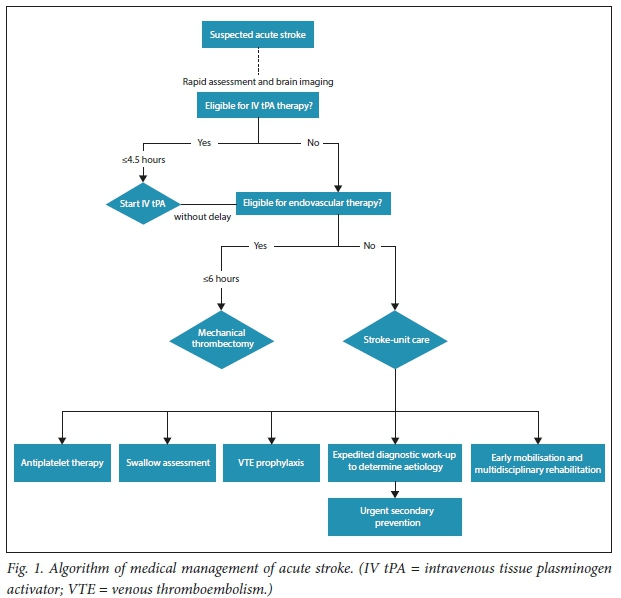
This article provides a practical overview of current medical treatments for acute ischaemic stroke, particularly for those in a busy family or general practice. Stroke is defined as an acute neurological deficit lasting >24 hours and caused by cerebrovascular disease. It may be ischaemic, caused by vessel stenosis or occlusion, or haemorrhagic, caused by rupture of vessels, resulting in intraparenchymal and/or subarachnoid haemorrhage. Transient ischaemic attack is defined as a transient episode of neurological dysfunction caused by focal brain, spinal cord or retinal ischaemia without acute infarction, replacing the old time-based definition. The goals of management of patients with an acute stroke are as follows: make an accurate assessment and diagnosis, limit the extent of the brain injury, avoid and treat stroke-related complications, evaluate the underlying aetiology that is closely linked to the prognosis for recurrent stroke, institute appropriate secondary prevention and facilitate post-stroke recovery.
Continuing Medical Education • SAMJ, S. Afr. med. j. 109
(2)
• • https://doi.org/10.7196/samj.2019.v109i2.00008 copy
 Thumbnail