Socioeconomic factors associated with asthma prevalence and severity among children living in low-income South African communities
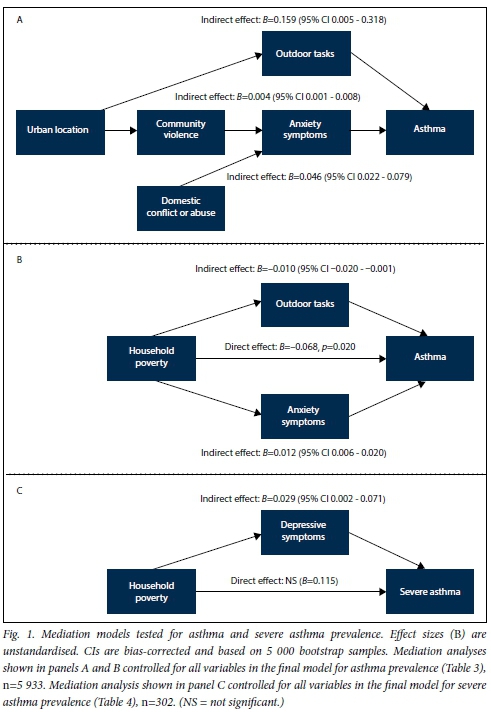
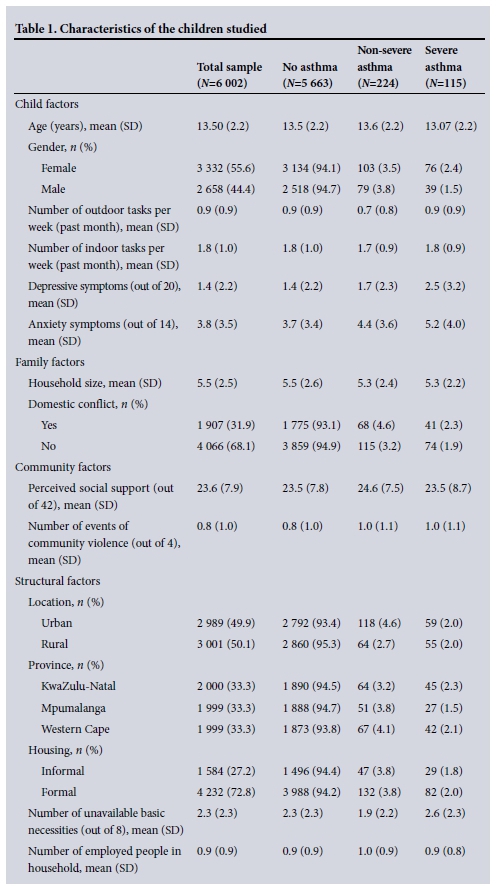
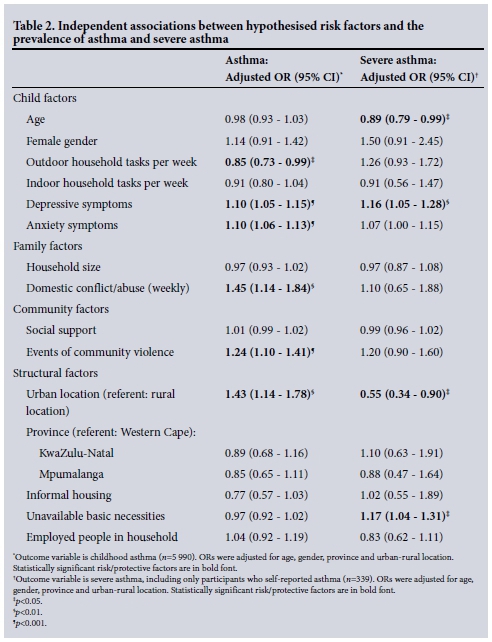
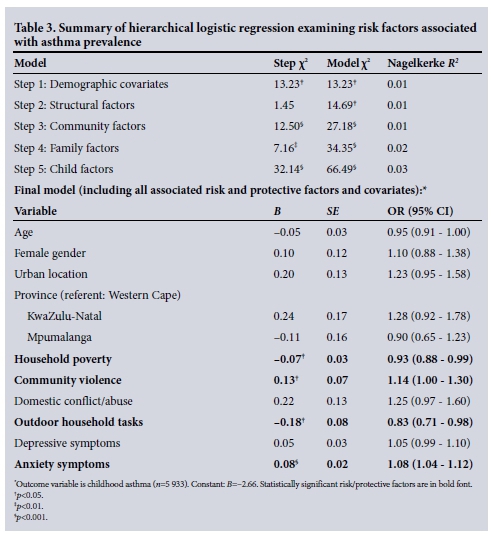
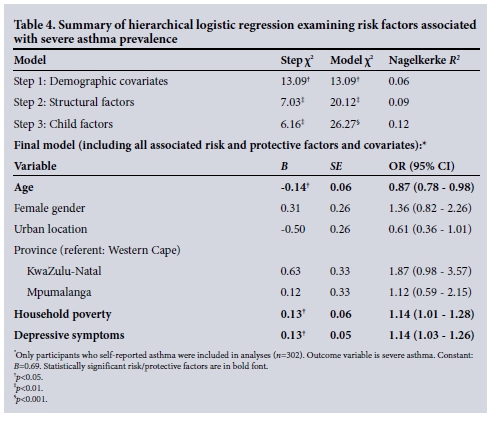
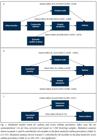
BACKGROUND: Rates of asthma, poverty and social deprivation are high among young people in South Africa (SA), yet asthma interventions largely remain focused on biomedical factors OBJECTIVE: To investigate associations between socioeconomic factors and childhood asthma METHODS: We recruited 6 002 children aged 10 - 17 years from six low-income urban and rural sites in three SA provinces. Self-report questionnaires measured health status, sociodemographics and socioeconomic factors. Logistic regression and mediation analyses were used to test models of risk factors for asthma prevalence and severity (frequency of attacks RESULTS: Child anxiety (odds ratio (OR) 1.08; 95% confidence interval (CI) 1.04 - 1.12) and community violence (OR 1.14; 95% CI 1.00 -1.30) were associated with increased odds of having asthma. Children doing more outdoor housework (OR 0.83; 95% CI 0.71 - 0.98) and living in greater poverty (OR 0.93; 95% CI 0.88 - 0.99) had lower odds of having asthma. Severe asthma was predicted by child depression (OR 1.14; 95% CI 1.03 - 1.26) and greater household poverty (OR 1.14; 95% CI 1.01 - 1.28). Most socioeconomic factors operated in 'risk pathways', wherein structural factors (e.g. urban living) were associated with individual factors (e.g. fewer outdoor tasks), which predicted greater odds of having asthma or severe exacerbations CONCLUSIONS: This study suggests the need to consider the context of childhood asthma in SA for improved prevention and treatment. A multidisciplinary approach may be more effective than a biomedical model, given the plausible effects of psychosocial stress and poverty on asthma outcomes
SAMJ: South African Medical Journal
 Thumbnail