Drivers' risk profile indicates the need for a graduated driving licence in South Africa
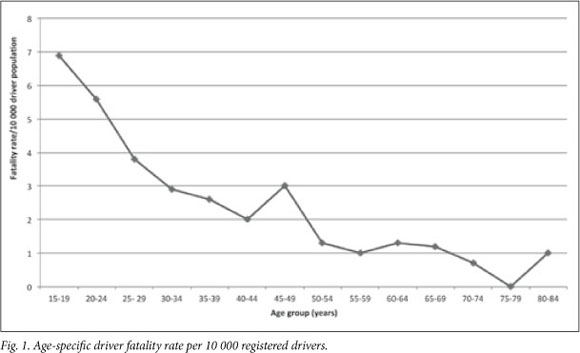
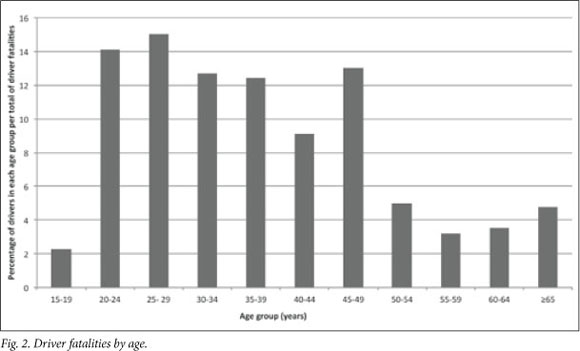
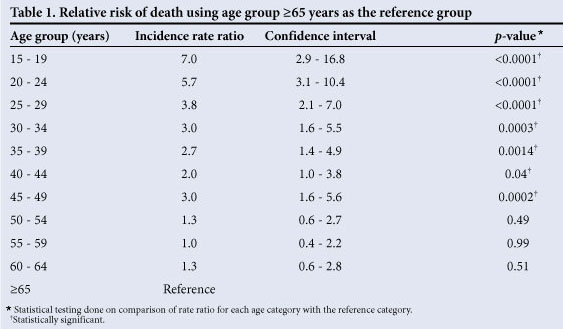
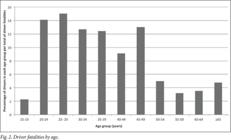
BACKGROUND: Current driver mortality estimates do not consider the great differences in exposure across the population, giving a false impression that driver deaths are lowest in the youngest age group. Interventions to reduce risk among the younger age group include graduated driver licensing (GDL) - a three-phase licensing system for novice drivers consisting of a learner's permit, a provisional license, and a full license. OBJECTIVES: We calculated driver fatality rates per 10 000 registered drivers in each age group and assessed the need for stricter licensing conditions for novice and younger drivers. METHODS: Age-specific driver mortality rates were calculated using Western Cape Province 2008 mortuary data. The total number of licensed drivers in each age group served as the denominator. Incidence rate ratios were calculated using the age group of 65 - 79 years as the reference. Chi-square test of trend on incidence rate ratios for the age groups was done. Statistical significance was set as p<0.05. RESULTS: There were 339 driver deaths; mean age was 39.4±13.8 years, and males accounted for 80% of the deaths. Age-specific driver mortality rates were highest in the youngest age group (15 -19 years). There was a significant progressive decrease (except for the age group 45 - 49 years) in the risk of death from road traffic injuries with increasing age compared with the age group >65 years (chi2 for trend p<0.0001). CONCLUSION: This study showed a relationship between driver's mortality risk and younger age, and underscores the need for introduction of a GDL programme in South Africa.
SAMJ: South African Medical Journal
 Thumbnail
 Thumbnail