Elevated unidentified antibodies in sickle cell anaemia patients receiving blood transfusions in Cape Town, South Africa
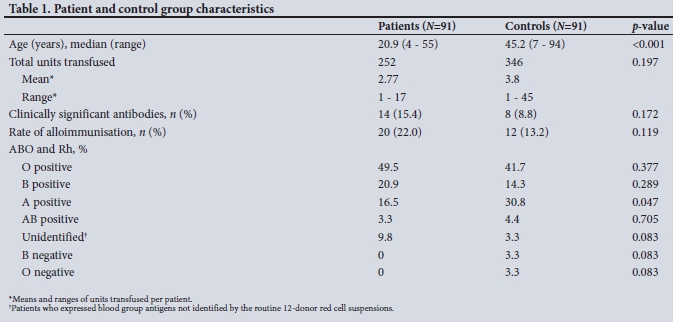
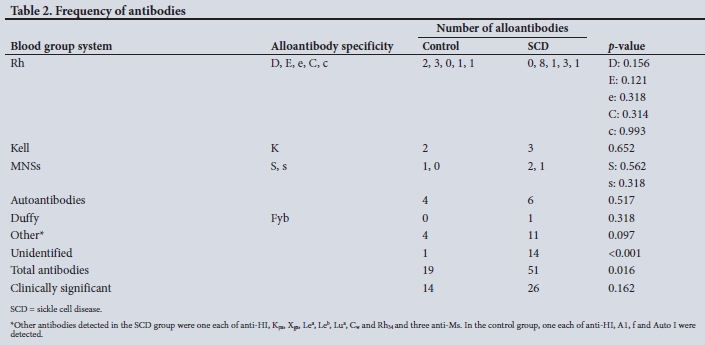
BACKGROUND. Sickle cell disease (SCD) is an inherited haemoglobinopathy in which homozygous individuals suffer from numerous complications including vaso-occlusion, infection and haemolytic anaemia. Patients therefore often require blood transfusions, which may lead to elevated levels of allogeneic antibodies. In South Africa (SA), the number of patients with SCD has risen significantly owing to migration and changing demographics, leading to an increased need for blood products.OBJECTIVES. Against the above background, to determine the incidence of alloimmunisation and the presence of clinically significant antibodies in SCD patients requiring transfusions in Cape Town, SA.METHODS. Information on SCD patients receiving blood products between 2010 and 2012, including demographics, number of units transfused and the presence and type of alloantibodies, was collected. The results were compared with those for non-SCD controls who had received a similar number of transfusions.RESULTS. Of 182 patients analysed, 91 had SCD. Twenty-two percent of the SCD patients and 13.2% of the controls had become alloimmunised (p=0.12), while the proportions of those receiving transfusions and acquiring clinically significant antibodies were similar between the two groups (p=0.17 and p=0.19, respectively). However, the total number and amount of unidentified antibodies were significantly increased in patients with SCD (p=0.02 and p<0.001, respectively).CONCLUSIONS. This study concluded that patients with SCD develop increased numbers of unidentified antibodies, which may be important in the selection of suitable donors.
SAMJ: South African Medical Journal