Patterns of seatbelt use in different socioeconomic communities in the Cape Town Metropole, South Africa
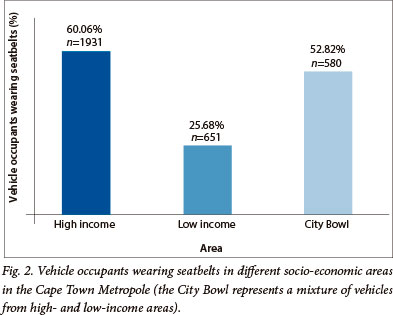
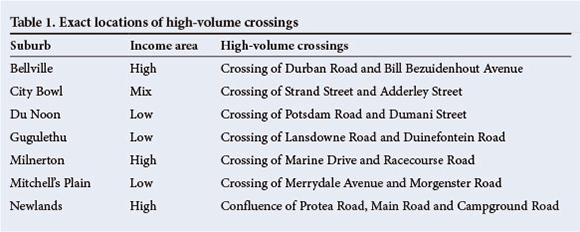
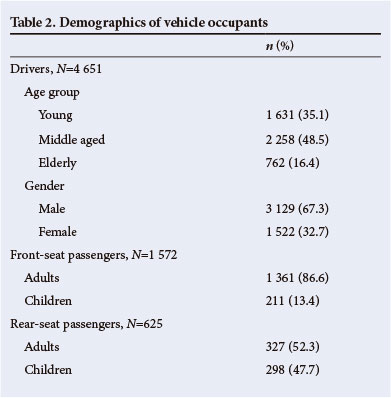
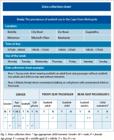
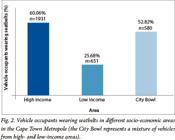
BACKGROUND: Road traffic injuries are a leading cause of death and may be related to social inequality. OBJECTIVE: To establish whether patterns of seatbelt use vary between different socioeconomic communities in the Cape Town Metropole, South Africa. METHODS: Vehicles and their occupants at 7 high-volume crossings (3 in high-income areas) were placed under surveillance for 2 hours each during November 2010. All occupants were eligible for inclusion except occupants of non-motorised vehicles, two-wheel motorised vehicles, buses, taxis, heavy goods vehicles and emergency vehicles. Child seatbelt use was recorded only for children who appeared older than 3 years. RESULTS: A total of 4 651 vehicles with 6 848 occupants were surveyed. Rates of seatbelt use were 45.1% (n=3 090) for all occupants, 54.0% (n=2 513) for drivers, 33.1% (n=521) for front-seat passengers (adults 33.2%, n=452; children 32.7%, n=69) and 9.0% (n=56) for rear-seat passengers (adults 4.0%, n=13; children 14.4%, n=43). Occupants from high-income areas were more likely to wear seatbelts (odds ratio (OR) 4.35; 95% confidence interval (CI) 3.89 - 4.88). Use of child restraints was poor overall (22.3%, n=114), but also varied according to income areas (high income 40.9%, n=99; low income 0.03%, n=6; OR 26.77; 95% CI 11.44 - 62.63). DISCUSSION: The impact of road traffic injuries is significant, but can be decreased by using appropriate restraining devices. Seatbelt use in South Africa, although compulsory, is neither strictly adhered to nor enforced. Their use is proportionally lower in lower-income areas. Specific interventions are required to target these communities directly.
SAMJ: South African Medical Journal
 Thumbnail
 Thumbnail