The usability of an electronic health record in a public healthcare facility in South Africa
BACKGROUND. An electronic health record (EHR) is a record of patient health information generated by encounters in healthcare delivery settings, and it plays a crucial role in the digital evolution of healthcare. EHRs, such as 'Patients Know Best' (PKB), are commonly used in health systems of developed countries, but are lacking in developing countries. Challenges and opportunities surrounding EHRs in Africa have been identified, but limited literature exists on how these factors may impact the practical use of digital health technologies within South Africa (SA). OBJECTIVES. To determine the usability of the PKB platform, as indicated by the patients and clinical staff registered on PKB at the Breast and Endocrine Surgery Clinic, Tygerberg Hospital (TBH). In addition, this study aimed to determine patients' and clinical staff's level of engagement with the PKB platform. Level of engagement was compared with a similar patient user group in the UK. METHODS. A prospective cohort study was conducted at the Breast and Endocrine Surgery Clinic, TBH. One hundred and fifty participants, including clinic patients and staff, were enrolled. Demographic information was collected at the time of recruitment, and a questionnaire measuring perceived PKB usability was administered electronically 6 weeks post enrolment. User engagement metrics were recorded during the study. Demographic and user engagement data from 49 patients using PKB in the UK were used for comparison purposes. Statistical analysis allowed for a description of the sample's demographics, a comparison of engagement levels between groups, an assessment of PKB platform usability and the identification of factors associated with completing the questionnaire. RESULTS. During the study period, 42% of SA participants registered on PKB, 26% logged in and 20% completed the usability questionnaire, for which an adequate PKB usability score was determined. The 45 - 54-year age group engaged most, with a maximum range of 11 - 20 logins recorded. The PKB feature most frequently accessed was the message/consultation feature. By comparison, almost all (96%) UK participants completed registration and logged in. The 55 - 64-year age group engaged most, with a maximum range of over 120 logins recorded. Laboratory results were the most frequently accessed feature. CONCLUSION. Implementing an EHR system such as PKB without necessary adaptations in the current SA public healthcare system environment is not feasible. Adaptations required include allowing patients access to the EHR system without an email address, integrating the EHR system with existing information technology infrastructure and streamlining hospital digital notes with EHR systems to enhance patient engagement and reduce healthcare worker burden.
electronic health record; usability; implementation; engagement; user experience; low; - and middle-income countries
The usability of an electronic health record in a public healthcare facility in South Africa
D de VilliersI; L MartinII; V BeekaI; M IsmailI; S MdletsheI; N MongaloI; N MpondaI; W ConradieIII; M Al-UbaydliIV; M XenouV; J EdgeVI
IMB ChB; Division of Surgery, Faculty of Medicine and Health Sciences, Stellenbosch University, Cape Town, South Africa
IIPhD; Division of Surgery, Faculty of Medicine and Health Sciences, Stellenbosch University, Cape Town, South Africa
IIIMB ChB, MMed (Surg); Division of Surgery, Faculty of Medicine and Health Sciences, Stellenbosch University, Cape Town, South Africa
IVMB BChir; Patients Know Best, St John's Innovation Centre, Cambridge, UK
VMSc, BSc; Patients Know Best, St John's Innovation Centre, Cambridge, UK
VIMMed (Surg), PRCS (Edin); Endocrine and Breast Division, Department of General Surgery, University of the Witwatersrand, Johannesburg, South Africa
BACKGROUND. An electronic health record (EHR) is a record of patient health information generated by encounters in healthcare delivery settings, and it plays a crucial role in the digital evolution of healthcare. EHRs, such as 'Patients Know Best' (PKB), are commonly used in health systems of developed countries, but are lacking in developing countries. Challenges and opportunities surrounding EHRs in Africa have been identified, but limited literature exists on how these factors may impact the practical use of digital health technologies within South Africa (SA).
OBJECTIVES. To determine the usability of the PKB platform, as indicated by the patients and clinical staff registered on PKB at the Breast and Endocrine Surgery Clinic, Tygerberg Hospital (TBH). In addition, this study aimed to determine patients' and clinical staff's level of engagement with the PKB platform. Level of engagement was compared with a similar patient user group in the UK.
METHODS. A prospective cohort study was conducted at the Breast and Endocrine Surgery Clinic, TBH. One hundred and fifty participants, including clinic patients and staff, were enrolled. Demographic information was collected at the time of recruitment, and a questionnaire measuring perceived PKB usability was administered electronically 6 weeks post enrolment. User engagement metrics were recorded during the study. Demographic and user engagement data from 49 patients using PKB in the UK were used for comparison purposes. Statistical analysis allowed for a description of the sample's demographics, a comparison of engagement levels between groups, an assessment of PKB platform usability and the identification of factors associated with completing the questionnaire.
RESULTS. During the study period, 42% of SA participants registered on PKB, 26% logged in and 20% completed the usability questionnaire, for which an adequate PKB usability score was determined. The 45 - 54-year age group engaged most, with a maximum range of 11 - 20 logins recorded. The PKB feature most frequently accessed was the message/consultation feature. By comparison, almost all (96%) UK participants completed registration and logged in. The 55 - 64-year age group engaged most, with a maximum range of over 120 logins recorded. Laboratory results were the most frequently accessed feature.
CONCLUSION. Implementing an EHR system such as PKB without necessary adaptations in the current SA public healthcare system environment is not feasible. Adaptations required include allowing patients access to the EHR system without an email address, integrating the EHR system with existing information technology infrastructure and streamlining hospital digital notes with EHR systems to enhance patient engagement and reduce healthcare worker burden.
Keywords: electronic health record, usability, implementation, engagement, user experience, low- and middle-income countries
The healthcare sector is experiencing a surge of interest in the use of digital technology.[1] Artificial intelligence, telemedicine and wearables have the potential to transform patient care, and prompt questions about the future of healthcare.[2] Developed countries with advanced healthcare systems have been at the forefront of digital health innovations, and despite many digital health technologies being introduced in developing countries, there remain significant disparities to overcome.[3-6] Recognising this issue, various articles have assessed the challenges and opportunities for digital health implementation, as well the user experience of these platforms from the clinician's perspective, particularly in the context of Africa.[5-7] However, there is a dearth of literature on how these factors impact the practical use of digital health technologies, and a patient-oriented digital health record platform specifically within the South African (SA) setting.
Electronic health records (EHRs), longitudinal electronic records containing patient health information, aim to streamline clinician workflows, engage patients in their healthcare and result in higher satisfaction with healthcare.[8] Other potential benefits of EHRs include reducing healthcare costs and facilitating large-scale data collection and analysis.[9] Factors that may influence successful EHR implementation and use can be broadly divided into social, technical and environmental factors.[5,6,9] In SA, the National Health Act 61 of 2003 outlines the implementation of a national EHR; however, significant challenges remain.[10,11]
'Patients Know Best' (PKB) is a European personal health-record platform with 4.3 million registered patients. Subscribers can collate their health information, share it with different practitioners and connect with their healthcare professionals. In the UK's National Health Service, for example, PKB consolidates data from various healthcare providers, including data entered by patients, into a unified patient record. This offers patients online access to self-manage their health, and aids healthcare professionals in decision-making and care management.[12]
Given that previous research has shown that EHRs have the potential to improve healthcare service delivery and patient care and outcomes,[13,14] this medical student-led study aimed to assess patient and clinic staff engagement with PKB (i.e. login frequency and features used) and compare this engagement with that of a similar patient user group in the UK. In addition, this study aimed to determine the PKB's platform usability (i.e. ease of use via an online questionnaire) as reported by patients and clinic staff registered on PKB in a resource-constrained environment. Factors associated with completion of the usability questionnaire (i.e. demographics, computer/internet access and behaviour around the use of smartphones, laptops and the internet) were also explored. Findings highlight challenges associated with the implementation of EHRs in public healthcare facilities in SA that may aid in facilitating the future implementation of suitable EHR systems in lower-income public healthcare settings.
To our knowledge, this is the first study in SA to evaluate the use of an international patient-driven EHR platform in the tertiary state system.
Methods
Study design, setting and sample
This was a prospective cohort study led by medical students that included patients attending the Breast and Endocrine Surgery Clinic at Tygerberg Hospital (TBH), Cape Town, SA, and clinic staff working within the unit. Patients were recruited between November 2022 and September 2023. Inclusion criteria were patients >18 years old, the ability to independently provide written informed consent, fluency in English, Afrikaans, or isiXhosa, and having access to an email address (i.e. either a family member's email address or their own). Clinic staff were eligible for inclusion if they currently worked in the clinic.
Study procedures
Patients attending the clinic
To encourage registration of patients on PKB, an infographic video explaining what PKB is and how it works was displayed on a television screen in the clinic's waiting room. The video was available in three languages (English, Afrikaans and isiXhosa) to ensure inclusivity. The patients were approached by medical students (who assisted part-time) who invited them to participate in the study. The purpose of the PKB platform was fully explained, a short run-through of the platform was performed and the features of PKB were explained to the patients interested in participating in the study. Those willing to participate provided written informed consent and were registered on the PKB platform. The clinic was equipped with free Wi-Fi, ensuring patient and medical student/ research team access to the PKB platform for completion of PKB registration. Sponsorship from PKB allowed patients to access the platform without the hospital incurring any cost.
Upon registration on PKB, participants were required to enter their name, surname, contact details, home address, the healthcare teams that could access their profile, security questions and passwords. Once completed, they were able to access content uploaded by the clinic and upload their own health information, if interested.
Clinic staff
The study was explained to the consultants and the medical officers working in the clinic. All three permanent staff members participated in the study. Thereafter, the clinic staff were registered on the PKB platform, and received a short run-through of the platform and its associated features.
Recruitment ended once 150 participants were successfully registered on the PKB platform.
Six weeks after PKB registration, patients and clinic staff were invited, via the PKB platform, to complete an online questionnaire to assess PKB usability.
Measures
After written informed consent was obtained, a demographic questionnaire (available in English, Afrikaans and isiXhosa) was administered by the medical students to both patients and clinic staff. Demographic information collected was age, sex, level of education, area of residence, level of comfort using computers/ laptops and smartphones, access to computers, laptops and smartphones and internet connectivity, frequency of accessing the internet during the week and use of the internet to search for health-related information. The demographic questionnaire administered to the clinic staff was similar to that administered to the patients, with the addition of job title, number of years worked in the field of medicine and years worked in the Breast and Endocrine Surgery Clinic. It excluded questions linked to their area of residence and use of the internet to search for health-related content.
PKB platform usability
The system usability scale (SUS) has been cited as the most commonly used tool to evaluate the perceived usability of e-health services.[15,16] In the current study, the positive version of the SUS was utilised. This version comprises statements scored from 1 - 5, with higher scores reflecting a higher degree of usability.[17] In the positive version, all statements are written in a positive tone, v. the original version in which statements are written in alternating positive and negative tones.[17] Rewording the SUS has no significant effect on resulting scores.[17]
Usability scores and associated percentile scores were calculated as per the developer's scoring guidelines.[17] A percentile score of 68 and above indicates that the system is indeed usable.[16] Various studies have shown the SUS to be reliable, valid, and sensitive.[17] Within the e-health industry, the SUS should not be used as a stand-alone usability benchmark and measures of engagement, such as task-completion rates, should also be evaluated.[18]
PKB platform engagement
To complement the SUS, PKB provided aggregated data on PKB engagement for the period that patients and clinic staff used the platform. In addition, for comparative purposes, PKB processed and provided data associated with a UK patient group that was similar in terms of the length of time patients had been registered on PKB (6 weeks), and used an email address as the only method of finalising PKB registration. The data were obtained from health facilities in the UK that permit PKB to process and transfer data.
The data collected were the following: patient registration (total number of profiles created, total number of profiles registered by patients, total number of profiles not registered by patients, sex and age at registration, patient login activity and data accessed (the type of data that were accessed by patients). Cumulative logins refers to the total number of logins across all users within a given period. Individual logins, on the other hand, track the number of active users regardless of whether they log in once or multiple times. PKB was unable to provide data on detailed individual logins per patient registered.
Study data were captured and managed using REDCap (Research Electronic Data Capture) electronic data capture tools hosted at Stellenbosch University. REDCap is a secure, web-based software platform designed to support data capture for research studies, providing (i) an intuitive interface for validated data capture; (ii) audit trails for tracking data manipulation and export procedures; (iii) automated export procedures for seamless data downloads to common statistical packages; and (iv) procedures for data integration and interoperability with external sources.[19,20] All data were de-identified, and accessible only to the research team. A total sample size of 150 was deemed adequate to draw conclusions from the data.
Statistical analysis
Statistical analysis aimed to describe the demographic characteristics of the sample, describe and compare engagement levels between two distinct groups and determine PKB platform usability and factors associated with the completion of the usability questionnaire. Data analysis was conducted using SPSS Statistics version 29 (IBM, USA). Descriptive statistics (mean, standard deviation (SD) and range) were used for continuous variables such as age. Frequencies and percentages were used for categorical variables such as sex, education level, technological literacy and access. Descriptive statistics were computed for the questionnaire responses and PKB usability scores, and associated percentiles were calculated as per the developer's scoring guidelines. Factors associated with the completion of the usability questionnaire (completed: yes/no) were assessed using Student's t-test and χ2
Ethical considerations
This study was approved by the Health Research Ethics Committee of Stellenbosch University (ref no. N22/08/092) and Tygerberg Hospital management (ref. no. WC_202209_034).
Results
Demographic characteristics of patients and clinic staff
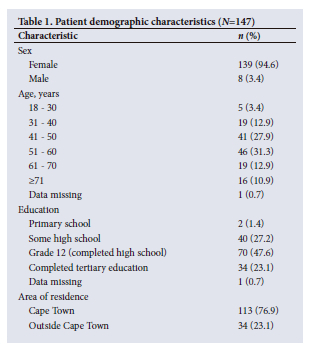
A total of 150 participants (147 patients and 3 clinic staff) were included in the study (see Table 1). Due to missing data across some data points of interest, total numbers varied. In terms of the patients, the majority (94.6%) were female, and the mean (SD) age was 52.89 (12.07) years (range 26 - 81), with a substantial portion (84%, 122/146) aged >40 years (Table 1). More than seventy percent (71.2%, 104/146) had completed grade 12 or had some form of tertiary education. Over three-quarters (76.9%) resided within the Cape Town area. Unpublished data suggest that this is broadly representative of the patient profile of the Breast and Endocrine Surgery Clinic.
Over 70% (71.9%, 105/146) indicated that they were 'comfortable' or 'completely comfortable' using a computer or laptop, and 86.9% (126/145) said that they were 'comfortable' or 'completely comfortable' using a smartphone. Over two-thirds (67.6%, 98/145) indicated that they had access to a computer or laptop at home, and 98.6% (145/147) had access to a smartphone. The vast majority (96.6%, 142/147) accessed the internet between 1 and 7 days per week, and 81% (119/147) most often used the internet at home. Almost three-quarters (74.5%, 105/141) used the internet to look up health-related information.
The clinic staff were female medical officers, with a mean (SD) age of 40.33 (10.07) years (range 31 - 51). They had worked in the unit for an average of 4.58 years. All indicated that they were 'comfortable' using a computer or laptop and either 'comfortable' (66.7%) or 'completely comfortable' (33.3%) using a smartphone. They all had access to a smartphone, a computer or laptop, and had internet access at home, with the internet commonly accessed at home. All clinic staff accessed the internet between 5 and 7 days per week.
Engagement
South African sample
Patients
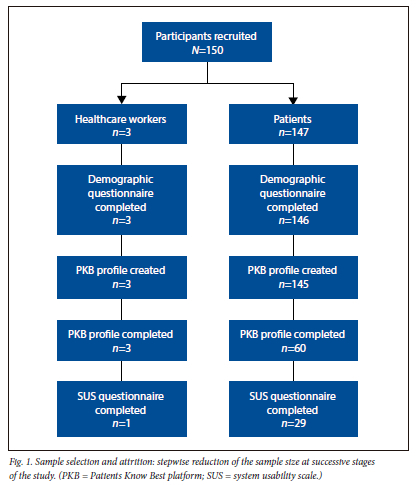
Of the 147 patients included in the study, 145 patient profiles were successfully created (Fig. 1). Of the 145 patients with successfully created profiles, 41% (60/145) completed the registration process at a place that was convenient for them (at home or in the clinic), and were subsequently able to engage with the platform.

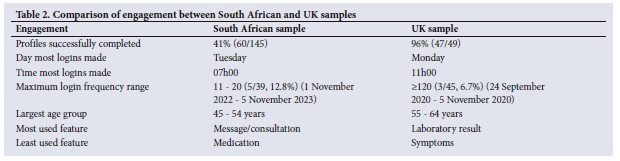
Most logins were made on a Tuesday (33 cumulative logins and 20 individual logins), and logins peaked at 07h00 (16 cumulative logins and 11 individual logins) (Table 2). Around one-third (31%, 19/60) of patients logged in between 2 and 3 times, and almost a fifth (23%, 14/60) logged in 6 -10 times during the study period. Almost two-thirds (65%, 39/60) of patients who completed the registration process logged in. Of those who completed registration, 30% (18/60) were between the ages of 45 and 54 years, 30% (18/60) were between the ages of 55 and 64 years, 21.7% (13/60) were between the ages of 35 and 44 years, 13% (8/60) were aged >65 years, and 5% (3/60) were between the ages of 25 and 34 years.
The feature patients accessed most frequently during the study period was the 'message/consultation' section (93 cumulative logins). The 'journal' feature (where patients could add their own notes and keep a diary of certain symptoms) was used occasionally (11 cumulative logins). The feature used least over the study period was the 'medication' feature.
Clinic staff
All three clinic staff members completed the registration process. Despite completing their profiles, the clinic staff did not log in and engage with the platform.
UK sample
Almost all (96%, 47/49) UK patients completed the registration process and were able to engage with the platform.
Most logins were made on a Monday (128 cumulative logins and 28 individual logins), and logins peaked at 11h00 (64 cumulative logins and 20 individual) (Table 2). In addition, 30% of patients (14/47) logged in between 81 and 120 times, and 21% (10/47) 41 to 80 times. All patients engaged with the PKB platform once registered. Of those who completed registration and provided date of birth, 35.6% (16/45) were between the ages of 55 and 64 years, 24.4% (11/45) were between the ages of 45 and 54 years, 24.4% (11/45) were between the ages of 35 and 44 years, 6.7% (3/45) were aged >65 years, 4.4% (2/45) were between the ages of 25 and 34 years, and 4.4% (2/45) were between the ages of 18 and 24 years.
The features that patients accessed the most during the 3-month period (v. our total study period) were the 'laboratory result' feature (247 cumulative logins) and the 'message/ consultation' feature (200 cumulative logins).
Usability
Of the 63 SA participants (60 patients and 3 clinic staff members) who completed their PKB registration, 30 (47.6%; 29 patients and 1 clinic staff member) completed the online usability questionnaire 6 weeks post registration. A median (interquartile range (IQR)) usability score of 72.5 (62.5 - 82.5) was determined, placing PKB usability within the 64th percentile.
There was a significant association between SUS completion and level of comfort using a laptop or computer (p<0.05). Compared with those who indicated that they were comfortable or neutral in terms of using a laptop or computer, none of the patients who indicated that they were uncomfortable using a computer or laptop completed the SUS (Table 3). In addition, a significant association was determined between SUS completion and whether or not patients had access to a computer or laptop at home (p<0.05). Of those who completed the SUS, more indicated that they had access to a computer or laptop at home than those who did not (82.8% v. 13.8%). There was no association between SUS completion (yes/no) and age, sex, educational level, area of residence, level of comfort using a smartphone, access to a smartphone, frequency of use of the internet, where the internet was used or accessed and use of the internet to search for health information (p>0.05).
Discussion
Most (84%) patients were female and aged >40 years, an expected demographic in the Breast and Endocrine Surgery Clinic. Most had a good basic education and reported being confident using digital technology. The majority tended to use smartphones and computers on a near-daily basis. Patients showed interest in their health, with three-quarters using the internet to search for health-related information. The above findings suggest that most patients had some degree of experience and comfort in using digital technologies.
The comparison of our patient sample with a UK sample showed large differences in PKB engagement despite receiving a reasonable usability score of 72.5. This supports the finding that the SUS score alone cannot reasonably be used to benchmark the usability of a given e-health product, despite it being the most widely used measure.[18]
During the study, various factors, broadly divided into 'patient factors' and 'clinic factors', impacted the implementation and engagement with PKB.
Patient factors
Access
To complete the registration process and subsequently access or use the PKB platform, patients need to have internet access, access to a working/active email address and an internet device such as a smartphone. In the UK, these requirements are relatively easy to fulfil, with the majority of web applications, globally, using email addresses for the creation of profiles. However, in the current SA study, most patients attending the clinic were unable to participate in the study owing to not having access to an email address.
We found that those who completed the SUS questionnaire were more likely to have access to a computer at home and to feel more comfortable using a computer. Literature in high-income countries has shown that the tendency to complete a survey was lower among users of mobile devices than users of personal computers.[21] We were unable to investigate further whether PKB in our study was more likely to be accessed on a personal computer v. a mobile device.
Profile completion
Once a patient's PKB profile was created, an automated email invitation from the PKB platform was sent to the patient requesting the creation of a password in order for the patient to gain access to their PKB account/platform. Less than half (41%) of the patients in the current study completed this step (profile completion), compared with 96% of patients in the UK. Possible reasons for the non-activation/completion of profiles include the perceived effort to complete the profile (creating passwords and security questions), no longer being interested in making use of PKB, not currently having access to an email inbox and not regularly accessing an email account.
Limited PKB engagement
In comparison with their UK counterparts, the SA patient group logged onto PKB considerably less often, with most logins occurring shortly after successful account activation. The SA patient group commonly accessed the 'message/consultation' feature to review their clinical notes, but rarely accessed other PKB features. PKB engagement evidently decreased thereafter. In contrast, the UK participants accessed features such as laboratory results, and continued logging in frequently thereafter.
Taken together, findings suggest that PKB platform engagement may be dependent on the content uploaded to a patient's profile by the medical facility (nurses and/or doctors and other healthcare professionals), which can be found on their profile (i.e. medical notes, messages from clinic staff, laboratory results, etc.), and how regularly new content is uploaded. As the SA sample only received a once-off medical summary uploaded to their PKB profile from their consultation at an isolated clinic, their engagement can be expected to be low. This supports Meskó et al.'s[22] idea that innovation in the realm of digital health will require a partnership between the professional and the patient to be successfully implemented.
Clinic factors
Conflicting work modalities
TBH uses a paper-based system to record clinical notes. These paper notes are sent to a facility where they are scanned and uploaded onto a digital database for future reference. It may, however, take multiple weeks before the notes are digitally accessible on the hospital network.
As the paper system is the dominant method of recording notes during consultations, integrating a digital platform such as PKB and requiring doctors to rewrite their clinic notes meant increasing the workload at an already overburdened clinic. This problem was partially solved by scanning the paper documents and uploading them onto patients' PKB profiles before sending them to archives. However, this method required the services of an additional staff member in the clinic to assist with the uploading of notes. Occasionally, notes were sent to be archived before being uploaded onto the PKB platform.
As healthcare workers did not rewrite the consultation notes on PKB or upload scanned notes onto PKB themselves, their exposure to PKB was limited to completing their profiles.
Isolated integration
As the imaging and laboratory systems of the hospital are not integrated within the PKB platform, as in the UK, the usefulness of PKB for the clinician and the patient was limited.
Infrastructure
TBH provides clinicians access to computers in the clinics to use certain websites and applications. However, for network security reasons, PKB was blocked from being accessed on these computers, prompting the installation of study-specific Wi-Fi routers to allow for internet access on devices used by study staff. These challenges reflect common issues within public healthcare facilities, namely suboptimal infrastructure and system interoperability.[23]
Recommendations
For the results to be more representative of a diverse population, future studies could contribute to the literature by identifying other facilities within SA where similar studies can be implemented. This will assist with increasing sample size and identifying other barriers in regions different to those of a metro in the Western Cape Province.
As shown, it would be ideal for future studies to continue using subjective questionnaires in addition to objective user statistics for accurate evaluation of future digital health projects. Lastly, we would like to recommend that a study be designed that can address the hypothesis that content provided by the healthcare worker or hospital will drive engagement of the patient, as this may be crucial to the success of patient-oriented digital health projects.
Study limitations
A number of study limitations should be noted, and findings must be viewed within the context of these limitations.
This was a single-site study, and findings may not be generalisable to other healthcare facilities or patient populations.
As evident from the results, a substantial reduction in patient numbers was observed with each stage of the study. While this accurately reflects the potential challenges in a real-world scenario, it resulted in relatively few patients completing the usability questionnaire, despite a relatively substantial portion completing registration and logging onto the platform. Participants' home language was not captured, and this could potentially have influenced the study outcomes as the PKB platform was only available in English. Lastly, among the consultants and medical officers working in the clinic, only three permanent staff members participated in the study, with their exposure to PKB limited to profile completion. As such, only limited data were available in terms of their PKB usage.
Conclusion
The study findings suggest that an EHR system such as PKB, implemented in its current form without necessary context-specific adaptations, is not usable within the current public healthcare system environment. Necessary adaptations required to address implementation challenges are: (i) allowing patients to create profiles and access the system without the need for an email address; (ii) integration with current information technology infrastructure and systems in use at hospitals; and (iii) the implementation of digital/electronic notes streamlined with EHR systems, aiding patient engagement and decreasing the burden on healthcare workers currently using paper notes.
Data availability. De-identified data will be made available upon reasonable request from the principal investigator.
Declaration. None.
Acknowledgements. The Breast and Endocrine Surgery Clinic at Tygerberg Hospital would like to thank the PKB team for providing this project with access to their platform, and with technical and data capturing support. We would like to thank the hospital management at TBH for allowing us to undertake this project at their facility. Lastly, we would like to thank the patients and clinic staff who took part in the study and allowed us to gain valuable insights into the use of digital platforms within our setting.
Author contributions. DdV: managed data collection, data collection, contributed to data analysis and interpretation, wrote the first draft and revised further drafts, reviewed and approved the final manuscript. LM: project administration, data management, analysis, and interpretation, reviewed drafts, supervised, reviewed and approved the final manuscript. VB, MI, SM, NMo, NMp, WC: data collection, reviewed manuscript, reviewed and approved the final manuscript. MA-U: conceptualisation, study design, reviewed manuscript, reviewed and approved the final manuscript. MX: data acquisition, reviewed manuscript, reviewed and approved the final manuscript. JE: conceptualisation, study design and methodology, supervised, reviewed drafts, reviewed and approved the final manuscript.
Funding. None.
Conflicts of interest. None.
References
-
1. Senbekov M, Saliev T, Bukeyeva Z, et al. The recent progress and applications of digital technologies in healthcare: A review. Int J Telemed Applications 2020:1-18. https://doi.org/10.1155/2020/8830200
» https://doi.org/10.1155/2020/8830200 -
2. Stoumpos AI, Kitsios F, Talias MA. Digital transformation in healthcare: Technology acceptance and its applications. Int J Environmental Res Public Health 2023;20(4):3407. https://doi.org/10.3390/ijerph20043407
» https://doi.org/10.3390/ijerph20043407 -
3. Pendrakowska P. Inequity pandemic: The lost generation of the digital transformation. Oberserver Research Foundation, 2021. https://www.orfonline.org/expert-speak/inequity-pandemic (accessed 7 July 2024).
» https://www.orfonline.org/expert-speak/inequity-pandemic -
4. Holst C, Sukums F, Radovanovic D, Ngowi B, Noll J, Winkler AS. Sub-Saharan Africa - the new breeding ground for global digital health. Lancet Dig Health 2020;2(4):e160-e162. https://doi.org/10.1016/S2589-7500(20)30027-3
» https://doi.org/10.1016/S2589-7500(20)30027-3 -
5. Woldemariam MT, Jimma W. Adoption of electronic health record systems to enhance the quality of healthcare in low-income countries: A systematic review. BMJ Health Care Inform 2023;30(1):e100704. https://doi.org/10.1136/bmjhci-2022-100704
» https://doi.org/10.1136/bmjhci-2022-100704 -
6. Kaboré SS, Ngangue P, Soubeiga D, et al. Barriers and facilitators for the sustainabilitty of digital health interventions in low and middle-income countries: A systematic review. Frontiers Digital Health 2022;4:014375. https://doi.org/10.3389/fdgth.2022.1014375
» https://doi.org/10.3389/fdgth.2022.1014375 -
7. Gumede S, Dyers R. User experience of an electronic medical record: A cross-sectional study in the public health sector of the Western Cape, South Africa. J Health Inform Afr 2024;11(2):1-16. https://doi.org/10.12856/JHIA-2024-v11-i2-491
» https://doi.org/10.12856/JHIA-2024-v11-i2-491 - 8. Weeks RV Electronic health records: Managing the transformation from a paper-based to an electronic system. J Contemp Manage 2013;10:135-155.
-
9. Katurura MC, Cilliers L. Electronic health record system in the public health care sector of South Africa: A systematic literature review. Afr J Primary Health Care Fam Med 2018;10(1):1-8. https://doi.org/10.4102/phcfm.v10i1.1746
» https://doi.org/10.4102/phcfm.v10i1.1746 -
10. Genesis Centre for Health Policy. Evaluation of the phase 1 implementation of the interventions in the National Health Insurance pilot districts in South Africa: Final evaluation report. Genesis, July 2019. https://www.genesis-analytics.com/projects/evaluating-nhi-phase-1-implementation-for-department-of-health (accessed 9 February 2022).
» https://www.genesis-analytics.com/projects/evaluating-nhi-phase-1-implementation-for-department-of-health -
11. Kattuu S. Transforming South Africa's health sector: The eHealth Strategy, the implementation of electronic document and records management systems (EDRMS) and the utility of maturity models. J Sci Technol Policy Manage 2016;7(3):330-345. https://doi.org/10.1108/JSTPM-02-2016-0001
» https://doi.org/10.1108/JSTPM-02-2016-0001 -
12. Patients Know Best. Patients Know Best, 2024. https://patientsknowbest.com/ (accessed 7 July 2024).
» https://patientsknowbest.com/ -
13. Adeniyi AO, Arowoogun JO, Chidi R, Okolo CA, Babawarun O. The impact of electronic health records on patient care and outcomes: A comprehensive review. World J Advanced Res Rev 2024;21(2):1446-1455. https://doi.org/10.30574/wjarr.2024.21.2.0592
» https://doi.org/10.30574/wjarr.2024.21.2.0592 -
14. Enahoro QE, Ogugua JO, Anyanwu EC, Akomolafe O, Odilibe IP, Daraojimba AI. The impact of electronic health records on healthcare delivery and patient outcomes: A review. World J Advanced Res Rev 2024;21(2):451-460. https://doi.org/10.30574/wjarr.2024.21.2.0478
» https://doi.org/10.30574/wjarr.2024.21.2.0478 -
15. Hajesmaeel-Gohari S, Khordastan F, Fatehi F, Samzadeh H, Bahaadinbeigy K. The most used questionnaires for evaluating satisfaction, usability, acceptance, and quality outcomes of mobile health. BMC Medical Inform Decision Making 2022;22(1):1-9. https://doi.org/10.1186/s12911-022-01764-2
» https://doi.org/10.1186/s12911-022-01764-2 -
16. Brooke J. SUS: A 'quick and dirty' usability scale. In: Jordan PW, Thomas B, McClelland IL, Weerdmeester B, eds. Usability Evaluation in Industry. London: CRC Press, 1996:207-212. https://doi.org/10.1201/9781498710411-35
» https://doi.org/10.1201/9781498710411-35 -
17. Sauro J, Lewis JR. Standardised usability questionnaires. In: Sauro J, Lewis JR. Quantifying the User Experience. Burlington: Morgan Kaufmann, 2012;185-240. https://doi.org/10.1016/b978-0-12-384968-7.00008-4
» https://doi.org/10.1016/b978-0-12-384968-7.00008-4 -
18. Broekhuis M, van Velsen L, Hermens H. Assessing usability of eHealth technology: A comparison of usability benchmarking instruments. Int J Med Inform 2019;128:24-31. https://doi.org/10.1016/j.ijmedinf.2019.05.001
» https://doi.org/10.1016/j.ijmedinf.2019.05.001 -
19. Harris PA, Taylor R, Thielke R, Payne J, Gonzalez N, Conde JG. Research electronic data capture (REDCap) - a metadata-driven methodology and workflow process for providing translational research informatics support. J Biomed Inform 2009;42(2):377-381. https://doi.org/10.1016/j.jbi.2008.08.010
» https://doi.org/10.1016/j.jbi.2008.08.010 -
20. Harris PA, Taylor R, Minor BL, et al. The REDCap consortium: Building an international community of software partners. J Biomed Inform 2019;95:103208. https://doi.org/10.1016/j.jbl2019.103208
» https://doi.org/10.1016/j.jbl2019.103208 -
21. Schlosser S, Mays A. Mobile and dirty: Does using mobile devices affect the data quality and the response process of online surveys? Soc Sci Computer Rev 2018;36(2):212-230. https://doiorg/10.1177/0894439317698437
» https://doiorg/10.1177/0894439317698437 -
22. Meskó B, Drobni Z, Bényei É, Gergely B, Györffy Z. Digital health is a cultural transformation of traditional healthcare. MHealth 2017;3:31-38. https://doi.org/10.21037/mhealth.2017.08.07
» https://doi.org/10.21037/mhealth.2017.08.07 -
23. Katurura MC, Cilliers L. Electronic health record system in the public health care sector of South Africa: A systematic literature review. Afr J Prim Health Care Fam Med 2018;10(1):1-8. https://doi.org/10.4102/phcfm.v10i1.1746
» https://doi.org/10.4102/phcfm.v10i1.1746

Accepted 8 July 2025