Use of vaccines as a key antimicrobial stewardship strategy
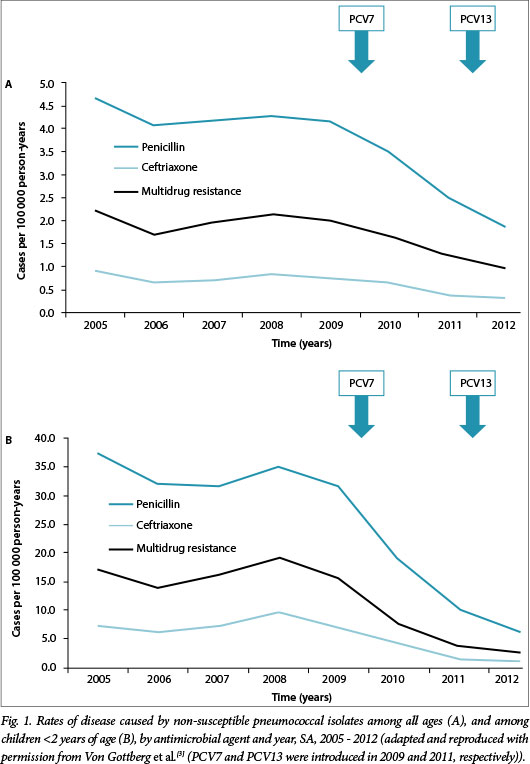
Vaccination may prevent bacterial infections and decrease the potential for transmission. Some effective vaccines may reduce bacterial colonisation and exposure to antimicrobials by minimising the spread of resistant strains; in this regard, a substantial indirect immunity has been demonstrated that protects unvaccinated members of society. One of the best documented examples of the crucial role of vaccination has been an adjunct to an antimicrobial stewardship programme. Pneumococcal conjugate vaccines (PCVs), for example, target the most virulent pneumococcal serotypes, which are linked to invasive disease and associated with antibiotic resistance. In this regard, recent local data highlight the remarkable impact of the sequential introduction of 7- and 13-valent PCV (PCV7/PCV13) on the incidence of penicillin-, ceftriaxone- and multidrug-resistant pneumococcal infections in South Africa in only 4 years. Equally impressive have been vaccines directed towards viruses such as influenza, which also have direct and indirect effects on antibiotic consumption.
Continuing Medical Education • SAMJ, S. Afr. med. j. 105
(5)
• • https://doi.org/10.7196/SAMJ.9651 copy
 Thumbnail