Surgical complications of bacille Calmette-Guérin (BCG) infection in HIV-infected children: Time for a change in policy?
AIM: Bacille Calmette-Guérin (BCG) immunisation is well established as part of the South African national expanded programme for immunisation (EPI). The World Health Organization (WHO) currently recommends that BCG be given to all asymptomatic infants irrespective of HIV exposure at birth but does not recommend BCG vaccination for children with symptomatic HIV infection. This approach, however, has led to HIV-infected neonates who are asymptomatic at birth, developing severe vaccine-related complications. We present a surgical case series, representative of a minority of the cases in circulation, in support of a change to the timing of BCG administration to HIV-exposed neonates. METHODS: A case series of 17 HIV-infected patients with surgical complications of BCG vaccination. RESULTS: Seventeen patients are presented. The first two illustrate disseminated systemic BCG infection, resulting in BCG infection of the lymph nodes, liver, spleen and tibia, and the second with gastrointestinal involvement causing bowel obstruction. The other 15 patients represent a series of severe ulcerating lymphadenitis secondary to BCG. CONCLUSION: The risks of BCG in HIV-infected infants are significant. Current recommendations are not satisfactory, and a change in policy is required to prevent the harmful effects of this vaccine in a high-risk group of patients. We believe that there is sufficient need to adequately stratify patients and vaccinate them according to a protocol that takes impaired immunity into consideration.
Surgical complications of bacille Calmette-Guérin (BCG) infection in HIV-infected children: Time for a change in policy?
J S KarpelowskyI; A G AlexanderII; S Dix PeekIII; A J W MillarIV; H RodeV
IMD, FCS (SA), Cert Paed Surg (SA). Division of Paediatric Surgery, Red Cross War Memorial Children's Hospital and University of Cape Town
IIMD, FCS (SA), Cert Paed Surg (SA). Division of Paediatric Surgery, Red Cross War Memorial Children's Hospital and University of Cape Town
IIIMD, FCS (Ortho) (SA). Division of Paediatric Surgery, Red Cross War Memorial Children's Hospital and University of Cape Town
IVMD, FRCS, FRACS. Division of Paediatric Surgery, Red Cross War Memorial Children's Hospital and University of Cape Town
VMD, FCS (SA). Division of Paediatric Surgery, Red Cross War Memorial Children's Hospital and University of Cape Town
Correspondence
ABSTRACTAIM: Bacille Calmette-Guérin (BCG) immunisation is well established as part of the South African national expanded programme for immunisation (EPI). The World Health Organization (WHO) currently recommends that BCG be given to all asymptomatic infants irrespective of HIV exposure at birth but does not recommend BCG vaccination for children with symptomatic HIV infection. This approach, however, has led to HIV-infected neonates who are asymptomatic at birth, developing severe vaccine-related complications. We present a surgical case series, representative of a minority of the cases in circulation, in support of a change to the timing of BCG administration to HIV-exposed neonates.
METHODS: A case series of 17 HIV-infected patients with surgical complications of BCG vaccination.
RESULTS: Seventeen patients are presented. The first two illustrate disseminated systemic BCG infection, resulting in BCG infection of the lymph nodes, liver, spleen and tibia, and the second with gastrointestinal involvement causing bowel obstruction. The other 15 patients represent a series of severe ulcerating lymphadenitis secondary to BCG.
CONCLUSION: The risks of BCG in HIV-infected infants are significant. Current recommendations are not satisfactory, and a change in policy is required to prevent the harmful effects of this vaccine in a high-risk group of patients. We believe that there is sufficient need to adequately stratify patients and vaccinate them according to a protocol that takes impaired immunity into consideration.
Bacille Calmette-Guérin (BCG) immunisation is well established as part of the South African national expanded programme for immunisation (EPI). The World Health Organization (WHO) currently recommends that BCG be given to all asymptomatic infants irrespective of HIV exposure at birth. The same report, however, acknowledges the risks of disseminated BCG and does not recommend BCG vaccination for children with symptomatic HIV infection.12-10 We present a surgical case series, representing a minority of the cases in circulation,3,4 in support of a change to the timing of BCG administration to HIV-exposed neonates.
Patients
Case 1
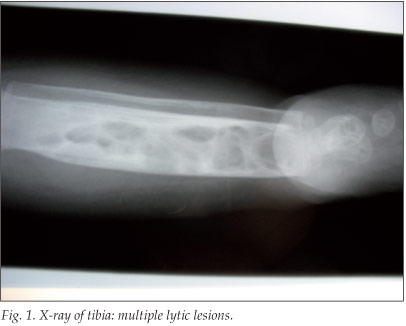
A 3-year-old HIV-infected boy first presented to our medical service at 11 months of age. He was noted to have firm, enlarged, matted axillary lymph nodes >3 cm in diameter; this was in keeping with BCG lymphadenitis of his right axilla. He also had pneumonia, oral thrush and neuro-developmental delay. He was subsequently started on highly active antiretroviral therapy (HAART). During this admission, he was diagnosed as having tuberculosis (TB), based on acid-fast bacilli (AFB)-positive gastric washings, and he was commenced on TB therapy. Owing to the presence of BCG adenitis, the systemic isolates of AFB were submitted to polymerase chain reaction (PCR) analysis and found to be Mycobacterium bovis rather than M. tuberculosis. He was discharged after 6 weeks of treatment, placed on 6 months of anti-TB treatment, and booked for regular follow-up, from which his caretakers defaulted. Almost a year later, he presented with multiple small subcutaneous abscesses evenly distributed over his trunk and limbs. Soft-tissue thickening over the tibial aspects of both lower legs was noted. Ultrasound of the abdomen revealed an enlarged spleen and liver; both revealed multiple focal hypodense lesions. The tibial thickening that had been detected clinically was not investigated further at the time. However, 2 months later he presented again with severe pain, subcutaneous inflammation and fluctuation over the anterior surface of the medial aspect of the lower legs. X-ray changes included a localised osteopenia and a periosteal reaction (Fig. 1). Surgical intervention revealed bilateral tibial osteitis. Histological examination of bone biopsies confirmed osteitis secondary to M. bovis infection. In summary, this boy developed disseminated (lymph node, cutaneous, hepatic, splenic and osteal) BCG infection subsequent to routine immunisation.
Case 2
A 13-month-old HIV-infected boy presented with bile-stained vomiting and a distended abdomen. He was on HAART, and disseminated BCG was confirmed on PCR analysis of gastric washings. The initial working diagnosis was that of gastro-enteritis, but when the symptoms failed to resolve and abdominal distention became evident, he was referred for a surgical opinion. A diagnosis of small-bowel obstruction was made. Laparotomy identified a large group of ulcerating nodes, to which the omentum had attached and consequently caused the obstruction. The histology of node biopsy confirmed necrotising granulomatous inflammation due to disseminated BCG infection. There were no other bowel lesions.
Cases 3 - 17
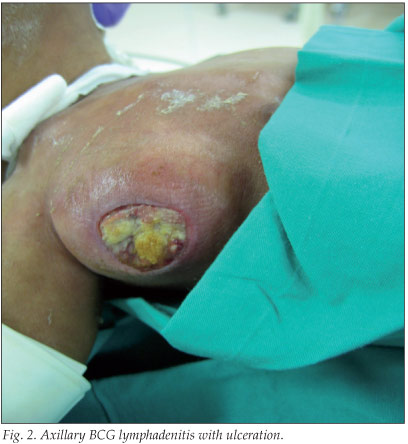
In this series of 15 infants,11Fig. 2). One child had disseminated disease as detected by gastric washings and positive PCR for M. bovis. Fourteen of the infants received HAART. In 10 patients, the implementation of HAART predated the complications of the BCG vaccine.
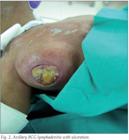
The average time from starting HAART to the onset of symptoms was 1.4 months. Nine of the 15 infants were placed on TB treatment. A total of 22 interventions were performed on 14 patients. One infant required no surgical intervention. Five were treated with at least 1 aspiration; 7 incisions and drainages were performed; and 6 had at least 1 curettage of the involved nodes. Two axillary lymphadenectomies were performed. One child had 1 aspiration, 1 incision and drainage and 4 curettages. Of the 11 patients who had histological analysis, all had the classic features of a caseating granulomatous lesion. All 14 patients who had had TB cultures performed, grew mycobacteria with subsequent PCR analysis confirming M. bovis.
Discussion
South Africa currently uses the intradermal Danish 1331 strain of live attenuated M. bovis in the BCG immunisation administered at birth. The efficacy and safety of this vaccine in immune-competent individuals is well demonstrated, with only a few adverse effects.52-10
BCG disease may take several forms and should be distinguished from the expected reactions induced by the vaccine An appropriate response would include a shallow, dry, crusted ulcer at the injection site and regional lymphadenopathy that should not exceed 1 cm in diameter. It is considered pathological if deep ulcers or abscesses develop at the injection site, gross lymphadenitis or suppuration develops in the axilla,1112813M. bovis, combined with a culture of under-reporting of adverse drug and vaccine events in South Africa, has added to the problem.4et al. have developed models to predict the potential scale of the epidemic and estimate the true prevalence to be 110 - 417/100 000 vaccinees (depending on HIV prevalence and rate of vertical transmission), with the risk of disseminated BCG disease being 100 times greater for HIV-infected infants.3
There are several clinical implications of BCG infection in HIV-infected children. The optimum treatment for both disseminated and local BCG disease is poorly defined. Inherent resistance of BCG to pyrazinamide1415,16 have made medical treatment more complex and is compounded by the poor response to therapy observed in HIV-infected children with BCG disease and the suggested duration of therapy of 9 months.417,18
The treatment of loco-regional disease is somewhat more controversial. An important subgroup has been identified in those patients who develop significant regional lymphadenopathy or a worsening of existing disease following the implementation of HAART. This, we believe, represents immune reconstitution inflammatory syndrome (IRIS).19-23 It is uncertain whether these conditions should be managed differently or whether they represent the same risk for potential dissemination in HIV-infected infants. Some authors feel that the risk of BCG spread together with the poor outcome in HIV-infected infants mandate systemic medical and, in some cases, surgical therapy.418242511
It is ironic that a vaccine developed to protect children from severe mycobacterial infection is now, in a subset of patients, causing significant mycobacterial disease. Current recommendations1543
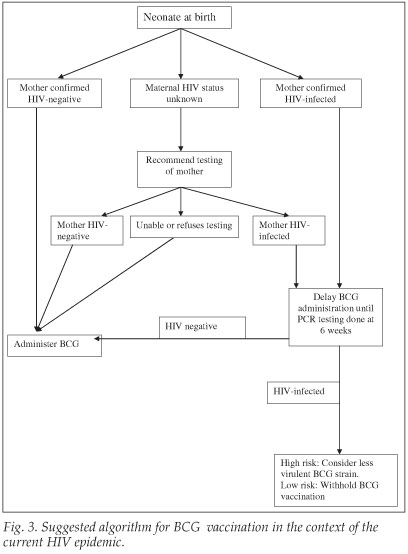
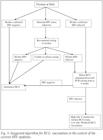
Most of the BCG disease that is seen can be prevented by adopting a stratified policy for the timing of BCG administration. Our proposal is that infants of mothers who test positive for HIV during their antenatal care should not have their BCG vaccination at birth but rather have it delayed to the second vaccination visit, at which time the infants' HIV status can be determined (Fig. 3). If an infant is HIV-infected, BCG vaccination should be with a less virulent strain or withheld. If an infant is HIV-negative, the vaccine can be given. It would therefore be possible to prevent those infants most at risk from BCG disease from becoming exposed to BCG, while not prejudicing those who would benefit from its administration. This problem will hopefully be solved with the advent of an effective vaccine that is not alive and attenuated; this process is well under way.
Conclusion
BCG disease is a growing epidemic. TB in BCG-exposed HIV-infected children needs to be differentiated from M. tuberculosis as it mandates different treatment. The risks of BCG in HIV-infected infants are significant. Current recommendations are not satisfactory, and a change in policy is required to prevent the harmful effects of this vaccine in a high-risk group of patients. Current policy focuses on the most reliable point of contact and does not place enough emphasis on the potential dangers of live attenuated vaccines in immunocompromised infants. We believe that there is sufficient need to stratify our patients adequately and vaccinate them according to a protocol that takes impaired immunity into consideration.
References
- 1. World Health Organization. Global Advisory Committee on Vaccine Safety, 29-30 November 2006. Wkly Epidemiol Rec 2007; 82(3): 18-24.
- 2. Campos JM, Simonetti JP, Pone MV, Carvalho LA, Pereira AC, Garrido JR. Disseminated Bacillus Calmette-Guérin infection in HIV-infected children: case report and review. Pediatr AIDS HIV Infect 1996; 7(6): 429-432.
- 3. Hesseling AC, Marais BJ, Gie RP, et al. The risk of disseminated bacille Calmette-Guérin (BCG) disease in HIV-infected children. Vaccine 2007; 25(1): 14-18.
- 4. Hesseling AC, Rabie H, Marais BJ, et al. Bacille Calmette-Guérin vaccine-induced disease in HIV-infected and HIV-uninfected children. Clin Infect Dis 2006; 42(4): 548-558.
- 5. Hesseling AC, Schaaf HS, Hanekom WA, et al. Danish bacille Calmette-Guérin vaccine-induced disease in human immunodeficiency virus-infected children. Clin Infect Dis 2003; 37(9): 1226-1233.
- 6. Raton JA, Pocheville I, Vicente JM, et al. Disseminated bacillus Calmette-Guérin infection in an HIV-infected child: a case with cutaneous lesions. Pediatr Dermatol 1997; 14(5): 365-368.
- 7. Rosenfeldt V, Paerregaard A, Valerius NH. Disseminated infection with Bacillus Calmette-Guérin in a child with advanced HIV disease. Scand J Infect Dis 1997; 29(5): 526-527.
- 8. Talbot EA, Perkins MD, Silva SF, Frothingham R. Disseminated bacille Calmette-Guérin disease after vaccination: case report and review. Clin Infect Dis 1997; 24(6): 1139-1146.
- 9. Thaithumyanon P, Thisyakorn U, Punnahitananda S, Praisuwanna P, Ruxrungtham K. Safety and immunogenicity of bacillus Calmette-Guérin vaccine in children born to HIV-1 infected women. Southeast Asian J Trop Med Public Health 2000; 31(3): 482-486.
- 10. Waddell RD, Lishimpi K, von Reyn CF, et al. Bacteremia due to Mycobacterium tuberculosis or M. bovis, Bacille Calmette-Guérin (BCG) among HIV- positive children and adults in Zambia.AIDS 2001; 15(1): 55-60.
- 11. Alexander A, Rode H. Adverse reactions to the bacillus Calmette-Guérin vaccine in HIV-positive infants. J Pediatr Surg 2007; 42(3): 549-552.
- 12. Fine PEM, Carneiro IAM, Milstein JB, Clements CJ. Issues Relating to the Use of BCG Immunisation Programmes - a Discussion Document No. WHO/V&B/99.23. Geneva: World Health Organization, 1999.
- 13. Talbot EA, Williams DL, Frothingham R. PCR identification of Mycobacterium bovis BCG. J Clin Microbiol 1997; 35(3): 566-569.
- 14. Diagnostic Standards and Classification of Tuberculosis in Adults and Children. Am J Respir Crit Care Med 2000; 161(4 Pt 1): 1376-1395.
- 15. Hesseling AC, Schaaf HS, Victor T, et al. Resistant Mycobacterium bovis Bacillus Calmette-Guérin disease: implications for management of Bacillus Calmette-Guérin disease in human immunodeficiency virus-infected children. Pediatr Infect Dis J 2004; 23(5): 476-179.
- 16. Sicevic S. Generalized BCG tuberculosis with fatal course in two sisters. Acta paediatrica Scandinavica 1972; 61(2): 178-184.
- 17. Cotton MF, Schaaf HS, Hesseling AC, Madhi SA. HIV and childhood tuberculosis: the way forward. Int J Tuberc Lung Dis 2004; 8(5): 675-682.
- 18. Swaminathan S, Luetkemeyer A, Srikantiah P, Lin R, Charlebois E, Havlir DV. Antiretroviral therapy and TB. Trop Doct 2006; 36(2): 73-79.
- 19. Kroidl A, Huck K, Weinspach S, et al. Immune reconstitution inflammatory syndrome (IRIS) due to Bacille Calmette-Guérin (BCG) in an HIV-positive child. Scand J Infect Dis 2006; 38(8): 716-718.
- 20. Narendran G, Swaminathan S, Sathish S, Rajasekaran S. Immune reconstitution syndrome in a child with TB and HIV. Indian J Pediatr 2006; 73(7): 627-629.
- 21. Puthanakit T, Oberdorfer P, Akarathum N, Wannarit P, Sirisanthana T, Sirisanthana V. Immune reconstitution syndrome after highly active antiretroviral therapy in human immunodeficiency virus-infected Thai children. Pediatr Infect Dis J 2006; 25(1): 53-58.
- 22. Puthanakit T, Oberdorfer P, Punjaisee S, Wannarit P, Sirisanthana T, Sirisanthana V. Immune reconstitution syndrome due to bacillus Calmette-Guérin after initiation of antiretroviral therapy in children with HIV infection. Clin Infect Dis 2005; 41(7): 1049-1052.
- 23. Siberry GK, Tessema S. Immune reconstitution syndrome precipitated by bacille Calmette-Guérin after initiation of antiretroviral therapy. Pediatr Infect Dis J 2006; 25(7): 648-649.
- 24. Hengster P, Solder B, Fille M, Menardi G. Surgical treatment of bacillus Calmette-Guérin lymphadenitis. World J Surg 1997; 21(5): 520-523.
- 25. Grange JM. Complications of bacille Calmette-Guérin (BCG) vaccination and immunotherapy and their management. Commun Dis Public Health 1998; 1(2): 84-88.
 Correspondence:
J Karpelowsky
(