Metabolie and bariatric surgery: Postoperative management
J SkeltonI; A MurphyII; M Conradie-SmitIII, ; W MayIV,
IMB ChB, Dip Obst (SA), FCP (SA), Cert Endocrinology & Metabolism (SA) Phys; Busamed Gateway Private Hospital, Umhlanga, South Africa
IIMB BCh, FCP (SA); Sunward Park Medical Centre, Boksburg, South Africa
IIIMB ChB, MMed (Int Med), FCP (SA), Cert Endocrinology & Metabolism (SA), MPhil (HPE); Division of Endocrinology, Department of Medicine, Stellenbosch University and Tygerberg Academic Hospital, Cape Town, South Africa
IVMB ChB, FCP (SA), Cert Endocrinology & Metabolism (SA); Cape Town Bariatric Clinic, Life Kingsbury Hospital, Cape Town, South Africa
• Adherence to consistent postoperative behavioural changes (behaviour modification for nutrition plans, physical activity and vitamin intake) can optimise management and health of people living with obesity (PLWO) who have had metabolic and bariatric surgery (MBS), while minimising postoperative complications.
• Working in partnership, the MBS centre, the local bariatric medicine specialist, the primary healthcare provider (HCP) and the PLWO need to establish and commit to a shared care model of chronic disease management for long-term follow-up.
• The primary HCP should refer patients with post-MBS complications back to the MBS centre, or to a local bariatric medicine specialist.
KEY MESSAGES FOR PATIENTS WHO HAVE HAD METABOLIC AND BARIATRIC SURGERY• If you have had MBS, it is important for you to take your nutritional supplements lifelong and to continue to follow the post-surgery nutrition plan, exercise, and any other recommendations given by your original specialist team. By doing this, you will increase your chances of staying healthy and reduce complications that can arise from bariatric surgery.
• Alcohol metabolism may be altered after MBS, which could increase your chance of developing a high-risk alcohol problem. Alcohol intake should be stopped or kept to a minimum.[1]
• Attend all scheduled appointments and programmes offered by your MBS centre. Once you are discharged from the centre, schedule annual appointments with your primary care provider to check your blood work, reassess your medications, and address any issues related to changes in your weight.
• After MBS, it is possible that there can be a negative impact on mood, relationships and body image, development of addictions, and reduced ability to cope with stress. If you are struggling, discuss this with your original specialist team or, if you have been referred to primary care, with your primary care provider.
• Remember that your lowest weight after surgery will be reached between 12 and 18 months. After this, a natural increase in weight occurs. If you are gaining excessive amounts of weight, discuss it with your specialist team or your primary care provider.
• If, 12 to 18 months after MBS, you are planning a pregnancy (pregnancy is not recommended earlier than this), discuss this with your primary care provider, specialist team and obstetrician.
RECOMMENDATIONS1. HCPs can encourage PLWO who have undergone MBS to participate in and maximise their access to behavioural interventions and allied health services at an MBS centre (Level 2a, Grade B).[2,3]
2. We suggest that MBS centres communicate a comprehensive care plan to primary HCPs for patients who are discharged, including MBS procedure, emergency contact numbers, annual blood tests required, long-term vitamin and mineral supplements, medications, behavioural interventions, and when to refer back (Level 4, Grade D, Consensus).
3. We suggest that after a PLWO has been discharged from the MBS centre, HCPs should annually review nutritional intake, activity, compliance with multivitamin and mineral supplements and weight, as well as assess comorbidities, order laboratory tests to assess for nutritional deficiencies, and investigate abnormal results and treat as required (Level 4, Grade D, Consensus).
4. We suggest that HCPs consider referral back to the MBS centre or to a local bariatric medicine specialist for technical or gastrointestinal symptoms, nutritional issues, pregnancy, psychological support, weight regain, or other medical issues related to MBS as described in this chapter (Level 4, Grade D, Consensus).
5. We suggest that MBS centres provide appropriate follow-up and laboratory tests at regular intervals after surgery with access to appropriate HCPs (dietitian, nurse, social worker, surgeon, bariatric physician, psychologist/psychiatrist) until discharge/referral to primary care level is deemed appropriate for the patient (Level 4, Grade D, Consensus).
Health behaviour changes after metabolic and bariatric surgery
Diet after surgery
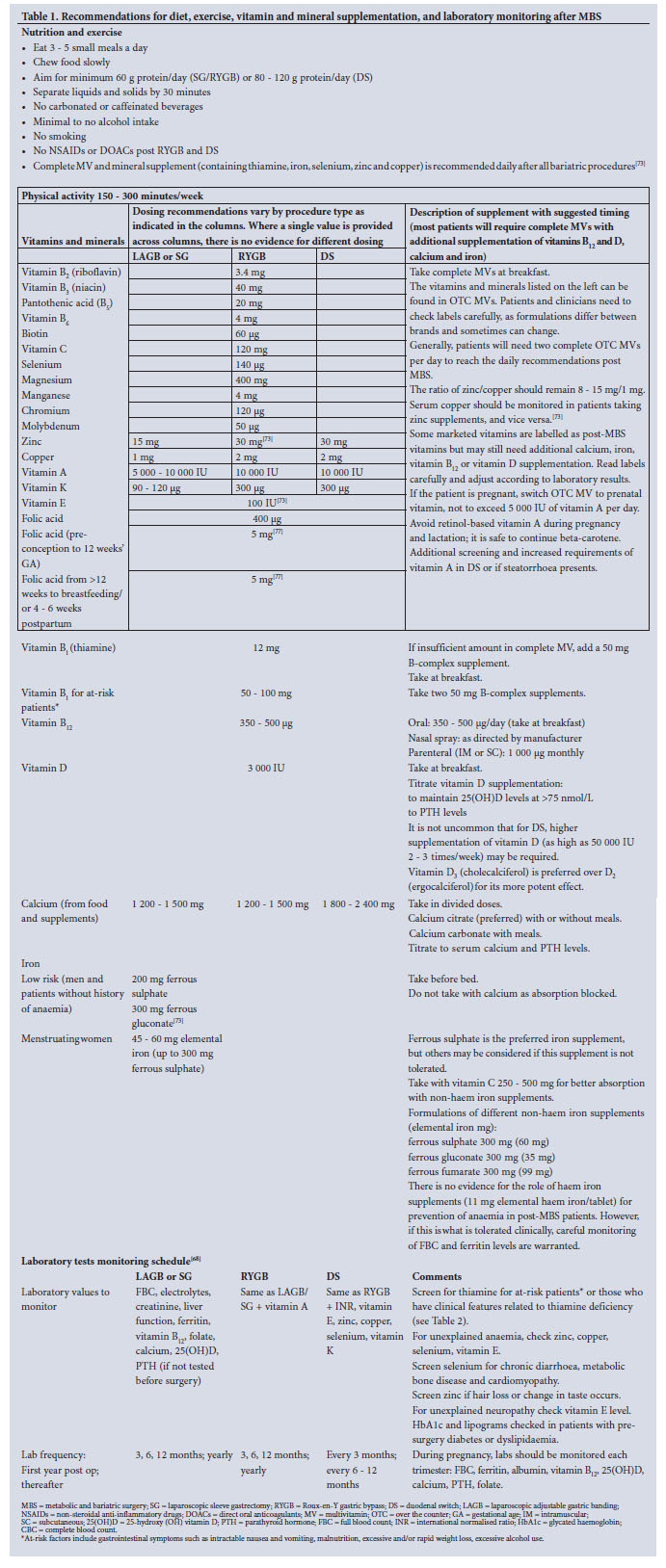
Centres that perform metabolic and bariatric surgery (MBS) will typically provide people living with obesity (PLWO) with a postoperative dietary protocol to follow. Initially, over several weeks, the PLWO transitions from a liquid to a soft and then to a solid diet. Over the long term, PLWO are encouraged to follow a structured post-MBS diet involving small portions, three to five balanced and structured meals per day, and healthy snacks (chew foods slowly and avoid sweets). With regard to beverages, PLWO should not eat and drink at the same time (avoid liquids within 30 minutes of eating solids). Carbonated beverages and caffeinated drinks are to be avoided, as phosphoric acid and caffeine can both increase the risk of ulceration.
After MBS, PLWO need to follow a low-fat, moderate-carbohydrate and high-protein diet. Postoperative protein recommendations range from 1.2 to 1.5 g/kg/day based on goal body weight (minimum of 60 g protein/day for laparoscopic sleeve gastrectomy (SG) and Roux-en-Y gastric bypass (RYGB), and 80 - 120 g/day for duodenal switch (DS). Consulting a registered dietitian can support changes in eating behaviours and guide PLWO on their nutrition needs.[4] This is especially applicable where examples of low-cost and culturally accepted alternatives must be considered, while adhering to recommendations. There is no advantage to prescribing alternative diets (e.g. low carbohydrate, high protein), probiotics or amino acids.[5-7]
Other behavioural changes to consider
• Alcohol intake should be minimal or avoided owing to changes in pharmacokinetics. For example, in women who have had RYGB, two alcoholic beverages are equivalent in absorption to four alcoholic beverages. Seven percent of PLWO reported new high-risk alcohol use 1 year after MBS, although, on a more positive note, half who reported high-risk alcohol use before surgery discontinued high-risk drinking.[3]
• Activity. Long term, a standard of 150 - 300 minutes of activity per week is recommended for post-MBS patients. Postoperative higher-volume exercise can help promote further weight loss,[8-10] but sustaining this level of activity is difficult.[11]
• Smoking cessation. Abstaining from cigarettes is recommended. Cigarette smoking can increase the risk of peptic ulcer disease, particularly marginal ulcers.
• Marijuana. There is a paucity of studies on the use of marijuana after MBS. One concern would be the impact on weight of the regular use of marijuana, which is traditionally known for its 'munchies' effect. At this point moderation, if not abstention, would be a safe recommendation.
Vitamin supplementation after metabolic and bariatric surgeryThe evidence for the role of vitamin supplementation (amount, duration) varies depending on which vitamin, mineral or type of MBS procedure is studied. Generally, some type of vitamin supplementation is needed for all MBS procedures, with tailoring for those that have a hypoabsorptive component (RYGB and DS).
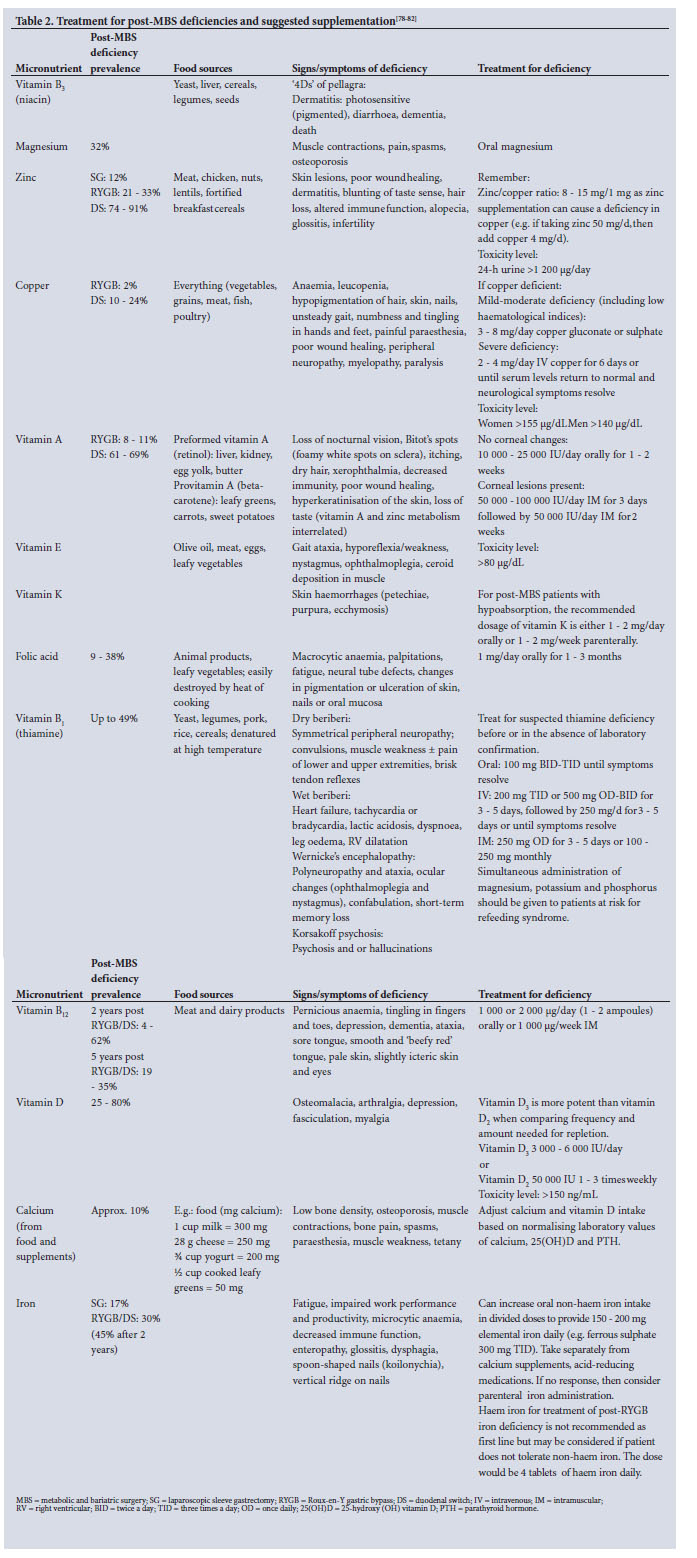
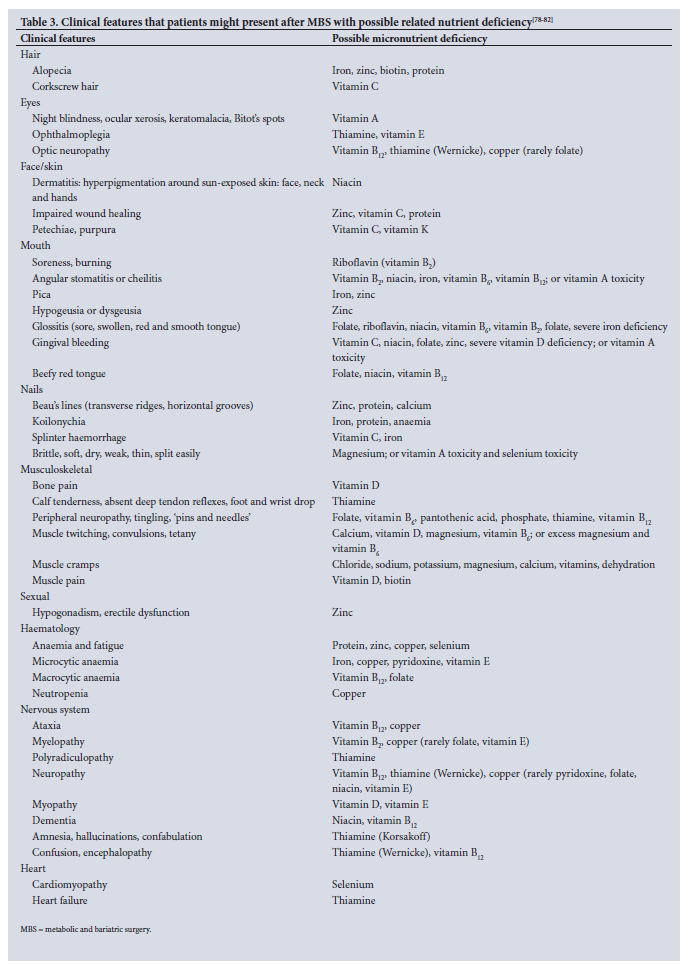
Practically, it makes sense that a standardised minimum prescription of vitamins be set for all MBS procedures. It should be noted that there are cost-effective preparations available for supplementation that may require taking vitamins and minerals separately, as opposed to a combination formulation, but ensure accessibility in resource-constrained settings. It is a natural human tendency to eventually forget to take supplements. Setting a standard means that HCPs can be consistent in their messaging about taking vitamins. Deficiencies of vitamins and some minerals can have serious and potentially non-reversible side-effects. Frequency of laboratory monitoring may vary depending on the individual and the type of procedure, but at minimum an annual check should be conducted to ensure that PLWO are not becoming malnourished. Tables 1 and 2 summarise the recommendations for vitamin supplementation, associated adverse health effects that can occur with various deficiencies, and frequency of monitoring. Table 3 summarises clinical features that may indicate nutrient deficiency. A dietitian can help determine what combination of vitamins makes sense for a patient. Gummy vitamins should be avoided, as they do not contain essential minerals.
Complications after metabolic and bariatric surgery
Many gastrointestinal (dumping syndrome) and metabolic complications (e.g. bone, kidney stones) can be prevented by following the recommended post-MBS nutrition plan and vitamin intake.
Dumping syndrome
Dumping syndrome is divided into early and late phases. Early dumping syndrome occurs within the first hour after a meal. Because of the hyperosmolality of the food, rapid fluid shifts occur from the plasma compartment into the intestinal lumen, resulting in hypotension and a sympathetic nervous system response. Early dumping is characterised by gastrointestinal symptoms such as abdominal pain, bloating, borborygmi, nausea and diarrhoea, and vasomotor symptoms such as fatigue, desire to lie down after meals (a classic symptom), flushing, palpitations, perspiration, tachycardia, hypotension and, rarely, syncope. In contrast, late dumping usually occurs 1 - 3 hours after a meal and is a result of an incretin-driven hyperinsulinaemic response after carbohydrate ingestion. Hypoglycaemia-related symptoms are related to neuroglycopenia (fatigue, weakness, confusion, hunger and syncope) and autonomic/ adrenergic reactivity (perspiration, palpitations, tremor and irritability).[12]
Symptoms that persist despite returning to a post-MBS diet may benefit from a trial of calcium channel blockers, diazoxide or octreotide. Referral to a bariatric medicine specialist or an endocrinologist for management and to rule out other causes of hypoglycaemia (nesidioblastosis, insulinoma, factitious) may be warranted. [13]
Glucagon-like peptide-1 (GLP-1) receptor agonists may potentially reduce the number of postprandial hypoglyaemic episodes and improve glycaemic variability in PLWO after MBS who have dumping. This may prove to be a helpful treatment option in the future pending further studies.[14] People living with type 2 diabetes undergoing MBS may be using sodium glucose co-transporter-2 (SGLT-2) inhibitors for glucose control. There is a significant reduction in carbohydrate intake in a preoperative liver volume-reducing diet, as well as a reduction in overall calorie intake after surgery. This may be the reason for reported cases of euglycaemic ketoacidosis in PLWO who continue to take SGLT-2 inhibitors. Conversely, SGLT-2 inhibitors may reduce postprandial hypoglycaemia, so judicious use could be beneficial. Further research will be valuable in determining when to use these agents.[15,16]
Abdominal discomfort
Abdominal discomfort has a long list of differential diagnoses, from dietary indiscretion (overeating) to dumping syndrome, biliary colic, stenosis of the gastrojejunostomy, marginal ulcer or small-bowel obstruction. Presentation with small-bowel obstruction can occur at any time but can be divided into early (<30 days; secondary to adhesions or incarcerated hernias) or late (>1 year; internal hernia, which can occur after RYGB or DS). During the first year, there is a need for an increased level of suspicion for pain secondary to a surgical complication. Tachycardia, unstable vital signs and abdominal pain may be suggestive of a surgical leak, internal hernia or cholecystitis, which warrant immediate surgical referral. The surgeon should have a low threshold to consider a diagnostic laparoscopy early to prevent serious complications with diarrhoea, constipation or bloating. Referral to a dietitian can help identify healthier food choices and proper fibre content. Probiotics may improve symptomatic gastrointestinal episodes.[17,18]
There should be a high level of suspicion for ulceration for PLWO who use non-steroidal anti-inflammatory drugs (NSAIDs). Referral to the MBS centre should be considered when clinical red flags appear such as unexplained, frequent, moderate to severe abdominal pain, daily intolerance to most solid foods, or daily nausea and vomiting. Any MBS patient suffering from persistent vomiting severe enough to interfere with regular nutrition should be promptly started on oral or parenteral thiamine supplementation, even in the absence of or before confirmatory laboratory data.[19]
In addition, patients who have undergone MBS and show clinical deterioration as defined by the International Federation for the Surgery of Obesity and Metabolic Disorders (IFSO) should be referred back to their MBS team. This includes a weight regain of >30% of the initial surgical weight loss or if there is any worsening of a complication of obesity that was the original indication for MBS.[20]
Bone health
After MBS, bone demineralisation[21-23] and fracture risk,[24] particularly after DS, are increased. A major cause of bone loss is impaired intestinal calcium absorption, which leads to stimulation of parathyroid hormone (PTH) (secondary hyperparathyroidism) and bone resorption.[21] The evidence for monitoring, prevention and treatment is not well described. At minimum, adequate protein intake in combination with routine physical activity in addition to routine supplementation of calcium and vitamin D are recommended.[21,25] It is recommended to adjust calcium and vitamin D intake to achieve normal serum calcium, vitamin D and PTH levels. Calcium citrate is preferred over calcium carbonate, as it is better absorbed in the absence of gastric acid.[26] Elevated PTH in the setting of inappropriately high serum calcium and normal vitamin D levels is suggestive of primary hyperparathyroidism and requires further investigation.
The role of bone mineral density testing prior to MBS is controversial,[27] particularly in view of technical difficulties in PLWO. We suggest ordering bone mineral density testing on PLWO 2 years after surgery, when weight is at its nadir. Subsequent bone mineral density testing can be ordered based on clinical need.[27] If a PLWO does have osteoporosis, intravenous bisphosphonates (zolendronate 5 mg once a year, ibandronate 3 mg every 3 months) are the preferred choice, as there is a risk of anastomotic ulcer with oral bisphosphonates.[28] Prior to starting bisphosphonate therapy, it is important that vitamin D levels be fully replete to prevent the development of hypocalcaemia, hypophosphataemia and osteomalacia.[28,29]
Nephrolithiasis
PLWO who have had MBS are at increased risk of new-onset nephrolithiasis, with the mean interval from surgery to diagnosis of nephrolithiasis ranging from 1.5 to 3.6 years. The risk of nephrolithiasis, typically calcium oxalate stones, varies by procedure, being highest for hypoabsorptive procedures (22 - 28.7%), intermediate for RYGB (7.65 - 13%) and lowest for purely restrictive procedures (laparoscopic adjustable gastric banding, laparoscopic SG), where it approaches that of non-operative controls.[30] Unabsorbed fat in the intestine binds with calcium, which typically would bind oxalate. Oxalate is reabsorbed from the intestine and is subsequently filtered by the kidneys, resulting in hyperoxaluria. With concomitant hypocitraturia (from intestinal alkali loss), there is a higher propensity for calcium oxalate stone formation. Basic therapeutic strategies to manage hyperoxaluria include calcium citrate supplementation, increased hydration, limiting dietary oxalate, and adhering to a low-fat diet.[18,21] PLWO often believe that kidney stones are caused by taking too much calcium, and that calcium supplementation should be discontinued. The exact opposite is true, in that they should remain on their calcium citrate supplementation, which not only helps bind intestinal oxalate but also provides citrate for the urine. There is some evidence to suggest that pyridoxine (vitamin B6) deficiency plays a role in kidney stone formation, highlighting the importance of taking vitamin supplementation consistently.[31] Certain probiotics (containing either Lactobacillus alone or in combination with Streptococcus thermophilus and Bifidobacterium) may play a complementary role in reducing gastrointestinal oxalate absorption if basic strategies are insufficient.[32,33]
Postoperative psychological complications and treatments
Although MBS is one of the most effective treatment options for managing PLWO, HCPs should be aware of the potential post-MBS psychological issues that may arise, including depression, suicide,[34,35] body image disorder, eating disorders,[36] and substance and alcohol abuse.'31[19] Beyond providing knowledge on diet and exercise, HCPs should address improvement in PLWOs' self-esteem and self-motivation. PLWO who have had post-MBS comprehensive behavioural-motivational nutrition education have decreased risk for depression and improved weight loss outcomes.[2,37,38] Primary HCPs may need to refer the post-MBS PLWO for more in-depth psychological counselling, such as cognitive or dialectical behaviour therapy. (See the chapters 'The role of mental health in obesity management' and 'Effective psychological and behavioural interventions in obesity management' for more details.)
Weight regain
Nadir weight (lowest weight point) occurs 1 to 2 years after MBS. Weight loss stops partly because of adaptive changes in the intestine, changed patient habits and metabolic adaptation.[36,39] After this, it is normal to expect some weight regain. Studies that have been conducted in the MBS population show that significant weight regain (>15% gain of initial weight loss after MBS) occurs in 25 - 35% of PLWO who undergo MBS, 2 to 5 years after their initial surgical date.[40] The Swedish Obese Subjects study, the largest non-randomised intervention trial comparing weight loss outcomes in a group of over 4 000 surgical and non-surgical individuals, reported that at 10 years, individuals who underwent RYGB had a mean weight regain of 12% of total body weight, which translates into regaining 34% of the maximal lost weight achieved at 1 year.[36,41] The IFSO defines a late postoperative clinical deterioration after MBS as either weight gain of more than 30% of the initial surgical weight loss, or worsening of an obesity complication that was originally a significant indication for the MBS.[20,42] The underlying factors that influence weight regain after MBS are multifactorial, and include endocrine/metabolic alterations, anatomical surgical failure, nutritional indiscretion, mental health issues and physical inactivity.[36]
Even before MBS, emphasising realistic weight trajectories and expectations may theoretically help reduce the anxiety that some PLWO go through as they mentally try to transition from losing weight to healthy living and maintaining weight loss. PLWO who experience weight regain may perceive that the MBS has failed, or they may enter a cycle of helplessness by blaming themselves and feeling shamed. It is important that HCPs mitigate these feelings by explaining that some weight regain following MBS is normal and then proceeding in a stepwise approach to address the weight regain. It is neither necessary nor economical to order an oesophagogastroduodenoscopy or an upper gastrointestinal contrast study to evaluate the gastrointestinal tract on all PLWO who experience weight regain following MBS. The following steps are suggested to address weight regain:
• Ensure that PLWO continue to follow the recommended post-MBS nutrition plan and vitamin intake. Check blood work to ensure that vitamin and mineral levels are in the normal range. If PLWO are malnourished at baseline, then more harm occurs trying to help them to lose further weight. Referral to a dietitian can be helpful at this stage.
• Psychological intervention may be required to address mood, anxiety or an eating disorder, or to help PLWO to make behaviour changes.
• If on subsequent follow-ups, despite adherence to the post-MBS nutrition plan and vitamin intake, weight does not decrease, an oesophagogastroduodenoscopy or upper gastrointestinal contrast study may rule out an anatomical failure. Detection of an anatomical failure would lead to a referral back to the MBS team.
• Consideration of medications for obesity management after MBS may be made for PLWO who are trying to follow the post-MBS nutrition plan and taking their vitamin supplementation. Orlistat should not be used in patients who have had hypoabsorptive procedures. Retrospective reports have demonstrated that liraglutide,[43,44] semaglutide[45] and naltrexone/bupropion[46] may play a role in reducing weight regain.
After all the above steps, if weight regain still remains an issue, then consider referring back to a MBS centre for eligibility for surgical revision.
Medications
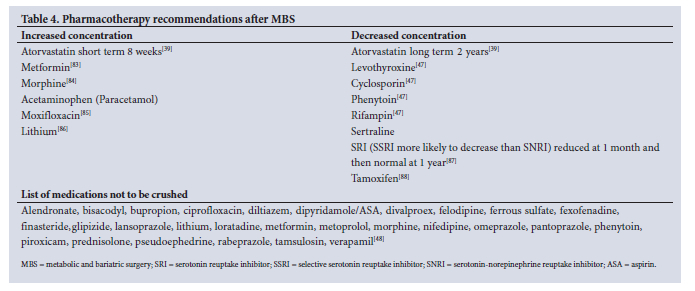
After MBS and the resulting weight loss, many studies demonstrate a reduction of medications for diabetes and dyslipidaemia, and cardiovascular and antihypertensive agents. There are a limited number of publications that focus on the pharmacodynamics of medications postoperatively (Table 4). Ultimately, there remains a large inter-individual variation, and the therapeutic effects of a medication must be individually dose adjusted.
For the first 3 to 8 weeks after surgery, medications should be consumed in a crushed or liquid form or by opening capsule contents. It is important that the liquid form does not contain absorbable sugars to avoid dumping syndrome.[47] Some medications, however, should not be crushed (Table 4).[48] After RYGB and DS, the pharmacokinetic profile of many medicines may be altered as a result of changed intestinal absorption surface, lipophilicity of drugs, increased pH in the stomach, reduced cytochrome P450 enzyme activity and first-pass intestinal metabolism, time after MBS, and changes in volume of distribution.[49] Immediate-release formulations are generally preferred over extended release. NSAIDs should be avoided after RYGB or DS owing to risk of anastomotic ulceration/perforations. For other MBS procedures, NSAID use should be accompanied by proton pump inhibitors (PPIs) for mucosal protection.[50] PLWO who need to remain on low-dose aspirin for secondary prevention may do so, but should have additional PPI protection.
Especially after RYGB and DS procedures, PLWO taking long-term warfarin require a postoperative dose reduction of >20% with closely monitored international normalised ratio. Direct oral anticoagulants should be avoided owing to the potential for decreased drug absorption.[51,52] If a beta-blocker is needed after MBS, a hydrophilic compound such as atenolol may be preferred. Bioavailability of oral contraceptives may be reduced after MBS, and alternative methods of contraception need to be considered. Antidiabetic medications with a risk for hypoglycaemia (such as sulphonylureas) should be discontinued and insulin doses adjusted. Metformin may be continued, but the dose may need to be reduced owing to increased absorption.[53] Primary HCPs may benefit from working with a patient's community pharmacist for medication adjustments.
Choledocholithiasis and marginal ulcer prophylaxis
Decreased postoperative oral intake predisposes to biliary stasis and choledocholithiasis after MBS. The 2025 American Society for Metabolic and Bariatric Surgery (ASMBS) guidelines recommend prophylaxis with ursodiol 10 days after surgery in PLWO with a high level of concern or risk for biliary disease.[54] Treatment should be continued for 6 months. Reported rates of marginal (stomal) ulceration after RYGB reach as much as 51% in smokers.[55] The 2025 ASMBS guidelines suggest prophylactic PPI therapy for at least 90 days after MBS.[54,56]
Gastro-oesophageal reflux disease after sleeve gastrectomy
Recent studies have highlighted the potential risks of gastro-oesophageal reflux disease (GORD) and Barrett's oesophagus (BE) following laparoscopic SG.[57,58] A systematic review and meta-analysis reported a pooled prevalence of BE of approximately 11.6% of PLWO after SG, with BE appearing as early as 3 years after surgery and with no correlation with GORD symptoms.[59] Given these findings, the IFSO recommends routine surveillance endoscopy after SG at 1, 3 and 5 years.[60] In addition, the ASMBS calculated a 10.7% rate of de novo BE after SG,[58] which is comparable to the American Society for Gastrointestinal Endoscopy recommendation that any population at an estimated 10% risk for BE should undergo endoscopic screening.[1,61]
Special considerations regarding fertility after metabolic and bariatric surgery
MBS should not be considered a treatment for infertility.[62] Many studies related to fertility in women after MBS are small, and appropriate control groups have not always been included. Together, the evidence suggests that MBS improves fertility, whether it is through improvements in sex hormone profiles or resolution of polycystic ovary syndrome markers that influence fertility (including anovulation, hirsutism, hormonal changes, insulin resistance, sexual activity and libido).[63] The type of MBS does not appear to be related to changes in fertility, as only the amount of weight lost (a body mass index [BMI] decrease of >5 kg/m2[64]
In men, surgery-induced massive weight loss does not affect sperm quality, but it does increase the quality of sexual function, total testosterone, free testosterone and follicle-stimulating hormone, and reduces prolactin. Overall, in men, the balance between positive (hormonal, psychological and sexual improvements) and negative (nutritional depletion as a result of selective food maldigestion and malabsorption) impacts will determine the final effect on seminal quality and fertility.[65]
Women who became pregnant less than 1 year after MBS had a higher rate of fetal loss in comparison with women whose pregnancy occurred after this period of time (35.5% v. 16.3%).[66] Pregnancy is therefore not recommended in the first 12 to 18 months after MBS,[66] by which time weight is more stable, and women are able to consume a nutritionally balanced diet. Adequate contraception should therefore be offered to women of reproductive age who undergo MBS. As oestrogen is absorbed in the upper gastrointestinal tract, which is modified during bariatric surgery, oral contraceptive pills should be avoided after RYGB and DS. Instead, alternative forms of hormonal contraception (subdermal implant, e.g. etonogestrel,[67] or a levonorgestrel-releasing intrauterine device[68]) may be considered.
There is no definitive contraindication to oral contraceptive pills for gastric banding and SG.[19,69]
Special considerations in women who become pregnant after metabolic and bariatric surgery
Compared with women who have not undergone MBS, women who became pregnant after MBS had a lower risk of gestational diabetes, hypertensive disorders and macrosomia.[70] However, the risk of small-for-gestational-age newborns increases after MBS.[70]
Pre-conception care
Women planning a pregnancy after MBS should have daily oral supplementation with a multivitamin containing 1.0 mg folic acid, beginning at least 3 months before conception. Women should continue this regimen until 12 weeks' gestational age. From 12 weeks' gestational age, continuing through the pregnancy, and for 4 to 6 weeks postpartum or as long as breastfeeding continues, continued daily supplementation should consist of a multivitamin with 0.8 - 1.0 mg folic acid.[7]- Vitamin B12 levels should be checked and corrected if deficient prior to initiation of additional folic acid. Women are advised to avoid vitamin and mineral preparations that contain vitamin A in the retinol form in the first 12 weeks of pregnancy, as supplements containing retinol may increase the teratogenic risk (especially in the first trimester). It is therefore recommended that pregnant women and those planning pregnancies after MBS are supplemented with vitamin A in the beta-carotene form.
Nutritional monitoring during pregnancy
Standard complete multivitamins routinely used after MBS should be replaced by prenatal multivitamins to reduce vitamin A intake, which should not exceed 5 000 IU/day and be delivered in the form of beta-carotene. Continue all other regular supplementation that the patient would typically be on and then adjust according to laboratory testing. Laboratory testing at each trimester should include full blood count, ferritin, albumin, vitamin B12, 25-hydroxy (OH) vitamin D, calcium, PTH and folate. Patients who have had hypoabsorptive surgery should additionally have zinc, copper and vitamin A levels (and possibly vitamin E and K levels with DS) monitored during pregnancy.[19,63,72,73] If the patient is vitamin A deficient, supplementation should be in the form of beta-carotene.[73] Patients suffering from nausea and intractable vomiting should have immediate vitamin B1 supplementation and careful monitoring of B1 levels. Nutrition advice from an experienced registered dietitian should be offered to review deficiencies and vitamin supplementation and ensure a recommended daily protein intake of 60 g.[61] Possible recommended gestational weight gain would be based on the pre-pregnancy BMI as per the Institute of Medicine.[74]
Other considerations during pregnancy
In addition to nutritional deficiencies, there is also the potential for severe, life-threatening complications such as internal hernias, bowel obstructions, volvulus, intussusception and gastric perforations, which generally occur 1 to 3 years after MBS. Because of the upward pressure from the gravid uterus, these late sequelae may present in pregnancy and during the immediate postpartum period. Abdominal pain in a post-MBS gravid woman would need to include these potential complications in the differential diagnosis. Radiological evaluation with a computed tomography scan should be reviewed by MBS specialists or radiologists with specialised expertise in this area.[75] Post-surgical patients may not tolerate the glucose solution commonly administered at 24 - 28 weeks' gestation to screen for gestational diabetes. Alternative measures to screen for gestational diabetes should be considered for patients who have undergone hypoabsorptive-type surgery. One proposed alternative is home glucose monitoring (fasting and 2-hour post-prandial blood sugar) for approximately 1 week during weeks 24 - 28 of gestation.[62]
Postpartum
Breastfeeding should be encouraged. It is important that postpartum MBS women continue their recommended vitamin supplementation, as there have been documented cases of nutritional deficiencies in breast-fed infants born to mothers who have had RYGB.[76]
Please note that it is recommended that women who become pregnant following MBS, be referred for appropriate specialist care.[77]
Acknowledgement. 'Metabolic and bariatric surgery: Postoperative management' is adapted from the Canadian Adult Obesity Clinical Practice Guideline (the 'Guideline'), which Obesity Canada owns and from whom we have a licence. SAMMSS adapted the Guideline having regard for relevant context affecting South Africa using the ADAPTE Tool.
SAMMSS acknowledges that Obesity Canada and the authors of the Guideline have not formally reviewed 'Metabolic and bariatric surgery: Postoperative management' and bear no responsibility for changes made to such chapter, or how the adapted Guideline is presented or disseminated. Therefore, such parties, according to their policy, disclaim any association with such adapted materials. The original Guideline may be viewed in English at: www.obesitycanada.ca/guidelines
Author contributions. JS adapted the Canadian guideline. AM edited and contributed. All authors edited and approved the final version of the chapter.
References
-
1. Wee CC, Mukamal KJ, Huskey KW, et al. High-risk alcohol use after weight loss surgery. Surg Obes Relat Dis 2014;10(3):508-513. https://doi.org/10.1016/j.soard.2013.12.014
» https://doi.org/10.1016/j.soard.2013.12.014 -
2. Campos GM, Mazzini GS, Altieri MS, et al. ASMBS position statement on the rationale for performance of upper gastrointestinal endoscopy before and after metabolic and bariatric surgery. Surg Obes Relat Dis 2021;17(5):837-847. https://doi.org/10.1016/j.soard.2021.03.007
» https://doi.org/10.1016/j.soard.2021.03.007 -
3. Nijamkin M, Campa A, Samiri Nijamkin S, Sosa J. Comprehensive behavioral-motivational nutrition education improves depressive symptoms following bariatric surgery: A randomized, controlled trial of obese Hispanic Americans. J Nutr Educ Behav.2013;45(6):620-626. https://doi.org/10.1016/j.jneb.2013.04.264
» https://doi.org/10.1016/j.jneb.2013.04.264 -
4. Sarwer DB, Moore RH, Spitzer JC, Wadden TA, Raper SE, Williams NN. A pilot study investigating the efficacy of postoperative dietary counseling to improve outcomes after bariatric surgery. Surg Obes Relat Dis 2012;8(5):561-568. https://doi.org/10.1016/j.soard.2012.02.010
» https://doi.org/10.1016/j.soard.2012.02.010 -
5. Swenson BR, Saalwachter Schulman A, et al The effect of a low-carbohydrate, high-protein diet on post laparoscopic gastric bypass weight loss: A prospective randomized trial. J Surg Res 2007;142(2):308-313. https://doi.org/10.1016/j.jss.2007.02.052
» https://doi.org/10.1016/j.jss.2007.02.052 -
6. Clements RH, Saraf N, Kakade M, Yellumahanthi K, White M, Hackett JA. Nutritional effect of oral supplement enriched in beta-hydroxy-beta-methylbutyrate, glutamine and arginine on resting metabolic rate after laparoscopic gastric bypass. Surg Endosc 2011;25(5):1376-1382. https://doi.org/10.1007/s00464-010-1371-9
» https://doi.org/10.1007/s00464-010-1371-9 -
7. Sherf-Dagan S, Zelber-Sagi S, Zilberman-Schapira G, et al. Probiotics administration following sleeve gastrectomy surgery: A randomized double-blind trial Int J Obes (Lond) 2018;42(2):147-155. https://doi.org/10.1038/ijo.2017.210
» https://doi.org/10.1038/ijo.2017.210 -
8. Egberts K, Brown WA, Brennan L, O'Brien PE. Does exercise improve weight loss after bariatric surgery? A systematic review. Obes Surg 2012;22(2):335-341. https://doi.org/10.1007/s11695-011-0544-5
» https://doi.org/10.1007/s11695-011-0544-5 -
9. Woodlief TL, Carnero EA, Standley RA, et al. Dose response of exercise training following Roux-en-Y gastric bypass surgery: A randomized trial. Obesity (Silver Spring) 2015;23(12):2454-2461. https://doi.org/10.1002/oby.21332
» https://doi.org/10.1002/oby.21332 -
10. Mundbjerg LH, Stolberg CR, Cecere S, et al Supervised physical training improves weight loss after Roux-en-Y gastric bypass surgery: A randomized controlled trial. Obesity (Silver Spring) 2018;26(5):828-837. https://doi.org/10.1002/oby.22143
» https://doi.org/10.1002/oby.22143 -
11. Shah M, Snell PG, Rao S, et al High-volume exercise program in obese bariatric surgery patients: A randomized, controlled trial. Obesity (Silver Spring) 2011;19(9):1826-1834. https://doi.org/10.1038/oby.2011.172
» https://doi.org/10.1038/oby.2011.172 -
12. Van Beek AP, Emous M, Laville M, Tack J. Dumping syndrome after esophageal, gastric or bariatric surgery: Pathophysiology, diagnosis, and management. Obes Rev 2017;18(1):68-85. https://doi.org/10.1111/obr.12467
» https://doi.org/10.1111/obr.12467 -
13. Ceppa EP, Ceppa DP, Omotosho PA, Dickerson JA 2nd, Park CW, Portenier DD. Algorithm to diagnose etiology of hypoglycemia after Roux-en-Y gastric bypass for morbid obesity: Case series and review of the literature. Surg Obes Relat Dis 2012;8(5):641-647. https://doi.org/10.1016/j.soard.2011.08.008
» https://doi.org/10.1016/j.soard.2011.08.008 -
14. Llewellyn DC, Logan Ellis H, Aylwin SJB, et al. The efficacy of GLP-1RAs for the management of postprandial hypoglycemia following bariatric surgery: A systematic review. Obesity (Silver Spring) 2023;31(1):20-30. https://doi.org/10.1002/oby.23600
» https://doi.org/10.1002/oby.23600 -
15. Iqbal QZ, Mishiyev D, Zia Z, Ruggiero RA, Aftab G. Euglycemic diabetic ketoacidosis with sodium-glucose cotransporter-2 inhibitor use post-bariatric surgery: A brief review of the literature. Cureus 2020;12(10):e10878. https://doi.org/10.7759/cureus.10878
» https://doi.org/10.7759/cureus.10878 -
16. Scheen AJ. Use of SGLT2 inhibitors after bariatric/metabolic surgery: Risk/benefit balance. Diabetes Metab 2023;49(4):101453. https://doi.org/10.1016/j.diabet.2023.101453
» https://doi.org/10.1016/j.diabet.2023.101453 -
17. Loewen M, Giovanni J, Barba C. Screening endoscopy before bariatric surgery: A series of 448 patients. Surg Obes Relat Dis 2008;4(6):709-712. https://doi.org/10.1016/j.soard.2008.02.009
» https://doi.org/10.1016/j.soard.2008.02.009 -
18. Mechanick JI, Youdim A, Jones DB, et al. Clinical practice guidelines for the perioperative nutritional, metabolic, and nonsurgical support of the bariatric surgery patient - 2013 update: Cosponsored by American Association of Clinical Endocrinologists, The Obesity Society, and American Society for Metabolic & Bariatric Surgery. Obesity (Silver Spring) 2013;21(Suppl 1):S1-27. https://doi.org/10.1002/oby.20461
» https://doi.org/10.1002/oby.20461 -
19. Busetto L, Dicker D, Azran C, et al. Practical recommendations of the Obesity Management Task Force of the European Association for the Study of Obesity for the post-bariatric surgery medical management. Obes Facts 2017;10(6):597-632. https://doi.org/10.1159/000481825
» https://doi.org/10.1159/000481825 -
20. Salminen P, Kow L, Aminian A, et al. IFSO consensus on definitions and clinical practice guidelines for obesity management - an international Delphi study. Obes Surg 2024;34(1):30-42. https://doi.org/10.1007/s11695-023-06913-8
» https://doi.org/10.1007/s11695-023-06913-8 -
21. Sakhaee K, Griffith C, Pak CYC. Biochemical control of bone loss and stone-forming propensity by potassium-calcium citrate after bariatric surgery. Surg Obes Relat Dis 2012;8(1):67-72. https://doi.org/10.1016/j.soard.2011.05.001
» https://doi.org/10.1016/j.soard.2011.05.001 -
22. Maghrabi AH, Wolski K, Abood B, et al. Two-year outcomes on bone density and fracture incidence in patients with T2DM randomized to bariatric surgery versus intensive medical therapy. Obesity (Silver Spring) 2015;23(12):2344-2348. https://doi.org/10.1002/oby.21150
» https://doi.org/10.1002/oby.21150 -
23. Crawford MR, Pham N, Khan L, Bena JF, Schauer PR, Kashyap SR. Increased bone turnover in type 2 diabetes patients randomized to bariatric surgery versus medical therapy at 5 years. Endocr Pract 2018;24(3):256-264. https://doi.org/10.4158/EP-2017-0072
» https://doi.org/10.4158/EP-2017-0072 -
24. Rousseau C, Jean S, Gamache P, et al. Change in fracture risk and fracture pattern after bariatric surgery: Nested case-control study. BMJ 2016;354:i3794. https://doi.org/10.1136/bmj.i3794
» https://doi.org/10.1136/bmj.i3794 -
25. Muschitz C, Kocijan R, Haschka J, et al. The impact of vitamin D, calcium, protein supplementation, and physical exercise on bone metabolism after bariatric surgery: The BABS study. J Bone Miner Res 2016;31(3):672-682. https://doi.org/10.1002/jbmr.2707
» https://doi.org/10.1002/jbmr.2707 -
26. Sakhaee K, Bhuket T, Adams-Huet B, Rao DS. Meta-analysis of calcium bioavailability: A comparison of calcium citrate with calcium carbonate. Am J Ther 1999;6(6):313-322. https://doi.org/10.1097/00045391-199911000-00005
» https://doi.org/10.1097/00045391-199911000-00005 -
27. Rodríguez-Carmona Y, López-Alavez FJ, González-Garay AG, Solís-Galicia C, Meléndez G, Serralde-Zúñiga AE. Bone mineral density after bariatric surgery: A systematic review. Int J Surg 2014;12(9):976-982. https://doi.org/10.1016/j.ijsu.2014.08.002
» https://doi.org/10.1016/j.ijsu.2014.08.002 -
28. Karam L, Paccou J. Management of adverse skeletal effects following bariatric surgery procedures in people living with obesity. Curr Osteoporos Rep 2025;23(1):11. https://doi.org/10.1007/s11914-025-00902-9
» https://doi.org/10.1007/s11914-025-00902-9 -
29. Mechanick JI, Kushner RF, Sugerman HJ, et al. American Association of Clinical Endocrinologists, The Obesity Society, and American Society for Metabolic & Bariatric Surgery medical guidelines for clinical practice for the perioperative nutritional, metabolic, and nonsurgical support of the bariatric surgery patient. Obesity (Silver Spring) 2009;17(Suppl 1):S1-S70. https://doi.org/10.1038/oby.2009.28
» https://doi.org/10.1038/oby.2009.28 -
30. Bhatti UH, Duffy AJ, Roberts KE, Shariff AH. Nephrolithiasis after bariatric surgery: A review of pathophysiologic mechanisms and procedural risk. Int J Surg 2016;36(Pt D):618-623. https://doi.org/10.1016/j.ijsu.2016.11.025
» https://doi.org/10.1016/j.ijsu.2016.11.025 -
31. Canales BK, Hatch M. Kidney stone incidence and metabolic urinary changes after modern bariatric surgery: Review of clinical studies, experimental models, and prevention strategies. Surg Obes Relat Dis 2014;10(4):734-742. https://doi.org/10.1016/j.soard.2014.03.026
» https://doi.org/10.1016/j.soard.2014.03.026 -
32. Woodard GA, Encarnacion B, Downey JR, et al. Probiotics improve outcomes after Roux-en-Y gastric bypass surgery: A prospective randomized trial. J Gastrointest Surg 2009;13(7):1198-1204. https://doi.org/10.1007/s11605-009-0891-x
» https://doi.org/10.1007/s11605-009-0891-x -
33. Okombo J, Liebman M. Probiotic-induced reduction of gastrointestinal oxalate absorption in healthy subjects. Urol Res 2010;38(3):169-178. https://doi.org/10.1007/s00240-010-0262-9
» https://doi.org/10.1007/s00240-010-0262-9 -
34. Tindle HA, Omalu B, Courcoulas A, Marcus M, Hammers J, Kuller LH. Risk of suicide after long-term follow-up from bariatric surgery. Am J Med 2010;123(11):1036-1042. https://doi.org/10.1016/j.amjmed.2010.06.016
» https://doi.org/10.1016/j.amjmed.2010.06.016 -
35. Chen EY, Fettich KC, McCloskey MS. Correlates of suicidal ideation and/or behavior in bariatric-surgery-seeking individuals with severe obesity. Crisis 2012;33(3):137-143. https://doi.org/10.1027/0227-5910/a000115
» https://doi.org/10.1027/0227-5910/a000115 -
36. Kushner RF, Sorensen KW. Prevention of weight regain following bariatric surgery. Curr Obes Rep 2015;4(2):198-206. https://doi.org/10.1007/s13679-015-0146-y
» https://doi.org/10.1007/s13679-015-0146-y -
37. Beck NN, Johannsen M, St0ving RK, Mehlsen M, Zachariae R. Do postoperative psychotherapeutic interventions and support groups influence weight loss following bariatric surgery? A systematic review and meta-analysis of randomized and nonrandomized trials. Obes Surg 2012;22(11):1790-1797. https://doi.org/10.1007/s11695-012-0739-4
» https://doi.org/10.1007/s11695-012-0739-4 -
38. Wild B, Hunnemeyer K, Sauer H, et al. Sustained effects of a psychoeducational group intervention following bariatric surgery: Follow-up of the randomized controlled BaSE study. Surg Obes Relat Dis 2017;13(9):1612-1618. https://doi.org/10.1016/j.soard.2017.03.034
» https://doi.org/10.1016/j.soard.2017.03.034 -
39. Jakobsen GS, Skottheim IB, Sandbu R, et al. Long-term effects of gastric bypass and duodenal switch on systemic exposure of atorvastatin. Surg Endosc 2013;27(6):2094-2101. https://doi.org/10.1007/s00464-012-2716-3
» https://doi.org/10.1007/s00464-012-2716-3 -
40. Stanford FC, Alfaris N, Gomez G, et al The utility of weight loss medications after bariatric surgery for weight regain or inadequate weight loss: A multi-center study. Surg Obes Relat Dis 2017;13(3):491-500. https://doi.org/10.1016/j.soard.2016.10.018
» https://doi.org/10.1016/j.soard.2016.10.018 -
41. Sjöström L, Lindroos A-K, Peltonen M, et al Lifestyle, diabetes, and cardiovascular risk factors 10 years after bariatric surgery. N Engl J Med 2004;351(26):2683-2693. https://doi.org/10.1056/NEJMoa035622
» https://doi.org/10.1056/NEJMoa035622 -
42. Haddad A, Suter M, Greve JW, et al. Therapeutic options for recurrence of weight and obesity related complications after metabolic and bariatric surgery: An IFSO position statement. Obes Surg 2024;34(11):3944-3962. https://doi.org/10.1007/s11695-024-07489-7
» https://doi.org/10.1007/s11695-024-07489-7 -
43. Pajecki D, Halpern A, Cercato C, Mancini M, de Cleva R, Santo MA. Short-term use of liraglutide in the management of patients with weight regain after bariatric surgery. Rev Col Bras Cir 2013;40(3):191-195. https://doi.org/10.1590/s0100-69912013000300005
» https://doi.org/10.1590/s0100-69912013000300005 -
44. Gorgojo-Martinez JJ, Feo-Ortega G, Serrano-Moreno C. Effectiveness and tolerability of liraglutide in patients with type 2 diabetes mellitus and obesity after bariatric surgery. Surg Obes Relat Dis 2016;12(10):1856-1863. https://doi.org/10.1016/j.soard.2016.02.013
» https://doi.org/10.1016/j.soard.2016.02.013 -
45. Jensen AB, Renström F, Aczél S, et al Efficacy of the glucagon-like peptide-1 receptor agonists liraglutide and semaglutide for the treatment of weight regain after bariatric surgery: A retrospective observational study. Obes Surg 2023;33(4):1017-1025. https://doi.org/10.1007/s11695-023-06484-8
» https://doi.org/10.1007/s11695-023-06484-8 -
46. Nor Hanipah Z, Nasr EC, Bucak E, et al. Efficacy of adjuvant weight loss medication after bariatric surgery. Surg Obes Relat Dis 2018;14(1):93-98. https://doi.org/10.1016/j.soard.2017.10.002
» https://doi.org/10.1016/j.soard.2017.10.002 -
47. Padwal R, Brocks D, Sharma AM. A systematic review of drug absorption following bariatric surgery and its theoretical implications. Obes Rev 2010;11(1):41-50. https://doi.org/10.1111/j.1467-789X.2009.00614.x
» https://doi.org/10.1111/j.1467-789X.2009.00614.x -
48. Sardo P, Walker JH. Bariatric surgery. Impact on medication management. Hosp Pharm 2008;43(2):113-120. https://doi.org/10.1310/hpj4302-113
» https://doi.org/10.1310/hpj4302-113 -
49. Azran C, Wolk O, Zur M, et al Oral drug therapy following bariatric surgery: An overview of fundamentals, literature and clinical recommendations. Obes Rev 2016;17(11):1050-1066. https://doi.org/10.1111/obr.12434
» https://doi.org/10.1111/obr.12434 -
50. Yska JP, Gertsen S, Flapper G, Emous M, Wilffert B, van Roon EN. NSAID use after bariatric surgery: A randomized controlled intervention study. Obes Surg 2016;26(12):2880-2885. https://doi.org/10.1007/s11695-016-2218-9
» https://doi.org/10.1007/s11695-016-2218-9 -
51. Martin KA, Lee CR, Farrell TM, Moll S. Oral anticoagulant use after bariatric surgery: A literature review and clinical guidance. Am J Med 2017;130(5):517-524. https://doi.org/10.1016/j.amjmed.2016.12.033
» https://doi.org/10.1016/j.amjmed.2016.12.033 -
52. Leong R, Chu DK, Crowther MA, Mithoowani S. Direct oral anticoagulants after bariatric surgery - what is the evidence? J Thromb Haemost 2022;20(9):1988-2000. https://doi.org/10.1111/jth.15823
» https://doi.org/10.1111/jth.15823 -
53. Wenger NK. Prevention of cardiovascular disease: Highlights for the clinician of the 2013 American College of Cardiology/American Heart Association guidelines. Clin Cardiol 2014;37(4):239-251. https://doi.org/10.1002/clc.22264
» https://doi.org/10.1002/clc.22264 -
54. Edwards MA, Powers K, Vosburg RW, et al. American Society for Metabolic and Bariatric Surgery: Postoperative care pathway guidelines for Roux-en-Y gastric bypass. Surg Obes Relat Dis 2025;21(5):523-536. https://doi.org/10.1016/j.soard.2025.01.005
» https://doi.org/10.1016/j.soard.2025.01.005 -
55. Athanasiadis DI, Christodoulides A, Monfared S, Hilgendorf W, Embry M, Stefanidis D. High rates of nicotine use relapse and ulcer development following Roux-en-Y gastric bypass. Obes Surg 2021;31(2):640-645. https://doi.org/10.1007/s11695-020-04978-3
» https://doi.org/10.1007/s11695-020-04978-3 -
56. Vosburg RW, Nimeri A, Azagury D, et al American Society for Metabolic and Bariatric Surgery literature review on risk factors, screening recommendations, and prophylaxis for marginal ulcers after metabolic and bariatric surgery. Surg Obes Relat Dis 2025;21(2):101-108. https://doi.org/10.1016/j.soard.2024.10.013
» https://doi.org/10.1016/j.soard.2024.10.013 -
57. Valentini DF Jr, Mazzini GS, Lazzarotto-da-Silva G, et al. Significant and distinct impacts of sleeve gastrectomy and Roux-en-Y gastric bypass on esophageal acid exposure, esophageal motility, and endoscopic findings: A systematic review and meta-analysis. J Gastrointest Surg 2024;28(9):1546-1557. https://doi.org/10.1016/j.gassur.2024.06.014
» https://doi.org/10.1016/j.gassur.2024.06.014 -
58. Chandan S, Khan SR, Deliwala SS, et al. Risk of de novo Barrett's esophagus post sleeve gastrectomy: A systematic review and meta-analysis of studies with long-term follow up. Clin Gastroenterol Hepatol 2025;23(1):33-44. https://doi.org/10.1016/j.cgh.2024.06.041
» https://doi.org/10.1016/j.cgh.2024.06.041 -
59. Qumseya BJ, Qumsiyeh Y, Ponniah SA, et al. Barrett's esophagus after sleeve gastrectomy: A systematic review and meta-analysis. Gastrointest Endosc 2021;93(2):343-352.e2. https://doi.org/10.1016/j.gie.2020.08.008
» https://doi.org/10.1016/j.gie.2020.08.008 -
60. Kassir R, Kassir R, Deparseval B, et al. Routine surveillance endoscopy before and after sleeve gastrectomy? World J Gastrointest Endosc 2019;11(1):1-4. https://doi.org/10.4253/wjge.v11.i1.1
» https://doi.org/10.4253/wjge.v11.i1.1 -
61. ASGE Standards of Practice Committee; Qumseya B, Sultan S, Bain P, et al ASGE guideline on screening and surveillance of Barrett's esophagus. Gastrointest Endosc 2019;90(3):335-359.e2. https://doi.org/10.1016/j.gie.2019.05.012
» https://doi.org/10.1016/j.gie.2019.05.012 -
62. American College of Obstetricians and Gynecologists. ACOG practice bulletin no. 105: Bariatric surgery and pregnancy. Obstet Gynecol 2009;113(6):1405-1413. https://doi.org/10.1097/AOG.0b013e3181ac0544
» https://doi.org/10.1097/AOG.0b013e3181ac0544 -
63. Pg Baharuddin DM, Payus AO, Abdel Malek Fahmy EH, et al. Bariatric surgery and its impact on fertility, pregnancy and its outcome: A narrative review. Ann Med Surg (Lond) 2021;72:103038. https://doi.org/10.1016/j.amsu.2021.103038
» https://doi.org/10.1016/j.amsu.2021.103038 -
64. Musella M, Milone M, Boellini M, Sosa Fernandez LM, Leongito M, Milone F. Effect of bariatric surgery on obesity-related infertility. Surg Obes Relat Dis 2012;8(4):445-449. https://doi.org/10.1016/j.soard.2011.09.021
» https://doi.org/10.1016/j.soard.2011.09.021 -
65. Reis LO, Zani EL, Saad RD, Chaim EA, de Oliveira LC, Fregonesi A. Bariatric surgery does not interfere with sperm quality - a preliminary long-term study. Reprod Sci 2012;19(10):1057-1062. https://doi.org/10.1177/1933719112440747
» https://doi.org/10.1177/1933719112440747 -
66. Gonzalez I, Rubio MA, Cordido F, et al. Maternal and perinatal outcomes after bariatric surgery: A Spanish multicenter study. Obes Surg 2015;25(3):436-442. https://doi.org/10.1007/s11695-014-1387-7
» https://doi.org/10.1007/s11695-014-1387-7 -
67. Ciangura C, Corigliano N, Basdevant A, et al. Etonorgestrel concentrations in morbidly obese women following Roux-en-Y gastric bypass surgery: Three case reports. Contraception 2011;84(6):649-651. https://doi.org/10.1016/j.contraception.2011.03.015
» https://doi.org/10.1016/j.contraception.2011.03.015 -
68. Hillman JB, Miller RJ, Inge TH. Menstrual concerns and intrauterine contraception among adolescent bariatric surgery patients. J Womens Health (Larchmt) 2011;20(4):533-538. https://doi.org/10.1089/jwh.2010.2462
» https://doi.org/10.1089/jwh.2010.2462 -
69. Curtis KM, Tepper NK, Jatlaoui TC, et al. U.S. medical eligibility criteria for contraceptive use, 2016. MMWR Recomm Rep 2016;65(3):1-103. https://doi.org/10.15585/mmwr.rr6503a1
» https://doi.org/10.15585/mmwr.rr6503a1 -
70. Yi XY, Li QF, Zhang J, Wang ZH. A meta-analysis of maternal and fetal outcomes of pregnancy after bariatric surgery. Int J Gynaecol Obstet 2015;130(1):3-9. https://doi.org/10.1016/j.ijgo.2015.01.011
» https://doi.org/10.1016/j.ijgo.2015.01.011 -
71. Wilson RD; Genetics Committee, Wilson RD, Audibert F, Brock J-A, et al. Pre-conception folic acid and multivitamin supplementation for the primary and secondary prevention of neural tube defects and other folic acid-sensitive congenital anomalies. J Obstet Gynaecol Can 2015;37(6):534-552. https://doi.org/10.1016/s1701-2163(15)30230-9
» https://doi.org/10.1016/s1701-2163(15)30230-9 -
72. Devlieger R, Guelinckx I, Jans G, Voets W, Vanholsbeke C, Vansant G. Micronutrient levels and supplement intake in pregnancy after bariatric surgery: A prospective cohort study. PLoS ONE 2014;9(12):e114192. https://doi.org/10.1371/journal.pone.0114192
» https://doi.org/10.1371/journal.pone.0114192 -
73. O'Kane M, Parretti HM, Pinkney J, et al. British Obesity and Metabolic Surgery Society guidelines on perioperative and postoperative biochemical monitoring and micronutrient replacement for patients undergoing bariatric surgery - 2020 update. Obes Rev 2020;21(11):e13087. https://doi.org/10.1111/obr.13087
» https://doi.org/10.1111/obr.13087 -
74. Rasmussen KM, Yaktine AL, eds. Weight Gain During Pregnancy: Reexamining the Guidelines. Washington, DC: National Academies Press, 2009. https://doi.org/10.17226/12584
» https://doi.org/10.17226/12584 -
75. Caranta DG, Lee AM, Pennington D, Zelig CM. Complications from Roux-en-Y gastric bypass mistaken for medical complications in gravid patients. Obstet Gynecol 2014;124(2 Pt 2 Suppl 1):464-466. https://doi.org/10.1097/AOG.0000000000000380
» https://doi.org/10.1097/AOG.0000000000000380 -
76. Celiker MY, Chawla A. Congenital B12 deficiency following maternal gastric bypass. J Perinatol 2009;29(9):640-642. https://doi.org/10.1038/jp.2009.16
» https://doi.org/10.1038/jp.2009.16 -
77. Shawe J, Ceulemans D, Akhter Z, et al. Pregnancy after bariatric surgery: Consensus recommendations for periconception, antenatal and postnatal care. Obes Rev 2019;20(11):1507-1522. https://doi.org/10.1111/obr.12927
» https://doi.org/10.1111/obr.12927 -
78. Parrott J, Frank L, Rabena R, Craggs-Dino L, Isom KA, Greiman L. American Society for Metabolic and Bariatric Surgery integrated health nutritional guidelines for the surgical weight loss patient 2016 update: Micronutrients. Surg Obes Relat Dis 2017;13(5):727-741. https://doi.org/10.1016/j.soard.2016.12.018
» https://doi.org/10.1016/j.soard.2016.12.018 -
79. Carlin AM, Rao DS, Yager KM, Parikh NJ, Kapke A. Treatment of vitamin D depletion after Roux-en-Y gastric bypass: A randomized prospective clinical trial. Surg Obes Relat Dis 2009;5(4):444-449. https://doi.org/10.1016/j.soard.2008.08.004
» https://doi.org/10.1016/j.soard.2008.08.004 -
80. Luger M, Kruschitz R, Kienbacher C, et al. Vitamin D3 loading is superior to conventional supplementation after weight loss surgery in vitamin D-deficient morbidly obese patients: A double-blind randomized placebo-controlled trial. Obes Surg 2017;27(5):1196-1207. https://doi.org/10.1007/s11695-016-2437-0
» https://doi.org/10.1007/s11695-016-2437-0 -
81. Wolf E, Utech M, Stehle P, et al. Oral high-dose vitamin D dissolved in oil raised serum 25-hydroxy-vitamin D to physiological levels in obese patients after sleeve gastrectomy - a double-blind, randomized, and placebo-controlled trial. Obes Surg 2016;26(8):1821-1829. https://doi.org/10.1007/s11695-015-2004-0
» https://doi.org/10.1007/s11695-015-2004-0 -
82. Mordarski B, Wolff J. Nutrition Focused Physical Exam Pocket Guide. 2nd ed. Chicago, IL: Academy of Nutrition and Dietetics, 2017. https://www.eatrightstore.org/ (accessed February 2025).
» https://www.eatrightstore.org/ -
83. Padwal RS, Gabr RQ, Sharma AM, et al Effect of gastric bypass surgery on the absorption and bioavailability of metformin. Diabetes Care 2011;34(6):1295-1300. https://doi.org/10.2337/dc10-2140
» https://doi.org/10.2337/dc10-2140 -
84. Lloret-Linares C, Hirt D, Bardin C, et al. Effect of a Roux-en-Y gastric bypass on the pharmacokinetics of oral morphine using a population approach. Clin Pharmacokinet 2014;53(10):919-930. https://doi.org/10.1007/s40262-014-0163-0
» https://doi.org/10.1007/s40262-014-0163-0 -
85. De Smet J, Colin P, de Paepe P, et al. Oral bioavailability of moxifloxacin after Roux-en-Y gastric bypass surgery. J Antimicrob Chemother 2012;67(1):226-229. https://doi.org/10.1093/jac/dkr436
» https://doi.org/10.1093/jac/dkr436 -
86. Lin YH, Liu SW, Wu HL, Kang JC, Huang KY, Huang H. Lithium toxicity with prolonged neurologic sequelae following sleeve gastrectomy: A case report and review of literature. Medicine (Baltimore) 2020;99(28):e21122. https://doi.org/10.1097/MD.0000000000021122
» https://doi.org/10.1097/MD.0000000000021122 -
87. Hamad GG, Helsel JC, Perel JM, et al. The effect of gastric bypass on the pharmacokinetics of serotonin reuptake inhibitors. Am J Psychiatry 2012;169(3):256-263. https://doi.org/10.1176/appi.ajp.2011.11050719
» https://doi.org/10.1176/appi.ajp.2011.11050719 -
88. Wills SM, Zekman R, Bestul D, Kuwajerwala N, Decker D. Tamoxifen malabsorption after Roux-en-Y gastric bypass surgery: Case series and review of the literature. Pharmacotherapy 2010;30(2):217. https://doi.org/10.1592/phco.30.2.217
» https://doi.org/10.1592/phco.30.2.217