Mechanisms of oedema formation: the minor role of hypoalbuminaemia
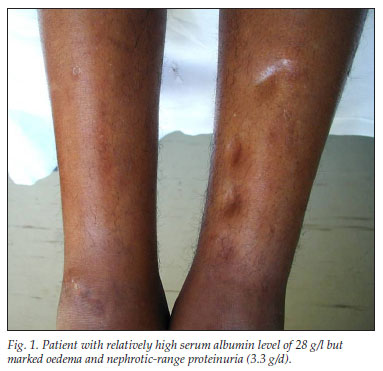
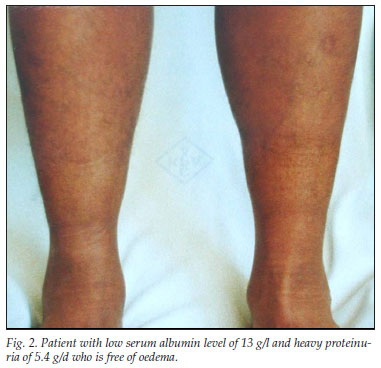
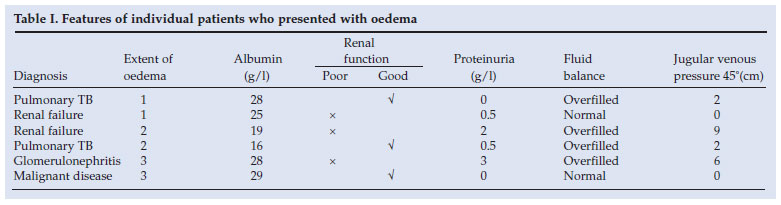
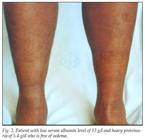
OBJECTIVES: Seriously ill patients often suffer from disorders of salt and water balance and present with clinical signs of either dehydration or oedema. The relationship of hypoalbuminaemia to oedema is complex and controversial and formed the central issue of this study. DESIGN: Prospective study. SETTING: Medical wards of New Somerset Secondary Hospital, November 2004. SUBJECTS: 50 patients admitted consecutively to the medicalwards at New Somerset Hospital were evaluated; 26 males and 24 females participated. OUTCOME MEASURES: An attempt was made to correlate causesof salt and water imbalance with the clinical assessment ofvolume status, oedema formation, nutritional state and serum albumin levels. RESULTS: Hypoalbuminaemia was not related to oedema inthis study. Of 24 patients with a serum albumin level below 30 g/l, only 6 had oedema. These patients all had other abnormalities that could have resulted in the oedema, notably primary salt retention by failing kidneys, cor pulmonale and malignancy. None of the patients with serum albumin levels below 15 g/l had any signs of oedema. The combined insult of a chronic inflammatory disease and malnutrition had a marked effect on serum albumin levels. CONCLUSION: Significant hypoalbuminaemia was present in many of our patients, yet oedema was detected infrequently and generally had an easily identifiable cause not related to low albumin levels. Most patients with hypoalbuminaemiapresented with normal or positive water balance. This study supports the notion that hypoalbuminaemia is infrequently associated with oedema and plays a minor role in its formation.
SAMJ: South African Medical Journal
 Thumbnail
 Thumbnail